Behavior
What are quick tips for Maltese gastric dilatation-volvulus (gdv/bloat)?
Feed smaller meals more frequently and use slow feeders to limit air intake. Avoid exercise right after eating, and monitor your Maltese for any signs of bloating.
Maltese gastric dilatation-volvulus (GDV/bloat) is a serious health issue that can affect your pet's life.
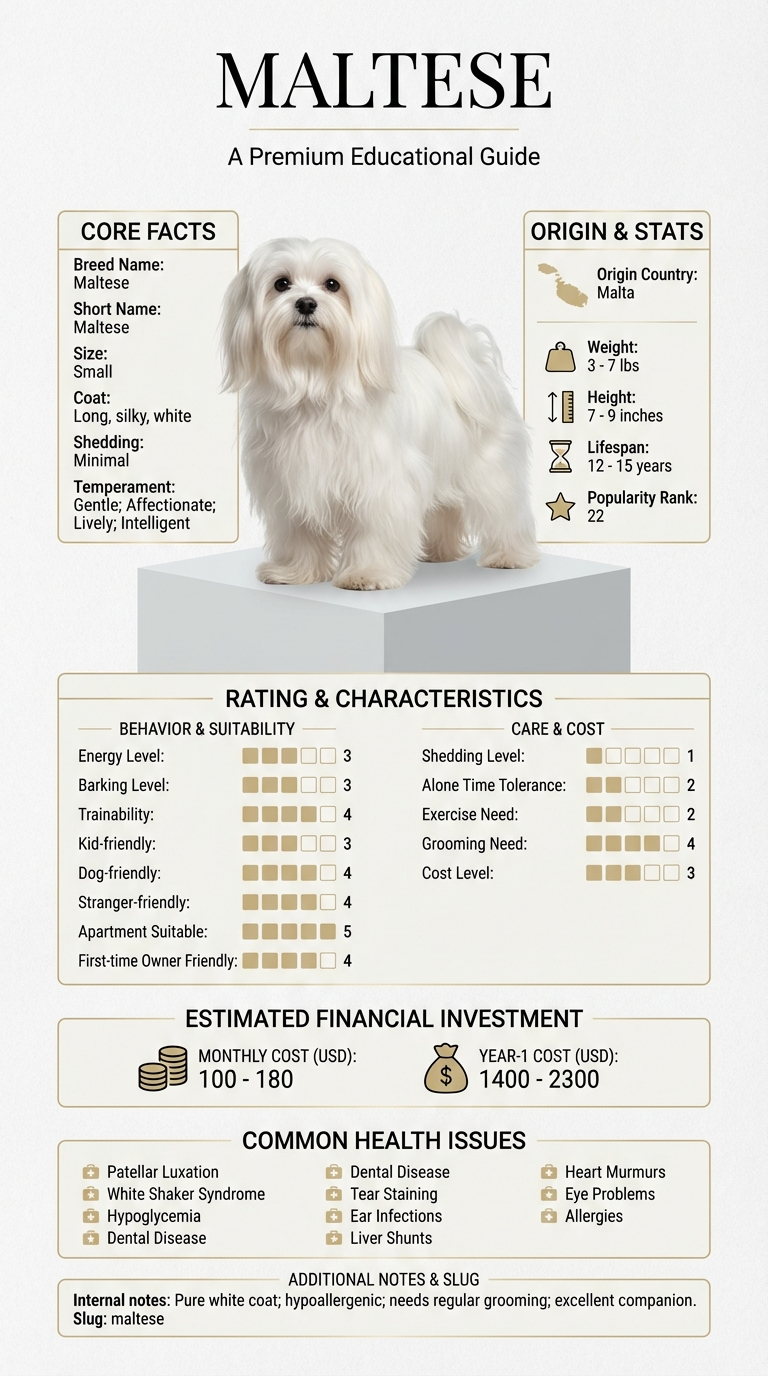
Owners of Maltese dogs, particularly those who are first-time dog parents or live in high-stress environments, often face challenges with this condition. Understanding how to recognize and manage GDV is crucial for their well-being.
This guide is not medical advice. If your dog shows pain, sudden behavior change, or worsening symptoms, consult a licensed veterinarian.
Some links may be affiliate links. We may earn a commission at no extra cost to you. We only suggest products we believe are helpful for dog owners.
Maltese gastric dilatation-volvulus (GDV/bloat) is a serious condition that can cause a dog's stomach to fill with gas and twist. Day-to-day, this may present as a distended abdomen, retching without producing anything, restlessness, and signs of pain. This condition is especially common in small breeds like the Maltese due to their anatomy and eating habits.
GDV is relatively uncommon overall, but when it does occur, it is particularly concerning for small dog breeds like the Maltese. Owners should be alert, as quick intervention is crucial for the dog's survival.
Maltese dogs are small and have a delicate build, which can make them more susceptible to gastric dilatation-volvulus (GDV). Their energetic nature and tendency to eat quickly can also contribute to this serious condition. Additionally, certain genetic factors may increase the risk of developing GDV in this breed.
Environmental factors such as stress, changes in routine, or a sudden increase in activity can trigger GDV in Maltese dogs. Feeding practices, like giving large meals or allowing vigorous play right after eating, can also lead to bloat. It's important to create a calm and consistent environment to help prevent these triggers.
If your Maltese shows signs of anxiety during meal times or exhibits excessive barking or restlessness, it may be beneficial to consult a dog trainer. A trainer can provide strategies to manage anxiety and improve your dog's behavior around food.
If you notice symptoms of GDV, like a swollen abdomen, excessive drooling, or signs of distress, contact your vet immediately. Even if your dog shows mild symptoms, it's best to err on the side of caution, as GDV can escalate quickly and is a life-threatening condition.
If you suspect your Maltese has gastric dilatation-volvulus (GDV/bloat), time is critical. Immediate veterinary attention is necessary, and outcomes can vary from hours to weeks depending on treatment and recovery.
Success means your Maltese receives prompt medical treatment and recovers fully, avoiding future incidents through dietary management and lifestyle changes.
Understanding what not to do can be just as important as learning how to handle Maltese gastric dilatation-volvulus (GDV/bloat). Here are some common mistakes that may exacerbate the problem, along with safer alternatives.
Recognizing when Maltese gastric dilatation-volvulus (GDV/bloat) is an emergency can save your dog's life. Immediate veterinary care is crucial if you notice severe symptoms such as a distended abdomen, unproductive retching, rapid breathing, or signs of shock like weakness or collapse. These are red flags indicating that your dog is in critical condition and requires urgent medical attention.
On the other hand, if your Maltese shows mild signs of discomfort like decreased appetite, light bloating, or occasional burping, you can monitor them at home. In these cases, it's wise to keep a close eye on their behavior and eating habits. If symptoms worsen or persist beyond a few hours, contact your vet for further advice. Always trust your instincts; if you're uncertain about your dog's condition, it's better to err on the side of caution.
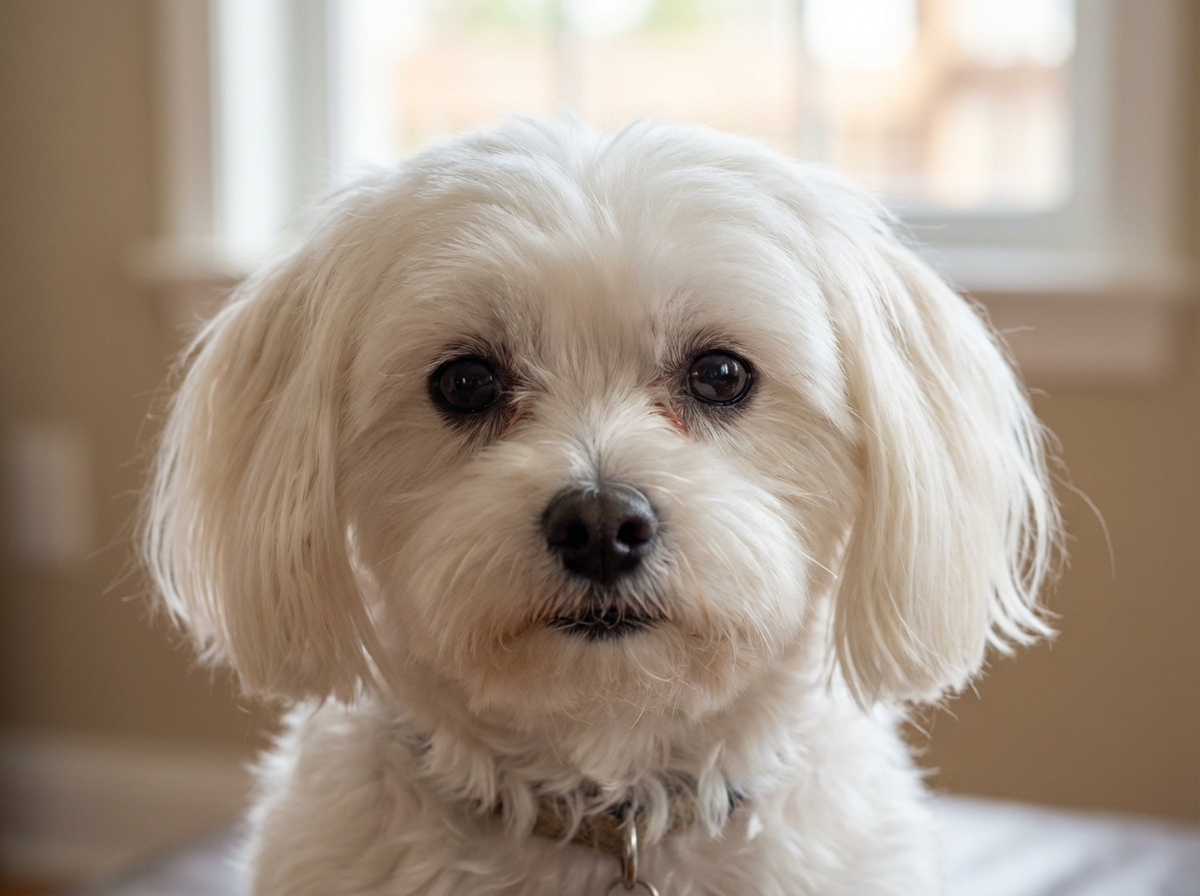
When Sarah, a busy nurse in New York, noticed her Maltese, Bella, acting unusually restless and bloated, she instantly felt a wave of worry. After a rushed trip to the vet, she learned Bella was suffering from GDV, a serious condition. Thankfully, after surgery and close monitoring, Bella made a full recovery. Sarah learned to adjust Bella's feeding schedule and introduced smaller meals to prevent future issues. Now, with a few simple lifestyle changes, Bella is thriving and back to her playful self.
Key takeaway: Recognizing the signs of GDV early can save your dog's life. Quick veterinary action and dietary adjustments are crucial for future prevention.
Gastric dilatation-volvulus (GDV) can occur in Maltese dogs due to rapid eating, excessive air intake, or genetic predisposition. Stress and food type can also play a role. If your Maltese shows signs of bloating, seek immediate veterinary care.
To help prevent GDV, feed your Maltese smaller meals more frequently, instead of one large meal. Use slow feeder bowls to reduce the speed of eating. Additionally, avoid vigorous exercise right after meals.
Symptoms include a swollen or bloated abdomen, excessive drooling, restlessness, and attempts to vomit without success. If your Maltese exhibits these signs, contact a vet immediately.
If you suspect GDV, take your Maltese to an emergency vet as soon as possible. This condition is life-threatening and requires immediate medical attention to prevent serious complications or death.
While training cannot directly prevent GDV, it can help establish a routine around feeding and exercise. Teaching your Maltese to eat calmly and controlling their environment can indirectly reduce the risk of bloat.
Early signs of Maltese gastric dilatation-volvulus (gdv/bloat) include restlessness, drooling, and a distended abdomen. If you notice your Maltese pacing or trying to vomit without success, it’s essential to seek veterinary help immediately.
Yes, older Maltese dogs can develop gastric dilatation-volvulus (gdv/bloat). As they age, their risk factors increase, so it's vital to monitor their eating habits and overall health closely.
To prevent Maltese gastric dilatation-volvulus (gdv/bloat), feed smaller, more frequent meals rather than one large meal. Additionally, avoid vigorous exercise immediately after eating to reduce the risk.
If your Maltese has a sensitive stomach, it’s worth discussing with your vet. While sensitivity can be common, it can also lead to more severe issues like gastric dilatation-volvulus (gdv/bloat) if not managed properly.
If your Maltese shows signs of gastric dilatation-volvulus (gdv/bloat), take them to the vet immediately. This condition is life-threatening, and prompt treatment is crucial for their survival.
Feed smaller meals more frequently and use slow feeders to limit air intake. Avoid exercise right after eating, and monitor your Maltese for any signs of bloating.
GDV is a life-threatening condition that requires immediate veterinary intervention. If you notice symptoms, do not delay seeking help.
Feeding high-quality, easily digestible food can help. Consult your vet for specific dietary recommendations tailored to your Maltese's needs.
It's best to feed your Maltese 2-3 small meals a day rather than one large meal. This can help reduce the risk of bloat.