Health
What should I do if my Jack Russell Terrier has vwd1?
If your Jack Russell Terrier has vwd1, keep them away from risky situations and consult your vet for tailored advice on managing the condition.
Jack Russell Terrier von Willebrand's Disease (vWD1) is a genetic bleeding disorder that can pose serious health risks to affected dogs. Understanding this condition is crucial for their well-being.
Owners of Jack Russell Terriers may find themselves facing vWD1, especially if they have a dog with a family history of the disease. New dog parents or those unfamiliar with the condition might struggle to recognize symptoms and manage the care required.
This guide is not medical advice. If your dog shows pain, sudden behavior change, or worsening symptoms, consult a licensed veterinarian.
Some links may be affiliate links. We may earn a commission at no extra cost to you. We only suggest products we believe are helpful for dog owners.
Jack Russell Terriers can face a serious health issue known as von Willebrand's disease (vWD1), a genetic bleeding disorder. This condition often leads to excessive bleeding, making even minor injuries a concern. Owners may notice their dog bleeding more than usual from cuts or experiencing nosebleeds, which can be alarming.
Von Willebrand's disease is relatively common in Jack Russell Terriers compared to other breeds. While not all JRTs will inherit this condition, it is important for owners to be aware of the risk, especially if there's a family history of bleeding disorders.
Jack Russell Terriers are known to have a higher risk of von Willebrand's disease (vWD1) due to genetic factors. This inherited condition affects their blood's ability to clot, making them more susceptible to bleeding issues. If you have a Jack Russell, it's essential to be aware of this breed-specific health concern.
Environmental factors can also contribute to the severity of vWD1. Stressful situations or injuries can trigger bleeding episodes in dogs predisposed to this condition. Keeping your dog in a calm and controlled environment can help minimize risks.
If your Jack Russell shows signs of anxiety or fear that may lead to injuries, consider working with a trainer experienced in behavior modification. They can help you develop strategies to build your dog's confidence and reduce stress.
Consult your vet if you notice unusual bleeding, such as from the gums or nose, or if your dog appears lethargic or in pain. Regular vet check-ups are crucial for monitoring any health issues related to vWD1.
Managing Jack Russell Terrier von Willebrand's disease (vWD1) typically takes several months to establish a routine. Regular vet visits and monitoring are crucial.
Success means your dog maintains a stable health condition, has reduced bleeding episodes, and can enjoy an active life with proper management.
Avoiding certain behaviors can greatly help your Jack Russell Terrier with von Willebrand's disease (vWD1). Here are some common mistakes and safer alternatives to consider.
Red flags that mean you should call your vet immediately include: excessive bleeding from any injury, prolonged bleeding from minor cuts, or bleeding from the nose or gums. If your dog experiences difficulty breathing or shows signs of weakness or lethargy after an injury, these are also major warning signs.
On the other hand, if your Jack Russell Terrier exhibits mild symptoms, such as light bruising or slight bleeding after play, you can monitor at home. Ensure your dog is resting and avoid any rough play. Keeping a close eye on their behavior and general health can help you decide if a vet visit becomes necessary later on.
Always trust your instincts; if you're unsure, it's better to err on the side of caution and consult a vet. Regular check-ups and discussions about their health can also help manage vWD1 effectively.

Emily, a first-time dog owner, adopted Max, a spirited Jack Russell Terrier. Shortly after bringing him home, she noticed that he bled easily during play. Concerned, Emily took him to her vet, who diagnosed Max with von Willebrand's disease (vWD1). With the vet's guidance, Emily learned how to manage Max's condition through regular check-ups and careful play supervision. She adjusted his activities to avoid rough play and focused on gentle games. Over time, Emily became adept at recognizing Max's limits, allowing him to enjoy life safely.
Key takeaway: With the right support and knowledge, managing a Jack Russell Terrier with vWD1 can lead to a fulfilling life for both dog and owner.
Jack Russell Terrier von willebrand's disease (vwd1) is a genetic bleeding disorder that affects the blood's ability to clot. This means your dog may bleed excessively from injuries or during surgery. It's important to get a proper diagnosis from your vet if you suspect your dog has this condition.
Von Willebrand's disease is inherited, meaning it's passed down from parent dogs who carry the gene. If your Jack Russell Terrier has vwd1, it's likely due to genetic factors. Regular health screenings can help identify this condition early.
Managing vwd1 involves regular vet check-ups and avoiding situations that could lead to injury. Your vet may recommend specific treatments or precautions to help minimize bleeding risks. Always keep a close eye on your dog’s activities.
Currently, there is no cure for von Willebrand's disease. However, with proper management and care, many dogs live happy lives. Your vet can provide guidance on how to best support your dog.
Common signs include excessive bleeding from minor cuts, prolonged bleeding after surgery, and unusual bruising. If you notice any of these symptoms, contact your vet immediately for evaluation.
While you can't stop vwd1 itself, you can help manage it by keeping your dog safe and minimizing risks. Regular vet visits and following their advice on care can significantly help. Consider avoiding high-risk activities that could lead to injury.
Common symptoms of von Willebrand's disease (vWD1) in Jack Russell Terriers include excessive bleeding from minor cuts, prolonged bleeding after surgery, and frequent nosebleeds. You might also notice bruising or blood in the stool, which can indicate a more severe issue.
Managing von Willebrand's disease in your Jack Russell Terrier involves regular vet check-ups and possibly avoiding high-risk activities. Your vet may also recommend specific treatments or medications to help support your dog's health and minimize bleeding risks.
Yes, von Willebrand's disease is a genetic condition that can be passed down from parent to offspring. If you're considering breeding your Jack Russell, it's essential to have both parents tested to prevent passing this disorder to the puppies.
You should take your Jack Russell Terrier to the vet if you notice any signs of excessive bleeding or if they experience unusual bruising. Regular check-ups are also crucial, especially if your dog has been diagnosed with vWD1 to monitor their health and adjust treatments as needed.
While training won't cure von Willebrand's disease, it can help improve your dog's overall behavior and reduce stress. Training can also teach your dog to avoid risky situations that might lead to injury or bleeding, which is essential for dogs with this condition.
If your Jack Russell Terrier has vwd1, keep them away from risky situations and consult your vet for tailored advice on managing the condition.
Yes, but moderation is key. Avoid intense activities that could lead to injuries, and opt for low-impact exercises.
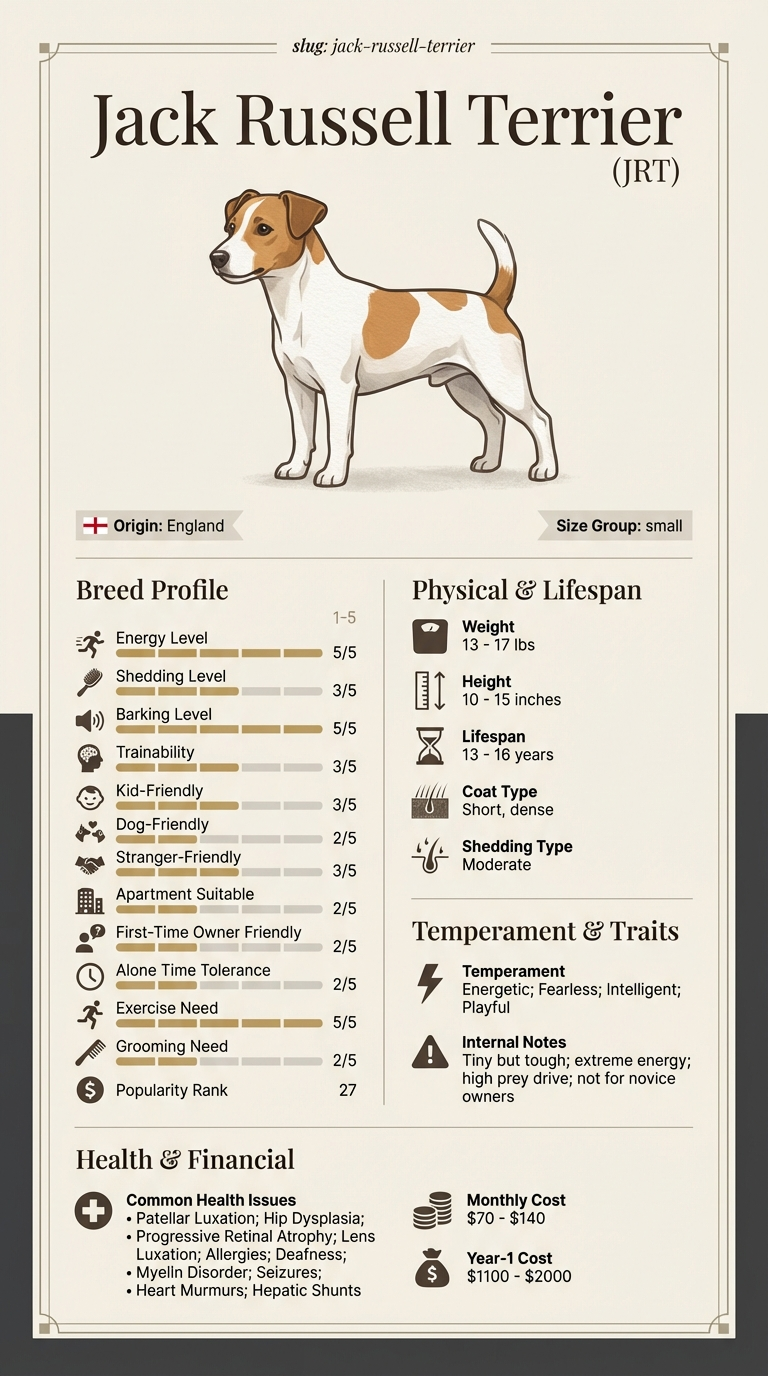
Managing Jack Russell Terrier von willebrand's disease can involve regular vet visits, which may range from $70 to $140 monthly, depending on care needs.
Training can help reinforce safe behaviors and keep your dog calm, reducing the risk of injuries. Positive reinforcement techniques work best.