Behavior
What are some quick tips for Great Dane insurance claims?
Maintain regular vet appointments and provide a balanced diet to keep your Great Dane healthy. Monitor their weight and ensure they get enough exercise to prevent health issues.

Quick answer
What are some quick tips for Great Dane insurance claims?
Maintain regular vet appointments and provide a balanced diet to keep your Great Dane healthy. Monitor their weight and ensure they get enough exercise to prevent health issues.
Great Dane insurance claims can be a significant concern for owners. These gentle giants are prone to certain health issues, leading to higher insurance claims.
Owners new to Great Danes or those unprepared for their health needs often struggle with insurance claims. Families who love their big dogs but find themselves overwhelmed by vet bills may also need guidance.
This guide is not medical advice. If your dog shows pain, sudden behavior change, or worsening symptoms, consult a licensed veterinarian.
Some links may be affiliate links. We may earn a commission at no extra cost to you. We only suggest products we believe are helpful for dog owners.
We research and check what we publish, but we do not warrant that any figure, date, price, or statement is accurate, complete, or current, and we accept no liability for any loss, cost, injury, or other harm arising from the use of this site. Use it as one reference among several. You remain responsible for your own decisions and for your dog's care - confirm anything that matters with a licensed veterinarian or another qualified professional before you act on it. Full disclaimer.
Check this first
Understanding when Great Dane insurance claims become an emergency is crucial for your pet's health. Emergency situations require immediate attention, while less severe cases might only need monitoring. Here are the signs to differentiate between the two.
If any of these apply, call your vet or an emergency clinic now. The rest of this page is for the cases that are not an emergency.
Great Dane insurance claims can be a significant concern for owners, especially given the breed's susceptibility to various health issues. Day-to-day, you might notice signs of anxiety or stress in your Great Dane, which can lead to unexpected vet visits. Common health problems like bloat or heart disease often result in higher insurance claims, making it essential to be proactive about your dog's health care.
Insurance claims are relatively common among Great Danes due to their size and inherent health risks. Owners often report increased claims during the first few years of ownership, particularly if the dog has not been properly trained or socialized.
Great Danes are large dogs with unique health challenges. They are prone to serious issues like bloat and heart disease, which can lead to higher insurance claims. Their size also means they may experience more stress on their joints, increasing the likelihood of conditions that require medical attention.
The environment can significantly impact a Great Dane's health. Factors like diet, exercise, and living conditions play a role in their wellbeing. If they are not exercised properly or are fed an unsuitable diet, they may develop health problems that lead to increased insurance claims.
Talk to your vet if you notice sudden changes in your Great Dane's behavior or health. Increased insurance claims may indicate underlying health issues that need professional attention. Don’t hesitate to reach out if you have concerns about their diet, weight, or exercise.
Avoiding common pitfalls can help reduce Great Dane insurance claims. Here are mistakes to steer clear of.
Start here: Great Dane Most Common Genetic Disorders: What to Screen For
See all Great Dane health problems, which breeds are prone to insurance claims, or the full Great Dane breed guide for temperament, exercise needs and ownership costs.
You can expect to see improvements in your Great Dane's behavior and a reduction in insurance claims within 3 to 6 months of consistent care and management.
Success means your Great Dane is more relaxed, experiences fewer anxiety-driven incidents, and has fewer claims filed, leading to potentially lower insurance costs.
Look for these urgent symptoms:

These conditions may not require an immediate vet visit, but keep an eye on them:

When Sarah adopted Max, a 120-pound Great Dane, she was excited but quickly faced challenges. Max had severe separation anxiety, leading to destructive behavior when left alone, which resulted in multiple insurance claims for damage and injuries. Frustrated, Sarah sought help from a dog trainer who specialized in behavior issues. Through consistent training, crate conditioning, and gradually increasing alone time, Max learned to cope better. After six months, Sarah noticed a real change; Max was calmer and the claims had stopped. Sarah felt relieved and more confident as a dog owner.
Key takeaway: With patience and the right training, you can manage your Great Dane's anxiety, which can lead to fewer insurance claims and a happier life for both of you.
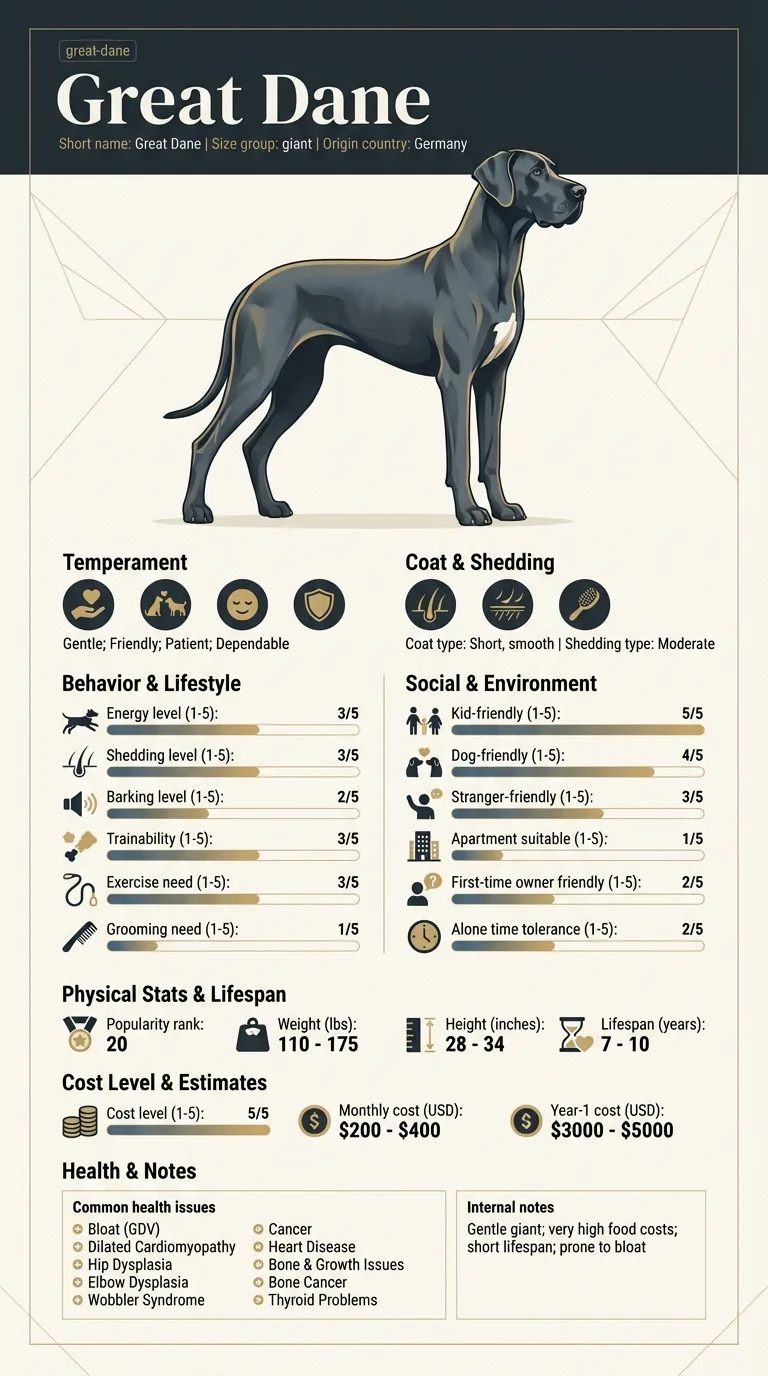
Great Danes are prone to specific health issues like bloat and hip dysplasia, which can lead to higher insurance claims. Regular vet check-ups and monitoring can help catch problems early. Make sure you understand the common health risks associated with your Great Dane.
To lower insurance claims, focus on preventive care. This includes regular vet visits, a balanced diet, and proper exercise. Training your Great Dane to manage anxiety and stress can also prevent health-related issues.
Great Danes commonly face health issues like bloat, dilated cardiomyopathy, and hip dysplasia. Understanding these risks can help you prepare and seek appropriate insurance. Always consult your vet for a tailored health plan.
If your Great Dane has frequent claims, reassess their diet and exercise routine. Speak to your vet about any concerns and consider a second opinion if necessary. Keeping a health diary can help track patterns that may lead to claims.
Yes, training can alleviate anxiety and stress, which are often associated with health problems. Focus on socialization and positive reinforcement techniques. This will improve their mental health and potentially reduce insurance claims.
Great Danes are prone to several health problems, including bloat, dilated cardiomyopathy, and hip dysplasia. These conditions often lead to significant veterinary expenses, which can result in higher insurance claims.
To minimize the risk of insurance claims, ensure your Great Dane receives regular veterinary check-ups and maintains a healthy diet. Training and socialization can also prevent behavior issues that might lead to accidents or injuries.
Yes, older Great Danes typically face more health issues, which can lead to increased insurance claims. Monitoring their health closely and addressing any changes promptly can help manage costs.
If your Great Dane has frequent insurance claims, it's essential to review their health history and lifestyle. Consulting with your vet can help identify underlying issues or necessary changes in care that could reduce claim frequency.
Yes, training techniques focusing on obedience, socialization, and behavior management can help reduce incidents that lead to claims. Consider enrolling in training classes or working with a professional trainer for best results.
Maintain regular vet appointments and provide a balanced diet to keep your Great Dane healthy. Monitor their weight and ensure they get enough exercise to prevent health issues.
Choose an insurance plan that covers breed-specific issues like bloat and hip dysplasia. Always read the fine print to understand exclusions.
Insurance for a Great Dane typically ranges from $200 to $400 per month, depending on coverage options and the dog's health history.
Yes, Great Danes are prone to conditions like bloat, heart disease, and hip dysplasia, which can lead to higher insurance claims.
If your Great Dane shows signs of a health issue, consult your veterinarian immediately. Early intervention can often prevent more serious problems.
A one-page prep sheet for this condition: the signs, the questions to ask, what to get priced. Unlocks here.
You get: Vet visit prep sheet
No spam. One-click unsubscribe. See our privacy policy.
Preview page 1 before you decide.