What are quick tips for managing Great Dane exercise intolerance?
Start with short, low-intensity walks and gradually increase their duration. Keep your Dane hydrated and avoid exercising during hot weather. Always watch for signs of fatigue.
Great Dane exercise intolerance can pose serious challenges for owners. This condition makes it difficult for these gentle giants to handle physical activity, leading to overheating and fatigue.

Typically, first-time Great Dane owners or families who may not be prepared for the exercise needs of such a large breed struggle with this problem. It's also common in urban environments where space for moderate exercise is limited.
This guide is not medical advice. If your dog shows pain, sudden behavior change, or worsening symptoms, consult a licensed veterinarian.
Some links may be affiliate links. We may earn a commission at no extra cost to you. We only suggest products we believe are helpful for dog owners.
Great Dane exercise intolerance can be concerning for owners. This condition often manifests as excessive fatigue or reluctance to engage in physical activities, even when the dog appears to be healthy. Many Great Danes may struggle with long walks or play sessions, which can be disheartening for both the dog and their owner.
Exercise intolerance is relatively common among Great Danes, especially as they age. The breed's large size and unique physiology can contribute to their sensitivity to exercise levels. Regular monitoring and a balanced exercise routine are essential for keeping them healthy.
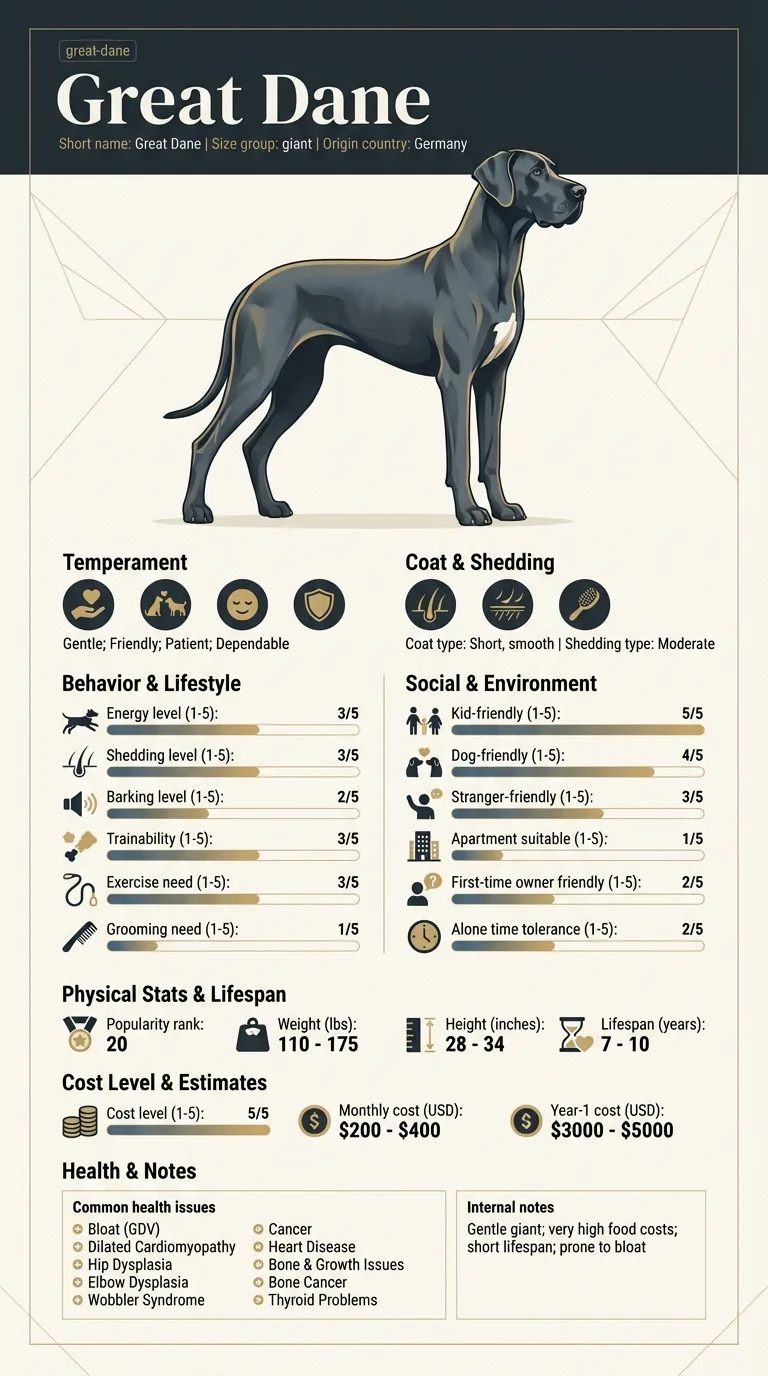
Great Danes are a giant breed with a unique body structure. Their large size can make them prone to fatigue, especially in warmer weather. Additionally, they may have specific health issues like heart problems or hip dysplasia that contribute to exercise intolerance.
Environmental factors can also play a role. High temperatures, humidity, and insufficient hydration can increase the risk of overheating. A lack of appropriate exercise space or opportunities for gradual conditioning may lead to an inability to keep up with physical activity.
If your Great Dane's exercise intolerance persists despite gradual conditioning, consider consulting a professional trainer. They can provide tailored guidance on exercise routines that suit your dog's specific needs.
If you notice severe fatigue, persistent coughing, or any signs of distress during exercise, it's crucial to consult a vet. These could be symptoms of underlying health issues that need attention.
It may take several weeks to a few months to see improvements in your Great Dane's exercise tolerance. Consistency is key, along with gradual adjustments to their activity levels.
Success means your Great Dane can participate in moderate exercise without showing signs of fatigue or overheating. They should enjoy walks and playtime while maintaining their energy and enthusiasm.
To help manage your Great Dane’s exercise intolerance, avoid these common mistakes that can exacerbate the problem. Making informed choices can lead to a happier, healthier dog.
Recognizing when your Great Dane's exercise intolerance becomes a serious issue is crucial. There are clear signs that indicate you should seek immediate veterinary help. If your dog shows extreme lethargy, collapses, or has difficulty breathing after light exercise, these are red flags. Additionally, if they develop a rapid heart rate or exhibit signs of distress, such as panting excessively or drooling, you should definitely call your vet right away.
On the other hand, some cases of exercise intolerance can be monitored at home. If your Great Dane seems slightly tired after a walk but is still alert and responsive, it may simply be a sign they need a slower pace or shorter duration of exercise. You can keep an eye on their hydration levels and ensure they are resting adequately. Always have a plan in place for managing their activity levels, especially on hot days or after they’ve eaten, as this breed is prone to bloat. If their condition persists or worsens over time, then it’s time to consult your vet for further evaluation.

Sarah, a first-time dog owner, was excited to adopt Max, her Great Dane. However, she quickly noticed he struggled with exercise intolerance, getting tired after short walks. Worried about his health, she consulted her vet, who advised her to start with shorter, more frequent walks and gradually increase their length. Sarah also began incorporating swimming into Max's routine, which proved easier on his joints and helped build his stamina. Over the weeks, Max became more energetic and started enjoying longer walks without exhaustion.
Key takeaway: Gradually increasing exercise levels and incorporating low-impact activities can help manage exercise intolerance in Great Danes. Patience and consistency are essential for success.

Great Danes can experience exercise intolerance due to their size and potential underlying health issues. They may overheat quickly during physical activity, making it crucial to monitor their exercise levels. Additionally, conditions like hip dysplasia or heart problems could contribute to their limited stamina.
To manage Great Dane exercise intolerance, start with shorter, low-intensity walks and gradually increase duration as your dog builds stamina. Ensure your dog stays cool and hydrated to prevent overheating. Consult your vet for tailored advice and to rule out any health concerns.
Signs of overexertion in a Great Dane include excessive panting, drooling, weakness, or lethargy. If your dog seems disinterested in activities they usually enjoy, it's time to take a break. Always observe their behavior closely during exercise.
Yes, training can help manage exercise intolerance in Great Danes. Focus on obedience training and low-impact activities to build their confidence and comfort. Gradually increasing the intensity of workouts can help them adapt, but always prioritize their well-being.
Low-impact exercises such as gentle walks, swimming, or short play sessions are best for Great Danes with exercise intolerance. These activities help maintain their fitness without risking overheating or overexertion. Always consult your vet for personalized recommendations.
Signs of exercise intolerance in your Great Dane include excessive panting, lethargy, reluctance to move, and even collapsing after minimal activity. If your dog shows these symptoms, it’s crucial to limit their exercise and consult a vet.
For older Great Danes, focus on shorter, gentler walks and low-impact activities. Providing a comfortable resting area and monitoring their health closely can also make a significant difference in their well-being.
Great Danes may experience exercise intolerance due to their large size, which can lead to overheating or exhaustion more quickly than smaller breeds. Health issues like heart disease or hip dysplasia can also contribute, so regular vet check-ups are essential.
If your Great Dane collapses, stop all activity immediately and move them to a cool, shaded area. Check for signs of distress, and contact your veterinarian right away for further guidance.
Yes, gradual training can help improve your Great Dane's exercise tolerance. Start with short walks and slowly increase the duration and intensity, while paying attention to their body language and health.
Start with short, low-intensity walks and gradually increase their duration. Keep your Dane hydrated and avoid exercising during hot weather. Always watch for signs of fatigue.
Great Danes typically need about 30 to 60 minutes of exercise each day, but monitor their tolerance closely. Adjust based on their individual needs and health status.
If your Great Dane frequently shows signs of fatigue or discomfort during exercise, consult your vet. They can check for underlying health problems that may cause exercise intolerance.
Great Danes are prone to several health issues, including bloat, hip dysplasia, and heart disease. Regular vet check-ups can help catch these issues early.
Include basic obedience training, low-impact exercises, and positive reinforcement techniques. Focus on building their confidence and gradually increasing activity levels.


![Ultimate Guides: "Complete Guide to Choosing a Dog for [X] | Ultimate Guides: Complete Guide to Choosing a Dog for You thumbnail](/images/breeds/golden-retriever/golden%20retriever1.jpg)