DogBreedCompass
← Back to breed profile

Understanding Great Dane Excessive Barking

Great Dane excessive barking can be a challenging issue for many pet owners. It disrupts the peace in your home and can lead to frustration.

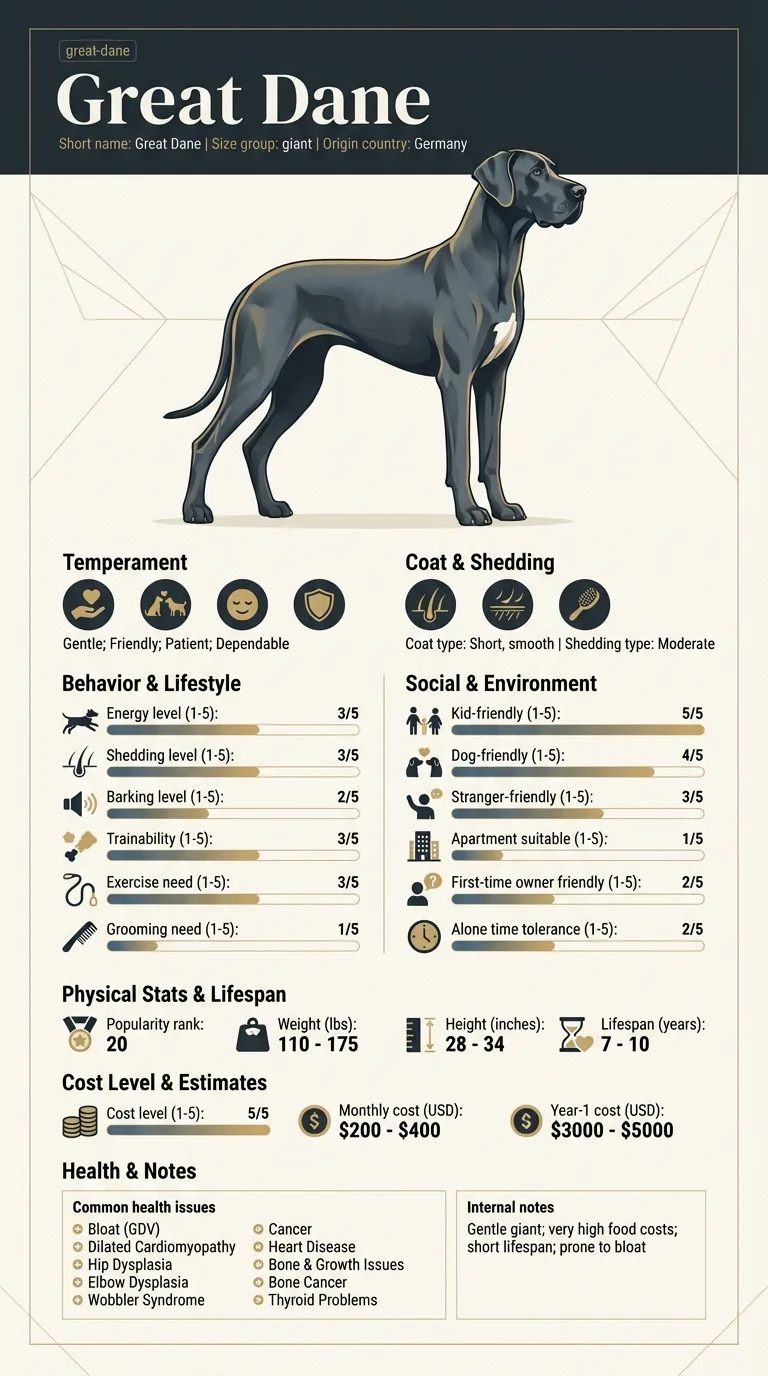
Understanding Great Dane Excessive Barking infographic

Owners of Great Danes, especially first-time dog parents or those living in apartments, often struggle with excessive barking. This can be particularly challenging in urban areas where noise levels can escalate quickly.

Important reminder

This guide is not medical advice. If your dog shows pain, sudden behavior change, or worsening symptoms, consult a licensed veterinarian.

Some links may be affiliate links. We may earn a commission at no extra cost to you. We only suggest products we believe are helpful for dog owners.

What this problem looks like

Great Dane excessive barking can be a daily challenge for owners. This behavior often manifests as barking at strangers, passing cars, or even during playtime. While Great Danes are known for their gentle nature, they can become surprisingly vocal, which might confuse new owners.

Common triggers

  • Strangers approaching the home
  • Loud noises like sirens or fireworks
  • Boredom or lack of exercise
  • Separation anxiety when left alone

Excessive barking is somewhat common in Great Danes. Though they typically have a moderate barking level, various factors can lead to increased vocalization. Understanding these triggers is essential for effective training.

Why this happens

Breed factors

Great Danes are naturally protective and may bark to alert you to visitors or unusual sounds. Their size can make them feel like they need to assert dominance, which sometimes leads to barking. Additionally, they can be vocal when bored or seeking attention.

Environment factors

Your Great Dane's environment plays a big role in their barking habits. If they are left alone for long periods, they may bark out of loneliness or anxiety. A noisy neighborhood or a lack of mental stimulation can also trigger excessive barking.

What you can try

At-home strategies

  • Create a calm environment by reducing noise and distractions. Use curtains or soundproofing to minimize outside sounds.
  • Establish a routine for your Great Dane. Regular exercise, playtime, and training sessions can help reduce boredom and anxiety.
  • Use positive reinforcement to train your Great Dane. Reward them with treats and praise when they remain quiet during potential triggers.
  • Teach the 'quiet' command. When your dog barks, say 'quiet' in a firm but calm voice. When they stop barking, reward them immediately. Repeat this until they understand the command.

When to consider a trainer

If your Great Dane's barking continues despite your efforts, consider hiring a professional trainer. A trainer can provide personalized strategies and help address underlying behavioral issues.

When to talk to your vet

If excessive barking suddenly starts or is accompanied by signs of distress, it’s wise to consult your vet. They can rule out any health issues or anxiety disorders that might be contributing to the behavior.

Realistic expectations

You can expect to see improvements in your Great Dane's excessive barking within 4 to 8 weeks with consistent training and practice.

Success means your Great Dane barks less frequently and only in appropriate situations, like alerting you to visitors or unusual sounds.

Mistakes that make this worse

Many owners unintentionally reinforce their Great Dane's excessive barking. Here are some common mistakes and suggestions for better approaches.

  • Ignoring the barking: Some owners may think barking is just a part of dog behavior. Ignoring it can make the barking worse. Instead, address the cause of the barking immediately.
  • Punishing the dog: Yelling or scolding a barking Great Dane can confuse them and increase anxiety. Use positive reinforcement methods to encourage quiet behavior instead.
  • Rewarding barking behavior: If you give attention or treats when your Great Dane barks, you're teaching them that barking gets them what they want. Instead, reward them for being quiet.
  • Inconsistent training: Changing your response to barking can confuse your dog. Stick to a consistent training routine that reinforces quiet behavior every time.
  • Avoiding socialization: Keeping your Great Dane isolated can increase barking at strangers or other dogs. Regularly exposing them to different environments and people can help reduce excessive barking.
  • Neglecting exercise: Insufficient physical activity can lead to boredom and excessive barking. Ensure your Great Dane gets regular exercise to help keep them calm and satisfied.
  • Using negative reinforcement: Techniques like shock collars can cause fear and anxiety, worsening the barking issue. Focus on gentle training methods that build trust between you and your dog.

When Great Dane Excessive Barking is an Emergency

While some barking is normal for a Great Dane, there are times when excessive barking can signal a serious problem. Knowing when to call your vet or when to monitor your dog's behavior can make a big difference. Here are the signs to watch for:

**Call Your Vet Now:** If your Great Dane’s barking comes with any of the following symptoms, it’s time to seek immediate help. Look for signs of distress like panting heavily, pacing, or not eating. If the barking is sudden and unusual, especially if your dog seems agitated or fearful, it could indicate pain or illness.

**Monitor and Plan:** If your Great Dane is barking excessively but otherwise seems healthy, you can monitor the situation. For example, if the barking occurs when strangers approach or when left alone, it might be due to anxiety or boredom. In this case, training and behavioral adjustments can help alleviate the problem. Keeping a consistent routine and providing mental stimulation can also improve their behavior over time.

Understanding Great Dane Excessive Barking - When Great Dane Excessive Barking is an Emergency

Finding Peace with Max the Great Dane

When Sarah adopted Max, her Great Dane, she quickly noticed his excessive barking at every passerby and noise. It drove her neighbors crazy and made her anxious. After researching how to stop Great Dane excessive barking, she started training sessions using positive reinforcement. With patience and regular practice, she taught Max to respond to commands and only bark when necessary. Within a few months, Max learned to control his barking, and Sarah felt more relaxed at home.

Key takeaway: With dedication, training, and understanding, you can manage your Great Dane's excessive barking and create a peaceful environment.

Frequently asked questions

Why does my Great Dane have excessive barking?

Great Danes may bark excessively due to boredom, anxiety, or a lack of training. They are naturally protective, so they might bark at strangers or noises. Understanding the reason behind the barking is key to finding the right solution.

How to stop Great Dane excessive barking?

To stop excessive barking, first identify the triggers. Use positive reinforcement to reward quiet behavior and redirect their attention when they start barking. Consistency is crucial, so make sure everyone in the household is on the same page.

What training methods work for Great Dane excessive barking?

Effective training methods for excessive barking include teaching commands like 'quiet' or 'enough.' Use treats to reinforce these commands when your Great Dane stops barking on cue. Short, frequent training sessions tend to work best.

Can socialization help with my Great Dane's barking?

Yes, socializing your Great Dane can significantly reduce excessive barking. Expose them to various environments, people, and other dogs to build their confidence. A well-socialized dog is less likely to bark out of fear or uncertainty.

When should I consult a professional trainer for barking issues?

If your Great Dane's excessive barking persists despite your efforts, it may be time to consult a professional trainer. They can offer tailored strategies and insights specific to your dog's behavior. Early intervention is important to prevent the problem from escalating.

Are there products that can help with Great Dane excessive barking?

There are several products like bark collars and calming aids that may help with excessive barking. However, it's essential to use them responsibly and in conjunction with training. Always consult a vet or trainer before introducing new tools.

What should I do if my Great Dane barks at strangers?

If your Great Dane barks at strangers, it may be due to protective instincts or anxiety. Start by socializing your dog gradually with new people and rewarding calm behavior. If the barking persists, consider consulting a professional trainer for tailored strategies.

How can I tell if my Great Dane's barking is a sign of stress?

Watch for signs of stress, such as pacing, excessive panting, or destructive behavior. If your Great Dane barks excessively when left alone, it might indicate separation anxiety. In this case, exploring a Great Dane separation anxiety guide can be helpful.

Is excessive barking common in older Great Danes?

While older Great Danes may bark less than younger ones, changes in behavior, including increased barking, can still occur. This may be due to health issues or changes in their environment. Consult your vet to rule out any underlying health problems.

What are some quick tips to stop my Great Dane from barking at the mailman?

To stop your Great Dane from barking at the mailman, try desensitizing them to the sound of the mail truck. Use treats to reward calm behavior during deliveries. Consistent training sessions focusing on commands like 'quiet' can also be effective.

How can I train my Great Dane to bark less around other dogs?

Training your Great Dane to bark less around other dogs starts with positive reinforcement. Reward them when they remain calm during encounters. Gradually expose them to other dogs while managing their reactions, and consider a Great Dane behavior problems guide for extra tips.

Quick answers

View more answers
Behavior

What are some quick tips for Great Dane excessive barking?

Provide plenty of exercise and mental stimulation to reduce boredom. Establish a consistent training routine and reward quiet moments. Consider environmental changes to minimize outside distractions.

Training

How much training does a Great Dane need to stop barking?

Training should be ongoing; aim for daily sessions of 5-10 minutes. Consistency and repetition will help your Great Dane learn faster.

Behavior

Is excessive barking a common issue for Great Danes?

Yes, while not all Great Danes bark excessively, it can be a common behavior if they are bored or anxious. Proper training and socialization can help manage this behavior.

Related DogBreedCompass guides

Related guides