DogBreedCompass
← Back to breed profile

Great Dane Cruciate Ligament Injuries: What You Need to Know

Great Dane cruciate ligament injuries can be serious and painful for your dog. Understanding this issue is crucial for their health and well-being.

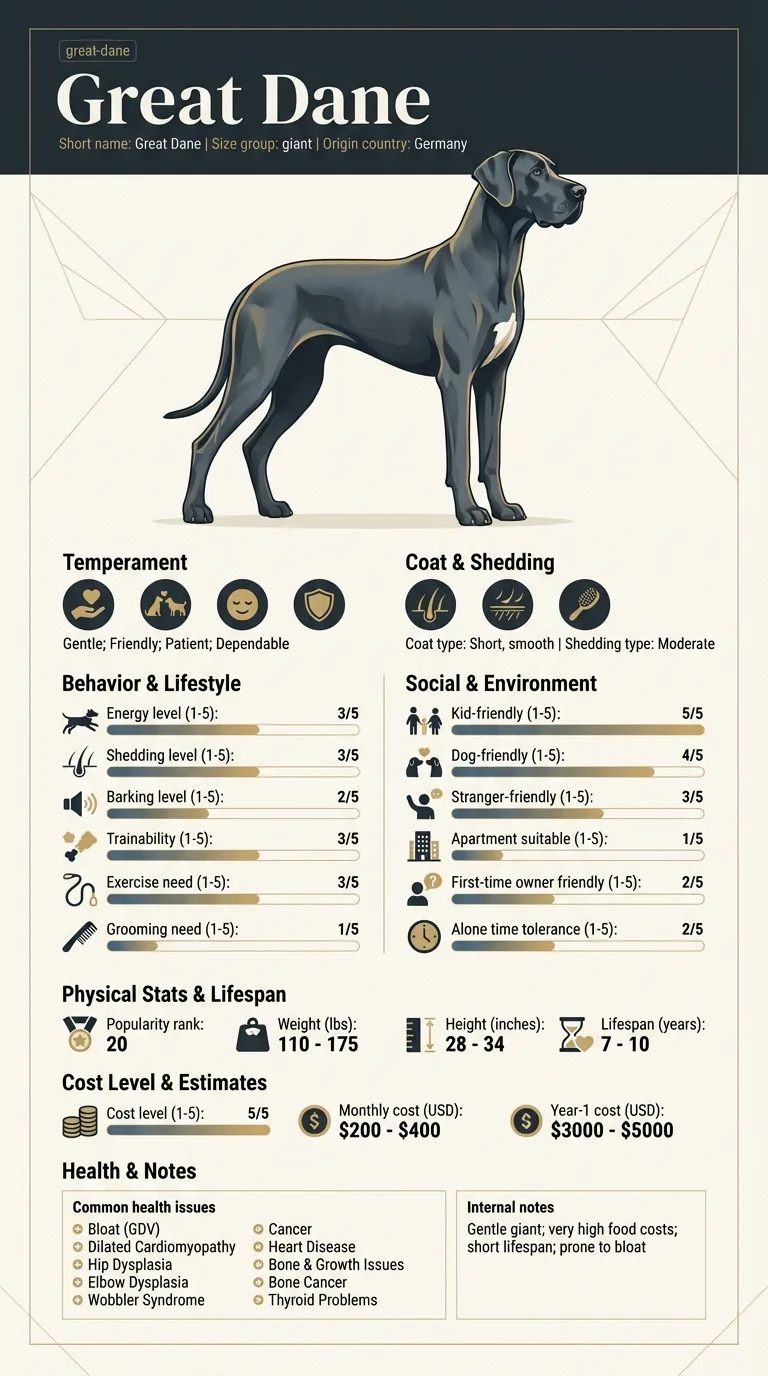
Great Dane Cruciate Ligament Injuries: What You Need to Know infographic

Owners of Great Danes, especially those with active lifestyles or older dogs, often face challenges with cruciate ligament injuries. This problem is particularly concerning for first-time owners who may not be aware of the breed's vulnerabilities.

Important reminder

This guide is not medical advice. If your dog shows pain, sudden behavior change, or worsening symptoms, consult a licensed veterinarian.

Some links may be affiliate links. We may earn a commission at no extra cost to you. We only suggest products we believe are helpful for dog owners.

What this problem looks like

Great Dane cruciate ligament injuries can be a significant issue for this breed. These injuries often manifest as limping, difficulty standing up, and reluctance to engage in physical activity. For Great Danes, daily life may involve sudden changes in behavior, particularly after exercise or play, indicating discomfort or pain.

Common triggers

  • High-impact activities like jumping or running
  • Obesity, which adds stress to the joints
  • Age-related wear and tear on the ligaments

Cruciate ligament injuries are fairly common in Great Danes, especially given their large size and weight. Many owners find that as their dog ages, the risk of these injuries increases, making awareness and preventive care essential.

Why this happens

Breed factors

Great Danes are giant dogs with a lot of weight and size. This can put extra stress on their joints, especially the knees. Their genetic predisposition to certain health issues can also increase the risk of cruciate ligament injuries.

Environment factors

Inadequate exercise or overweight conditions can lead to weak muscles around the knee. Slippery floors and sudden movements in small spaces can also contribute to injuries. Additionally, a lack of proper training might result in jumping or rough play that could harm their ligaments.

What you can try

At-home strategies

  • Ensure your Great Dane gets regular, moderate exercise. Aim for at least 30 to 60 minutes daily with controlled activities like walking or swimming.
  • Provide a stable environment by using non-slip rugs or mats in your home. This helps prevent slips and falls that could lead to injuries.
  • Maintain a healthy weight through proper diet and portion control. Overweight dogs are more susceptible to joint issues.
  • Incorporate joint supplements into their diet, such as glucosamine or omega-3 fatty acids, after consulting with your vet.
  • Teach your Great Dane basic commands and provide positive reinforcement. This can help manage their energy and prevent unwanted jumping or rough play.

When to consider a trainer

If your Great Dane struggles with basic commands or exhibits hyperactive behavior, it may be time to consult a professional trainer. Proper training can help improve self-control and reduce the risk of injury during play.

When to talk to your vet

Reach out to your vet if you notice signs of pain, limping, or swelling in your dog's legs. Early intervention is key to addressing any potential issues before they worsen.

Realistic expectations

With consistent training and care, you can see improvements in your Great Dane's mobility within 3 to 6 months. However, full recovery from cruciate ligament injuries may take longer, sometimes up to a year.

Success looks like your Great Dane regaining strength and mobility, allowing them to engage in regular activities without pain. You'll notice a happier dog who can jump, run, and play without showing signs of discomfort.

Mistakes that make this worse

Avoiding these common mistakes can help your Great Dane recover from cruciate ligament injuries more effectively.

  • Ignoring weight management: Great Danes are large dogs, and excess weight puts extra strain on their knees. Keep your dog at a healthy weight to reduce injury risk.
  • Skipping rehabilitation exercises: After an injury, it can be tempting to let your dog rest too much. Gentle, vet-approved exercises can help strengthen the knee and prevent further issues.
  • Over-exercising too soon: While exercise is important, too much too quickly can worsen injuries. Gradually increase activity as advised by your vet.
  • Using inappropriate surfaces: Walking your Great Dane on slippery surfaces, like wet tiles, can lead to falls and worsen injuries. Stick to grass or non-slip surfaces for walks.
  • Neglecting to train for controlled movements: Encouraging jumping or running can exacerbate ligament injuries. Focus on training commands that promote calm and controlled movement.
  • Delaying vet visits: If you notice signs of pain or limping, don't wait to consult a vet. Early intervention can make a big difference in recovery.
  • Not following a proper diet: A poor diet can affect your dog's overall health and healing process. Feed a balanced diet that supports joint health.

When Great Dane Cruciate Ligament Injuries Are an Emergency

Recognizing when your Great Dane's cruciate ligament injury is an emergency is crucial. You should be aware of red flags that require immediate veterinary attention. If your dog is showing severe limping, cannot bear weight on the affected leg, or is in visible pain when moving, these are signs to call your vet right away.

Other emergency signs include swelling around the knee, an unusual posture or inability to straighten the leg, or if your Great Dane is lethargic and refuses to eat or drink. These symptoms often indicate serious injury or complications that need prompt treatment.

On the other hand, if your Great Dane shows mild limping but is still able to move around and play, you can monitor the situation at home. Start with rest, apply ice packs, and limit activities for a few days. If the limping improves, you might just need to adjust their exercise routine. However, keep an eye out for any worsening symptoms, and don’t hesitate to consult your vet if you're unsure.

Great Dane Cruciate Ligament Injuries: What You Need to Know - When Great Dane Cruciate Ligament Injuries Are an Emergency

A Journey with Max: Overcoming Injuries

When Sarah adopted Max, her Great Dane, she quickly learned about the risks of cruciate ligament injuries. After Max tore his ligament while playing, it was a tough time for both of them. Sarah worked closely with a vet and a trainer specializing in large breeds. They developed a tailored recovery plan that included physical therapy and controlled exercise. With patience and dedication, Max improved remarkably, regaining his playful spirit and mobility. Now, he enjoys regular walks and even a few runs at the park without any issues.

Key takeaway: The journey to recovery from Great Dane cruciate ligament injuries requires dedicated care, consistent training, and patience. With the right support, your dog can bounce back and enjoy a happy, active life.

Frequently asked questions

Why does my Great Dane have cruciate ligament injuries?

Great Danes are large dogs that are prone to cruciate ligament injuries due to their weight and size. These injuries can occur from sudden movements, slips, or even degenerative changes. Maintaining a healthy weight and avoiding high-impact activities can help reduce the risk.

How can I stop Great Dane cruciate ligament injuries?

To prevent cruciate ligament injuries in Great Danes, focus on maintaining a healthy weight and providing regular, low-impact exercise. Avoid activities that involve sudden stops or jumps, such as chasing after balls. Additionally, consult with a vet for tailored exercise plans.

What are the signs of cruciate ligament injuries in Great Danes?

Signs of cruciate ligament injuries include limping, swelling around the knee, and reluctance to put weight on the affected leg. You may also notice changes in activity levels, as your dog may be less eager to play or go for walks.

What should I do if I suspect my Great Dane has a cruciate ligament injury?

If you suspect your Great Dane has a cruciate ligament injury, take them to the vet as soon as possible. The vet may perform a physical exam and possibly X-rays to confirm the diagnosis. Early intervention can help prevent further damage.

What is the treatment for cruciate ligament injuries in Great Danes?

Treatment for cruciate ligament injuries may include rest, anti-inflammatory medications, and physical therapy. In severe cases, surgery might be necessary to repair the ligament. Always consult your vet to determine the best course of action.

What are the signs of cruciate ligament injuries in Great Danes?

Common signs of cruciate ligament injuries in Great Danes include limping, difficulty rising, and reluctance to play or walk. You may also notice swelling around the knee and changes in their gait. If you observe these symptoms, it's essential to consult your vet as soon as possible.

Can older Great Danes suffer from cruciate ligament injuries?

Yes, older Great Danes can be more susceptible to cruciate ligament injuries due to age-related wear and tear. Their joints may weaken over time, increasing the risk of injury. Regular check-ups with your vet can help manage these risks as they age.

How can I prevent my Great Dane from getting cruciate ligament injuries?

To prevent cruciate ligament injuries in your Great Dane, ensure they maintain a healthy weight and engage in regular, controlled exercise. Avoid high-impact activities like jumping and running on hard surfaces. Training methods focused on proper movements and strengthening exercises can also be beneficial.

When should I take my Great Dane to the vet for a potential cruciate ligament injury?

If your Great Dane shows signs of pain, swelling, or difficulty moving, it's time to visit the vet. Additionally, if they seem to be favoring one leg and their behavior changes, such as increased lethargy or reluctance to engage in activities, seek veterinary advice promptly.

Are there specific breeds that are more prone to cruciate ligament injuries?

While Great Danes are at risk, larger breeds like Rottweilers and Labrador Retrievers also commonly experience cruciate ligament injuries. Breeds with a history of hip dysplasia or obesity tend to have a higher likelihood of these injuries. Proper care and preventive measures are crucial for all breeds.

Quick answers

View more answers
Behavior

What are some quick tips for Great Dane cruciate ligament injuries?

Keep your Great Dane at a healthy weight to reduce stress on their joints. Regular, controlled exercise is key, along with avoiding slippery surfaces. Consider joint supplements to support their overall joint health.

Costs

How much does it cost to treat a Great Dane cruciate ligament injury?

Treatment costs can vary widely, but surgery for cruciate ligament injuries can range from $1,500 to $3,000 or more. Post-operative care and physical therapy may add additional costs.

Training

Can I train my Great Dane to avoid injuries?

Yes, training can help! Focus on teaching commands for controlled movement and avoiding rapid changes in direction. Incorporate gentle exercises that strengthen the muscles around the knee.

Related DogBreedCompass guides

  • how to stop Great Dane cruciate ligament injuriesLearn how to prevent cruciate ligament injuries in your Great Dane with effective training techniques.
  • Great Dane behavior problemsUnderstand the common behavior problems that can affect Great Danes and how to address them.
  • Great Dane health issues overviewExplore the unique health issues that Great Danes face, including cruciate ligament injuries.
  • Great Dane separation anxiety guideGet insights on how to manage separation anxiety in Great Danes to improve their overall well-being.
  • Great Dane cost breakdownDiscover the typical costs of owning a Great Dane, including potential medical expenses related to injuries.

Related guides