Behavior
What are some quick tips for Great Dane cherry eye?
Keep your dog's eyes clean and monitor for any signs of irritation. Consult your vet promptly if you notice cherry eye to discuss treatment options. Early action can prevent complications.

Quick answer
What are some quick tips for Great Dane cherry eye?
Keep your dog's eyes clean and monitor for any signs of irritation. Consult your vet promptly if you notice cherry eye to discuss treatment options. Early action can prevent complications.
Great Dane cherry eye is a common eye condition that causes the gland in the eyelid to protrude, resembling a cherry. This can lead to discomfort and potential complications if not addressed.
New and experienced Great Dane owners alike often struggle with cherry eye. It's particularly concerning for those who may not recognize the signs early or understand the best ways to manage this condition.
This guide is not medical advice. If your dog shows pain, sudden behavior change, or worsening symptoms, consult a licensed veterinarian.
Some links may be affiliate links. We may earn a commission at no extra cost to you. We only suggest products we believe are helpful for dog owners.
We research and check what we publish, but we do not warrant that any figure, date, price, or statement is accurate, complete, or current, and we accept no liability for any loss, cost, injury, or other harm arising from the use of this site. Use it as one reference among several. You remain responsible for your own decisions and for your dog's care - confirm anything that matters with a licensed veterinarian or another qualified professional before you act on it. Full disclaimer.
Check this first
Cherry eye in Great Danes occurs when a gland in the eyelid prolapses, leading to visible swelling. It's important to recognize when this situation requires immediate veterinary attention. Red-flag signs that mean you should call your vet right away include excessive swelling, discharge from the eye, or signs of pain such as squinting or pawing at the eye. If your Great Dane is also showing signs of fever or lethargy, these can indicate a serious issue that needs urgent care.
In contrast, mild cases of cherry eye can often be monitored at home. If the gland is mildly swollen but your dog is not in distress, you can create a watch-and-wait plan. Keep an eye on the affected area and note any changes. Ensure your Great Dane isn't rubbing their eye, and consider using a protective cone if they're persistent. Regularly check for any discharge, and if the swelling decreases or stabilizes, a vet visit may not be necessary immediately.
Always remember, while cherry eye can sometimes seem minor, it can lead to more serious health issues if left untreated. If you're ever in doubt, it's better to err on the side of caution and consult your veterinarian. They can provide the right guidance on how to stop Great Dane cherry eye and recommend appropriate treatment options.
If any of these apply, call your vet or an emergency clinic now. The rest of this page is for the cases that are not an emergency.
Great Dane cherry eye is a condition where the eyelid gland prolapses, causing a noticeable bulge in the eye. This can appear alarming, as the red tissue becomes visible and can easily irritate your dog's eye. While not usually painful, it can lead to discomfort and potential complications if left untreated.
Cherry eye is relatively common among Great Danes, affecting a notable percentage of the breed. Many owners notice symptoms during the dog's first few years, making it essential to be aware of this issue early on.
Great Danes can be prone to cherry eye due to their genetics. This condition occurs when the gland in the eyelid prolapses, which can be influenced by the breed's anatomy. Some Great Danes may simply be more susceptible due to inherited traits.
Environmental factors can also play a role. Dry air, allergens, or irritants can aggravate the eyes. Stress or anxiety might contribute to more frequent episodes, especially if your Great Dane is already prone to this issue.
Consult your vet if your Great Dane's cherry eye persists or worsens. A vet can recommend treatment options or surgery if necessary. It's especially important to seek help if there are signs of pain, redness, or discharge.
Avoiding common mistakes can help alleviate your Great Dane's cherry eye. Here are some behaviors that may inadvertently worsen the situation.
Start here: Great Dane Most Common Genetic Disorders: What to Screen For
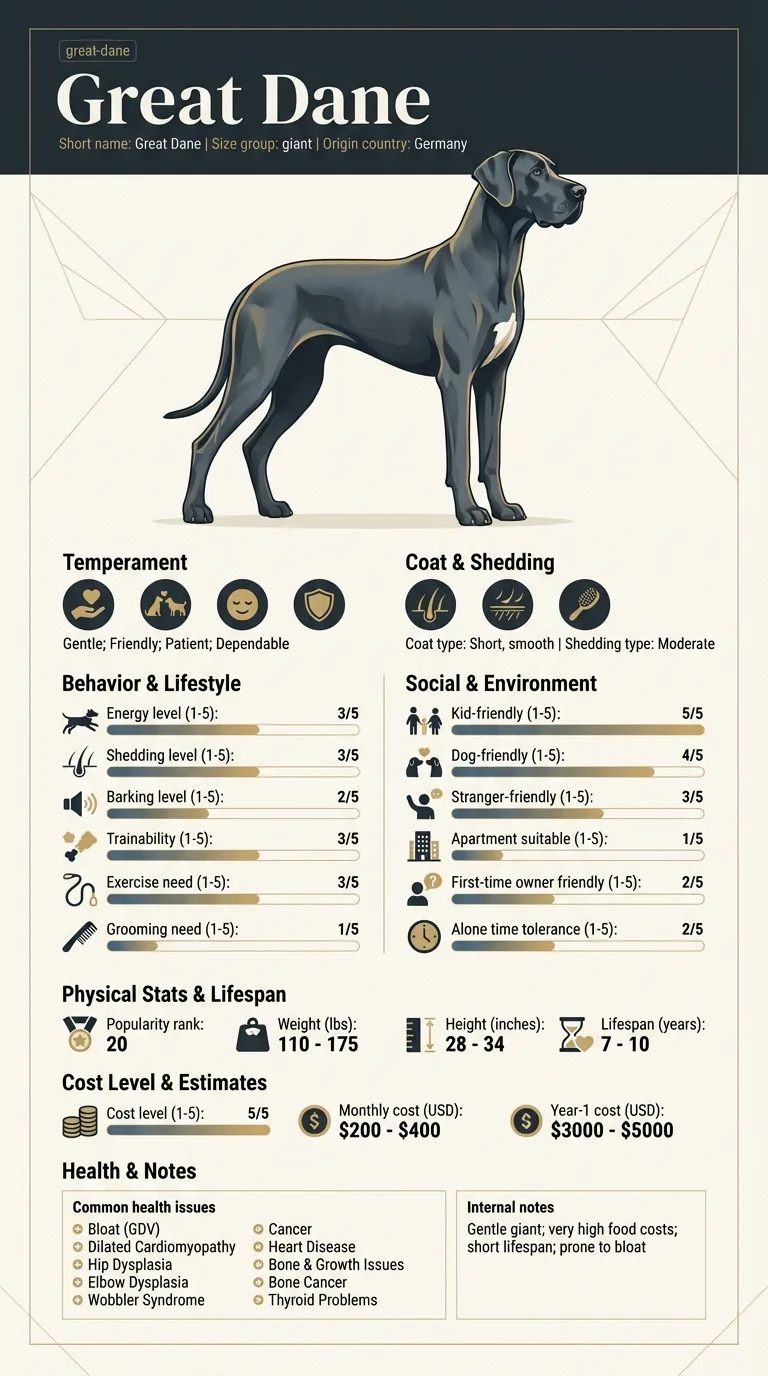
See all Great Dane health problems, which breeds are prone to cherry eye, or the full Great Dane breed guide for temperament, exercise needs and ownership costs.
You may start to see improvement in a few weeks, but full resolution can take several months, especially if surgery is needed.
Success means your Great Dane's cherry eye is either managed effectively with treatment or resolved through surgery, leading to a comfortable and happy pet.
Emily, a first-time Great Dane owner in Austin, noticed her dog Max had a bulging eye. Worried about cherry eye, she consulted her vet, who explained it was common but required attention. Emily learned how to manage the condition with topical treatments and monitored Max closely. When the issue persisted, she opted for surgery. After a couple of weeks of recovery, Max was back to his playful self, and his eyes looked great.
Key takeaway: Don't delay vet visits for new health issues; early intervention can save your pet from discomfort and improve outcomes.
Cherry eye occurs when the gland in the eyelid prolapses or falls out of place. This condition is more common in certain breeds, including Great Danes, and may be due to genetic factors or structural issues. If you notice this, it's essential to consult your vet for proper diagnosis and treatment.
To manage cherry eye in your Great Dane, it's crucial to seek veterinary advice. Depending on the severity, treatment may range from topical medications to surgical options to reposition the gland. Early intervention can help prevent further complications.
Cherry eye itself may not be painful, but it can lead to irritation and discomfort. If left untreated, it can cause more serious issues like infections or chronic irritation. Monitoring your dog and consulting with a vet can help keep your Great Dane comfortable.
Unfortunately, training won't fix cherry eye since it's a physical condition rather than a behavioral one. However, you can work on general eye care and hygiene to help minimize irritation. A vet can guide you on the best practices for your dog's eye health.
If not treated, cherry eye can lead to chronic irritation, infections, or even vision problems. It's essential to address this condition promptly to avoid complications. Regular vet check-ups can help ensure your Great Dane's eyes remain healthy.
Cherry eye occurs when the tear gland of the third eyelid prolapses and becomes visible. This can happen due to genetic factors, stress, or an underlying health issue. It's important to consult a vet if you notice this condition.
While cherry eye itself isn't an emergency, it can lead to discomfort and complications if left untreated. If your Great Dane shows signs of irritation or redness, it's best to see a vet for advice on treatment options.
In some cases, cherry eye can be managed with medications or eye drops, but surgery is often the most effective solution. If you want to explore non-surgical options, discuss this with your vet as soon as possible.
Preventing cherry eye isn't always possible due to genetic predisposition, but keeping your Great Dane's stress levels low and ensuring proper nutrition may help. Regular vet check-ups can also catch early signs of this condition.
If your older Great Dane develops cherry eye, consult with your vet to evaluate the best treatment options. Older dogs may have different health considerations that could affect the treatment approach, so professional guidance is essential.
Keep your dog's eyes clean and monitor for any signs of irritation. Consult your vet promptly if you notice cherry eye to discuss treatment options. Early action can prevent complications.
Yes, cherry eye is relatively common in Great Danes and other breeds. It's essential to be aware of this condition and act quickly if it occurs.
There are no effective at-home remedies for cherry eye, and these should not replace veterinary care. Always consult your vet for the best treatment options.
A one-page prep sheet for this condition: the signs, the questions to ask, what to get priced. Unlocks here.
You get: Vet visit prep sheet
No spam. One-click unsubscribe. See our privacy policy.
Preview page 1 before you decide.