Goldendoodle Most Common Genetic Disorders: What Owners Should Know
Quick answer
What are quick tips for Goldendoodle genetic health?
Keep regular veterinary appointments, maintain notes on any new symptoms, and share family health information when it is available. A risk list is most useful as a prompt for informed monitoring, not for self-diagnosis.
A genetic risk is not a diagnosis, and it does not mean every Goldendoodle will develop a condition. Knowing the family history and watching for changes helps owners make timely, calm decisions.
This topic is useful for prospective Goldendoodle owners comparing breeders, as well as current owners who want to understand a health concern without jumping to conclusions from a symptom alone.
Important reminder
This guide is not medical advice. If your dog shows pain, sudden behavior change, or worsening symptoms, consult a licensed veterinarian.
Some links may be affiliate links. We may earn a commission at no extra cost to you. We only suggest products we believe are helpful for dog owners.
We research and check what we publish, but we do not warrant that any figure, date, price, or statement is accurate, complete, or current, and we accept no liability for any loss, cost, injury, or other harm arising from the use of this site. Use it as one reference among several. You remain responsible for your own decisions and for your dog's care - confirm anything that matters with a licensed veterinarian or another qualified professional before you act on it. Full disclaimer.
What this problem looks like
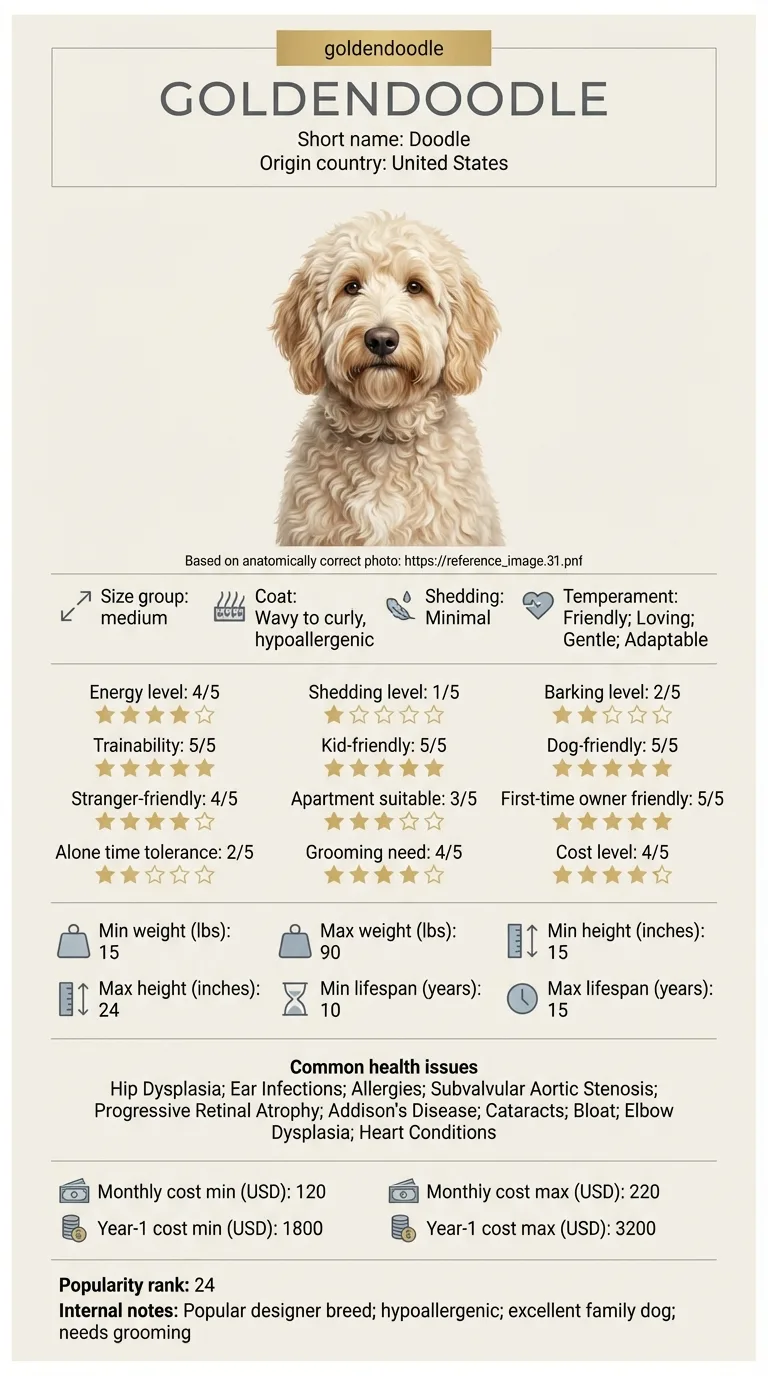
Goldendoodle genetic health is best approached as a conversation about possible inherited risk, routine veterinary care, and the individual dog in front of you. The health profile for this breed includes joint, heart, eye, endocrine, digestive, skin, and ear concerns, but only an examination and appropriate veterinary assessment can determine what is causing a symptom.
Common triggers
A new symptom such as limping, reduced stamina, or reluctance to move
Repeated ear irritation, skin itching, or signs of discomfort
Changes in vision or eye appearance
Digestive upset, unusual weakness, or sudden distress
The supplied breed data identifies conditions to be aware of but does not provide prevalence figures. It is more accurate to treat them as potential discussion points than to estimate how common they are for an individual Goldendoodle.
Why this happens
Breed factors
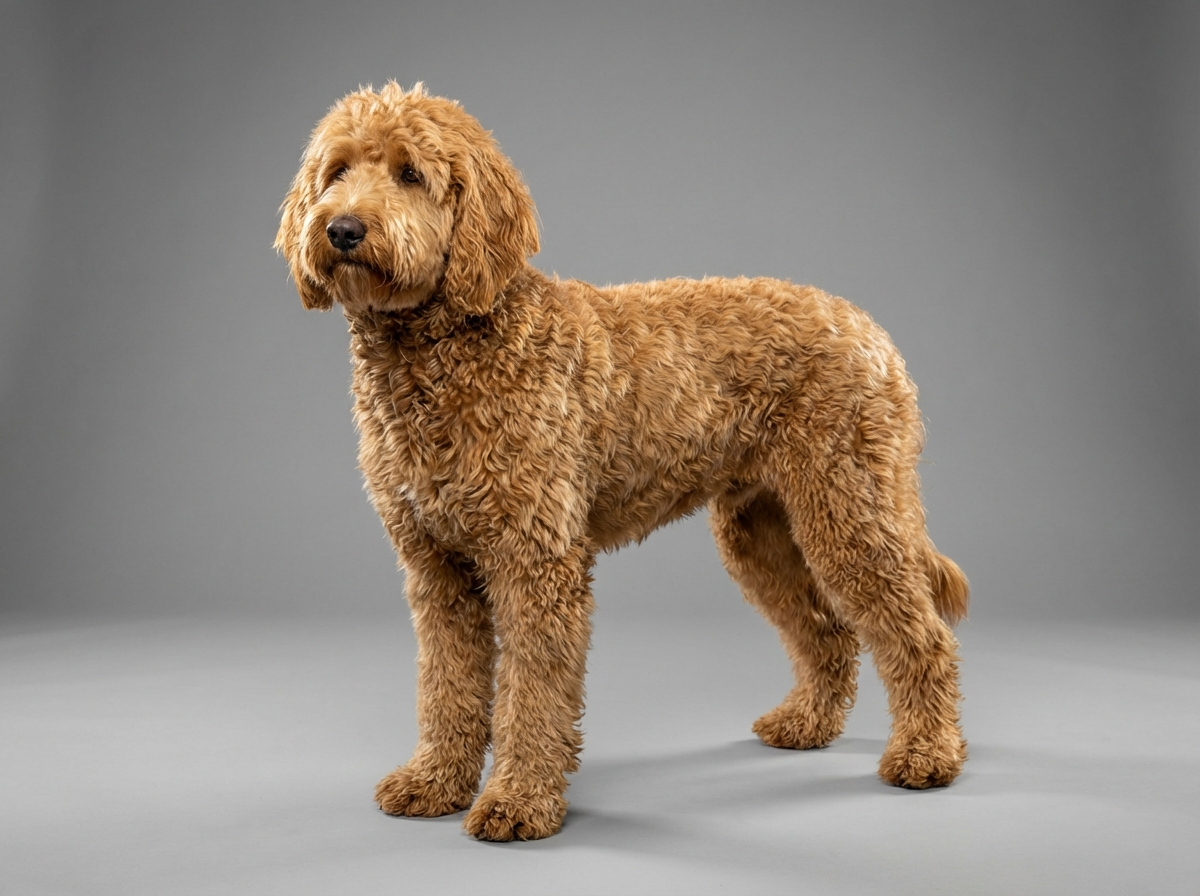
Because a Goldendoodle is a Golden Retriever and Poodle mix, an individual dog can inherit traits from either family line. Inherited influence is only one part of health, and it cannot by itself predict whether a particular dog will become ill.
Environment factors
Environment and daily care can affect how a dog feels and how quickly an owner notices a problem. Body condition, activity, grooming, exposure to irritants, diet changes, and access to veterinary care may all be relevant, but they do not establish the cause of a medical condition.
What you can do at home (once it is not an emergency)
When to talk to your vet
Talk to a veterinarian about persistent or recurring symptoms, any concern from family history, or questions about appropriate monitoring. Seek urgent care for sudden severe weakness, collapse, breathing difficulty, or signs consistent with bloat.
At home, alongside your vet's plan
Keep a brief record of symptoms, when they started, what makes them better or worse, and any changes in appetite, activity, or behavior.
Maintain a consistent routine for age-appropriate exercise, grooming, and routine veterinary visits; adjust activity if your dog seems painful or distressed until you can get professional advice.
Share available breeder, rescue, or family health information with your veterinarian instead of relying on internet lists to diagnose a condition.
Goldendoodle Most Common Genetic Disorders: Mistakes to Avoid
The list below is a starting point for informed conversations, not a prediction for an individual dog. A Goldendoodle's size, age, family background, lifestyle, and exam findings all matter.
Hip and elbow dysplasia: These joint conditions are included in the Goldendoodle health profile. A veterinarian can assess lameness, stiffness, reluctance to exercise, or discomfort rather than assuming the cause at home.
Heart concerns: Subvalvular aortic stenosis and other heart conditions appear in the breed profile. Changes such as fainting, weakness, coughing, or reduced exercise tolerance warrant prompt veterinary advice.
Eye concerns: Progressive retinal atrophy and cataracts are listed health concerns. New cloudiness, vision changes, bumping into objects, or eye discomfort should be evaluated by a veterinarian.
Addison's disease: This condition is listed for Goldendoodles, but its signs can overlap with many other illnesses. Recurrent vomiting, diarrhea, weakness, or unusual lethargy should not be self-diagnosed.
Bloat: Bloat is listed as a concern and can become urgent. A swollen-looking abdomen, unproductive retching, distress, or collapse needs emergency veterinary attention.
Skin and ear problems: Allergies and ear infections are also included in the profile. Itching, head shaking, odor, redness, or repeated ear trouble are good reasons to arrange an examination.
The appropriate timeline depends on the symptom and your veterinarian's assessment. Urgent signs need immediate care; non-urgent questions can be raised at a scheduled appointment or sooner if they persist or worsen.
Success means you have a clear veterinary plan for your individual Goldendoodle, understand which changes need follow-up, and avoid treating a breed risk list as a diagnosis.
When a Goldendoodle Needs Veterinary Care
Contact your regular veterinarian when you notice persistent lameness, reluctance to move, repeated ear or skin irritation, changes in vision, vomiting or diarrhea that does not settle, unusual tiredness, or a drop in normal exercise tolerance. These signs are not specific to genetic disorders, but they deserve professional assessment.
Seek emergency veterinary care for collapse, difficulty breathing, a distended abdomen with distress or repeated unproductive retching, severe weakness, or other sudden, serious changes. Do not wait to see whether a potentially urgent sign passes.
For a dog that seems well, routine wellness visits are a sensible time to review family health information, nutrition, weight, activity, and any questions about the conditions listed in this guide.
Goldendoodle Most Common Genetic Disorders: What Owners Should Know - When a Goldendoodle Needs Veterinary Care
Using a Health Concern List Without Jumping to Conclusions
A Goldendoodle owner notices that their dog is less eager to jump into the car and seems stiff after a long outing. Rather than deciding it must be a genetic joint condition, the owner records when the change began, reduces strenuous activity, and schedules a veterinary visit. The veterinarian evaluates the dog and explains the next steps based on the exam.
The useful outcome is not a diagnosis from a checklist. It is a timely evaluation and a plan tailored to the dog's actual needs.
Key takeaway: Breed-level health information can help an owner notice and report changes, but veterinary assessment is needed to identify the cause and choose safe care.
Frequently asked questions
What does genetic health risk mean for a Goldendoodle?
A genetic disorder is a condition influenced by inherited genes. In a Goldendoodle, inherited risk can come from either parental line, but risk is not certainty. A veterinarian can help interpret a dog's history, exam findings, and any appropriate records.
What health concerns are listed for Goldendoodles?
The health profile used for this page lists hip dysplasia, elbow dysplasia, subvalvular aortic stenosis, progressive retinal atrophy, Addison's disease, cataracts, bloat, allergies, ear infections, and other heart conditions. This is a discussion list, not a diagnosis or a guarantee that an individual dog will be affected.
Does being a mix prevent genetic disorders?
No. A mixed-breed background does not eliminate inherited health risk. Individual health depends on many factors, including family history and the dog itself, so avoid assuming a Goldendoodle is protected from every inherited condition. When researching Goldendoodle most common genetic disorders, always prioritize individual veterinary assessment over general breed assumptions.
How can I discuss Goldendoodle genetic health with my vet?
Bring any available family health information and ask what routine monitoring is appropriate for your dog's age, size, and history. Your veterinarian can explain which symptoms matter and whether any further evaluation is useful.
How can I respond to a possible Goldendoodle health problem?
Do not try to stop a suspected health problem with home remedies or training. Keep notes on the change, avoid activities that seem to cause pain or distress, and contact a veterinarian for guidance. Sudden severe signs need urgent care.
Is family health information useful when choosing a Goldendoodle?
A breeder or rescue may have background information, but it cannot replace veterinary care. Share whatever history you have with your veterinarian and make decisions based on your own dog's examination and needs.
What are quick tips for Goldendoodle genetic health?
Keep regular veterinary appointments, maintain notes on any new symptoms, and share family health information when it is available. A risk list is most useful as a prompt for informed monitoring, not for self-diagnosis.
Health
Will every Goldendoodle develop a genetic disorder?
No. The listed conditions are possible concerns to discuss with a veterinarian, not outcomes for every Goldendoodle.
Training
Can training help with Goldendoodle health care?
Training cannot prevent or treat a genetic disorder, but gentle, reward-based handling can make routine care and veterinary visits less stressful for a dog that is comfortable enough to participate.
Costs
What does Goldendoodle health care cost?
Costs vary widely with the condition, the tests or treatment a veterinarian recommends, and where you live. Ask your clinic for an estimate before non-urgent care when possible.
Related DogBreedCompass guides
Goldendoodle breed overview – Review the Goldendoodle breed overview alongside this health-focused guide to keep care, grooming, activity, and temperament needs in context.
Goldendoodle vs Labradoodle guide – Compare two popular doodle mixes while keeping health questions in context with overall ownership fit.
dogs with few health issues – Explore broader factors to consider when comparing dogs and their health needs.
dog health care guide – Explore a health-focused guide that can help owners prepare thoughtful questions for routine veterinary conversations.
dog allergy and health guide – Learn why skin and ear symptoms still need an individual veterinary assessment instead of being assumed to be inherited.
Goldendoodle anxiety guide – Read about Goldendoodle anxiety while remembering that a sudden behavior change can also warrant a veterinary conversation.
Bring the right questions to the vet
A one-page prep sheet for this condition: the signs, the questions to ask, what to get priced. Unlocks here.
You get: Vet visit prep sheet
No spam. One-click unsubscribe. See our privacy policy.