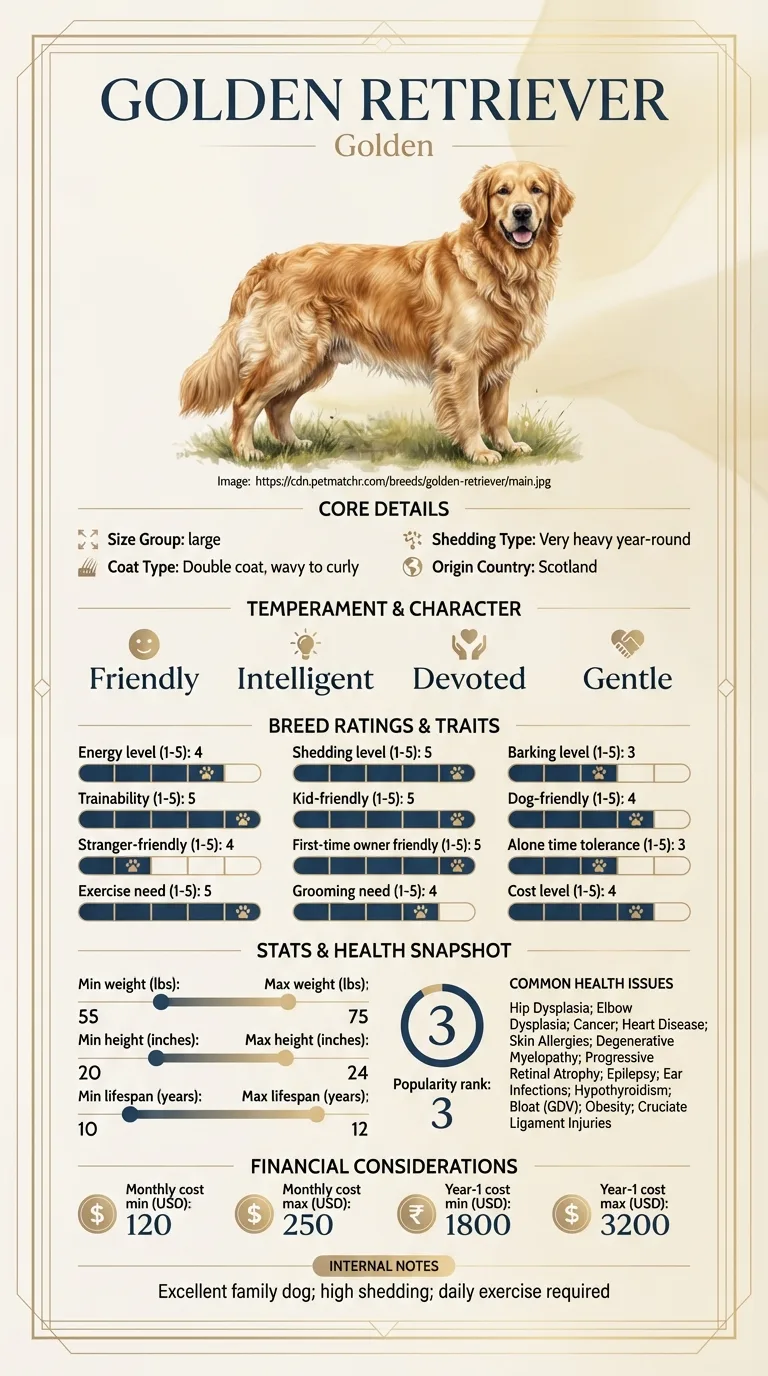
Golden Retriever Myxomatous Mitral Valve Disease (MMVD)
Golden Retriever myxomatous mitral valve disease (MMVD) is a serious heart condition that affects many dogs in this breed.

What you can try
- Maintain a healthy diet: Feed your Golden Retriever a balanced diet rich in nutrients to support heart health.
- Ensure regular exercise: Aim for daily exercise that suits their energy level, such as walks or playtime.
- Monitor weight: Keep an eye on their weight to prevent obesity, which can strain their heart.
Mistakes that make this worse
Addressing Golden Retriever myxomatous mitral valve disease (MMVD) can be tricky. Here are some common mistakes that can worsen the situation, along with safer alternatives.
- Ignoring regular vet check-ups: Skipping routine visits can delay the diagnosis and management of MMVD. Make sure to schedule regular check-ups to monitor your dog's heart health.
- Overlooking signs of distress: Many owners miss subtle signs of discomfort in their Golden. Pay close attention to changes in behavior, such as increased fatigue or coughing.
- Using harsh training methods: Stress can worsen MMVD symptoms. Instead, focus on positive reinforcement techniques to maintain a calm environment for your dog.
- Neglecting diet and exercise: An unhealthy diet or lack of exercise can exacerbate heart issues. Consult your vet to develop a balanced diet and suitable exercise plan tailored for your Golden.
- Delaying treatment: Some owners hesitate to pursue treatment options. Early intervention can significantly improve your dog's quality of life, so don’t wait if you suspect MMVD.
- Not educating yourself about the condition: Lack of knowledge can lead to poor decisions about care. Take the time to learn about MMVD and its management to make informed choices.
- Avoiding support groups: Some owners feel isolated with their dog's condition. Joining a support group can provide valuable advice and emotional support.
When Golden Retriever Myxomatous Mitral Valve Disease (MMVD) Is an Emergency
Recognizing when Golden Retriever myxomatous mitral valve disease (MMVD) becomes an emergency is crucial for your dog’s health. There are clear signs that indicate immediate veterinary attention is necessary. If your Golden shows any of the following red flags, don’t hesitate—call your vet right away.

Mild Cases to Monitor
In some situations, you can monitor your Golden Retriever at home. If your dog has mild symptoms like occasional coughing or slight fatigue, keep an eye on them. Create a plan to observe any changes, and ensure they are comfortable and resting.

Frequently asked questions
What is Golden Retriever myxomatous mitral valve disease (mmvd)?
Golden Retriever myxomatous mitral valve disease (mmvd) is a common heart condition affecting this breed. It involves the degeneration of the mitral valve, leading to heart murmurs and other health issues. Early detection is crucial for managing symptoms and ensuring a better quality of life.
Why does my Golden Retriever have myxomatous mitral valve disease (mmvd)?
Genetics plays a significant role in Golden Retriever myxomatous mitral valve disease (mmvd). The breed is predisposed to this heart condition, often due to inherited traits. Regular check-ups can help catch the disease early.
How can I help my Golden Retriever with myxomatous mitral valve disease (mmvd)?
To help your Golden, keep their weight in check and ensure they get regular, moderate exercise. Consult your vet about medications that can manage symptoms and improve heart function. Routine veterinary visits are essential for monitoring their condition.
What are the signs of myxomatous mitral valve disease (mmvd) in Golden Retrievers?
Signs of myxomatous mitral valve disease (mmvd) include coughing, lethargy, difficulty breathing, and decreased appetite. If you notice these symptoms, it's important to take your dog to the vet for a thorough examination. Early intervention can significantly improve outcomes.
Can training help with myxomatous mitral valve disease (mmvd) in Golden Retrievers?
While training won't cure myxomatous mitral valve disease (mmvd), it can provide mental stimulation and keep your dog engaged. Focus on low-impact activities and basic commands to maintain their cognitive abilities. Always tailor training sessions to their energy levels.
What are the early signs of myxomatous mitral valve disease (mmvd) in Golden Retrievers?
Early signs of Golden Retriever myxomatous mitral valve disease (mmvd) can include a persistent cough, difficulty breathing, and lethargy. If you notice these symptoms, it's crucial to consult your vet to determine the cause and appropriate treatment.
Can my older Golden Retriever develop myxomatous mitral valve disease (mmvd)?
Yes, older Golden Retrievers are at a higher risk for developing myxomatous mitral valve disease (mmvd). Regular vet check-ups are essential for early detection and management of this condition as your dog ages.
How does myxomatous mitral valve disease (mmvd) affect daily life for Golden Retrievers?
Golden Retrievers with myxomatous mitral valve disease (mmvd) may tire easily and require modifications in their exercise routines. It's important to balance activity with rest and consult your vet for tailored advice.
Are there specific diets that can help manage myxomatous mitral valve disease (mmvd) in Golden Retrievers?
While there's no specific diet to cure myxomatous mitral valve disease (mmvd), a heart-healthy diet low in sodium can support your dog's overall health. Always consult your vet before making significant changes to your dog's diet.
How can I help my Golden Retriever with myxomatous mitral valve disease (mmvd) feel more comfortable?
To help your Golden Retriever with myxomatous mitral valve disease (mmvd), provide a calm environment and limit strenuous activities. Regular vet visits and medications as prescribed can also improve their quality of life.