What are quick tips to manage excessive barking in German Wirehaired Pointers?
Provide regular exercise, engage in training sessions, and use distraction techniques when barking occurs. Consistency in your approach will help reinforce good behavior.
Is your German Wirehaired Pointer barking excessively? This behavior can be frustrating and disruptive.
First-time owners or families with busy lifestyles may find this behavior particularly challenging. If you live in an apartment or close quarters, constant barking can become a significant problem.
Important reminder
This guide is not medical advice. If your dog shows pain, sudden behavior change, or worsening symptoms, consult a licensed veterinarian.
Some links may be affiliate links. We may earn a commission at no extra cost to you. We only suggest products we believe are helpful for dog owners.
We research and check what we publish, but we do not warrant that any figure, date, price, or statement is accurate, complete, or current, and we accept no liability for any loss, cost, injury, or other harm arising from the use of this site. Use it as one reference among several. You remain responsible for your own decisions and for your dog's care - confirm anything that matters with a licensed veterinarian or another qualified professional before you act on it. Full disclaimer.
What this problem looks like
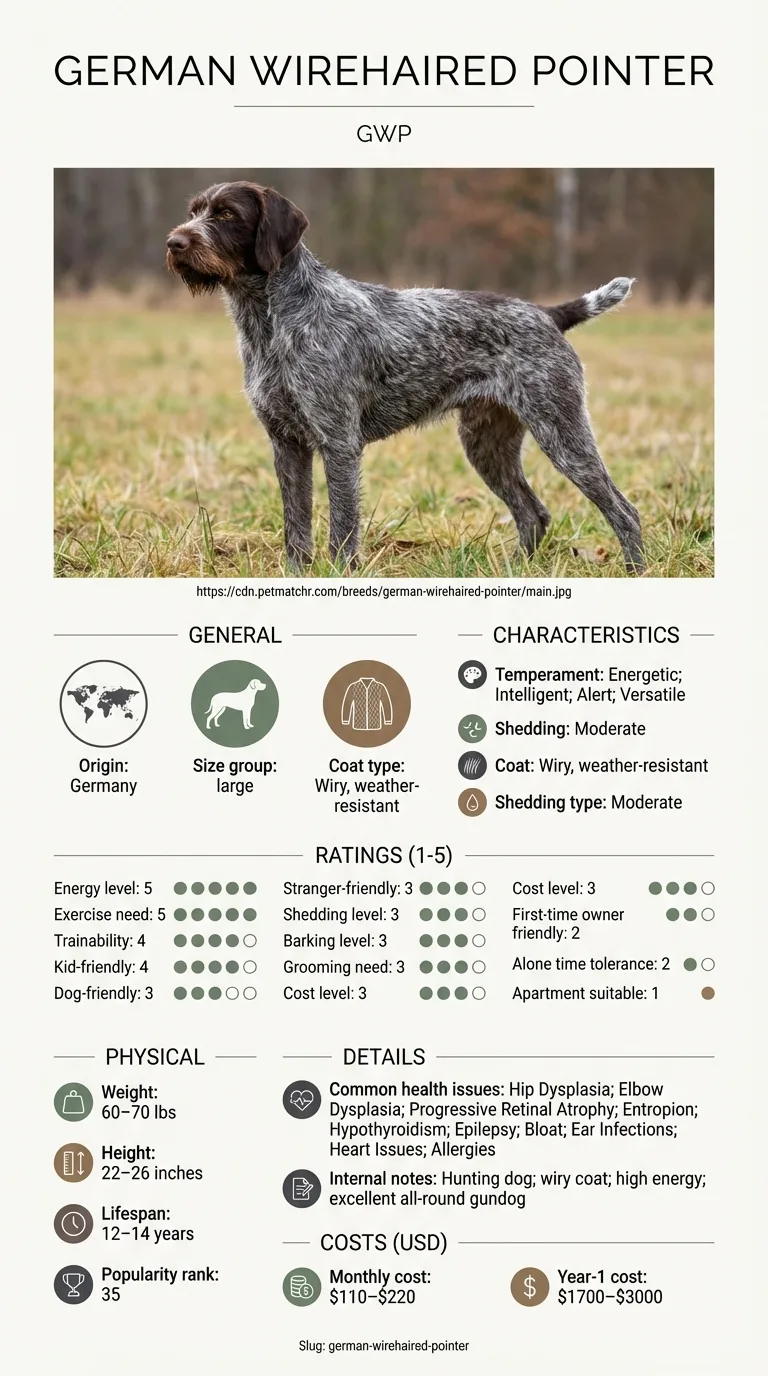
German Wirehaired Pointer excessive barking can be a real challenge for owners. This breed is known for its alertness and energetic nature, which can lead to barking at stimuli like strangers, animals, or even sudden movements. While barking is a natural behavior, excessive barking can become a nuisance if not addressed properly.
Common triggers
Loud noises or sudden sounds
Strangers or other animals approaching their territory
Boredom due to lack of exercise or mental stimulation
Separation from their owner or family
For German Wirehaired Pointers, excessive barking is relatively common, especially if they are not adequately trained or socialized. Their high energy levels and alert temperament can contribute to this behavior, making it essential for owners to implement effective training strategies.
Why this happens
Breed factors
German Wirehaired Pointers (GWPs) are naturally alert and energetic dogs. Their hunting background makes them prone to excessive barking when they feel the need to alert their owners to potential threats or simply release pent-up energy. This breed's intelligence also means they may bark out of boredom or to seek attention.
Environment factors
The environment plays a significant role in excessive barking. Factors like being left alone for too long, lack of physical exercise, or not enough mental stimulation can lead to barking. Additionally, a noisy neighborhood or the presence of other animals can trigger a GWP's instinct to bark.
What you can try
At-home strategies
Establish a consistent daily routine for exercise and playtime. Aim for at least an hour of vigorous activity each day to help tire your GWP out.
Provide mental stimulation through puzzle toys or training games. This can keep their mind engaged and reduce barking due to boredom.
Teach the 'quiet' command. Use treats to reward your dog when they stop barking on command. Practice this regularly to reinforce the behavior.
Create a comfortable space for your dog when you leave, filled with toys or calming music to reduce anxiety and excessive barking.
When to consider a trainer
If your GWP's barking persists despite your efforts, consider consulting a professional dog trainer. A trainer can help identify triggers and offer customized strategies to address excessive barking effectively.
When to talk to your vet
If your dog's barking suddenly increases, it might indicate an underlying health issue or anxiety. Schedule a vet visit to rule out any medical problems and discuss behavioral concerns.
More German Wirehaired Pointer health & behavior issues
You can expect to see some improvement in your German Wirehaired Pointer's excessive barking within 4 to 6 weeks of consistent training.
Success means your dog barks less frequently and only in appropriate situations, such as alerting you to a stranger or during play.
Mistakes that make Excessive Barking worse
Avoiding common mistakes can greatly help reduce your German Wirehaired Pointer's excessive barking. Here are some pitfalls to watch out for and better alternatives.
Ignoring the barking triggers: If your GWP is barking due to specific stimuli like other dogs or strangers, ignoring this behavior can reinforce it. Instead, identify what triggers the barking and work on desensitizing your dog to those situations.
Responding to barking with attention: Giving your dog attention when they bark, whether positive or negative, can reinforce the behavior. Try to remain calm and only reward quiet behavior with attention or treats.
Using punishment as a training tool: Punishing your dog for barking can lead to fear and anxiety, worsening the problem. Instead, focus on positive reinforcement techniques to encourage desired behaviors.
Failing to provide enough exercise: An under-exercised GWP may bark out of boredom or pent-up energy. Ensure your dog has adequate physical activity each day to help reduce excessive barking.
Inconsistent training: If your training methods vary or family members give mixed signals, your dog may become confused. Establish a consistent training routine and ensure everyone in the household follows the same rules.
Not socializing your dog: Lack of socialization can lead to excessive barking at unfamiliar people or animals. Gradually expose your GWP to new experiences and environments to help them become more comfortable.
Neglecting mental stimulation: A bored dog may bark excessively. Incorporate puzzle toys and training sessions into your routine to keep your dog's mind engaged.
When Excessive Barking is an Emergency
Excessive barking in your German Wirehaired Pointer can be frustrating, but knowing when it’s an emergency is crucial. Watch for red flags that require immediate veterinary attention. If your dog is barking excessively while displaying signs of distress, such as pacing, panting, or appearing agitated, it’s time to call your vet. This could indicate underlying issues like anxiety or health problems.
Other emergency signs include barking while showing signs of pain or discomfort. If your dog suddenly becomes lethargic, refuses to eat, or has difficulty breathing, these could be symptoms of serious health conditions that need prompt care. Additionally, if the barking seems uncontrollable and is disrupting your household to the point where it affects your dog’s or your family’s well-being, don’t hesitate to seek professional help.
In contrast, mild cases of excessive barking can often be managed with patience and a monitoring plan. If your German Wirehaired Pointer barks during play or when excited, it might just be a normal behavior. Keeping track of the situations that trigger the barking can help you understand and address the root cause. Gradually implementing training techniques or seeking the advice of a professional trainer may resolve these issues without the need for immediate intervention.
Understanding German Wirehaired Pointer Excessive Barking - When Excessive Barking is an Emergency
A Journey to Quieter Days: Sarah and Max
Sarah, a busy nurse in Seattle, struggled with her German Wirehaired Pointer, Max, who barked at every passerby and car. Frustrated, she realized that his excessive barking was not only disruptive but also affected her neighbors. After researching how to stop German Wirehaired Pointer excessive barking, she began crate training and introduced basic commands like 'quiet' during barking episodes. With consistent reinforcement and patience, Max learned that barking wasn’t always necessary, reducing his noise levels significantly over time.
Key takeaway: With patience and the right training techniques, you can manage your German Wirehaired Pointer's excessive barking and enjoy quieter days.
Frequently asked questions
Why does my German Wirehaired Pointer have excessive barking?
German Wirehaired Pointers may bark excessively for various reasons, including boredom, anxiety, or to alert you of perceived threats. They are naturally alert and energetic dogs, which can lead to barking if they're not adequately stimulated. Identifying the root cause is essential for effective training.
How can I stop my German Wirehaired Pointer from barking excessively?
To address German Wirehaired Pointer excessive barking, start by providing plenty of physical exercise and mental stimulation. Training commands like 'quiet' can be effective, and rewarding calm behavior helps reinforce the desired response. Consistency is key in training sessions to see results.
Are there specific training techniques for excessive barking in German Wirehaired Pointers?
Yes, techniques such as positive reinforcement, desensitization, and counterconditioning can be helpful. Start by exposing your dog to the stimuli causing the barking in a controlled manner and reward them for remaining calm. This approach can gradually reduce their barking response.
Can separation anxiety contribute to excessive barking in German Wirehaired Pointers?
Absolutely. German Wirehaired Pointers can develop separation anxiety, which may lead to excessive barking when left alone. Addressing this issue involves gradually increasing alone time and providing engaging toys to keep them occupied.
How much exercise does a German Wirehaired Pointer need to help with excessive barking?
German Wirehaired Pointers need significant exercise—around 60 to 90 minutes daily. Regular physical activity can help reduce their excess energy and decrease barking. Consider daily walks, playtime, or even dog sports to keep them active.
What should I do if my older German Wirehaired Pointer starts barking excessively?
If your older German Wirehaired Pointer starts barking excessively, it could be a sign of discomfort or health issues. It's important to consult a vet to rule out medical concerns. After that, consider adjusting their routine for more mental stimulation or training.
Can excessive barking be a sign of separation anxiety in German Wirehaired Pointers?
Yes, excessive barking can be a sign of separation anxiety in German Wirehaired Pointers. If your dog barks more when left alone, they may need help learning to feel secure. Gradual desensitization and training can help alleviate their anxiety.
How can I train my German Wirehaired Pointer to stop excessive barking?
Training your German Wirehaired Pointer to stop excessive barking involves teaching commands like 'quiet' and rewarding calm behavior. Consistent training sessions and positive reinforcement can be very effective. Be patient and remember that it may take time for them to learn.
What environmental factors might contribute to my German Wirehaired Pointer's excessive barking?
Environmental factors like noise, unfamiliar people, or animals can trigger excessive barking in German Wirehaired Pointers. Ensuring a calm environment and providing a safe space for your dog can help reduce their barking. Consider using soundproofing or creating a quiet area for them.
What are quick tips to manage excessive barking in German Wirehaired Pointers?
Provide regular exercise, engage in training sessions, and use distraction techniques when barking occurs. Consistency in your approach will help reinforce good behavior.
Behavior
How do I know if my dog's barking is a problem?
If your German Wirehaired Pointer barks excessively in situations where barking isn't appropriate, it may be a problem. Look for patterns and triggers to assess the situation.
Training
When should I consult a professional trainer for barking issues?
If your attempts to stop excessive barking aren't working after a few weeks, it may be time to consult a professional trainer. They can provide tailored strategies specific to your dog's needs.
Behavior
Is barking at strangers normal for German Wirehaired Pointers?
Yes, barking at strangers is typical for this breed as they are naturally alert and protective. However, this behavior should be managed to prevent excessive barking.