Behavior
What are quick tips for managing German Shepherd anxiety?
Establish a routine, provide plenty of exercise, and create a designated safe space for your dog. Consistency is key to helping them feel secure.

Quick answer
What are quick tips for managing German Shepherd anxiety?
Establish a routine, provide plenty of exercise, and create a designated safe space for your dog. Consistency is key to helping them feel secure.
Choosing between a German Shepherd purebred and a mixed breed can be tough. This decision impacts everything from health to behavior.
First-time dog owners or families with young children often find it challenging to decide between purebred and mixed-breed German Shepherds. They might worry about training difficulties and health concerns, especially if they don’t know what to expect.
This guide is not medical advice. If your dog shows pain, sudden behavior change, or worsening symptoms, consult a licensed veterinarian.
Some links may be affiliate links. We may earn a commission at no extra cost to you. We only suggest products we believe are helpful for dog owners.
We research and check what we publish, but we do not warrant that any figure, date, price, or statement is accurate, complete, or current, and we accept no liability for any loss, cost, injury, or other harm arising from the use of this site. Use it as one reference among several. You remain responsible for your own decisions and for your dog's care - confirm anything that matters with a licensed veterinarian or another qualified professional before you act on it. Full disclaimer.
Check this first
When considering the differences between German Shepherd purebred vs. mixed breeds, it’s crucial to recognize when issues may require immediate attention. If your dog shows signs of severe distress, such as excessive panting, inability to stand, or persistent vomiting, these are red flags that warrant a call to your vet right away.
Another emergency indicator is any sudden change in behavior, particularly if your German Shepherd becomes aggressive or overly fearful. These changes can signal underlying health problems that need urgent evaluation. Additionally, if your dog has difficulty breathing or shows signs of a bloated abdomen, don’t hesitate to seek veterinary help immediately.
On the other hand, some situations can be monitored. For instance, if your German Shepherd seems to be a little more anxious than usual but is still eating and playing, it’s often best to observe them for a few days. Keeping track of their behavior can help you spot patterns or triggers that may not require immediate intervention.
For mild cases, you can implement a plan with gradual training to help your dog adjust to their environment. A simple checklist can help you manage their needs without feeling overwhelmed. However, always trust your instincts—if something feels off, it's better to consult with your vet sooner rather than later.
If any of these apply, call your vet or an emergency clinic now. The rest of this page is for the cases that are not an emergency.
Choosing between a German Shepherd purebred and a mixed breed can be challenging. Each type has its unique traits and potential issues. For example, purebred German Shepherds may face more health problems, while mixed breeds might display unpredictable behaviors.
This dilemma is fairly common among dog owners, especially those considering a German Shepherd. Many potential owners are often torn between the predictability of purebreds and the unique charm of mixed breeds.
German Shepherds, whether purebred or mixed, often inherit specific traits that can influence their behavior and health. Purebreds may be bred for particular characteristics, leading to a higher risk of genetic health issues. Mixed breeds, however, may possess a wider genetic diversity, which can mitigate some health risks but may also bring unpredictable behavior traits.
The living environment plays a crucial role in a dog's behavior. Factors such as lack of exercise, insufficient mental stimulation, and inconsistent training can exacerbate issues. Additionally, the presence of stressors like loud noises or new people can trigger anxiety in both purebred and mixed breeds.
If your German Shepherd shows signs of physical distress or health issues, like excessive barking or changes in appetite, consult your vet. They can rule out any underlying health problems that may contribute to behavioral issues.
Many owners unknowingly reinforce problems with their German Shepherds. Here are common mistakes that can make the situation worse, along with safer alternatives.
Start here: German Shepherd Most Common Genetic Disorders: Screening
See all German Shepherd health problems, which breeds are prone to purebred vs mixed breeds, or the full German Shepherd breed guide for temperament, exercise needs and ownership costs.
Expect noticeable improvement within 3 to 6 months with consistent care and a steady routine.
A stable, well-adjusted German Shepherd that responds well to commands and interacts positively with other dogs and people.
When Sarah adopted Max, a 2-year-old German Shepherd, she was excited but quickly overwhelmed. Max struggled with anxiety and aggression towards other dogs, making walks stressful. After reaching out to a professional trainer, Sarah learned to implement consistent training routines and gradually introduce Max to other dogs in controlled environments. Over time, Max became more confident and less reactive, allowing Sarah to enjoy their walks without worry.
Key takeaway: With patience and the right training approach, even the most anxious German Shepherd can learn to thrive in their environment.
German Shepherds may experience anxiety due to their strong instincts and attachment to their owners. Mixed breeds can sometimes be more adaptable, which might reduce anxiety levels. Consider behavior training and creating a calm environment to help. This answer relates to German Shepherd purebred vs. mixed breeds.
Training methods should focus on consistency and positive reinforcement. Start with basic commands and gradually introduce more complex behaviors. Socialization is also key, so expose your dog to various environments and other pets.
Yes, purebred German Shepherds can be more susceptible to health issues such as hip dysplasia and certain genetic disorders. Mixed breeds often benefit from a more diverse gene pool, which can lead to fewer health problems. Regular vet check-ups are essential for both.
Purebred German Shepherds typically have a more predictable temperament and physical traits, while mixed breeds can vary widely in behavior and appearance. This can affect training and adaptability, so consider your lifestyle before choosing.
Start by gradually increasing the time your dog spends alone, ensuring they feel secure. Use interactive toys to keep them occupied and consider crate training. If anxiety persists, consult a veterinarian for additional strategies.
Both purebred and mixed breed German Shepherds can face health issues. However, purebreds may be more prone to genetic problems like hip dysplasia and degenerative myelopathy. It's essential to get regular vet check-ups regardless of the dog's breed.
Training a mixed breed German Shepherd can be similar to training a purebred. Focus on positive reinforcement and consistency. Remember that mixed breeds may inherit traits from either parent, so adjust your training techniques based on their unique personality.
Purebred German Shepherds can be great family dogs, but so can mixed breeds. The key is to consider individual temperament and energy levels. Both types can thrive in a family environment with proper training and socialization.
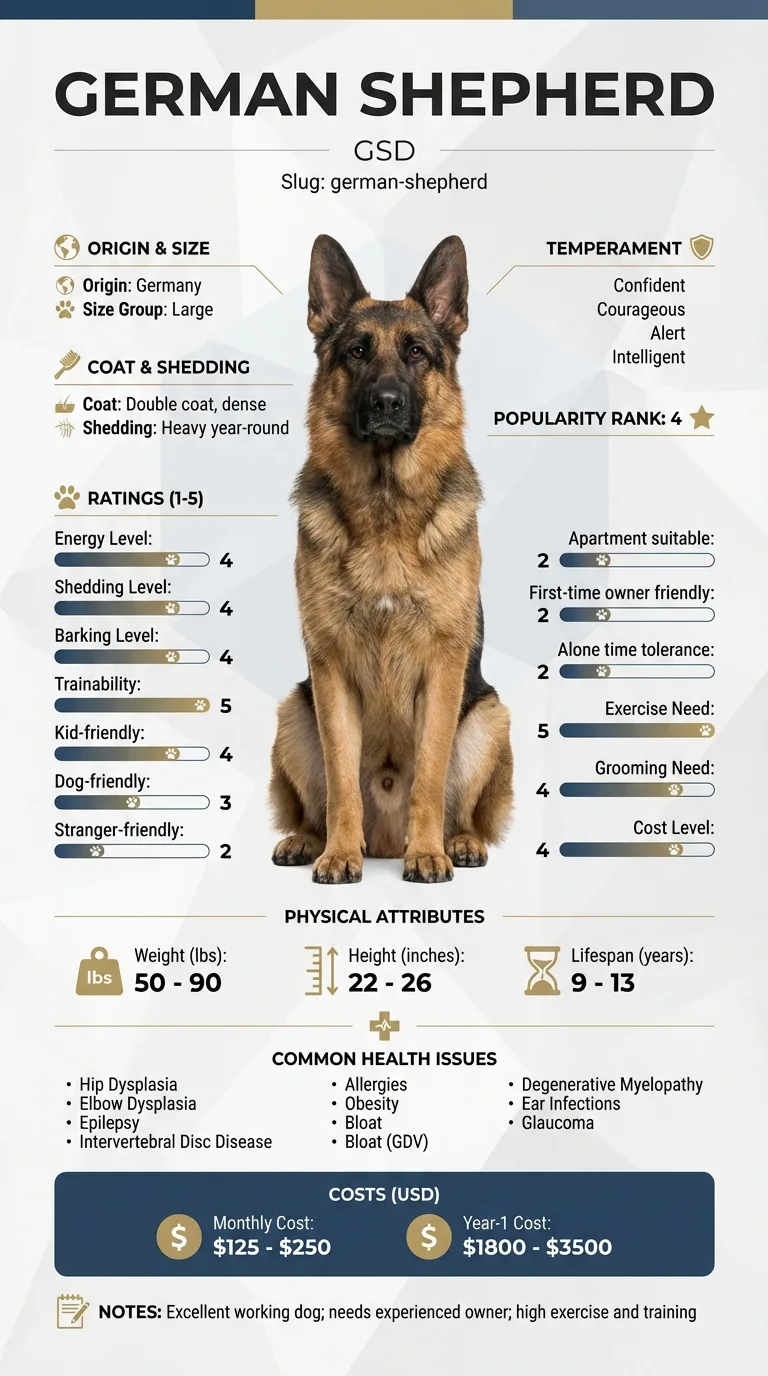
Generally, mixed breed dogs may have a longer lifespan than purebreds due to genetic diversity. Purebred German Shepherds often have a lifespan of 9 to 13 years, while mixed breeds can vary widely. Regular vet visits can help manage health risks regardless of breed.
Consider factors like temperament, health history, and your lifestyle. Purebreds may have more predictable traits, while mixed breeds can offer surprises. Think about your ability to handle potential health issues and training needs for either type.
Establish a routine, provide plenty of exercise, and create a designated safe space for your dog. Consistency is key to helping them feel secure.
Expect monthly costs to range from $125 to $250 for food, grooming, and health care. Yearly expenses can total between $1,800 and $3,500.
Yes, proper training can significantly reduce anxiety by building your dog's confidence and providing structure. Consider enrolling in a training class for additional support.
A one-page prep sheet for this condition: the signs, the questions to ask, what to get priced. Unlocks here.
You get: Vet visit prep sheet
No spam. One-click unsubscribe. See our privacy policy.
See a sample page before you decide.
Early access list
The free prep sheet covers the same-day warning signs, a symptom log and the questions to ask. We are considering a fuller kit that adds a cost worksheet for the usual tests and treatments (US price ranges with their sources) and a plain-English guide to ways of covering the bill. It is not built yet; this list tells us whether it is worth building.
One email, no spam, unsubscribe anytime. Information only, not veterinary advice.