Training
How can I improve my German Shepherd's fitness safely?
Start with shorter walks and gradually increase duration as they build stamina. Monitor their energy and adjust activities accordingly.

Quick answer
How can I improve my German Shepherd's fitness safely?
Start with shorter walks and gradually increase duration as they build stamina. Monitor their energy and adjust activities accordingly.
German Shepherd exercise intolerance can be a frustrating issue for many owners. This condition can prevent your dog from enjoying physical activity, which is vital for their happiness and health.
Typically, first-time owners or those with busy lifestyles may not recognize the signs of exercise intolerance. Moreover, owners with older or health-compromised German Shepherds may also see this issue arise, making it crucial to understand how to manage it.
This guide is not medical advice. If your dog shows pain, sudden behavior change, or worsening symptoms, consult a licensed veterinarian.
Some links may be affiliate links. We may earn a commission at no extra cost to you. We only suggest products we believe are helpful for dog owners.
We research and check what we publish, but we do not warrant that any figure, date, price, or statement is accurate, complete, or current, and we accept no liability for any loss, cost, injury, or other harm arising from the use of this site. Use it as one reference among several. You remain responsible for your own decisions and for your dog's care - confirm anything that matters with a licensed veterinarian or another qualified professional before you act on it. Full disclaimer.
Check this first
Here are some red-flag signs indicating you should call your vet right away: - Excessive panting or drooling: If your dog is panting heavily, drooling, or seems unable to cool down, this could indicate overheating. - Weakness or collapse: If your GSD suddenly becomes weak or collapses during exercise, this is a serious concern. - Labored breathing: Rapid or difficulty breathing while resting can signal a severe issue.
- Unresponsiveness: If your dog is lethargic or unresponsive, don't wait; get help immediately. - Coughing or gagging: Persistent coughing or gagging after exercise could mean something is wrong with their airways.
On the other hand, you may choose to monitor your dog if they show mild signs like occasional reluctance to exercise or short bouts of fatigue. Keep an eye on their behavior and consider the following: - Mild fatigue after exercise: Some tiredness is normal, especially in older dogs. - Occasional resting during play: If they take a break but seem to recover quickly, it may not be alarming.
- Behavioral changes: A change in energy levels can happen due to various factors, including weather or stress.
If you notice these milder signs, create a plan to gradually increase their activity level. Always consult your vet if you’re unsure about your dog's health. Remember, staying informed and proactive can lead to a happier, healthier life for your German Shepherd.
If any of these apply, call your vet or an emergency clinic now. The rest of this page is for the cases that are not an emergency.
German Shepherd exercise intolerance can significantly disrupt daily life. This condition often manifests as extreme fatigue or reluctance to participate in physical activities that these dogs typically love. Owners may notice their GSD panting excessively, lagging behind during walks, or even refusing to engage in playtime.
Exercise intolerance is relatively common among German Shepherds, especially as they age or if they have certain health conditions. Many owners report that their dogs struggle with exercise, particularly in warmer climates or after intense play sessions.
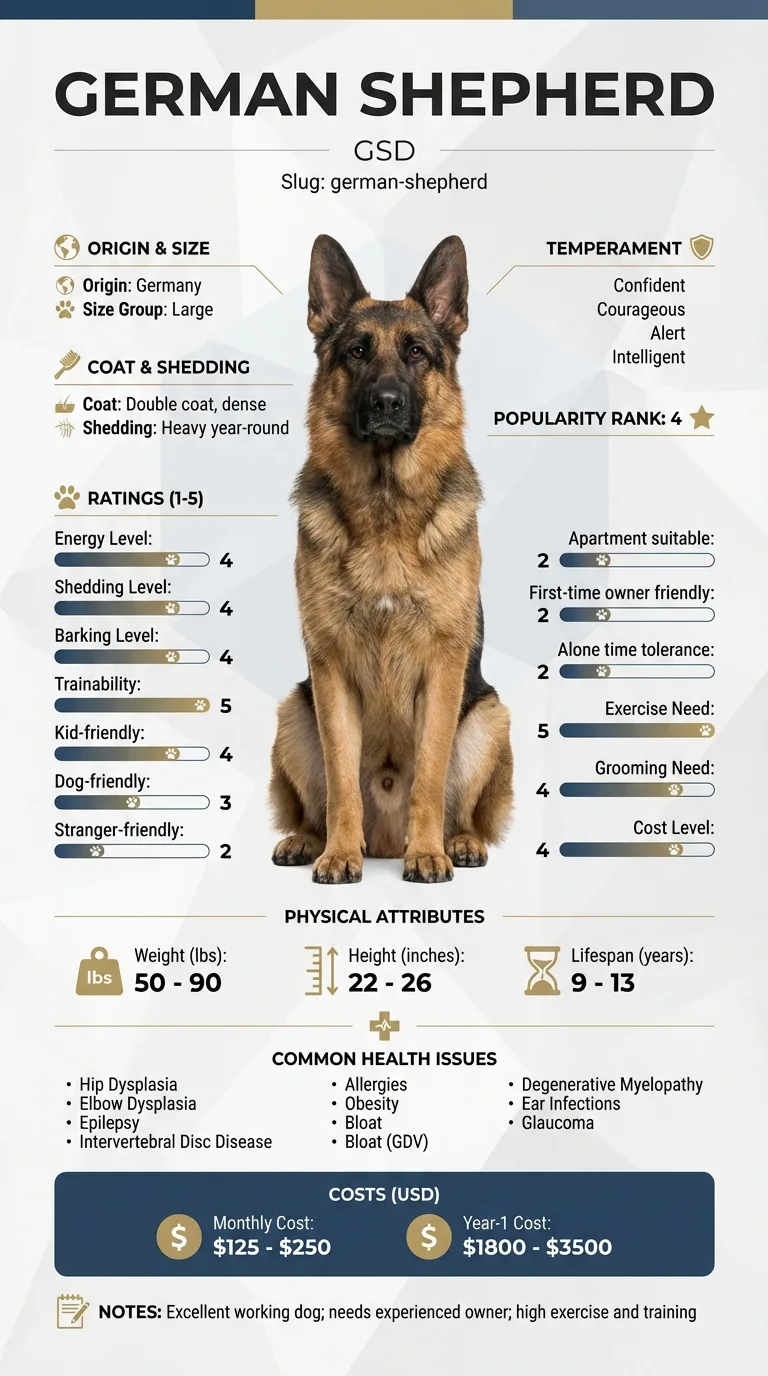
German Shepherds, or GSDs, are large, energetic dogs with high exercise needs. However, they can be prone to certain health issues that impact their stamina and tolerance for physical activity. Conditions such as hip dysplasia or degenerative myelopathy can lead to exercise intolerance, making them tire easily during activity.
Environmental factors can also contribute to exercise intolerance in German Shepherds. High temperatures, humidity, and lack of adequate hydration can lead to overheating. Additionally, if they are not accustomed to regular exercise, they may struggle to keep up with longer walks or play sessions.
If you notice sudden changes in your GSD's exercise tolerance or signs of discomfort, it's essential to consult your vet. They can rule out underlying health issues and provide a proper diagnosis and treatment plan.
Avoiding these common mistakes can help improve your German Shepherd's exercise intolerance effectively.
Start here: German Shepherd Most Common Genetic Disorders: Screening
See all German Shepherd health problems, which breeds are prone to exercise intolerance, or the full German Shepherd breed guide for temperament, exercise needs and ownership costs.
You can expect to see improvements in your German Shepherd's exercise tolerance within 4 to 8 weeks of consistent care adjustments and follow-up with your vet.
Success means your German Shepherd can enjoy regular exercise without excessive fatigue or overheating, allowing them to be active and happy.
Sarah, a busy veterinarian in Los Angeles, noticed that her German Shepherd, Max, struggled during walks. After only a short distance, he would pant heavily and lag behind. Concerned, Sarah researched German Shepherd exercise intolerance and consulted a vet. They discovered that Max needed a more gradual exercise routine. Over the next few weeks, Sarah slowly increased Max's activity with shorter, more frequent walks and provided plenty of water breaks. She also focused on keeping him cool during exercise, especially in the warmer months. With patience and proper care, Max began to enjoy his walks again, showing more energy and enthusiasm.
Key takeaway: Gradually adjusting exercise routines can help manage exercise intolerance in German Shepherds, making them happier and healthier.
German Shepherd exercise intolerance can stem from several factors, including underlying health issues like hip dysplasia or heart problems. It may also be due to environmental factors like heat or humidity, which can lead to overheating. Always consult your vet if you notice your dog struggling during exercise.
Signs of exercise intolerance include excessive panting, reluctance to move, or seeming exhausted after light activity. If your German Shepherd is frequently tired or overheated, it’s important to monitor their behavior closely and consult a vet for advice. Catching these signs early can help prevent further health complications.
To manage exercise intolerance, adjust your dog’s exercise routine based on their energy levels and health condition. Shorter, more frequent walks during cooler parts of the day can help. Gradually increase exercise intensity while monitoring your dog’s response to avoid overexertion.
Yes, training can play a significant role in helping your German Shepherd build stamina safely. Focus on positive reinforcement techniques and incorporate low-impact activities to promote fitness without overexerting them. Always ensure sessions are short and enjoyable.
Seek veterinary help if your German Shepherd consistently shows signs of exercise intolerance or if their condition worsens. If they experience severe fatigue, coughing, or difficulty breathing during or after exercise, it's crucial to get them examined immediately. Early intervention can be key to managing any potential health issues.
Refusal to exercise can be linked to pain, discomfort, or anxiety. It may also indicate exercise intolerance. Observing changes in their behavior and consulting a vet will help determine the underlying cause and appropriate action.
To help your German Shepherd stay cool, provide plenty of water and take breaks during exercise. Avoid exercising during peak heat hours, and consider using cooling vests or mats. These strategies can reduce the risk of overheating.
Signs of exercise intolerance in a German Shepherd can include excessive panting, lethargy, or reluctance to continue during walks or play. If your dog seems overly tired or shows discomfort after light activity, it may be a sign of exercise intolerance.
Yes, older German Shepherds can develop exercise intolerance due to age-related health issues, like arthritis or heart problems. Regular vet check-ups are essential to monitor their health and adjust exercise routines accordingly.
If your German Shepherd consistently shows signs of exercise intolerance, such as excessive fatigue or difficulty breathing, it's important to consult a vet. They can help rule out underlying health issues that may be contributing to these symptoms.
To help your German Shepherd with exercise intolerance, focus on shorter, more frequent walks instead of long sessions. Gradually build up their stamina and consult a vet for tailored exercise recommendations.
Training methods for exercise intolerance in German Shepherds should focus on positive reinforcement and gradual exposure to exercise. Consult a professional trainer or behaviorist for a customized plan that suits your dog's needs.
Start with shorter walks and gradually increase duration as they build stamina. Monitor their energy and adjust activities accordingly.
Move your dog to a cooler area, offer water, and apply cool, wet cloths. If symptoms persist, consult a vet.
Early mornings or late evenings are ideal for exercise to avoid heat stress. Plan outdoor activities when temperatures are cooler.
German Shepherds typically need at least 1-2 hours of exercise per day, but this may vary based on individual health and fitness levels.
Yes, anxiety can lead to reluctance to exercise. Addressing behavioral issues may improve their willingness to engage in physical activity.
A one-page prep sheet for this condition: the signs, the questions to ask, what to get priced. Unlocks here.
You get: Vet visit prep sheet
No spam. One-click unsubscribe. See our privacy policy.
See a sample page before you decide.
Early access list
The free prep sheet covers the same-day warning signs, a symptom log and the questions to ask. We are considering a fuller kit that adds a cost worksheet for the usual tests and treatments (US price ranges with their sources) and a plain-English guide to ways of covering the bill. It is not built yet; this list tells us whether it is worth building.
One email, no spam, unsubscribe anytime. Information only, not veterinary advice.