Behavior
What are quick tips for managing French Spaniel progressive retinal atrophy (pra-rcd3)?
Create a safe environment, keep a consistent routine, and use verbal cues to guide your dog.
French Spaniel progressive retinal atrophy (pra-rcd3) is a serious condition that leads to vision loss in your dog. Understanding it is crucial for your pet's well-being.
Owners of French Spaniels, especially those who notice changes in their dog's vision, will often struggle with the emotional and practical challenges of this condition. Families with active dogs may find it particularly tough as they help their pets adjust to their new reality.
This guide is not medical advice. If your dog shows pain, sudden behavior change, or worsening symptoms, consult a licensed veterinarian.
Some links may be affiliate links. We may earn a commission at no extra cost to you. We only suggest products we believe are helpful for dog owners.
French Spaniel progressive retinal atrophy (pra-rcd3) is a genetic condition that leads to gradual vision loss. This can manifest as difficulty seeing in low light, bumping into furniture, or hesitancy to navigate familiar environments. Owners may notice their dogs struggling to fetch toys or avoiding stairs, all signs that their vision is deteriorating.
This condition is relatively common among French Spaniels, particularly as they age. Many dogs may show signs of PRA-rcd3 by the time they reach middle age, making it an important issue for owners to monitor.
French Spaniels can inherit Progressive Retinal Atrophy (PRA-rcd3) due to their genetic makeup. This condition is linked to specific genes that affect the retina, leading to vision loss over time. Understanding this can help owners anticipate and manage the situation.
While genetics play a significant role, environmental factors like poor lighting and lack of stimulation can worsen the dog's condition. An environment that lacks mental and physical engagement may lead to increased anxiety and behavioral issues.
If your French Spaniel displays significant anxiety or behavioral changes due to vision loss, consider consulting a professional trainer. A trainer experienced with sight-impaired dogs can provide tailored strategies to improve your dog's confidence and adaptability.
If you suspect your French Spaniel may have PRA-rcd3, it’s vital to consult a veterinarian. They can confirm the diagnosis and discuss potential treatments or supportive care options to help manage the condition.
You may see gradual changes over several months to a few years as your French Spaniel adjusts to their vision loss.
Success means your dog adapts well to their environment, maintains a good quality of life, and enjoys daily activities with minimal frustration.
Avoiding certain behaviors can help manage your French Spaniel's progressive retinal atrophy (PRA-rcd3). Here are common mistakes that can make the situation worse, along with safer alternatives.
Emergency signs include sudden blindness, excessive bumping into objects, or disorientation in familiar surroundings. Additionally, if your French Spaniel shows signs of distress or anxiety due to their vision loss, contact your vet right away. These red flags mean immediate intervention is necessary to help your dog and prevent further complications.
On the other hand, mild cases may include gradual vision changes or minor adjustments in your dog's behavior. If your French appears to be adapting to low-light situations or you notice only slight hesitance in new environments, you can monitor these changes. Keep a close watch on their behavior and consider setting a plan to document any further decline.
Always err on the side of caution. If you're unsure about your French Spaniel's condition or if their symptoms worsen, don't hesitate to reach out to your vet. Getting professional advice can provide peace of mind and ensure your dog receives the care they need.

Emily, a nurse in San Francisco, noticed that her French Spaniel, Max, was bumping into furniture and hesitating during walks. After a vet visit confirmed he had progressive retinal atrophy (PRA-rcd3), she felt overwhelmed. Emily started to adapt their home by removing obstacles and using sound cues to help Max navigate. With time and patience, Max learned to follow her voice and became more confident. Emily celebrated small victories, like when Max successfully found his favorite toy without help. They created a strong bond by working through this challenge together.
Key takeaway: Patience and adaptation are crucial when helping a dog cope with progressive retinal atrophy (PRA-rcd3).
Progressive retinal atrophy (pra-rcd3) in French Spaniels is often genetic. It's a condition where the retina deteriorates over time, leading to vision loss. If you notice signs of vision impairment, consult your vet for a proper diagnosis.
Managing PRA in your French Spaniel involves creating a safe environment for them. Minimize obstacles at home and keep their routine consistent. Training them to navigate through commands can also be beneficial.
Common signs include difficulty seeing in low light, bumping into objects, or reluctance to go outside. If your dog exhibits these behaviors, it's best to schedule a veterinary appointment for evaluation.
Currently, there is no cure for progressive retinal atrophy (pra-rcd3). However, early detection and management can help improve your dog's quality of life. Regular vet check-ups are essential for monitoring their condition.
Helping your French Spaniel adjust involves using verbal cues and maintaining a consistent home layout. Avoid moving furniture around too much, and consider using tactile markers to help them navigate. Patience and understanding are key.
Training your French Spaniel to respond to commands, such as 'stop' or 'come,' can greatly assist them. Use positive reinforcement to encourage learning, and consider working with a professional trainer experienced with sight-impaired dogs.
Early signs of French Spaniel progressive retinal atrophy (pra-rcd3) include difficulty seeing in low light, bumping into furniture, or hesitating before jumping. If you notice these behaviors, it may be time to consult your vet for a thorough eye exam.
Yes, progressive retinal atrophy (pra-rcd3) can develop in older French Spaniels. While it may start showing signs in younger dogs, the progression can continue as they age, leading to more noticeable vision loss.
To help your French Spaniel cope with vision loss, maintain a consistent environment and use verbal cues. Training them to navigate obstacles and using scent markers can also improve their confidence and safety.
Currently, there is no cure for French Spaniel progressive retinal atrophy (pra-rcd3). Management focuses on helping your dog adapt to vision loss through training and lifestyle adjustments, so consulting a vet for tailored advice is crucial.
If you notice any signs of vision problems in your French Spaniel, such as difficulty navigating or changes in behavior, it's time to see a vet. Early intervention can help manage the condition and improve your dog's quality of life.
Create a safe environment, keep a consistent routine, and use verbal cues to guide your dog.
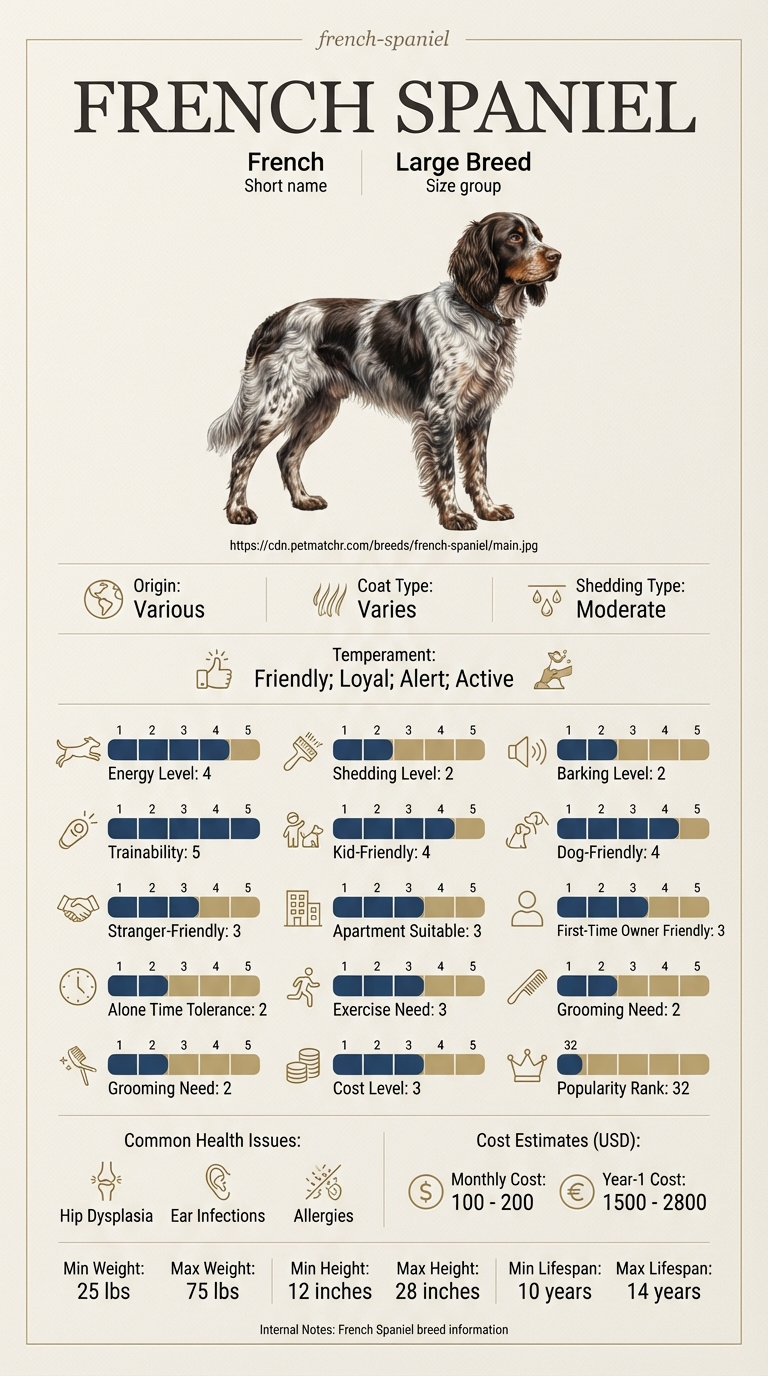
Monthly costs can range from $100 to $200, depending on veterinary care and special needs.
Yes, pra-rcd3 is a genetic condition, so it's essential to consider the lineage of your dog.
Focus on verbal commands and consider hiring a trainer who specializes in working with visually impaired dogs.