French Spaniel Excessive Barking: Causes and Solutions
Quick answer
What are some quick tips for managing excessive barking?
Provide plenty of daily exercise and mental stimulation to keep your French Spaniel engaged. Use positive reinforcement to reward quiet behavior and redirect attention when barking occurs.
Excessive barking can be a challenge for French Spaniel owners. This behavior often leads to frustration and misunderstandings.
Owners of French Spaniels, especially those new to dog ownership or living in close quarters, often face this barking issue. Busy families or individuals with lively lifestyles may find it particularly challenging to manage their dog's vocal habits.
Important reminder
This guide is not medical advice. If your dog shows pain, sudden behavior change, or worsening symptoms, consult a licensed veterinarian.
Some links may be affiliate links. We may earn a commission at no extra cost to you. We only suggest products we believe are helpful for dog owners.
We research and check what we publish, but we do not warrant that any figure, date, price, or statement is accurate, complete, or current, and we accept no liability for any loss, cost, injury, or other harm arising from the use of this site. Use it as one reference among several. You remain responsible for your own decisions and for your dog's care - confirm anything that matters with a licensed veterinarian or another qualified professional before you act on it. Full disclaimer.
What this problem looks like
French Spaniel excessive barking can be a daily challenge for owners. This behavior often manifests as barking at various stimuli, whether it's passing cars, other dogs, or even people walking by. While barking is a natural form of communication for dogs, when it becomes excessive, it can lead to frustration for both the dog and the owner.
Common triggers
Loud noises like sirens or doorbells
Presence of unfamiliar people or animals
Boredom or lack of physical exercise
Excessive barking is relatively common among French Spaniels, especially in environments that lack stimulation. While some dogs may bark more than others, many can develop this habit if their needs are not met.
Why this happens
Breed factors
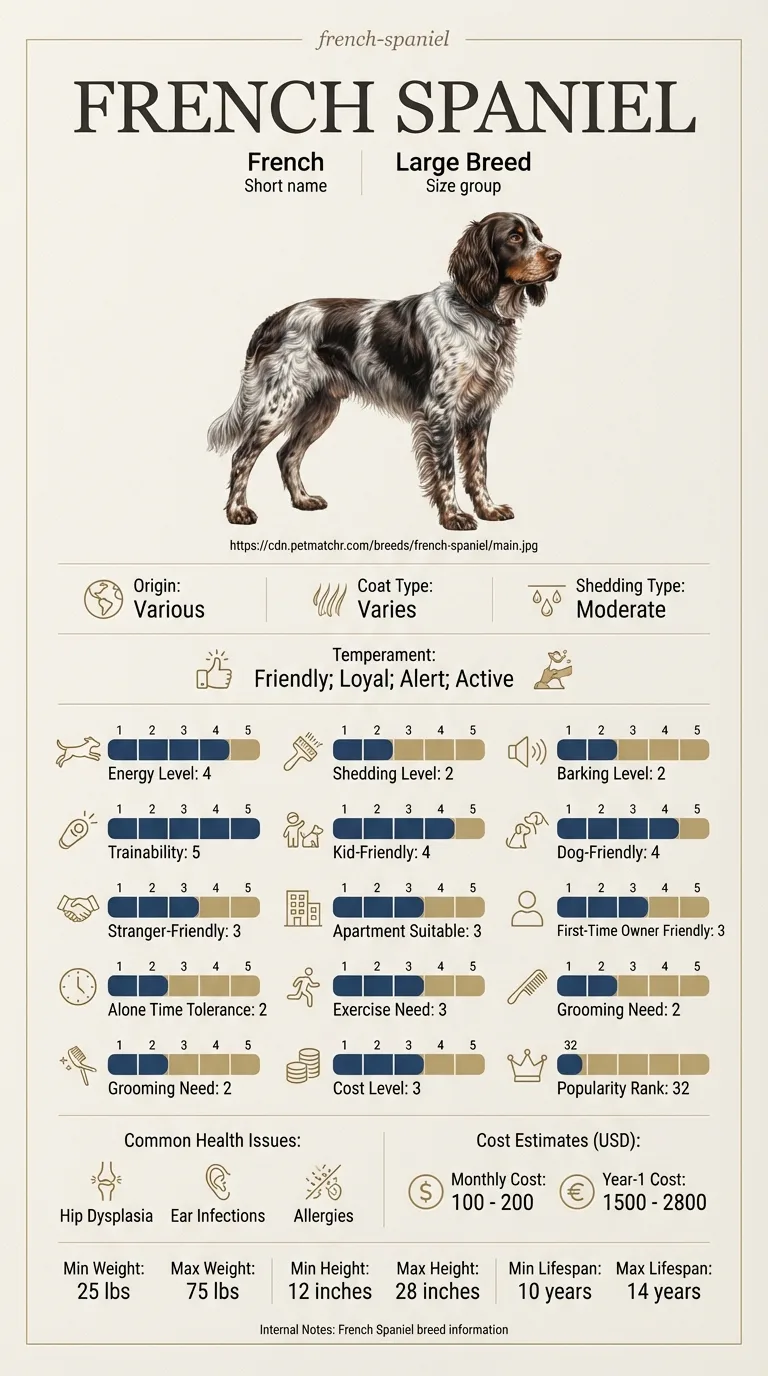
French Spaniels are known for their alertness and loyalty, which can lead them to bark excessively when they perceive potential threats or changes in their environment. Their energetic nature means they may bark out of boredom or frustration if they don't get enough physical and mental stimulation.
Environment factors
Excessive barking can be influenced by environmental factors such as loud noises, unfamiliar people, or other animals nearby. A lack of socialization can also contribute, as these dogs may bark to express anxiety or discomfort in new situations.
What you can try
At-home strategies
Provide daily exercise: Aim for at least 30-60 minutes of physical activity, such as walks or playtime, to help burn off excess energy.
Engage in training: Use positive reinforcement to teach your French Spaniel commands like 'quiet' or 'enough.' Reward them when they stop barking on command.
Create a calm environment: Use white noise machines or calming music to help drown out outside noises that might trigger barking.
Socialize your dog: Introduce your French Spaniel to new people, pets, and environments gradually to reduce anxiety and improve their comfort level.
When to consider a trainer
If your French Spaniel's barking persists despite your efforts, consider consulting a professional trainer who specializes in behavior modification. They can provide personalized strategies and support.
When to talk to your vet
If your dog's barking seems excessive and is accompanied by signs of distress or behavioral changes, it's a good idea to talk to your vet. They can rule out any underlying health issues or anxiety disorders.
Expect to see some improvement within 4 to 6 weeks of consistent training.
Success means your French Spaniel barks less frequently and responds better to commands, leading to a quieter home environment.
Mistakes That Make French Spaniel Excessive Barking Worse
Avoiding these common mistakes can help you manage your French Spaniel's excessive barking more effectively.
Ignoring the barking
Yelling at your dog
Reinforcing barking with attention
Using punishment as a training method
Failing to identify triggers
Inconsistent training
Lack of exercise
When French Spaniel Excessive Barking is an Emergency
Understanding when your French Spaniel's excessive barking is an emergency is crucial. There are clear signs that indicate you should contact your vet immediately. On the other hand, some situations may be manageable with a monitoring plan. Knowing the difference can help you act quickly and effectively.
Red-Flag Signs to Call Your Vet Now:
If your French Spaniel is barking excessively due to signs of distress, such as pacing, whining, or showing signs of aggression, these are serious red flags. Additionally, if your dog displays sudden changes in behavior, like excessive drooling, vomiting, or lethargy, it may indicate an underlying health issue.
Another emergency sign is when your dog has difficulty breathing or is barking uncontrollably without a clear trigger. If your French Spaniel seems to be in pain or has an unusual posture, such as cowering or hiding, you should seek veterinary help immediately.
Mild Cases to Monitor:
In contrast, barking due to boredom or excitement can often be managed without an urgent call. If your dog is barking at strangers, other dogs, or noises outside but is otherwise calm and healthy, you can create a training plan. Monitoring your dog's barking patterns and triggers can help you understand if this is a behavioral issue rather than a medical one.
If your French Spaniel barks excessively during specific times, like when left alone, it may indicate separation anxiety. In these cases, gradual training and behavior modification techniques can often help. Always remember, if you're unsure, it's best to err on the side of caution and consult your vet.
French Spaniel Excessive Barking: Causes and Solutions - When French Spaniel Excessive Barking is an Emergency
Jessica's Journey with Max's Barking
Jessica, a busy nurse in Seattle, found herself overwhelmed by her French Spaniel, Max, who barked at every passerby. Frustrated, she learned how to stop French Spaniel excessive barking by starting a training program focused on positive reinforcement. After engaging Max with daily exercises and clear commands, Jessica noticed a significant reduction in his barking after just a month of consistent training.
Key takeaway: With patience and the right techniques, you can effectively manage excessive barking in your French Spaniel.
Frequently asked questions
Why does my French Spaniel have excessive barking?
Excessive barking in French Spaniels can stem from boredom, anxiety, or a desire for attention. They are naturally alert dogs and may bark to alert you to new sounds or movements. Identifying the trigger can help you address the behavior.
How can I stop French Spaniel excessive barking?
To stop excessive barking, first identify the triggers causing your French Spaniel to bark. Providing regular exercise, mental stimulation, and consistent training can help reduce barking. Consider using positive reinforcement techniques when your dog remains quiet.
What training methods work for excessive barking in French Spaniels?
Training methods like desensitization and counter-conditioning can be effective. Start by exposing your dog to the barking triggers at a distance and rewarding calm behavior. Gradually decrease the distance while continuing to reward non-barking behavior.
Can excessive barking indicate a health issue in my French Spaniel?
Yes, excessive barking can sometimes indicate stress or discomfort due to health issues. If your dog's barking is sudden or unusual, consult with a vet to rule out any underlying problems that might be causing anxiety or pain.
How much exercise do French Spaniels need to reduce barking?
French Spaniels require moderate exercise, around 30 to 60 minutes daily. Adequate physical activity can help alleviate boredom and anxiety, which are common causes of excessive barking. Engaging in interactive play can also help.
What should I do if my French Spaniel barks excessively when they are home alone?
If your French Spaniel barks excessively when left alone, it might indicate separation anxiety. Consider implementing gradual desensitization techniques or consult a trainer familiar with anxiety issues. Additionally, providing interactive toys can help keep them occupied.
Why does my French Spaniel bark at strangers?
French Spaniels may bark at strangers due to their alert nature. This behavior can be a part of their instinct to protect their home and family. Socializing your dog from a young age can help reduce this barking.
How can I tell if my French Spaniel's barking is a sign of a health issue?
If your French Spaniel’s barking changes suddenly or becomes more frequent, it could be a sign of discomfort or pain. It's essential to monitor for other symptoms, like lethargy or loss of appetite, and consult your vet if you notice any changes.
Is excessive barking common in older French Spaniels?
Yes, older French Spaniels may bark more due to changes in their environment or health. Cognitive dysfunction or hearing loss can also contribute. Regular vet check-ups are important to address any underlying issues.
What training methods are effective for stopping excessive barking in French Spaniels?
To stop excessive barking, positive reinforcement training is often effective. Reward your French Spaniel for quiet behavior and redirect their attention when they bark. Consistency is key, so practice regularly and be patient with the process.
What are some quick tips for managing excessive barking?
Provide plenty of daily exercise and mental stimulation to keep your French Spaniel engaged. Use positive reinforcement to reward quiet behavior and redirect attention when barking occurs.
Training
Is training a French Spaniel easier for first-time owners?
While French Spaniels are generally trainable, first-time owners may find it challenging due to their energy and need for social interaction. Consistent training and patience are key to success.
Behavior
How can I tell if my French Spaniel is barking out of anxiety?
Signs of anxiety may include barking combined with pacing, drooling, or destructive behavior. If you notice these signs, consider consulting a professional trainer or behaviorist.