Behavior
What are quick tips for managing English Springer Spaniel progressive retinal atrophy (pra-rcd3)?
Create a safe living space, maintain a consistent routine, and keep your dog engaged with verbal commands.
English Springer Spaniel progressive retinal atrophy (PRA-RCD3) is a serious eye condition that leads to vision loss over time. This condition can deeply affect your dog's quality of life.
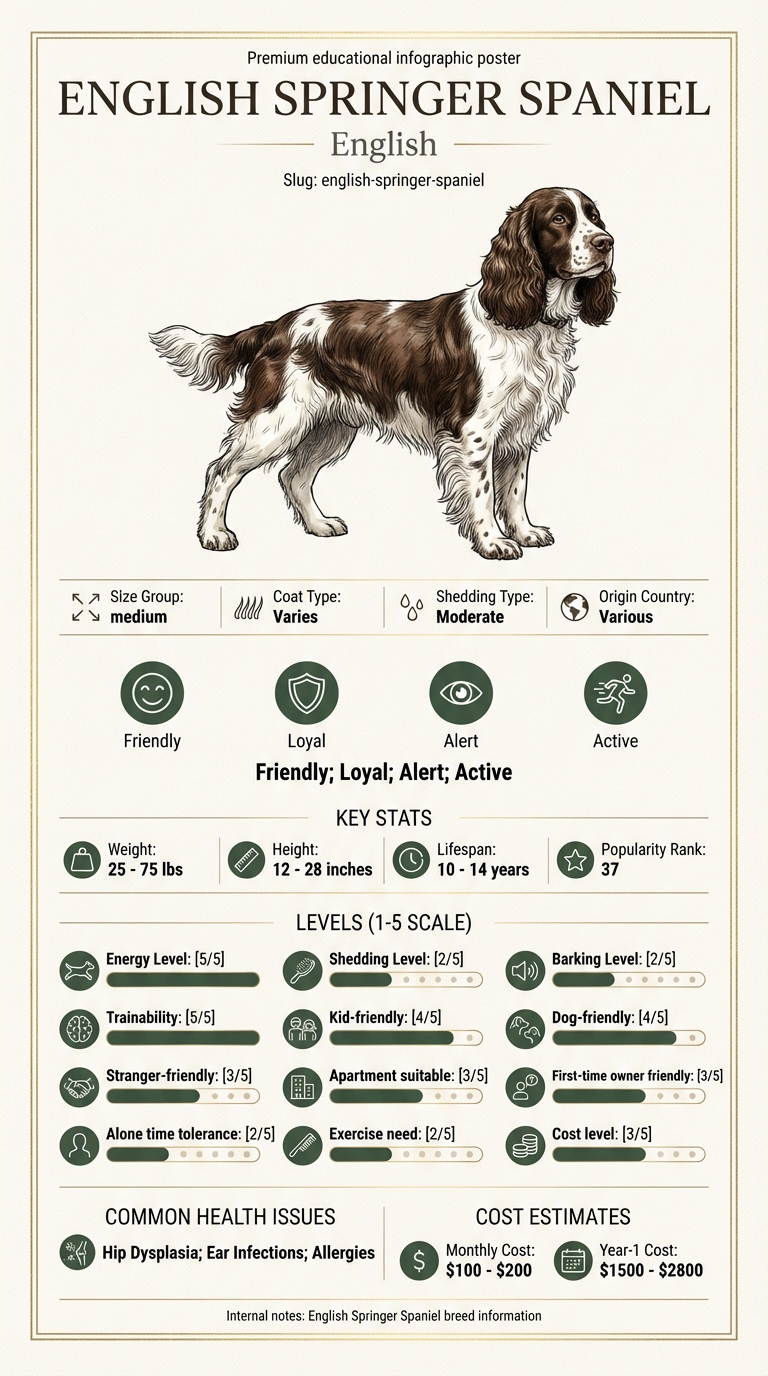
Owners of English Springer Spaniels often face challenges with this condition, especially those with older dogs or those showing early signs of vision impairment. It's essential for these owners to understand the implications and how to support their furry friends.
This guide is not medical advice. If your dog shows pain, sudden behavior change, or worsening symptoms, consult a licensed veterinarian.
Some links may be affiliate links. We may earn a commission at no extra cost to you. We only suggest products we believe are helpful for dog owners.
English Springer Spaniel progressive retinal atrophy (pra-rcd3) is a genetic condition that leads to gradual vision loss. Owners may notice their dog struggling to navigate familiar spaces, bumping into furniture, or showing reluctance to go outside in low light. This issue is particularly distressing for both the dog and the owner, as it can impact the dog's quality of life and independence.
Progressive retinal atrophy (pra-rcd3) is relatively common in English Springer Spaniels, with studies indicating that a significant number of these dogs may develop the condition as they age. It's essential for owners to be aware of this risk, especially since early detection can help manage the dog's adjustment to vision loss.
English Springer Spaniels are genetically predisposed to progressive retinal atrophy (PRA-rcd3). This condition is inherited and affects the retina's ability to function properly, leading to gradual vision loss. Understanding this breed-specific issue is crucial for owners.
Environmental factors can also contribute to the progression of PRA. Excessive exposure to bright sunlight without protection may worsen the condition. Additionally, a lack of mental stimulation and physical exercise can impact overall eye health.
If your dog's behavior changes significantly, such as increased anxiety or disorientation, it might be time to consult a professional trainer. A trainer experienced with vision-impaired dogs can offer tailored strategies to help your pet adapt more comfortably.
Speak to your vet if you notice rapid changes in your dog's vision or if they seem to be struggling more than usual. Regular check-ups can help monitor the condition and ensure your dog receives the best care possible.
Managing English Springer Spaniel progressive retinal atrophy (pra-rcd3) typically involves ongoing support over several months. Early detection is key, and you may see progress in your dog's adaptation to vision loss within 6 to 12 months.
Success looks like your dog learning to navigate their environment confidently, relying more on their other senses. You'll notice improved comfort levels and reduced anxiety as they adjust to their condition with your guidance.
Avoid these common mistakes that can worsen your English Springer Spaniel's progressive retinal atrophy (PRA-rcd3) symptoms.
Progressive Retinal Atrophy (PRA-rcd3) can lead to serious vision loss in your English Springer Spaniel. It's crucial to know when to act swiftly and when to monitor the situation. Here are the signs that indicate it's time to call your vet immediately versus when you can take a wait-and-see approach.

Look out for these critical signs: - Sudden behavior changes, such as bumping into objects or becoming disoriented. - Signs of pain or distress, like whining or reluctance to move. - Rapid deterioration in vision over a short period. - Changes in pupil size or color, particularly if one eye appears different from the other.

If your English Springer Spaniel shows milder symptoms, you may not need an emergency visit right away. Instead, monitor these signs: - Gradual vision loss that occurs over weeks or months. - Occasional bumping into furniture without distress. - Increased anxiety but no signs of pain. - Normal behavior otherwise, such as eating and playing.

When Sarah adopted her English Springer Spaniel, Max, she was excited to welcome a playful companion. However, she soon learned that Max had been diagnosed with progressive retinal atrophy (pra-rcd3). At first, Max struggled with his new reality, bumping into furniture and showing signs of anxiety. Sarah researched ways to help him adapt, using training techniques to encourage him to use his sense of smell and hearing. She created a consistent home environment and used tactile cues to guide him. Over time, Max became more confident, learning to navigate the house with ease and even enjoy his walks again.
Key takeaway: With patience, training, and a loving approach, you can help your English Springer Spaniel adjust to progressive retinal atrophy (pra-rcd3) and maintain a happy, fulfilling life.
Progressive retinal atrophy (pra-rcd3) is a genetic condition affecting your English Springer Spaniel's vision. It occurs when the retina deteriorates over time, leading to vision loss. If you're concerned, consult your vet for a proper diagnosis and advice.
To assist your dog, create a safe environment with minimal obstacles. Use consistent commands and cues to help guide them. Regular vet check-ups are essential to monitor their condition and adjust care as needed.
Currently, there is no cure for progressive retinal atrophy (pra-rcd3). Management focuses on adapting the dog's environment and lifestyle to ensure they remain safe and comfortable. Your vet can suggest the best strategies for your dog's situation.
Signs include difficulty navigating in low light, bumping into objects, and increased anxiety in unfamiliar settings. You may also notice your dog hesitating to move around. Keep an eye on these behaviors and discuss them with your vet.
Yes, many dogs adapt well to living with progressive retinal atrophy (pra-rcd3). With proper care and adjustments to their environment, they can enjoy a fulfilling life. Consistent training and a supportive routine are key to their happiness.
While you can't stop the progression, you can manage it. Regular veterinary visits are crucial to monitor their health. Providing a stable, predictable environment can also help minimize stress and anxiety.
Focus on verbal cues and tactile signals instead of visual ones. Use positive reinforcement to encourage good behavior. Always be patient, as your dog may take longer to respond to commands due to their vision loss.
Early signs of PRA-rcd3 in English Springer Spaniels might include difficulty seeing in low light or a reluctance to go out at night. You may also notice your dog bumping into objects or having trouble navigating familiar spaces. If you see these signs, consult a veterinarian for further evaluation.
While PRA-rcd3 can occur at any age, older English Springer Spaniels may show more pronounced symptoms due to age-related changes in their vision. It's essential to monitor their behavior closely, as they may struggle more with navigation and require additional support in familiar environments.
To help your English Springer Spaniel cope with PRA-rcd3, maintain a consistent environment to prevent confusion. Use positive reinforcement training to encourage them to navigate without fear. Additionally, consider using toys or tools that make noise to guide them during playtime.
Yes, genetic testing is available for PRA-rcd3 in English Springer Spaniels. If you're considering breeding or adopting, a genetic test can help determine if a dog is a carrier of the gene associated with this condition. This information can guide you in making informed decisions about your dog's health.
You should see a vet if you notice significant changes in your English Springer Spaniel's vision, such as sudden blindness or difficulty navigating familiar areas. A veterinarian can perform an eye examination and recommend the best course of action, whether it’s management strategies or other options.
Create a safe living space, maintain a consistent routine, and keep your dog engaged with verbal commands.
Use familiar scents and sounds to comfort your dog. Also, avoid rearranging furniture to help them navigate easily.
Focus on sound and touch cues rather than visual ones, and reinforce behaviors with treats and praise.
Costs may include regular vet visits and potential adaptations to your home. Budget for around $100 to $200 monthly for care.