Health
What should I do if my English Cocker Spaniel shows signs of vision loss?
Take your dog to the vet for an eye exam and discuss potential treatments or adaptations needed for their environment.
English Cocker Spaniel progressive retinal atrophy (PRA-RCD3) is a serious condition that leads to vision loss in dogs. Understanding this issue is crucial for owners who want to provide the best care for their pets.
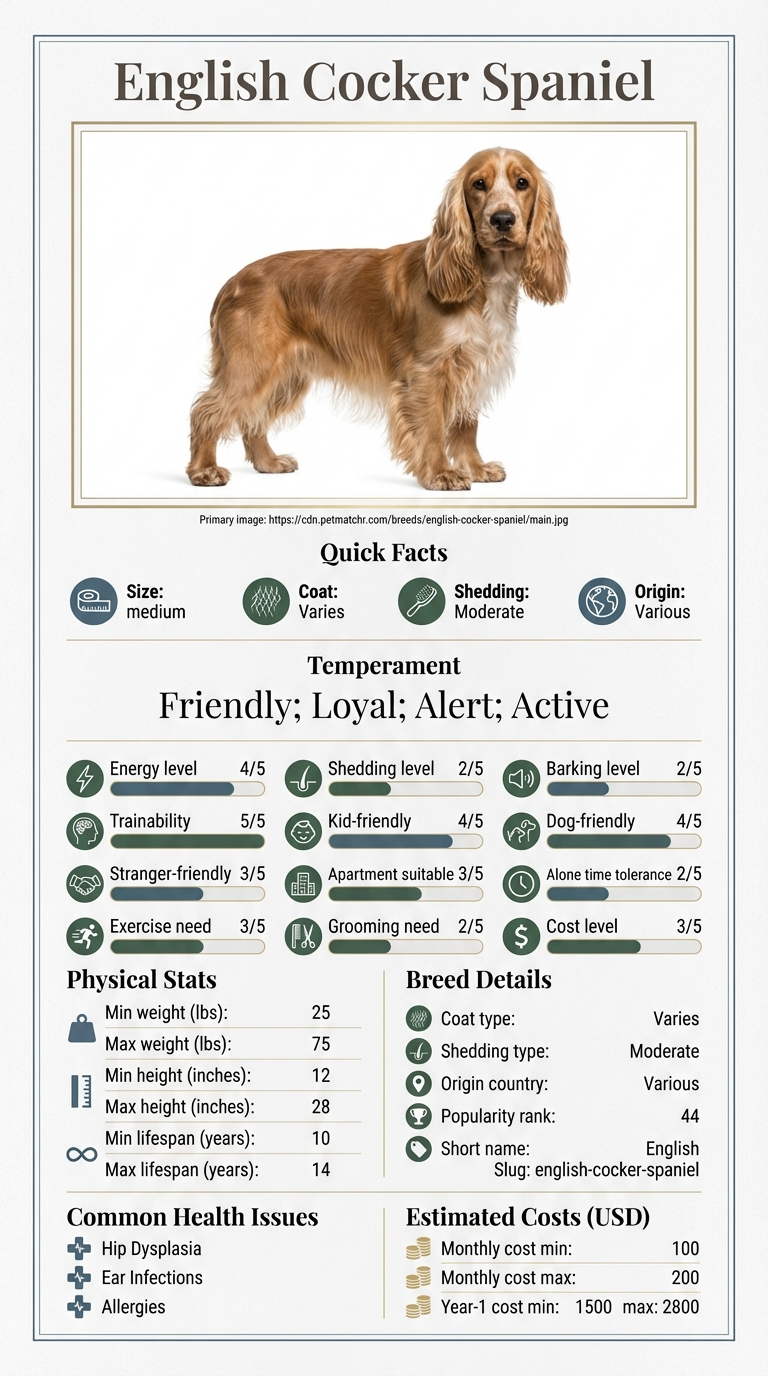
Owners of English Cocker Spaniels, especially those who may notice changes in their dog's vision, are most affected. This issue can be particularly challenging for families with active pets or those who enjoy outdoor activities.
This guide is not medical advice. If your dog shows pain, sudden behavior change, or worsening symptoms, consult a licensed veterinarian.
Some links may be affiliate links. We may earn a commission at no extra cost to you. We only suggest products we believe are helpful for dog owners.
English Cocker Spaniel progressive retinal atrophy (pra-rcd3) is a genetic condition that leads to gradual vision loss. This issue typically manifests in older puppies or young adult dogs, usually between the ages of 2 and 5. Owners may notice their dog bumping into furniture or struggling to navigate familiar environments.
This condition is relatively common in the English Cocker Spaniel breed, affecting approximately 1 in 4 dogs. Regular veterinary check-ups and genetic testing can help identify the risk of pra-rcd3 early.
English Cocker Spaniels can inherit Progressive Retinal Atrophy (PRA-rcd3) as a genetic condition. This breed is more prone to this issue due to specific genes that affect their vision over time. As the dog ages, the retinal cells deteriorate, leading to gradual vision loss.
While genetics play a significant role, environmental factors can also impact the progression of PRA-rcd3. Poor lighting conditions, lack of stimulation, or a chaotic living environment may exacerbate the symptoms. Additionally, exposure to harmful substances can affect overall eye health.
If your English Cocker Spaniel is struggling with anxiety or fear due to vision loss, consider hiring a professional trainer. A trainer experienced in working with dogs with disabilities can provide tailored strategies and support.
If you notice significant changes in your dog's behavior or vision, consult your vet. They can assess the severity of PRA-rcd3 and discuss potential treatments or management options to improve your dog's quality of life.
Managing English Cocker Spaniel progressive retinal atrophy (pra-rcd3) is an ongoing process that can take several months to years. Early intervention and consistent care can help slow progression and improve quality of life.
Success means your dog adapts well to their changing vision, maintains a good quality of life, and continues to enjoy activities they love with your support.
Avoiding certain behaviors can help manage your English Cocker Spaniel's progressive retinal atrophy (PRA-rcd3). Here are some common mistakes and better alternatives.
Understanding when English Cocker Spaniel progressive retinal atrophy (PRA-rcd3) becomes an emergency is crucial for your dog's health. If you notice any sudden changes in your dog's vision, such as bumping into furniture or sudden reluctance to go out, these could be red flags. Other alarming signs include excessive tearing, squinting, or any signs of pain around the eyes.
Call your vet immediately in these situations.
On the other hand, if your dog has been diagnosed with PRA-rcd3 but shows no signs of distress, you can monitor their condition at home. Mild symptoms may include a gradual decrease in night vision or occasional disorientation in familiar surroundings. In such cases, keep track of any changes and plan a check-up with your vet to ensure your dog remains comfortable and healthy.

Samantha adopted her English Cocker Spaniel, Max, when he was a puppy. A few years later, she noticed he was bumping into furniture and struggling to find his favorite toys. After a vet visit confirmed he had progressive retinal atrophy (pra-rcd3), she felt overwhelmed but determined to help him. She started by making her home more navigable, removing obstacles, and using consistent voice commands to guide him. Over time, they developed a routine that included scent games and regular outdoor walks to keep Max active and engaged. Gradually, Max adapted to his vision loss, and Samantha learned to communicate with him in new ways. They both thrived in this new chapter of their lives.
Key takeaway: With patience and creativity, you can help your English Cocker Spaniel adapt to progressive retinal atrophy (pra-rcd3), ensuring they remain happy and fulfilled.
English Cocker Spaniel progressive retinal atrophy (pra-rcd3) is a genetic condition that leads to gradual vision loss. It affects the retina, causing it to deteriorate over time. Early detection is crucial for managing the condition.
This condition is inherited and caused by a genetic mutation. If your dog shows signs of vision problems, it's best to consult a vet for a proper diagnosis and potential genetic testing.
Ensure your dog navigates familiar spaces safely by keeping furniture in place. Use a consistent command system to help them adapt and avoid obstacles. Regular vet check-ups can help monitor the progression of the disease.
Signs include difficulty seeing in low light, bumping into objects, and reluctance to explore new areas. If you notice these signs, consult your veterinarian for an evaluation.
Yes, training can help! Use positive reinforcement to teach your dog commands and cues to navigate their environment. This can improve their confidence and independence.
Early signs of PRA-rcd3 in your English Cocker Spaniel may include difficulty seeing in dim light and bumping into objects. You might notice your dog hesitating when navigating familiar spaces. Regular vet check-ups can help catch these symptoms early.
Older English Cocker Spaniels may experience more pronounced symptoms of PRA-rcd3, including complete vision loss over time. It's crucial to adapt their environment to ensure safety and comfort. Your vet can provide guidance on managing this condition in senior dogs.
Unfortunately, there is no cure for English Cocker Spaniel progressive retinal atrophy (pra-rcd3) at this time. However, early detection and management can help slow its progression and improve your dog's quality of life. Consulting with a vet for personalized strategies is essential.
For a dog with PRA-rcd3, consider creating a consistent living space with minimal obstacles. Keeping furniture in the same place and using tactile markers can help your dog navigate better. Training them to respond to verbal cues can also enhance their confidence.
Yes, a genetic test can identify if your English Cocker Spaniel is a carrier of the gene responsible for PRA-rcd3. This can be particularly useful for breeders looking to avoid passing the condition on. Discuss testing options with your vet for more information.
Take your dog to the vet for an eye exam and discuss potential treatments or adaptations needed for their environment.
Yes, English Cocker Spaniels are genetically predisposed to this condition, so it's important to be aware of their health history.
Create a safe and consistent environment by keeping furniture in place and using verbal cues to guide your dog.
Consider using non-slip rugs and keeping pathways clear. Regularly check in with your vet to monitor their condition.