Behavior
What should I do if my English Cocker Spaniel has PRA?
Create a safe environment with clear pathways and consistent routines to help your dog adjust to vision loss.

Quick answer
What should I do if my English Cocker Spaniel has PRA?
Create a safe environment with clear pathways and consistent routines to help your dog adjust to vision loss.
English Cocker Spaniel progressive retinal atrophy (PRA) is a serious eye condition that leads to gradual vision loss.
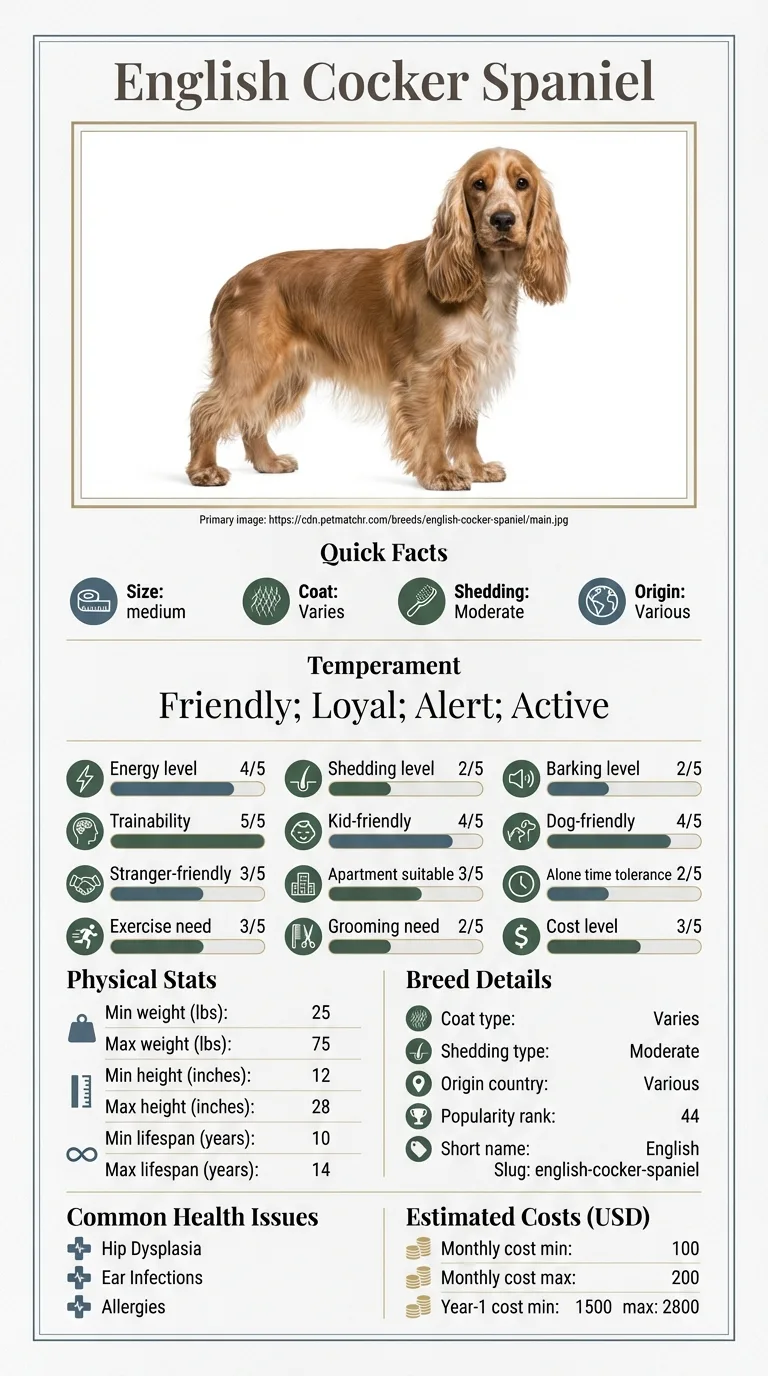
Owners of English Cocker Spaniels, especially those who notice changes in their dog's vision or behavior, often find themselves grappling with the emotional challenges of this diagnosis.
This guide is not medical advice. If your dog shows pain, sudden behavior change, or worsening symptoms, consult a licensed veterinarian.
Some links may be affiliate links. We may earn a commission at no extra cost to you. We only suggest products we believe are helpful for dog owners.
We research and check what we publish, but we do not warrant that any figure, date, price, or statement is accurate, complete, or current, and we accept no liability for any loss, cost, injury, or other harm arising from the use of this site. Use it as one reference among several. You remain responsible for your own decisions and for your dog's care - confirm anything that matters with a licensed veterinarian or another qualified professional before you act on it. Full disclaimer.
Check this first
Understanding when English Cocker Spaniel progressive retinal atrophy (PRA) is an emergency can help you act quickly and protect your dog's well-being. Look for red-flag signs that indicate you should call your vet immediately. If your dog suddenly exhibits severe vision loss, appears disoriented, or struggles to navigate familiar spaces, these are critical signs that require urgent veterinary attention.
Other alarming symptoms include sudden changes in behavior, such as increased anxiety or aggression due to confusion.
If any of these apply, call your vet or an emergency clinic now. The rest of this page is for the cases that are not an emergency.
English Cocker Spaniel progressive retinal atrophy (PRA) is a genetic condition that leads to gradual vision loss. Owners may notice their dog bumping into furniture, struggling to navigate familiar environments, or showing signs of anxiety in new situations. This condition typically becomes apparent in middle age, usually between 6 to 8 years old, but it can vary.
PRA is relatively common in English Cocker Spaniels, affecting a significant number of dogs in the breed. It's essential for owners to be aware of this condition as early detection can aid in managing the dog's quality of life.
English Cocker Spaniels are genetically predisposed to Progressive Retinal Atrophy (PRA). This inherited condition affects the retina, leading to gradual vision loss. It's important to know that not all English Cocker Spaniels will develop PRA, but those with a family history are at higher risk.
Environmental factors can also play a role in the progression of PRA. Poor lighting conditions or lack of stimulation can exacerbate vision issues. Ensuring a safe and enriching environment can help your dog cope better with their condition.
If you notice any changes in your dog's vision, such as difficulty seeing in bright light or changes in behavior, it's essential to talk to your vet. They can perform tests to determine the extent of PRA and suggest appropriate management strategies.
Avoiding common mistakes can help improve your English Cocker Spaniel's experience with progressive retinal atrophy (PRA). Here are some behaviors to steer clear of.
Start here: English Cocker Spaniel Most Common Genetic Disorders
See all English Cocker Spaniel health problems, which breeds are prone to progressive retinal atrophy pra, or the full English Cocker Spaniel breed guide for temperament, exercise needs and ownership costs.
Managing English Cocker Spaniel progressive retinal atrophy (PRA) involves ongoing care and adjustments. Owners should expect to see gradual changes over several months to years as the condition progresses. Regular vet visits will help monitor your dog's vision and overall health.
Success looks like a dog that adapts well to their vision loss, maintaining a good quality of life. This includes learning to navigate their environment safely, responding to cues from their owner, and enjoying regular activities without fear or anxiety.
In less severe cases of English Cocker Spaniel progressive retinal atrophy (PRA), you can monitor your dog at home. If your dog shows gradual vision loss without any sudden behavioral changes, you can create a plan to observe their condition. Make note of any slow changes in their ability to see at night or in dim light.
Regular vet check-ups can help you track the progression and manage any related issues.

Sarah, a busy nurse in Chicago, adopted Bella, her English Cocker Spaniel, when she was a puppy. After a few years, Sarah noticed Bella bumping into furniture and hesitating on walks. A vet diagnosed Bella with progressive retinal atrophy (PRA). At first, Sarah felt overwhelmed, fearing for Bella’s well-being. However, she committed to helping Bella adapt. Sarah started using verbal cues and a consistent walking path to guide Bella. They practiced in their backyard and, slowly, Bella learned to feel confident despite her vision loss. Over time, Sarah noticed Bella was more relaxed and happy, navigating their home and favorite parks with ease.
Key takeaway: With patience and training, English Cocker Spaniels with PRA can lead fulfilling lives. Consistent communication and a stable environment are key to helping them adapt.
PRA is primarily inherited and is caused by genetic mutations. If your English Cocker Spaniel is diagnosed with PRA, it's important to consult your veterinarian for genetic testing options and to understand the implications for future litters.
To assist a dog with PRA, create a safe, predictable environment. Use consistent commands, and consider training that focuses on non-visual cues. Regular veterinary check-ups are essential to monitor the dog's condition.
Currently, there is no cure for PRA. Management focuses on improving quality of life through adaptations in the home and training methods that accommodate your dog's changing vision.
While PRA cannot be prevented if the dog is genetically predisposed, responsible breeding practices can help reduce the incidence of this condition. Consider testing breeding dogs for PRA before mating.
Signs of PRA may include difficulty navigating in low light, bumping into objects, or reluctance to go outside. If you notice these behaviors, consult your veterinarian for evaluation.
Early signs of progressive retinal atrophy (PRA) in English Cocker Spaniels may include difficulty seeing in low light or bumping into furniture. You might also notice your dog hesitating when walking in unfamiliar places. If you see these signs, consult your vet.
To help your English Cocker Spaniel adapt to vision loss from PRA, maintain a consistent home environment and avoid moving furniture around. Using scent and sound cues can help your dog navigate safely. Training with positive reinforcement can also aid in their adaptation.
Progressive retinal atrophy (PRA) can develop in English Cocker Spaniels at various ages, but symptoms often appear between 3 to 5 years old. Genetic factors play a significant role, so consult your breeder for more information on your dog’s lineage.
Currently, there is no cure or way to reverse progressive retinal atrophy (PRA) in English Cocker Spaniels. However, early detection and management can improve your dog’s quality of life. Regular vet check-ups are crucial for monitoring their condition.
If your English Cocker Spaniel shows sudden changes in vision, such as bumping into things or reluctance to go outside, it's important to see a vet immediately. These changes could indicate a variety of health issues, and prompt attention is essential for your dog's well-being.
Create a safe environment with clear pathways and consistent routines to help your dog adjust to vision loss.
Use verbal cues and tactile signals instead of visual ones to guide your dog during training sessions.
Consider investing in dog-friendly furniture and obstacles to help your English Cocker Spaniel navigate safely at home.
Regular vet check-ups every 6 to 12 months can help monitor your dog's condition and overall health.
A one-page prep sheet for this condition: the signs, the questions to ask, what to get priced. Unlocks here.
You get: Vet visit prep sheet
No spam. One-click unsubscribe. See our privacy policy.
Preview page 1 before you decide.