Health
What are some quick tips for managing English Cocker Spaniel diabetes?
Regularly monitor your dog's weight and adjust their diet as needed. Consistent exercise and routine vet check-ups are essential.

Quick answer
What are some quick tips for managing English Cocker Spaniel diabetes?
Regularly monitor your dog's weight and adjust their diet as needed. Consistent exercise and routine vet check-ups are essential.
English Cocker Spaniel diabetes is a serious health issue that many owners face, especially as their pets age.
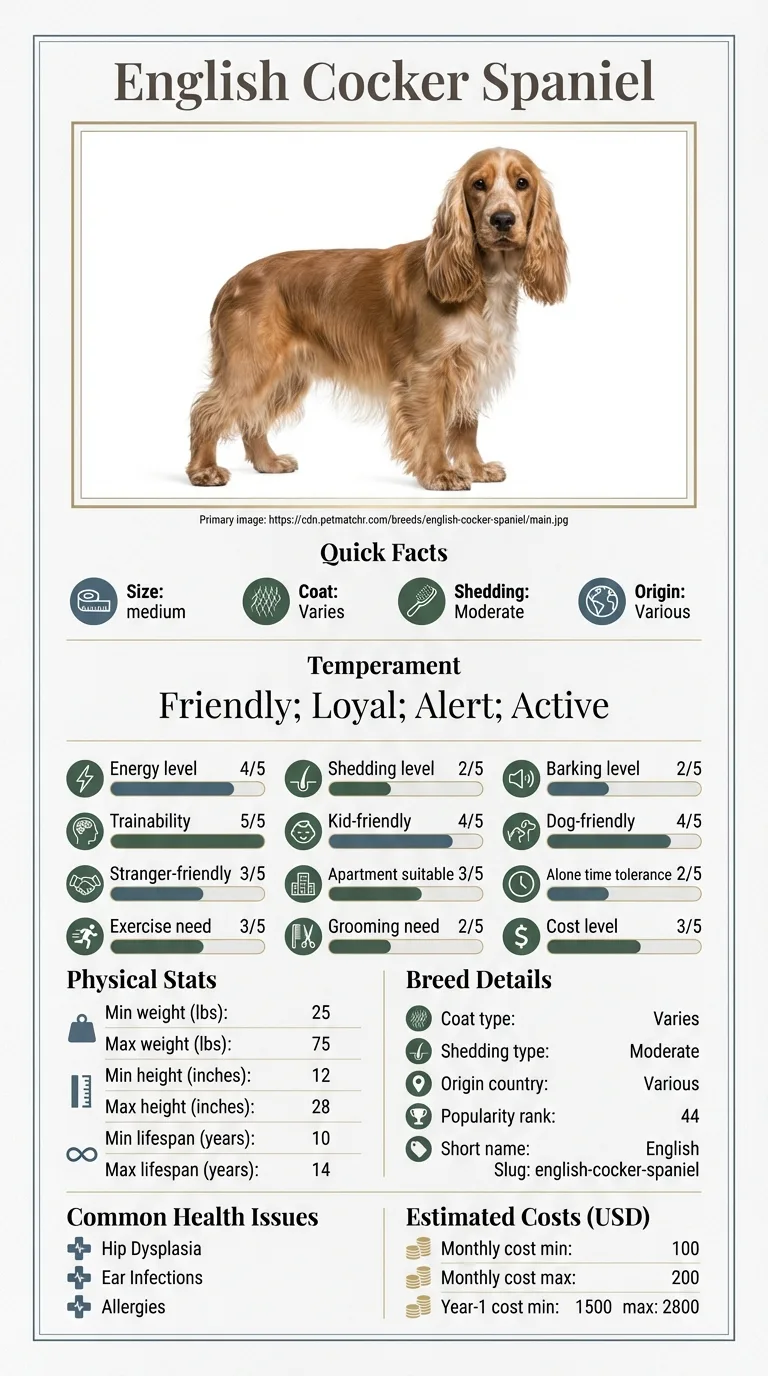
Owners of English Cocker Spaniels, particularly those with older dogs, often struggle with this condition. It can be overwhelming to navigate dietary changes and health monitoring, especially for first-time pet owners.
This guide is not medical advice. If your dog shows pain, sudden behavior change, or worsening symptoms, consult a licensed veterinarian.
Some links may be affiliate links. We may earn a commission at no extra cost to you. We only suggest products we believe are helpful for dog owners.
We research and check what we publish, but we do not warrant that any figure, date, price, or statement is accurate, complete, or current, and we accept no liability for any loss, cost, injury, or other harm arising from the use of this site. Use it as one reference among several. You remain responsible for your own decisions and for your dog's care - confirm anything that matters with a licensed veterinarian or another qualified professional before you act on it. Full disclaimer.
Check this first
Recognizing when English Cocker Spaniel diabetes becomes an emergency is crucial for your dog's health. If you notice severe symptoms, such as excessive thirst and urination, lethargy, or vomiting, it’s time to call your vet immediately. These signs can indicate a dangerous spike in blood sugar levels, which can lead to serious complications.
On the other hand, if your dog shows mild symptoms like increased appetite or slight weight loss, you can monitor the situation at home. Keep a close eye on your English Cocker Spaniel's behavior and maintain a consistent feeding schedule. It’s essential to have a plan to manage their diabetes with proper diet and medication, but you don’t need to panic just yet.
In summary, seek immediate veterinary care if your dog shows any of these red-flag symptoms. For less severe cases, keep track of their condition and follow your vet's guidance on managing their diabetes effectively.
If any of these apply, call your vet or an emergency clinic now. The rest of this page is for the cases that are not an emergency.
English Cocker Spaniel diabetes is a condition that can affect your dog's daily life. This endocrine disorder often appears in senior dogs, leading to symptoms like excessive thirst, frequent urination, and weight loss. Monitoring your pup's behavior is crucial, as changes can signal worsening health.
Diabetes is relatively common in English Cocker Spaniels, particularly as they age. While not all will develop this condition, awareness and early intervention can make a significant difference in managing their health.
English Cocker Spaniels may be predisposed to diabetes due to their genetic background. Some lines are more susceptible to endocrine disorders, especially as they age. Their medium size can also contribute to weight gain, which is a risk factor for diabetes.
Environmental factors like diet and lack of exercise play a significant role. If your English Cocker Spaniel is overfed or not getting enough activity, they may become overweight. This weight gain increases the risk of developing diabetes.
If you notice signs like increased thirst, frequent urination, or unexplained weight loss, contact your vet right away. These could be symptoms of diabetes or other health issues that need immediate attention.
Avoiding these common mistakes can help manage your English Cocker Spaniel's diabetes more effectively.
Start here: English Cocker Spaniel Most Common Genetic Disorders
See all English Cocker Spaniel health problems, which breeds are prone to diabetes, or the full English Cocker Spaniel breed guide for temperament, exercise needs and ownership costs.
When managing English Cocker Spaniel diabetes, you can expect to see initial improvements in about 4 to 6 weeks with consistent care.
Success means your dog maintains stable blood sugar levels, shows increased energy, and has a healthier weight.
When Sarah adopted Max, her English Cocker Spaniel, she had no idea he would develop diabetes at age 8. After noticing Max was drinking more water and losing weight, she took him to the vet, who confirmed the diagnosis. Determined to help her furry friend, Sarah learned how to adjust his diet and administer insulin shots. She also kept a detailed journal of his eating habits and energy levels. Over the next few months, Sarah established a routine that worked for both of them. Max regained his playful spirit, and Sarah felt empowered by her new role as a proactive pet owner.
Key takeaway: With patience and dedication, you can successfully manage an English Cocker Spaniel’s diabetes and improve their quality of life.
Common symptoms of diabetes include increased thirst, frequent urination, and unexplained weight loss. You might also notice changes in energy levels or appetite. If your English Cocker Spaniel exhibits any of these symptoms, it's essential to consult a vet.
Managing English Cocker Spaniel diabetes involves a consistent diet, regular exercise, and monitoring blood sugar levels. Work closely with your vet to establish a feeding schedule and insulin regimen tailored to your dog's needs.
While not all cases of English Cocker Spaniel diabetes can be prevented, maintaining a healthy weight and regular exercise can help. A balanced diet and routine vet visits are also key in reducing risk.
Treatment typically involves insulin injections and a special diet. Your vet will help determine the best plan, including monitoring your dog's condition regularly to adjust treatment as needed.
Diabetes can occur in English Cocker Spaniels, especially as they age. While it's not the most common condition, awareness and proactive care can make a significant difference.
Yes, a proper diet is crucial in managing diabetes. A vet can recommend a high-fiber diet that helps maintain stable blood sugar levels. Regular feeding schedules and portion control are also important.
While genetics can play a role, diabetes is often influenced by environmental factors and lifestyle. Maintaining a healthy weight can help reduce the risk. Regular vet check-ups can also catch potential issues early.
Ensure your older English Cocker Spaniel has a consistent routine for meals, exercise, and vet visits. Monitoring their health closely and providing a comfortable living environment will also help them adjust to their condition. Speak to your vet about any specific needs.
If you suspect diabetes, schedule a vet appointment as soon as possible. Early diagnosis and treatment are vital for managing the condition effectively. Your vet will perform tests to confirm the diagnosis and recommend a treatment plan.
Regularly monitor your dog's weight and adjust their diet as needed. Consistent exercise and routine vet check-ups are essential.
Visit your vet at least every six months for check-ups, or more frequently if your dog's condition changes.
Yes, choose a high-fiber, low-calorie dog food specifically designed for diabetic dogs to help regulate blood sugar levels.
Monthly costs for managing diabetes can range from $100 to $200, including food, medication, and vet visits.
Focus on positive reinforcement training and establish a routine for feeding and exercise to help your dog adjust to their condition.
A one-page prep sheet for this condition: the signs, the questions to ask, what to get priced. Unlocks here.
You get: Vet visit prep sheet
No spam. One-click unsubscribe. See our privacy policy.
Preview page 1 before you decide.