Behavior
What are quick tips for managing Doberman Pinscher PRA?
Keep your home layout consistent and use commands to guide your dog. Regular vet visits can help monitor their condition.

Quick answer
What are quick tips for managing Doberman Pinscher PRA?
Keep your home layout consistent and use commands to guide your dog. Regular vet visits can help monitor their condition.
Doberman Pinscher progressive retinal atrophy (PRA) is a serious eye condition that leads to gradual vision loss. This can significantly impact your dog's quality of life.
Typically, owners of Doberman Pinschers may face this issue, especially if their dog begins to show signs of vision problems. It can be particularly challenging for first-time dog owners or those unaware of the breed's predisposition to such health issues.
This guide is not medical advice. If your dog shows pain, sudden behavior change, or worsening symptoms, consult a licensed veterinarian.
Some links may be affiliate links. We may earn a commission at no extra cost to you. We only suggest products we believe are helpful for dog owners.
We research and check what we publish, but we do not warrant that any figure, date, price, or statement is accurate, complete, or current, and we accept no liability for any loss, cost, injury, or other harm arising from the use of this site. Use it as one reference among several. You remain responsible for your own decisions and for your dog's care - confirm anything that matters with a licensed veterinarian or another qualified professional before you act on it. Full disclaimer.
Check this first
When it comes to Doberman Pinscher progressive retinal atrophy (PRA), recognizing emergencies is crucial. If your Doberman suddenly shows signs of severe vision loss, such as bumping into objects, appearing disoriented, or showing distress, these are red flags. Call your vet immediately if you notice any of these symptoms, as they could indicate a rapid progression of the disease or other serious issues.
Milder cases of PRA may not require urgent attention. If your dog is experiencing gradual vision changes, like occasional hesitance in unfamiliar environments or seeming less active, you can monitor these symptoms at home. Keep track of any changes and consult with your vet for a plan to manage the condition. Regular check-ups can help catch any exacerbation of the symptoms early.
In summary, act quickly if your Doberman shows acute signs of worsening vision or distress. However, if the changes are gradual and manageable, a watchful waiting approach with veterinary guidance can be appropriate. Always trust your instincts as a pet owner, and when in doubt, reach out for professional advice.
If any of these apply, call your vet or an emergency clinic now. The rest of this page is for the cases that are not an emergency.
Doberman Pinscher progressive retinal atrophy (PRA) is a genetic condition that leads to gradual vision loss. It often starts with night blindness, making it tough for your Doberman to see in low light. As the disease progresses, daytime vision can also deteriorate, impacting their quality of life and your daily routines.
PRA is fairly common in Doberman Pinschers, especially as they age. While not every Doberman will develop this condition, it is a known health issue within the breed, affecting many dogs during their lifetime.
Doberman Pinschers are prone to genetic conditions, including Progressive Retinal Atrophy (PRA). This inherited issue affects the retina and leads to gradual vision loss. The breed's genetic predisposition makes them more vulnerable to this condition compared to other breeds.
Environmental factors can also play a role in exacerbating PRA. Poor lighting conditions, lack of stimulating activities, or high-stress environments may worsen the dog's anxiety and coping mechanisms. Ensuring a stable and enriched environment can help mitigate some of these effects.
Consult your vet if you notice rapid changes in your Doberman's vision or if they seem to be struggling with their daily activities. Regular check-ups can help monitor the progression of PRA and ensure your dog remains comfortable.
Certain common behaviors can inadvertently worsen your Doberman Pinscher's progressive retinal atrophy (PRA). Here are some mistakes to avoid and safer alternatives.
Start here: Doberman Pinscher Most Common Genetic Disorders: Screening
See all Doberman Pinscher health problems, which breeds are prone to progressive retinal atrophy pra, or the full Doberman Pinscher breed guide for temperament, exercise needs and ownership costs.
You may see gradual changes in your Doberman's vision over several months, with some signs of adjustment in behavior as they adapt.
Success looks like your Doberman adjusting to their vision loss, learning to navigate familiar spaces confidently, and maintaining a good quality of life with your support.
Emma adopted Max, her Doberman Pinscher, when he was a puppy. As he aged, she noticed he seemed hesitant in low light and occasionally bumped into furniture. After a vet visit confirmed he had Progressive Retinal Atrophy (PRA), Emma felt anxious about how to help him. She began using consistent commands and creating a safe space for Max at home. They took short, guided walks in familiar areas, allowing him to adapt. Over time, Max learned to navigate their home confidently, and Emma found joy in their renewed bond.
Key takeaway: Adapting to PRA requires patience and consistent support, but with the right approach, your dog can thrive despite vision loss.
Doberman Pinscher progressive retinal atrophy (PRA) is a genetic condition that leads to progressive vision loss in dogs. It typically begins with night blindness and can eventually result in total blindness. Early detection is key to managing this condition.
Signs of PRA may include difficulty seeing in low light, bumping into objects, or showing reluctance to walk in unfamiliar areas. Regular vet check-ups can help catch these signs early and allow for better management of the condition.
To support a Doberman with PRA, maintain a familiar environment and avoid sudden changes in furniture placement. Use positive reinforcement training to help them navigate their space safely. Regular vet visits are essential for monitoring their eye health.
Currently, there is no cure for PRA. However, supportive care and adjustments in the dog's environment can greatly improve their quality of life. Consulting with a veterinarian can provide tailored strategies for managing the condition.
Training a Doberman with PRA should focus on verbal commands and tactile cues to help them navigate. Using consistent commands and positive reinforcement can help them learn their environment better and feel more secure.
Early signs of progressive retinal atrophy (PRA) in Doberman Pinschers can include difficulty seeing in low light, bumping into objects, or changes in their behavior, such as reluctance to navigate stairs. If you notice these signs, it's essential to consult your vet for further evaluation.
Currently, there is no cure for progressive retinal atrophy (PRA) in Doberman Pinschers. However, managing their environment and providing them with guidance can help them adapt to their vision loss. Regular check-ups with your veterinarian can also help monitor their condition.
To help your Doberman Pinscher cope with PRA, maintain a consistent environment and avoid rearranging furniture. Consider using voice commands to guide them and provide them with safe spaces to navigate. Training sessions focused on obedience can also help reinforce their confidence.
Yes, progressive retinal atrophy (PRA) is a hereditary condition in Doberman Pinschers. Responsible breeders screen their breeding stock for the disease to minimize its occurrence in puppies. It's crucial to ask about health testing when considering a Doberman puppy.
If you notice any signs of vision loss or changes in behavior, it's important to take your Doberman Pinscher to the vet as soon as possible. Early detection and management can significantly improve their quality of life, so don't hesitate to seek help.
Keep your home layout consistent and use commands to guide your dog. Regular vet visits can help monitor their condition.
PRA can lead to increased anxiety and confusion for your Doberman. Providing stability and routine can help them adjust.
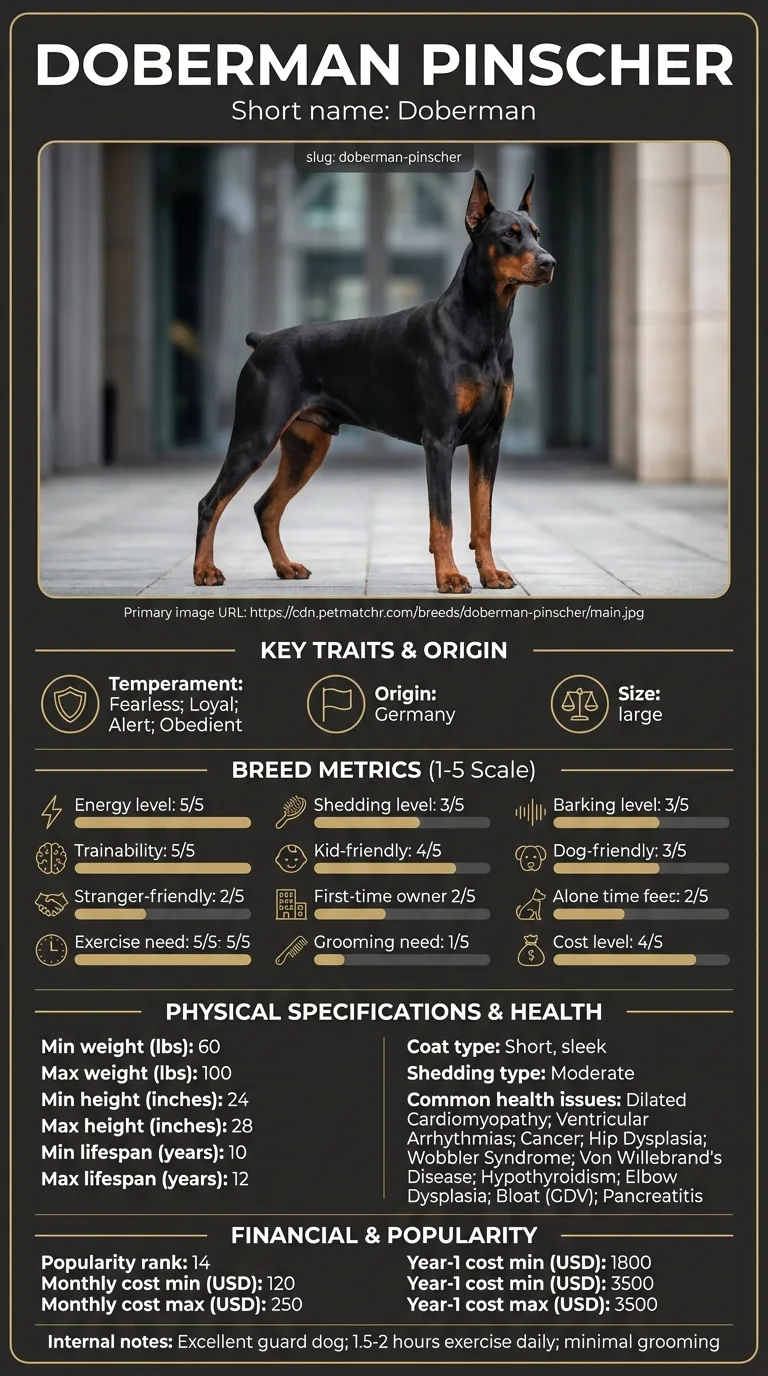
While there are no direct treatment costs for PRA, regular veterinary check-ups can range from $120 to $250 monthly. Budgeting for these costs is crucial.
PRA itself does not directly cause other health issues, but the stress of vision loss can exacerbate existing conditions. Regular health monitoring is important.
A one-page prep sheet for this condition: the signs, the questions to ask, what to get priced. Unlocks here.
You get: Vet visit prep sheet
No spam. One-click unsubscribe. See our privacy policy.
Preview page 1 before you decide.