Behavior
What are quick tips for managing Dachshund x-scid?
Keep your Dachshund away from crowded areas to minimize infection risk. Schedule regular vet visits for monitoring and vaccinations.

Quick answer
What are quick tips for managing Dachshund x-scid?
Keep your Dachshund away from crowded areas to minimize infection risk. Schedule regular vet visits for monitoring and vaccinations.
Dachshund x-scid is a rare but serious condition affecting your dog's immune system. It can lead to severe health issues, making it crucial to understand and manage.
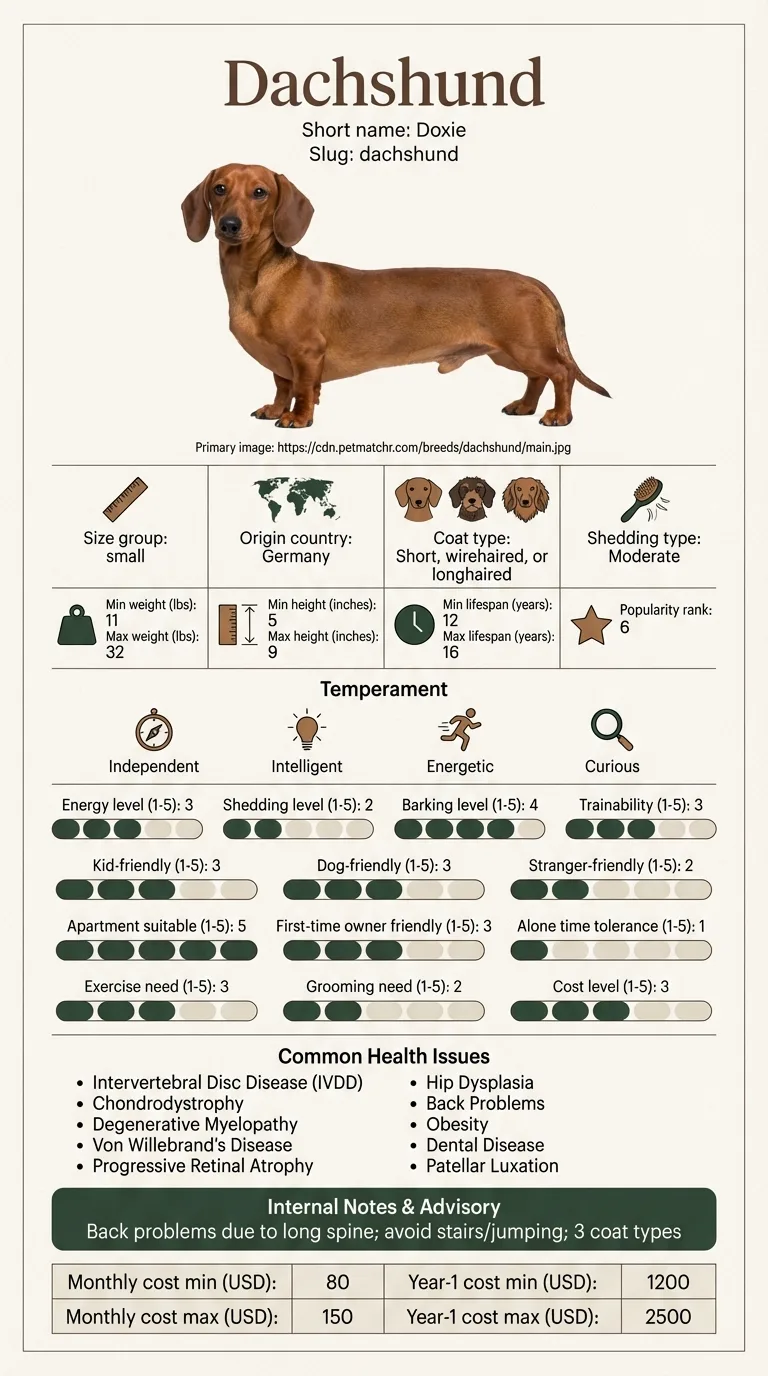
Many Dachshund owners, especially first-time pet parents, may find it challenging to recognize the symptoms of x-scid. Caregivers juggling busy lives or those unfamiliar with dog health issues often struggle with knowing how to help their furry friends.
This guide is not medical advice. If your dog shows pain, sudden behavior change, or worsening symptoms, consult a licensed veterinarian.
Some links may be affiliate links. We may earn a commission at no extra cost to you. We only suggest products we believe are helpful for dog owners.
We research and check what we publish, but we do not warrant that any figure, date, price, or statement is accurate, complete, or current, and we accept no liability for any loss, cost, injury, or other harm arising from the use of this site. Use it as one reference among several. You remain responsible for your own decisions and for your dog's care - confirm anything that matters with a licensed veterinarian or another qualified professional before you act on it. Full disclaimer.
Check this first
Dachshund x-scid, or severe combined immunodeficiency, can present serious health risks. It's essential to recognize when your dog's condition becomes an emergency versus when it can be monitored. Immediate veterinary attention is crucial if your Dachshund shows signs of severe illness, such as persistent vomiting, difficulty breathing, or signs of infection like fever or lethargy. These symptoms can escalate quickly and require urgent care.
In less severe cases, you may notice symptoms like mild coughing, sporadic diarrhea, or occasional lethargy. While these might be concerning, they could also be monitored at home. It's important to keep track of your dog's behavior, noting any changes, and maintain a communication plan with your vet. If symptoms persist or worsen, don’t hesitate to seek professional help.
If any of these apply, call your vet or an emergency clinic now. The rest of this page is for the cases that are not an emergency.
Dachshund x-scid, or X-linked severe combined immunodeficiency, is a rare but serious condition affecting this breed. Dogs with x-scid have a compromised immune system, making them highly susceptible to infections and illnesses. This can lead to frequent vet visits and a lot of worry for owners, as even minor health issues can quickly escalate into major problems.
While x-scid is not common among Dachshunds, it can occur in certain lines, especially if breeding practices are not carefully monitored. Owners should be aware of this risk and consider genetic testing when acquiring a puppy.
Dachshunds can inherit genetic conditions like X-SCID, which is a rare immunodeficiency. This breed’s unique traits, such as their elongated spine, can also contribute to various health issues that may affect their overall resilience. The combination of these traits makes them more susceptible to certain health challenges.
Environmental factors such as exposure to infections or a stressful living situation can exacerbate the effects of X-SCID. If not properly socialized or if they have limited interaction with other dogs, Dachshunds may also struggle with anxiety. This can lead to a weakened immune system and make managing their health even more difficult.
Consult a vet if you suspect your Dachshund has X-SCID or if they show signs of frequent illness. A vet can perform tests to confirm any health concerns and recommend appropriate treatments. Regular check-ups are important to maintain their health.
Addressing Dachshund x-scid can be challenging. Here are some common mistakes owners make that can worsen the situation, along with safer alternatives.
Start here: Dachshund Most Common Genetic Disorders: What to Screen For
See all Dachshund health problems, which breeds are prone to x scid, or the full Dachshund breed guide for temperament, exercise needs and ownership costs.
implementing a care routine for Dachshund x-scid typically takes 4 to 6 weeks to start seeing improvements, but ongoing support is essential.
Success means your Dachshund exhibits reduced anxiety, increased comfort in their environment, and a better ability to cope with separation.
The Johnson family, living in a bustling city, adopted a Dachshund named Max. They quickly noticed he had separation anxiety, especially when they left for work or school. After consulting with a vet, they learned about x-scid and how it affected Max’s immune system. They implemented consistent training routines, including crate training and gradual desensitization to being alone. By the end of six weeks, Max began to show signs of improvement, like staying calm during short departures.
Key takeaway: With patience and the right training strategies, even a Dachshund with special needs like x-scid can adapt and thrive in a home environment.
Dachshund x-scid, or X-linked severe combined immunodeficiency, is a rare genetic condition affecting the immune system. This means that affected Dachshunds have a drastically reduced ability to fight off infections and diseases.
To manage a Dachshund with x-scid, regular veterinary check-ups are crucial. Your vet may recommend specific vaccinations and treatments to help support their immune system and monitor for infections.
Currently, there is no cure for Dachshund x-scid. Treatment focuses on managing symptoms and preventing infections through careful monitoring and possibly medication.
While you can't stop x-scid itself, you can prevent complications by keeping your Dachshund away from sick animals and ensuring they receive prompt veterinary care when ill.
Long-term effects of x-scid include a higher risk of infections and potentially reduced lifespan. Regular vet visits and a controlled environment are essential for managing these risks.
Symptoms of X-SCID in Dachshunds can include frequent infections, failure to thrive, and lethargy. If your Doxie seems unusually weak or gets sick often, it’s essential to consult a vet.
Training a Dachshund with X-SCID requires patience and understanding. Focus on basic commands and gentle socialization, keeping in mind their health limitations and avoiding stress.
Currently, there is no cure for X-SCID in Dachshunds. Management typically involves preventing infections and monitoring health closely, so regular veterinary visits are crucial.
While X-SCID is genetic and typically presents early in life, older Dachshunds may show symptoms as their immune system weakens. If you notice signs of illness, it’s best to consult your vet.
If your Dachshund has X-SCID, limit their exposure to other dogs and environments where infections can spread. Regular check-ups with your vet are essential to manage their health.
Keep your Dachshund away from crowded areas to minimize infection risk. Schedule regular vet visits for monitoring and vaccinations.
For a Dachshund with x-scid, aim for vet visits every 3-6 months to monitor health and adjust care plans as needed.
If your Dachshund shows signs of illness, contact your vet immediately for advice on treatment and care.
Yes, Dachshunds with x-scid may have lower energy levels due to frequent infections and immune challenges.
Training can help build your Dachshund's confidence and comfort in their environment, but it should be gentle and stress-free.
A one-page prep sheet for this condition: the signs, the questions to ask, what to get priced. Unlocks here.
You get: Vet visit prep sheet
No spam. One-click unsubscribe. See our privacy policy.
Preview page 1 before you decide.