Behavior
How to stop Dachshund myotonia congenita?
While you can't stop the condition, you can manage its effects through regular, gentle exercise and veterinary guidance.

Quick answer
How to stop Dachshund myotonia congenita?
While you can't stop the condition, you can manage its effects through regular, gentle exercise and veterinary guidance.
Dachshund myotonia congenita causes muscle stiffness, impacting your dog's mobility and comfort.
Typical owners dealing with this issue are those who love their Dachshunds but may notice their pets struggling with stiffness, especially after resting. It can be particularly concerning for first-time dog owners who are unfamiliar with this condition.
This guide is not medical advice. If your dog shows pain, sudden behavior change, or worsening symptoms, consult a licensed veterinarian.
Some links may be affiliate links. We may earn a commission at no extra cost to you. We only suggest products we believe are helpful for dog owners.
We research and check what we publish, but we do not warrant that any figure, date, price, or statement is accurate, complete, or current, and we accept no liability for any loss, cost, injury, or other harm arising from the use of this site. Use it as one reference among several. You remain responsible for your own decisions and for your dog's care - confirm anything that matters with a licensed veterinarian or another qualified professional before you act on it. Full disclaimer.
Check this first
If your Dachshund shows extreme stiffness that prevents them from moving or causes pain, this is a red-flag sign. Other emergency symptoms include breathing difficulties, seizures, or inability to eat or drink. If you notice these signs, contact your vet immediately.
On the other hand, if your dog experiences mild muscle stiffness but can still move around and seems comfortable, you can monitor the situation at home. Keep an eye on their behavior and note any changes in their mobility or energy levels. Keeping a consistent routine can help you manage their condition in the long run.
It's also wise to consult your vet if stiffness occurs regularly after exercise, as this could indicate an underlying issue. Be sure to have a plan in place to track your dog's behavior and condition. Regular check-ins with your vet can help you stay ahead of any potential problems.
If any of these apply, call your vet or an emergency clinic now. The rest of this page is for the cases that are not an emergency.
Dachshund myotonia congenita is a muscle disorder that causes stiffness, particularly after rest. Affected Doxies may struggle to move or appear uncoordinated when they first get up. This can be alarming for owners and may lead to concerns about overall health and mobility.
Myotonia congenita is relatively rare among Dachshunds, but it can occur in some lines. Owners should be aware of the signs and consult their vet for proper guidance.
Dachshunds are prone to myotonia congenita due to their genetic makeup. This condition leads to muscle stiffness, making it hard for them to relax their muscles. It is more common in this breed because of their unique muscular structure.
Environmental factors can also contribute to myotonia congenita. Stressful situations, lack of exercise, or improper training methods can exacerbate muscle stiffness. Additionally, overexertion can trigger symptoms, making it essential to manage their activities.
If you notice persistent muscle stiffness or any changes in your Dachshund's behavior, it's important to talk to your vet. They can provide a thorough examination and suggest treatment options tailored to your dog's needs.
Avoiding these common mistakes can help improve your Dachshund's myotonia congenita symptoms.
Start here: Dachshund Most Common Genetic Disorders: What to Screen For
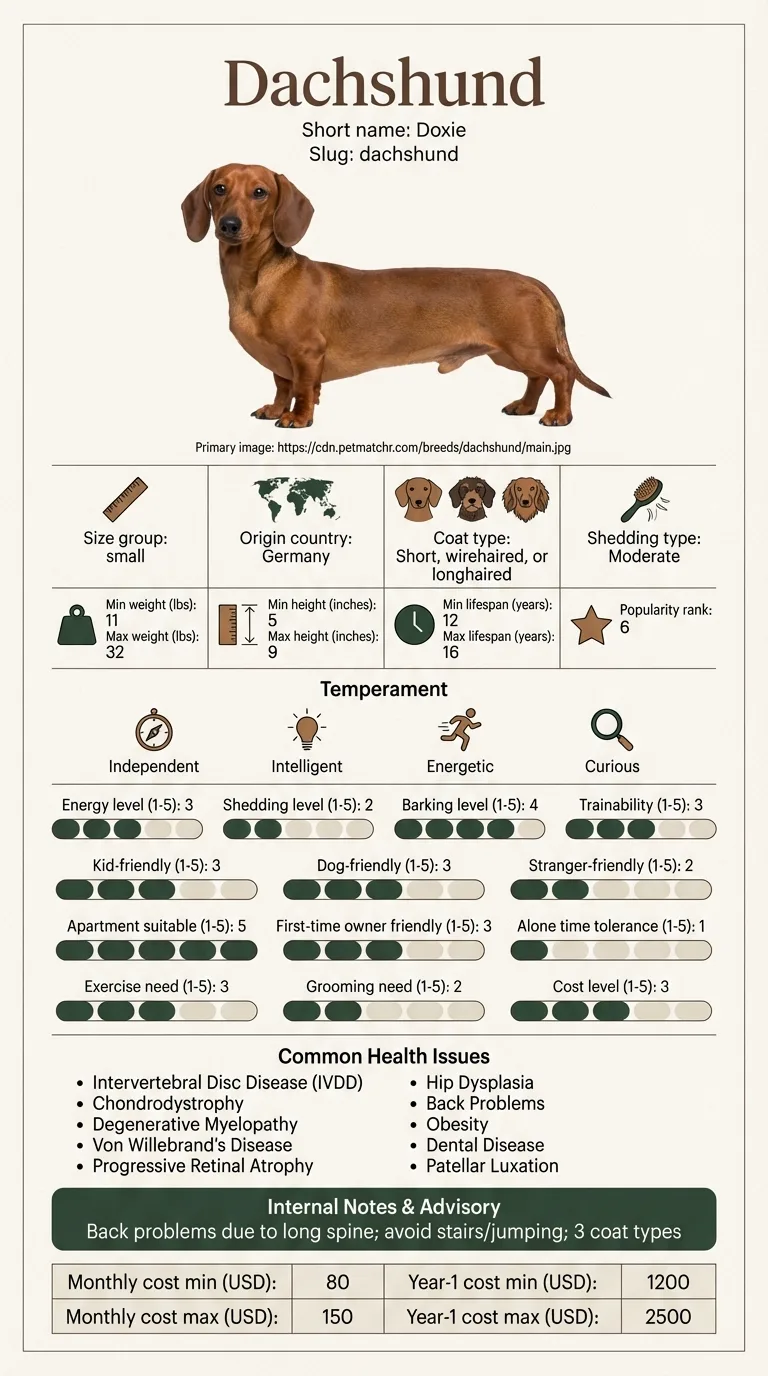
See all Dachshund health problems, which breeds are prone to myotonia congenita, or the full Dachshund breed guide for temperament, exercise needs and ownership costs.
Improvement in your Dachshund's myotonia congenita can typically be seen within 2 to 3 months of consistent care and management.
Success looks like your Dachshund showing less muscle stiffness, responding better to commands, and enjoying activities without excessive fatigue.
Emily adopted Max, a four-year-old Dachshund, who was diagnosed with myotonia congenita. At first, Emily noticed Max struggled to walk after periods of inactivity and often looked stiff. Determined to help him, she consulted a vet and started a gentle exercise routine paired with positive reinforcement training. After a few weeks, she noticed Max was less stiff and could run around the yard without needing long breaks. Emily realized that a combination of regular, light exercise and patience during training sessions made a significant difference in Max's quality of life.
Key takeaway: With the right approach, you can improve your Dachshund's myotonia congenita symptoms and enhance their overall well-being.
This condition is often inherited and can be traced back to specific genetic factors in Dachshunds. If your dog shows signs of muscle stiffness, it's essential to consult a vet for proper diagnosis.
To help your Dachshund, focus on regular, gentle exercise to keep their muscles active. Additionally, consult with a vet about potential treatments or therapies that can ease their symptoms.
Training can help improve your Dachshund's mobility and confidence. Use positive reinforcement techniques to encourage movement and gradually introduce new activities that suit their abilities.
Signs include muscle stiffness, difficulty in getting up or moving, and occasional muscle spasms. If you notice these symptoms, it's crucial to seek veterinary advice.
Currently, there is no cure for myotonia congenita. However, symptoms can often be managed with proper care, exercise, and veterinary guidance.
Consider modifying your home environment to reduce obstacles. Keep their exercise routine consistent but gentle, and avoid activities that require excessive jumping or running.
Dachshund myotonia congenita is a genetic condition that affects muscle relaxation. It often results from a mutation in a specific gene, leading to stiffness in the muscles. If you're noticing symptoms, it's best to consult with a vet for an accurate diagnosis.
Yes, training Dachshunds with myotonia congenita should focus on gentle exercises and positive reinforcement. Avoid high-impact activities that can exacerbate their muscle stiffness. Consistent, short training sessions can help keep them engaged and comfortable.
Older Dachshunds with myotonia congenita may need extra care and attention. Providing a warm, comfortable resting area and low-impact exercise can help. Regular vet check-ups are also important to monitor their condition and adjust care as needed.
If your Dachshund shows signs of severe muscle stiffness or difficulty moving, it's crucial to consult a vet. Early intervention can help manage symptoms and improve your dog's quality of life. Always trust your instincts as a pet owner.
While diet won't cure myotonia congenita, proper nutrition can support overall health. A balanced diet helps maintain a healthy weight, which is essential for Dachshunds prone to joint problems. Consult your vet for personalized dietary recommendations.
While you can't stop the condition, you can manage its effects through regular, gentle exercise and veterinary guidance.
Focus on positive reinforcement to encourage movement and keep training sessions short and engaging.
Keep an eye out for stiffness, difficulty moving, or signs of discomfort, and consult your vet if these occur.
Ensure your Dachshund has a comfortable living space and avoid stairs or high jumps to prevent injury.
A one-page prep sheet for this condition: the signs, the questions to ask, what to get priced. Unlocks here.
You get: Vet visit prep sheet
No spam. One-click unsubscribe. See our privacy policy.
Preview page 1 before you decide.