Behavior
What are quick tips for managing Cocker Spaniel diabetes?
Monitor your Cocker Spaniel’s weight, provide a balanced diet, and ensure regular exercise. Consistency in feeding times and insulin administration is key.

Quick answer
What are quick tips for managing Cocker Spaniel diabetes?
Monitor your Cocker Spaniel’s weight, provide a balanced diet, and ensure regular exercise. Consistency in feeding times and insulin administration is key.
Cocker Spaniel diabetes is a serious condition that can significantly impact your dog's health and quality of life.
Typically, this issue affects Cocker Spaniel owners who notice their dogs experiencing increased thirst, frequent urination, or unexplained weight loss. Busy pet parents may find it particularly challenging to monitor and manage these symptoms.
This guide is not medical advice. If your dog shows pain, sudden behavior change, or worsening symptoms, consult a licensed veterinarian.
Some links may be affiliate links. We may earn a commission at no extra cost to you. We only suggest products we believe are helpful for dog owners.
We research and check what we publish, but we do not warrant that any figure, date, price, or statement is accurate, complete, or current, and we accept no liability for any loss, cost, injury, or other harm arising from the use of this site. Use it as one reference among several. You remain responsible for your own decisions and for your dog's care - confirm anything that matters with a licensed veterinarian or another qualified professional before you act on it. Full disclaimer.
Check this first
Recognizing when Cocker Spaniel diabetes becomes an emergency is crucial for your dog's health. If your Cocker shows any of the following red-flag signs, call your vet immediately. These include sudden weight loss, extreme lethargy, or vomiting. Additionally, if your dog exhibits symptoms like excessive thirst or urination combined with a lack of appetite, don't wait; seek help right away.
On the other hand, if your Cocker Spaniel is managing mild symptoms like increased thirst or slight changes in appetite, you can monitor the situation at home. Keep a close eye on their behavior and food intake. Establish a plan to track their symptoms and maintain a regular vet schedule. This is often enough to manage diabetes effectively, but be prepared to take action if things worsen.
If any of these apply, call your vet or an emergency clinic now. The rest of this page is for the cases that are not an emergency.
Cocker Spaniel diabetes can be a challenging condition for both pets and their owners. This endocrine disorder often manifests in senior dogs, leading to issues like increased thirst, frequent urination, and weight loss. Owners may notice their Cocker Spaniel showing lethargy or changes in appetite, which can be concerning.
Diabetes is relatively common in Cocker Spaniels, particularly as they age. Many dogs in this breed may develop it after they turn 7 years old, making it important for owners to monitor their pet's health closely.
Cocker Spaniels are prone to diabetes due to their genetic makeup. This breed can have issues with insulin production and regulation, making them more vulnerable to this condition as they age. Additionally, certain health problems common in Cocker Spaniels, such as obesity, can increase the risk of diabetes.
Environmental factors also play a significant role in Cocker Spaniel diabetes. Poor diet, lack of exercise, and obesity contribute to the development of this disease. If a Cocker is not given a balanced diet or sufficient physical activity, their chances of developing diabetes increase.
Talk to your vet if you notice symptoms such as increased thirst, frequent urination, or weight loss. Early intervention can be crucial in managing Cocker Spaniel diabetes effectively.
Avoiding these common mistakes can help manage your Cocker Spaniel's diabetes more effectively.
Start here: Cocker Spaniel Most Common Genetic Disorders: Screening
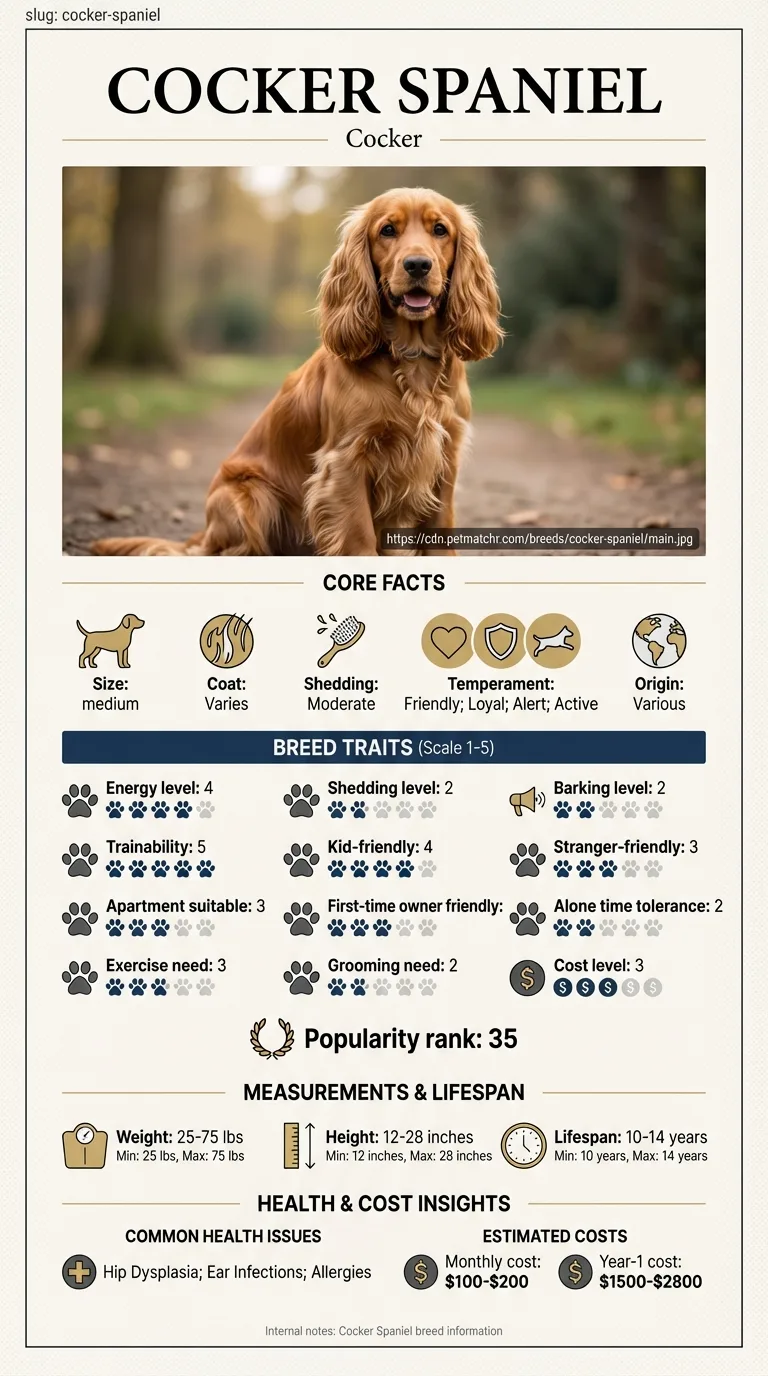
See all Cocker Spaniel health problems, which breeds are prone to diabetes, or the full Cocker Spaniel breed guide for temperament, exercise needs and ownership costs.
Managing Cocker Spaniel diabetes typically takes several months of careful monitoring and adjustment. Expect to see some improvements in your dog's health within 4 to 6 weeks after implementing a new diet and treatment plan.
Success means your Cocker Spaniel maintains stable blood sugar levels, has more energy, and enjoys a better quality of life. Regular vet check-ups and adjustments to their diet will be key.
When Sarah noticed her Cocker Spaniel, Daisy, was drinking more water than usual and losing weight, she took her to the vet. After tests, Daisy was diagnosed with diabetes. At first, Sarah felt overwhelmed by the prospect of managing this condition. She learned to administer insulin and switched Daisy to a vet-recommended diet. After a few weeks of consistent care, Daisy's energy levels improved, and she was more playful. Sarah realized that with patience and routine, they could manage Daisy's diabetes together.
Key takeaway: Managing Cocker Spaniel diabetes is challenging but achievable with the right knowledge, routine, and support from your vet.
Cocker Spaniel diabetes can occur due to various factors, including genetics, obesity, and lack of exercise. Older dogs are particularly at risk, as insulin production may decline with age. Regular vet check-ups can help catch this condition early.
To help prevent Cocker Spaniel diabetes, maintain a balanced diet and monitor their weight. Regular exercise is essential, as it helps manage their blood sugar levels. Consult your vet for a specific diet plan tailored to your dog's needs.
Common signs of Cocker Spaniel diabetes include excessive thirst, frequent urination, and weight loss despite a good appetite. Additionally, lethargy and poor coat condition may indicate health issues. If you notice these symptoms, it's vital to see a vet.
Cocker Spaniel diabetes is typically managed with insulin therapy and dietary changes. Your vet can determine the correct dosage and monitor your dog's response to treatment. Regular check-ups will help ensure their health remains stable.
While Cocker Spaniel diabetes cannot be completely reversed, it can be effectively managed with proper care. This includes a consistent diet, regular exercise, and insulin administration as needed. Early intervention is crucial for a better outcome.
Yes, genetics can play a role in Cocker Spaniel diabetes. Some lines may be more predisposed to developing this condition. Responsible breeding practices can help reduce the risk of hereditary diabetes in future generations.
A Cocker Spaniel with diabetes should be seen by a vet every 3 to 6 months for monitoring. This ensures that their treatment plan is effective and allows for adjustments as needed. Regular vet visits are crucial for managing their health.
While diabetes is more common in older Cocker Spaniels, younger dogs can also develop the condition, particularly if they are overweight or have underlying health issues. Monitoring your dog's weight and diet can help reduce this risk.
Managing your Cocker Spaniel's diabetes at home involves regular monitoring of blood glucose levels and adhering to a consistent feeding schedule. Ensuring a healthy diet and regular exercise can also help maintain their condition. Always follow your vet's recommendations.
There is some evidence to suggest that diabetes can have a genetic component in Cocker Spaniels, particularly if there is a family history of the condition. Responsible breeding practices can help minimize this risk.
If you suspect your Cocker Spaniel has diabetes, schedule an appointment with your vet as soon as possible. They can conduct tests to confirm the diagnosis and help develop a treatment plan tailored to your dog's needs.
Monitor your Cocker Spaniel’s weight, provide a balanced diet, and ensure regular exercise. Consistency in feeding times and insulin administration is key.
Feed a high-fiber, low-fat diet suitable for diabetic dogs. Consult your vet for specific food recommendations tailored to your dog's needs.
Engage in regular walks, play fetch, or use interactive toys to keep your Cocker Spaniel active. Aim for at least 30 minutes of exercise daily.
Cocker Spaniel diabetes care can range from $100 to $200 monthly, depending on insulin, vet visits, and diet. Be prepared for additional costs for monitoring supplies.
A one-page prep sheet for this condition: the signs, the questions to ask, what to get priced. Unlocks here.
You get: Vet visit prep sheet
No spam. One-click unsubscribe. See our privacy policy.
See a sample page before you decide.
Early access list
The free prep sheet covers the same-day warning signs, a symptom log and the questions to ask. We are considering a fuller kit that adds a cost worksheet for the usual tests and treatments (US price ranges with their sources) and a plain-English guide to ways of covering the bill. It is not built yet; this list tells us whether it is worth building.
One email, no spam, unsubscribe anytime. Information only, not veterinary advice.