What are quick tips for managing a Cavalier King Charles Spaniel's anxiety?
Establish a consistent routine, provide a safe space, and use positive reinforcement to build confidence in your Cavalier. Regular exercise can also help reduce anxiety.
Choosing between a Cavalier King Charles Spaniel purebred and a mixed breed can be a tough decision. This choice impacts health, temperament, and costs. (Cavalier King Charles Spaniel purebred vs. mixed breeds)

New dog owners and families often face this dilemma. They may worry about health issues and costs while trying to find the best fit for their home.
This guide is not medical advice. If your dog shows pain, sudden behavior change, or worsening symptoms, consult a licensed veterinarian.
Some links may be affiliate links. We may earn a commission at no extra cost to you. We only suggest products we believe are helpful for dog owners.
Choosing between a Cavalier King Charles Spaniel purebred and a mixed breed can be a challenge. Purebreds often have predictable traits, but they may also face specific health issues more frequently. For example, purebred Cavaliers are known to be prone to heart disease, while mixed breeds may have a wider range of health backgrounds.
The debate between Cavalier King Charles Spaniel purebreds and mixed breeds is quite common among dog owners. Many people choose Cavaliers for their affectionate nature, but they must be aware of the potential health risks. Mixed breeds might offer more resilience but can also vary widely in behavior and health.
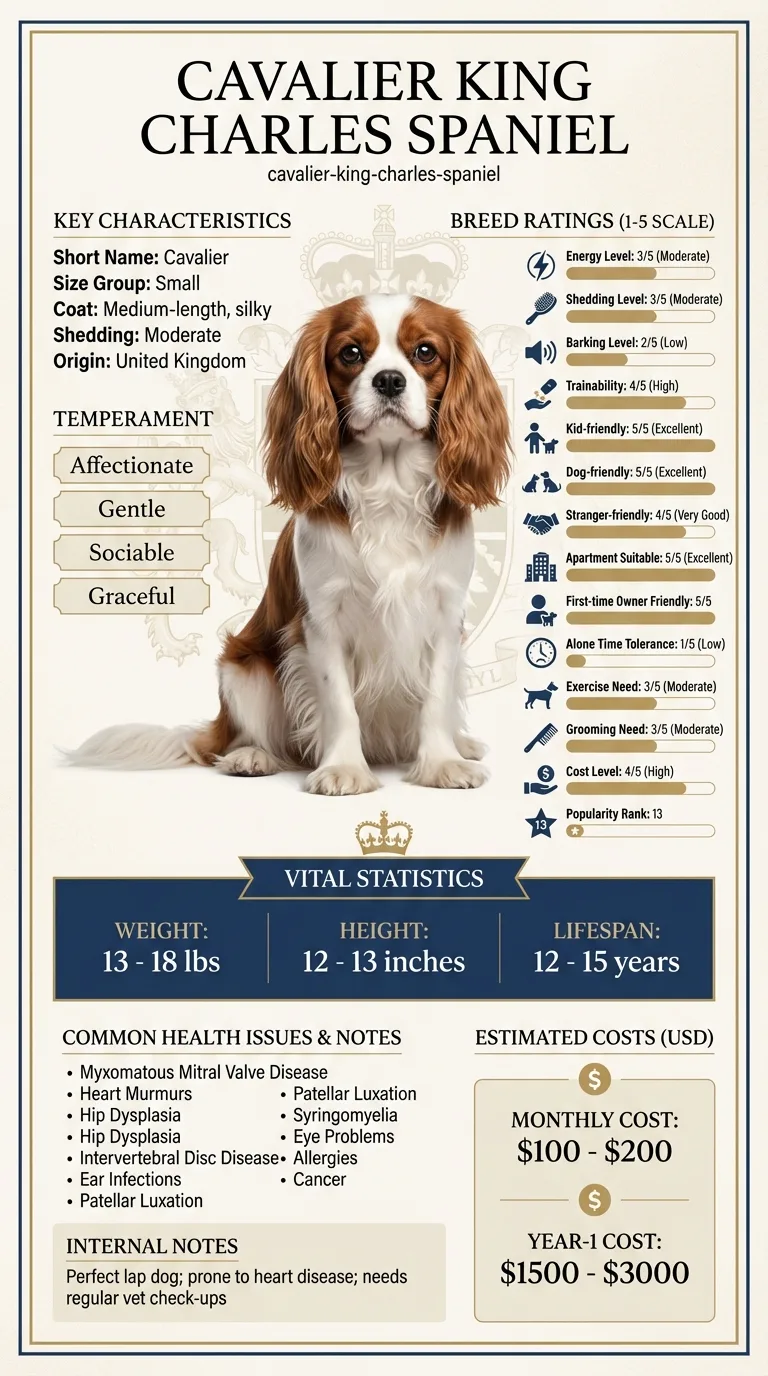
Cavalier King Charles Spaniels are known for their affectionate and sociable nature. However, they are also prone to specific health issues, such as heart disease and hip dysplasia, which can affect their behavior. Additionally, purebred Cavaliers may have inherited traits that make them more sensitive to changes in their environment, leading to anxiety or behavioral problems.
The environment plays a significant role in a Cavalier's behavior. Factors like lack of exercise, insufficient socialization, or changes in routine can lead to anxiety and stress. Living in a noisy area or being left alone for long periods can exacerbate these issues, especially since Cavaliers are not tolerant of being alone.
If your Cavalier displays persistent anxiety or behavioral issues despite your efforts, it might be time to consult a professional trainer. Look for someone who specializes in positive reinforcement methods and has experience with small breeds.
If your Cavalier shows signs of significant distress, such as excessive barking, destructive behavior, or changes in eating habits, consult your vet. They can rule out any underlying health problems and may recommend behavioral therapies or medications.
You may notice some changes in your Cavalier King Charles Spaniel within 4 to 6 months of consistent training and care.
Success looks like a well-adjusted dog that exhibits less anxiety and more confidence, along with improved behavior around other dogs and people.
Avoid these common mistakes that can worsen your Cavalier King Charles Spaniel's issues related to purebred vs. mixed breeds.
Understanding when to act quickly is vital for your Cavalier King Charles Spaniel. If your dog shows signs of severe distress, such as difficulty breathing, excessive lethargy, or persistent vomiting, you need to call your vet immediately. These symptoms can indicate serious health issues requiring urgent attention.

Emily, a nurse living in a busy city, adopted Bella, a Cavalier King Charles Spaniel mixed breed. Initially, Bella struggled with anxiety, barking at strangers and other dogs during walks. After researching techniques and committing to daily training sessions, Emily implemented positive reinforcement strategies. Within months, Bella became calmer and more sociable, enjoying her strolls and even making dog friends at the park.
Key takeaway: With patience and the right training approach, even anxious dogs can flourish and adapt to their environments.

Anxiety in Cavalier King Charles Spaniels can stem from various factors, including genetics, socialization, and environment. Purebreds may have specific health issues that contribute to their anxiety levels. It's essential to monitor their behavior and consult with a vet for tailored advice. This answer relates to Cavalier King Charles Spaniel purebred vs. mixed breeds.
Training your Cavalier to accept mixed breeds involves positive reinforcement techniques. Start with controlled introductions and reward calm behavior. Gradually increase exposure while ensuring your Cavalier feels safe and secure.
Mixed breeds often exhibit fewer genetic health issues compared to purebreds. They can be more adaptable and may have a wider range of temperaments. Additionally, mixed breeds are generally less expensive and can be found in shelters, providing a loving home.
Yes, Cavalier King Charles Spaniels are known to have specific health concerns, such as heart disease and hip dysplasia. Mixed breeds typically benefit from hybrid vigor, which can reduce the likelihood of inherited health problems.
To help your Cavalier manage anxiety around new dogs, start with gradual exposure in a controlled setting. Use treats and praise to reinforce positive interactions. Consistent training and socialization can significantly improve their comfort level.
Mixed breed Cavaliers can inherit a variety of health traits from both parent breeds. While they may be less prone to certain genetic issues, they can still develop health problems common in Cavaliers, like heart disease or hip dysplasia. It's essential to monitor their health and consult a vet regularly.
To determine if your Cavalier is purebred, check for specific breed traits like coat type, size, and temperament. DNA testing can also provide clarity by identifying breed compositions. If you’re unsure, consult with a breeder or vet familiar with the breed.
Training can vary widely among mixed breed Cavaliers depending on the traits they inherit. Some may be just as trainable as purebreds, while others might present unique challenges. Consistent, positive reinforcement training methods usually yield the best results.
You can begin training your Cavalier King Charles Spaniel as early as eight weeks old. Early socialization is crucial, so introducing them to different environments and people helps them grow into well-adjusted adults. Keep sessions short and fun to maintain their interest.
Yes, Cavalier King Charles Spaniels are known for their affectionate nature, which can make them prone to separation anxiety. If you notice signs of distress when left alone, consider gradual training techniques or consult your vet for advice. Providing mental stimulation can also help ease their anxiety.
Establish a consistent routine, provide a safe space, and use positive reinforcement to build confidence in your Cavalier. Regular exercise can also help reduce anxiety.
Consider health, temperament, and your lifestyle. Purebreds may be more predictable in behavior, while mixed breeds often come with fewer health concerns.
Purebreds typically cost more upfront, often between $1,500 and $3,000, while mixed breeds can be adopted for lower fees. Ongoing care costs remain similar regardless of breed.


![Ultimate Guides: "Complete Guide to Choosing a Dog for [X] | Ultimate Guides: Complete Guide to Choosing a Dog for You thumbnail](/images/breeds/golden-retriever/golden%20retriever1.jpg)