Behavior
What are quick tips for managing EIC in Cavaliers?
Limit intense exercise, especially in hot weather. Monitor your dog closely during play, and ensure they have regular breaks.

Quick answer
What are quick tips for managing EIC in Cavaliers?
Limit intense exercise, especially in hot weather. Monitor your dog closely during play, and ensure they have regular breaks.
Cavalier King Charles Spaniel exercise-induced collapse (EIC) is a serious condition where your dog suddenly collapses during or after exercise.
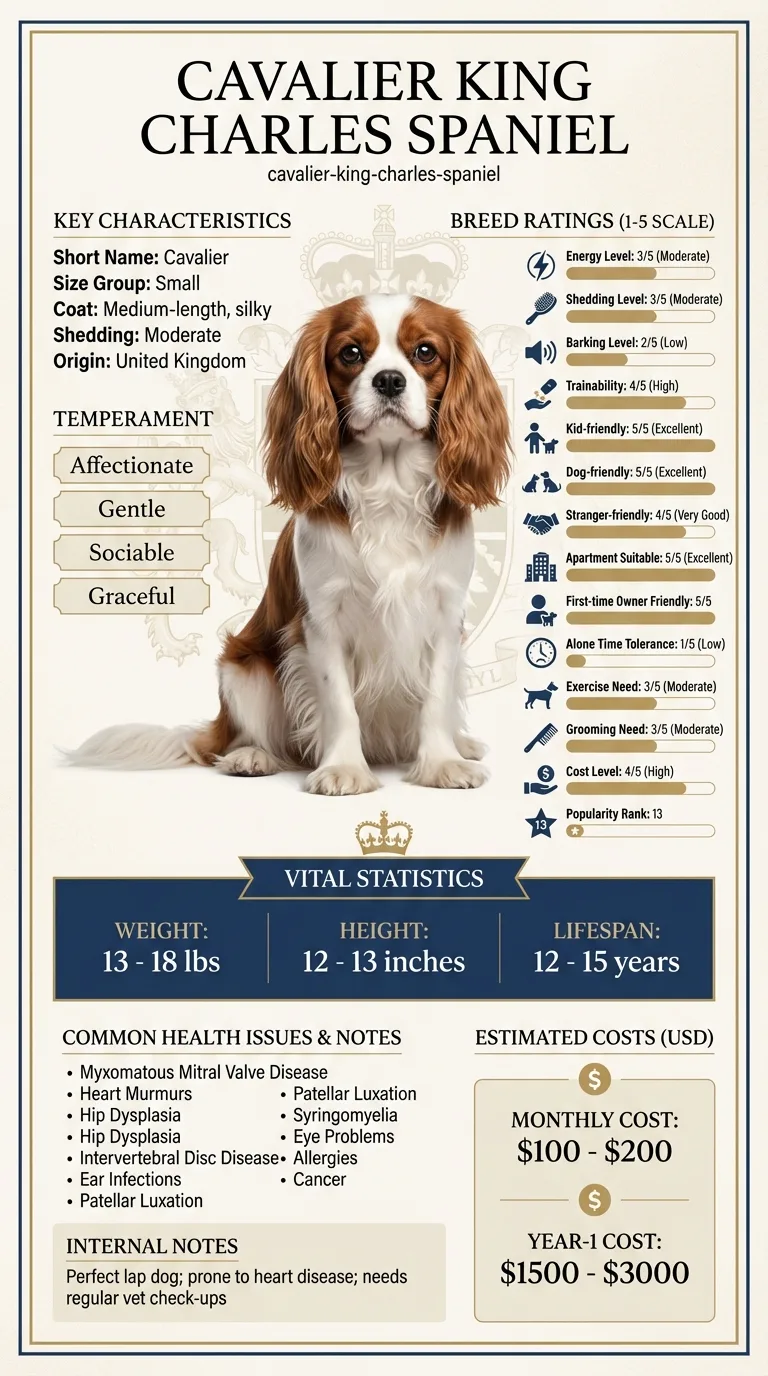
Owners of Cavalier King Charles Spaniels, particularly those who love to engage their dogs in active play, often face this challenge. It’s especially concerning for first-time dog owners who may not recognize the signs or know how to respond.
This guide is not medical advice. If your dog shows pain, sudden behavior change, or worsening symptoms, consult a licensed veterinarian.
Some links may be affiliate links. We may earn a commission at no extra cost to you. We only suggest products we believe are helpful for dog owners.
We research and check what we publish, but we do not warrant that any figure, date, price, or statement is accurate, complete, or current, and we accept no liability for any loss, cost, injury, or other harm arising from the use of this site. Use it as one reference among several. You remain responsible for your own decisions and for your dog's care - confirm anything that matters with a licensed veterinarian or another qualified professional before you act on it. Full disclaimer.
Check this first
Recognizing when your Cavalier King Charles Spaniel's exercise-induced collapse (EIC) is an emergency is crucial for their health. If your dog collapses suddenly during or after exercise and shows signs of distress—like panting heavily, drooling excessively, or losing consciousness—this is a clear red flag. These symptoms indicate a serious situation that requires immediate veterinary attention.
On the other hand, if your Cavalier experiences mild fatigue or temporary weakness after light play but recovers quickly, you can monitor the situation. Keep an eye on their behavior and energy levels, and limit strenuous activity to prevent future episodes. If they seem to bounce back within a few minutes, it might just be a sign to slow down.
It's essential to differentiate between these scenarios. Always err on the side of caution; if you're unsure, calling your vet is the best course of action. They'll help you determine whether your dog needs urgent care or if it's safe to wait and observe their behavior.
If any of these apply, call your vet or an emergency clinic now. The rest of this page is for the cases that are not an emergency.
Cavalier King Charles Spaniel exercise-induced collapse (EIC) is a distressing condition where your dog may suddenly collapse during or after exercise. This can happen during play, walks, or even vigorous indoor activities. Owners often notice their Cavalier becoming weak, unable to stand, or even fainting temporarily, which can be alarming.
EIC is a known issue for Cavalier King Charles Spaniels, particularly among those with a family history of the condition. Studies suggest that around 20% of Cavaliers may be affected, making awareness and management crucial for owners.
Cavalier King Charles Spaniels are a small breed with moderate energy levels. They can be prone to exercise-induced collapse (EIC) due to genetic factors. This condition often occurs when they engage in intense physical activity, which can trigger their symptoms.
Environmental factors can also contribute to EIC. Overexertion, high temperatures, and lack of proper hydration can increase the risk of collapse. Additionally, stressful environments or rapid changes in activity levels may also be triggers.
Consult your veterinarian if your Cavalier experiences repeated episodes of collapse or if you're unsure about their exercise needs. A vet can provide guidance on managing EIC and may suggest tests to rule out other health issues.
Avoiding common pitfalls can help manage Cavalier King Charles Spaniel exercise-induced collapse (EIC). Here are key mistakes to steer clear of.
Start here: Cavalier King Charles Spaniel Genetic Disorders: Screening
See all Cavalier King Charles Spaniel health problems, which breeds are prone to exercise induced collapse eic, or the full Cavalier King Charles Spaniel breed guide for temperament, exercise needs and ownership costs.
You can expect to see improvements in your Cavalier King Charles Spaniel's behavior within 4 to 6 weeks of consistent care and management.
Success means your dog can participate in moderate exercise without collapsing, and you’ll feel confident managing their activity levels.
Emily, a busy nurse in Atlanta, adopted Bella, a charming Cavalier King Charles Spaniel. After a few weeks, she noticed Bella would suddenly collapse after playtime. Concerned, Emily researched Cavalier King Charles Spaniel exercise-induced collapse (EIC) and learned how to stop it. She adjusted Bella's exercise routine to include shorter, frequent walks instead of long runs. Emily also worked with a trainer to teach Bella commands that would help them stop activities before a collapse could happen. Over time, Bella was able to enjoy outdoor play without collapsing, and Emily felt more at ease taking her on daily adventures.
Key takeaway: With proper management and training, you can help your Cavalier enjoy exercise safely while minimizing risks associated with EIC.
Cavalier King Charles Spaniel exercise-induced collapse (EIC) is a condition where dogs suddenly collapse during or after vigorous activity. This happens due to a lack of oxygen in the muscles, leading to weakness and loss of coordination. It’s crucial to recognize the signs early to prevent potential harm.
To manage exercise-induced collapse (EIC), limit your Cavalier's intense activities, especially in hot weather. Gradually increase exercise levels, monitor your dog closely, and provide frequent breaks. Training your dog to recognize and respond to physical limits can also help.
If your Cavalier collapses, immediately remove them from the activity and cool them down. Ensure they are in a shaded or cool area and provide fresh water. If they do not recover quickly or show other concerning symptoms, contact your veterinarian right away.
Yes, EIC is relatively common in Cavalier King Charles Spaniels, especially in active individuals. Since this breed has a moderate energy level, they can be prone to overexertion. Regular monitoring and proper exercise management can help reduce incidents.
Training can significantly help in managing EIC. Teaching your Cavalier commands like 'stop' or 'slow down' during playtime can help them recognize their limits. Positive reinforcement for calm behavior can also create better exercise habits.
Early signs of exercise-induced collapse (EIC) in Cavalier King Charles Spaniels include sudden weakness, stumbling, or collapsing during or after intense activity. If you notice these symptoms, it’s important to stop exercise immediately and allow your dog to rest.
Yes, older Cavalier King Charles Spaniels may be more susceptible to exercise-induced collapse (EIC) due to decreased physical resilience. It’s essential to monitor their activity levels closely and consult your vet for tailored exercise recommendations.
To manage exercise-induced collapse (EIC) during playtime, keep sessions short and monitor your dog's energy levels. Allow for plenty of breaks and opt for low-impact activities to prevent overexertion.
If your Cavalier King Charles Spaniel collapses during exercise, stay calm and check if they are responsive. Move them to a cool, quiet area, offer water, and let them rest. If they do not recover quickly or show other concerning symptoms, contact your veterinarian immediately.
Yes, training techniques for Cavalier King Charles Spaniels with exercise-induced collapse (EIC) include gradual conditioning and positive reinforcement for calm behavior. Working with a professional trainer can help create a tailored plan that accommodates their specific needs.
Limit intense exercise, especially in hot weather. Monitor your dog closely during play, and ensure they have regular breaks.
Consult your vet if your Cavalier experiences repeated collapses or shows signs of distress during exercise.
Yes, consider training programs focused on managing exercise limits to help your Cavalier develop safer habits.
Immediately stop all activity, cool your dog down, and provide hydration. If symptoms persist, contact your veterinarian.
A one-page prep sheet for this condition: the signs, the questions to ask, what to get priced. Unlocks here.
You get: Vet visit prep sheet
No spam. One-click unsubscribe. See our privacy policy.
See a sample page before you decide.
Early access list
The free prep sheet covers the same-day warning signs, a symptom log and the questions to ask. We are considering a fuller kit that adds a cost worksheet for the usual tests and treatments (US price ranges with their sources) and a plain-English guide to ways of covering the bill. It is not built yet; this list tells us whether it is worth building.
One email, no spam, unsubscribe anytime. Information only, not veterinary advice.