Behavior
How can I comfort my Cane Corso during separation?
Try leaving a piece of your clothing with your Cane Corso to provide comfort while you're away. You can also use a calming music playlist to help soothe them.

Quick answer
How can I comfort my Cane Corso during separation?
Try leaving a piece of your clothing with your Cane Corso to provide comfort while you're away. You can also use a calming music playlist to help soothe them.
Cane Corso separation anxiety is a serious issue that can affect both your dog and your peace of mind. When these loyal companions feel distressed when left alone, it can lead to destructive behaviors and emotional turmoil.
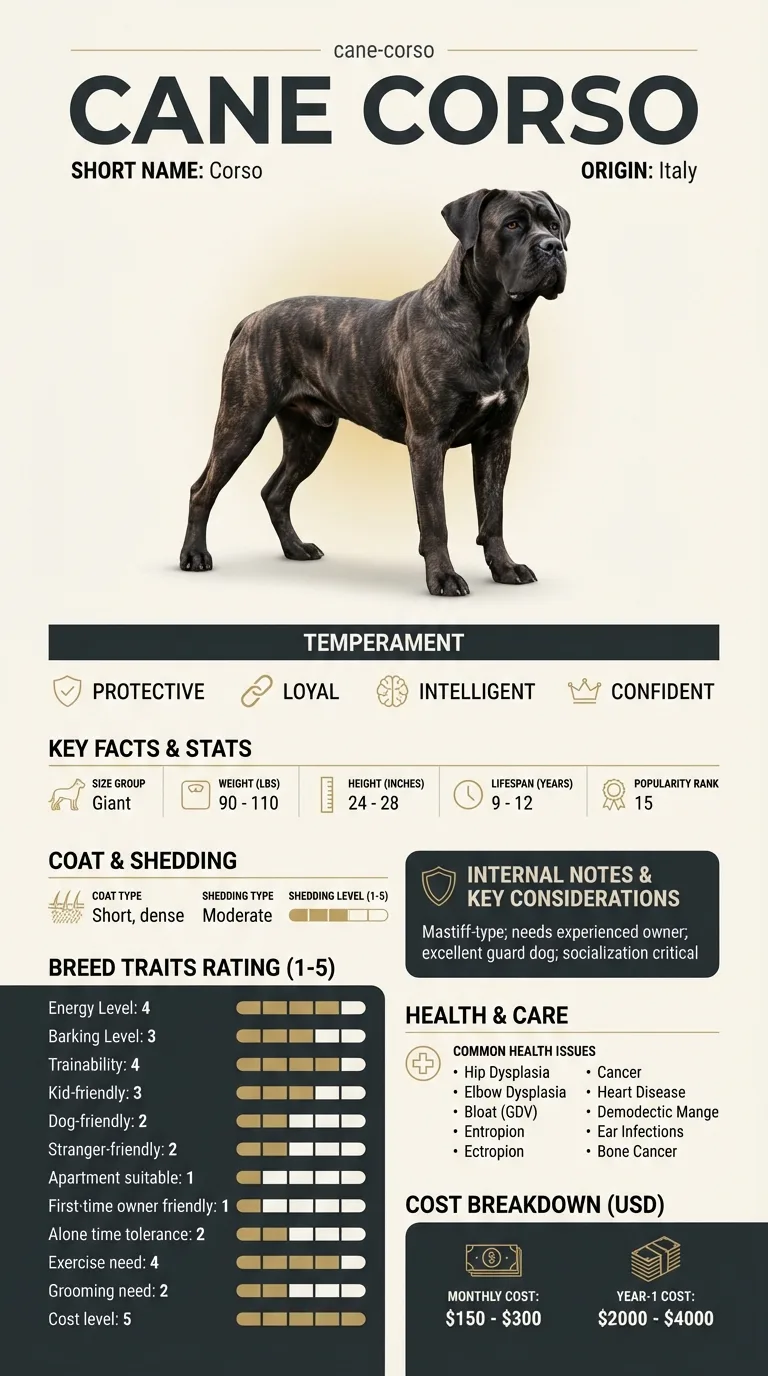
Typical owners facing this issue often include busy professionals, families who travel, or anyone who needs to leave their Cane Corso alone for extended periods. If you're a first-time owner or live in an apartment, you may find this especially challenging.
This guide is not medical advice. If your dog shows pain, sudden behavior change, or worsening symptoms, consult a licensed veterinarian.
Some links may be affiliate links. We may earn a commission at no extra cost to you. We only suggest products we believe are helpful for dog owners.
We research and check what we publish, but we do not warrant that any figure, date, price, or statement is accurate, complete, or current, and we accept no liability for any loss, cost, injury, or other harm arising from the use of this site. Use it as one reference among several. You remain responsible for your own decisions and for your dog's care - confirm anything that matters with a licensed veterinarian or another qualified professional before you act on it. Full disclaimer.
Cane Corso separation anxiety is a common issue for these loyal and protective dogs. When left alone, they may exhibit distress through barking, destructive behavior, or attempts to escape. This anxiety often stems from their strong attachment to their owners and can lead to significant challenges in daily life.
Separation anxiety affects many Cane Corsos, especially those with less tolerance for being alone. While not every Corso will struggle with this issue, it's notably prevalent among those who are not accustomed to spending time alone.
Cane Corsos are naturally protective and loyal, often forming strong bonds with their owners. This deep attachment can lead to anxiety when they are left alone. Additionally, their intelligence means they can become bored or frustrated without enough mental stimulation, contributing to anxiety symptoms.
Separation anxiety can also stem from an environment lacking stability. If a Cane Corso has experienced frequent changes in their household or been rehomed, they may feel insecure when left alone. Inadequate socialization or lack of training can amplify their fears, making them feel more anxious.
If your Cane Corso's separation anxiety doesn't improve with home strategies, it may be time to consult a professional trainer. Look for someone experienced in behavior modification techniques specifically for anxiety issues. They can provide tailored guidance and training plans.
If your dog's anxiety leads to destructive behavior or severe distress, it's essential to talk to your vet. They can rule out any medical issues and discuss possible medications or supplements to help manage your Cane Corso's anxiety.
Start here: Cane Corso Most Common Genetic Disorders: What to Screen For
See all Cane Corso health problems, which breeds are prone to separation anxiety, or the full Cane Corso breed guide for temperament, exercise needs and ownership costs.
With consistent training and patience, you can see improvement in your Cane Corso's separation anxiety in 4 to 8 weeks.
Success means your dog can be left alone for longer periods without excessive barking, destructive behavior, or signs of distress.
Many owners unintentionally make their Cane Corso's separation anxiety worse. Here are some common mistakes and safer alternatives to consider.
Cane Corso separation anxiety can range from mild to severe. It's crucial to recognize when your dog's anxiety requires urgent attention. If your Cane Corso shows signs of distress that lead to harmful behaviors, you should call your vet immediately. Here are some red-flag signs that indicate it's an emergency:
- Destructive Behavior: If your dog is chewing furniture, digging holes, or breaking things when left alone, this can indicate severe distress. - Self-Harm: Excessive barking, howling, or attempts to escape that lead to injury are serious signs. If your dog is injuring themselves while trying to get to you, seek help right away. - Panic Attacks: Signs such as panting, drooling, pacing, or shaking when you leave could mean your dog is in crisis.
On the other hand, there are mild cases of separation anxiety that can be monitored with a plan. If your Cane Corso shows occasional whining or mild barking when you leave but doesn't cause harm to themselves or your home, you might not need to rush to the vet. Instead, you can implement training strategies to help ease their anxiety. Here are some signs to monitor instead of panicking:
- Mild Whining: A little whining or barking upon your departure is normal and can usually be addressed with training. - Restlessness: If your Corso seems restless or anxious but is not destructive, you can work on creating a more comfortable environment for them. - Delayed Settling: If your dog takes a while to settle down after you leave, this can be managed with gradual desensitization and training exercises.
In summary, if you're unsure whether your Cane Corso's behavior is an emergency, err on the side of caution. Contact your vet for advice tailored to your situation.

Maria, a busy nurse in Atlanta, adopted Titan, a Cane Corso, thinking he would be a perfect companion. However, she soon discovered that Titan suffered from separation anxiety. Every time she left for work, he would bark incessantly and chew on furniture. Feeling overwhelmed, Maria sought help from a local trainer who specialized in Cane Corso separation anxiety training. With a structured plan that included gradual desensitization and positive reinforcement, Maria worked with Titan for about six weeks. Slowly but surely, he learned to stay calm when she left. Now, Titan can comfortably spend up to four hours alone without panic.
Key takeaway: With dedication and the right training techniques, even a Cane Corso with separation anxiety can learn to feel secure when left alone.
Signs of separation anxiety in Cane Corsos include excessive barking, destructive behavior, and attempts to escape when left alone. You may also notice your dog being clingy or showing signs of distress when you prepare to leave. Observing these behaviors can help you address the issue early.
To stop Cane Corso separation anxiety, start by gradually increasing the time your dog spends alone. Use positive reinforcement to reward calm behavior when you leave and return. Implementing a consistent routine can also help your dog feel more secure.
Yes, training can significantly alleviate separation anxiety. Techniques such as crate training, desensitization, and teaching your dog to be comfortable alone for short periods can make a difference. Consider working with a professional trainer for personalized strategies.
There are several products designed to help with separation anxiety, including calming collars, anxiety wraps, and interactive toys. These can provide comfort and distraction for your Cane Corso when you're away. Always consult your vet before trying new products.
Yes, older Cane Corsos can develop separation anxiety, especially if there have been significant changes in their environment or routine. It might be triggered by moving to a new home, the loss of a family member, or changes in their owner's schedule. Monitoring their behavior and providing reassurance can help.
To help your Cane Corso, gradually get them used to being alone by starting with short departures and increasing the time. Providing interactive toys or a comfortable space can also help keep them occupied. Training sessions that focus on independence can be beneficial.
Medication may be necessary for severe cases of Cane Corso separation anxiety, especially when training and behavior modification alone aren't enough. Consulting with a veterinarian is essential to determine the best course of action. They can recommend appropriate medications and help create a comprehensive treatment plan.
If your Cane Corso's separation anxiety is severe or worsening, it’s best to consult a vet. Signs like self-harm, extreme distress, or significant behavioral changes warrant professional advice. A vet can help identify any underlying issues and recommend effective treatment options.
Try leaving a piece of your clothing with your Cane Corso to provide comfort while you're away. You can also use a calming music playlist to help soothe them.
If your Cane Corso is destructive, ensure they have safe toys to chew on. Gradually increase their alone time and consider using a crate for safety.
Cane Corsos generally tolerate being alone for 2-4 hours, but longer periods can lead to anxiety. Make sure to provide mental stimulation and exercise before you leave.
Yes, whining is a common sign of anxiety. Training and desensitization can help your Cane Corso learn to cope better when alone.
Behaviour changes often start with pain. The prep sheet for this page covers what to rule out, and what to ask.
You get: Vet visit prep sheet
No spam. One-click unsubscribe. See our privacy policy.
Preview page 1 before you decide.