Behavior
What are quick tips for managing Cane Corso myotonia congenita?
Focus on gentle exercise, avoid strenuous activities, and maintain a consistent training routine. Regular vet check-ups are essential for monitoring their condition.

Quick answer
What are quick tips for managing Cane Corso myotonia congenita?
Focus on gentle exercise, avoid strenuous activities, and maintain a consistent training routine. Regular vet check-ups are essential for monitoring their condition.
Cane Corso myotonia congenita can lead to muscle stiffness, affecting your dog's mobility and comfort.
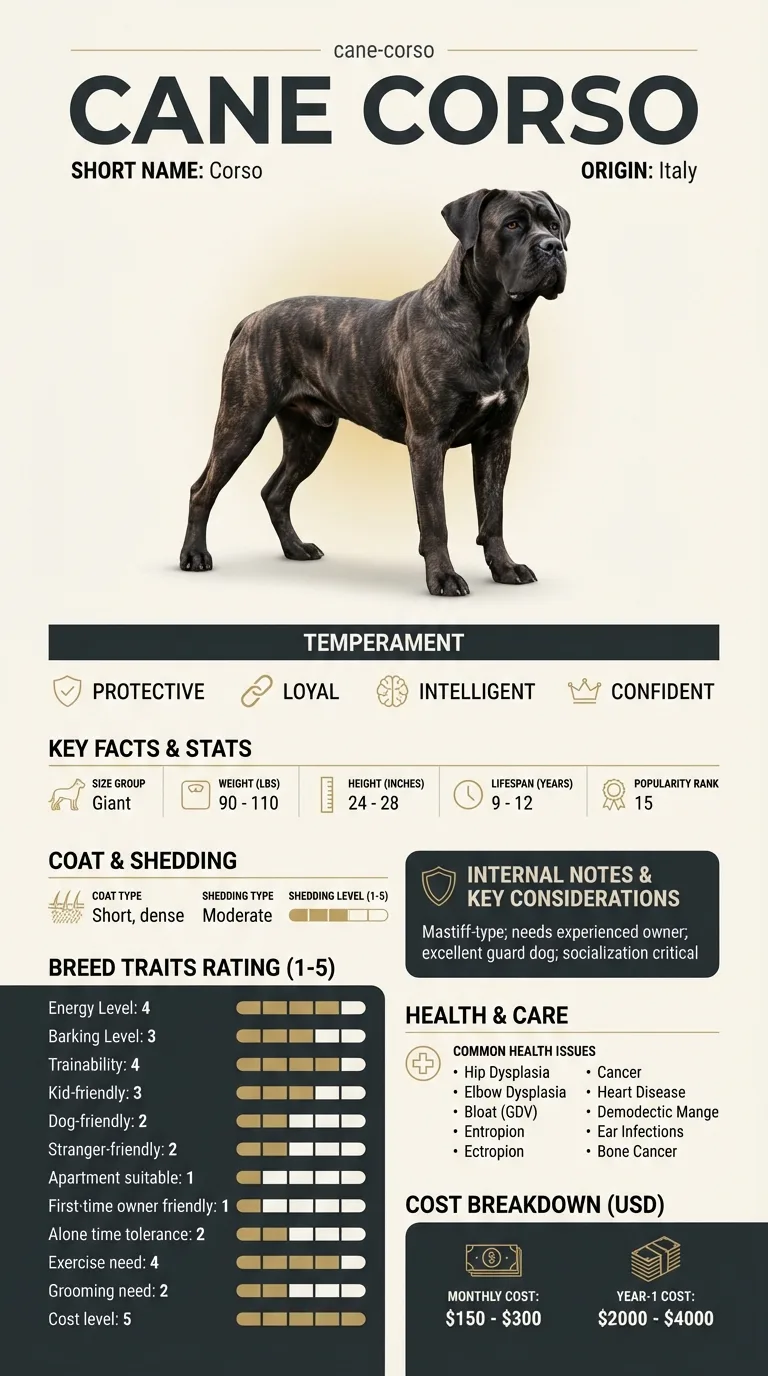
Typically, owners of Cane Corsos may notice their dogs struggling with stiffness and delayed muscle relaxation. This is particularly concerning for first-time dog owners or those unfamiliar with breed-specific health issues.
This guide is not medical advice. If your dog shows pain, sudden behavior change, or worsening symptoms, consult a licensed veterinarian.
Some links may be affiliate links. We may earn a commission at no extra cost to you. We only suggest products we believe are helpful for dog owners.
We research and check what we publish, but we do not warrant that any figure, date, price, or statement is accurate, complete, or current, and we accept no liability for any loss, cost, injury, or other harm arising from the use of this site. Use it as one reference among several. You remain responsible for your own decisions and for your dog's care - confirm anything that matters with a licensed veterinarian or another qualified professional before you act on it. Full disclaimer.
Check this first
Noticing myotonia congenita symptoms in your Cane Corso can be worrying. It's essential to know when to call your vet immediately versus when to monitor your dog's condition. This will help ensure your dog's health and safety.
If any of these apply, call your vet or an emergency clinic now. The rest of this page is for the cases that are not an emergency.
Cane Corso myotonia congenita is a genetic condition that causes muscle stiffness and difficulty relaxing after a contraction. This can lead to challenges in movement, making daily activities like walking or playing more complicated for your dog. Owners may notice their Corso struggling to get up after resting or having trouble with stairs, which can be frustrating and concerning.
Myotonia congenita is relatively rare in Cane Corsos, but it does occur. It's important for potential owners to be aware of this condition and monitor their dog for signs of stiffness or difficulty moving.
Cane Corso myotonia congenita is linked to genetic factors specific to the breed. This condition causes muscle stiffness, particularly after periods of rest. It's essential for Cane Corso owners to understand that this is not a training issue but rather a hereditary health concern.
Environmental factors can exacerbate myotonia congenita symptoms. Stressful situations, such as loud noises or unfamiliar environments, may trigger muscle stiffness. Additionally, lack of physical activity can contribute to more noticeable stiffness in affected dogs.
If you notice significant changes in your dog's mobility or if they seem to be in pain, it's crucial to consult a veterinarian. They can assess the severity of myotonia congenita and recommend appropriate treatment options.
Avoiding these common mistakes can help manage your Cane Corso's myotonia congenita more effectively.
Start here: Cane Corso Most Common Genetic Disorders: What to Screen For
See all Cane Corso health problems, which breeds are prone to myotonia congenita, or the full Cane Corso breed guide for temperament, exercise needs and ownership costs.
Improvement in your Cane Corso's myotonia congenita can take several weeks to months with consistent care and follow-up with your vet.
Success means your dog shows reduced muscle stiffness, improved mobility, and a more comfortable lifestyle.
If your Cane Corso shows any of the following symptoms, it’s crucial to contact your veterinarian right away. These signs may indicate a severe issue that needs immediate attention.

In some situations, you may notice milder symptoms that can be monitored. These cases typically do not require immediate vet visits but should be observed closely.

When Sarah adopted Max, her Cane Corso, she noticed he struggled with muscle stiffness, particularly after exercise. After researching, she learned that myotonia congenita could be affecting him. She worked with a vet and a trainer to create a plan that included gentle exercises and specific training techniques. Over several months, Sarah saw Max become more agile and less uncomfortable after playtime, which brought both of them joy.
Key takeaway: With patience and the right approach, managing Cane Corso myotonia congenita can lead to a happier, healthier life for your dog.
Signs of myotonia congenita in a Cane Corso include muscle stiffness, difficulty jumping, or prolonged muscle contraction after exercise. If you notice these symptoms, it’s crucial to consult your vet for an accurate diagnosis and management options.
To help your Cane Corso with myotonia congenita, ensure they receive regular, gentle exercise to maintain muscle tone without overexertion. Training should focus on positive reinforcement and patience. Work closely with your vet to create a tailored plan.
Yes, training for Cane Corso myotonia congenita should emphasize low-impact activities and short training sessions. Focus on commands that encourage movement without causing strain. Consistency and positive reinforcement are key to successful training.
Myotonia congenita may not worsen in all dogs, but some may experience increased muscle stiffness with age. Regular vet visits can help monitor the condition and adjust care as needed to ensure your dog's comfort and mobility.
Symptoms of Cane Corso myotonia congenita include muscle stiffness, difficulty in movement, and delayed relaxation of muscles after contraction. You might notice your dog struggling to get up after lying down or having trouble with stairs.
Diagnosis typically involves a thorough veterinary examination and may include blood tests, a muscle biopsy, or genetic testing. If you suspect your Cane Corso has myotonia congenita, contact your vet for a detailed assessment.
While there is no cure for myotonia congenita, treatment focuses on managing symptoms. This may include specific exercises, medication, and lifestyle adjustments to help your dog live comfortably.
Gentle, regular exercise can help improve muscle function in Cane Corsos with myotonia congenita. Consider low-impact activities like short walks and swimming, but always consult your vet for a tailored exercise plan.
If your Cane Corso shows signs of muscle stiffness, difficulty moving, or any unusual behavior, it's crucial to consult your vet. Early intervention can help manage the condition more effectively.
Focus on gentle exercise, avoid strenuous activities, and maintain a consistent training routine. Regular vet check-ups are essential for monitoring their condition.
Use positive reinforcement and short, fun sessions that prioritize gentle movements. Avoid high-impact exercises to prevent strain.
Look for signs of muscle stiffness, difficulty moving, or changes in energy levels. These can indicate issues related to myotonia congenita.
A one-page prep sheet for this condition: the signs, the questions to ask, what to get priced. Unlocks here.
You get: Vet visit prep sheet
No spam. One-click unsubscribe. See our privacy policy.
Preview page 1 before you decide.