Costs
What are quick tips for Cane Corso insurance claims?
Regular vet visits, a healthy diet, and proper training can help reduce insurance claims for your Cane Corso.

Quick answer
What are quick tips for Cane Corso insurance claims?
Regular vet visits, a healthy diet, and proper training can help reduce insurance claims for your Cane Corso.
Cane Corso insurance claims can be a concern for many owners. Understanding their causes and how to address them is crucial.
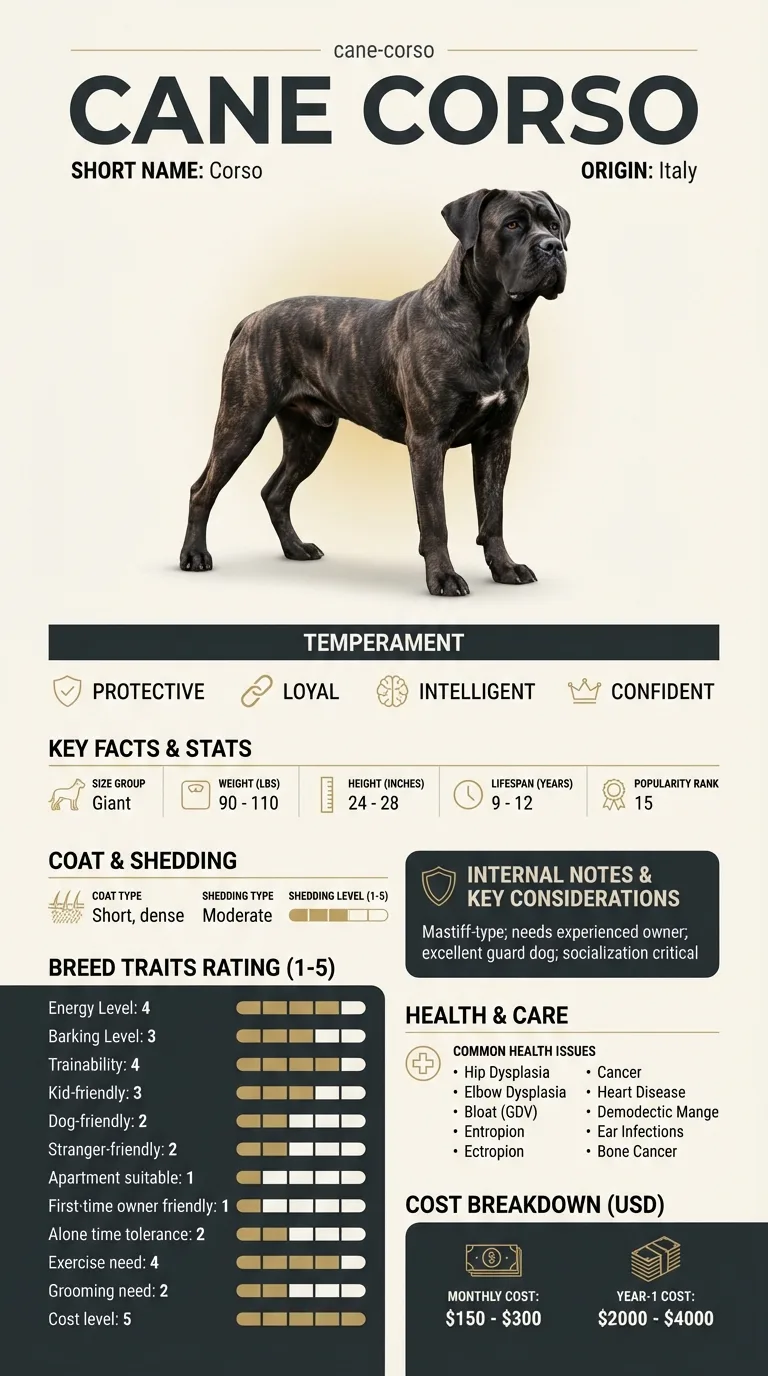
Owners of Cane Corsos, especially first-time dog parents or those unfamiliar with the breed's needs, often find themselves dealing with insurance claims. These claims can arise from accidents, health issues, or behavioral problems that may not be apparent until it's too late.
This guide is not medical advice. If your dog shows pain, sudden behavior change, or worsening symptoms, consult a licensed veterinarian.
Some links may be affiliate links. We may earn a commission at no extra cost to you. We only suggest products we believe are helpful for dog owners.
We research and check what we publish, but we do not warrant that any figure, date, price, or statement is accurate, complete, or current, and we accept no liability for any loss, cost, injury, or other harm arising from the use of this site. Use it as one reference among several. You remain responsible for your own decisions and for your dog's care - confirm anything that matters with a licensed veterinarian or another qualified professional before you act on it. Full disclaimer.
Check this first
Understanding when Cane Corso insurance claims signal an emergency is crucial for your pet's wellbeing. Certain signs indicate you need to act fast, while other situations may allow for a wait-and-see approach. Knowing the difference can save you time, stress, and potentially your dog's health.
If any of these apply, call your vet or an emergency clinic now. The rest of this page is for the cases that are not an emergency.
Cane Corso insurance claims can be a significant concern for owners. These dogs are large and powerful, which can lead to higher incidents of accidents or injuries, often resulting in insurance claims. Daily, owners may find themselves worrying about potential issues that could lead to costly claims, especially if their Corso is involved in a scuffle or an incident with another dog or person.
Insurance claims related to Cane Corsos can be common, especially in households where they are not properly trained or socialized. Many owners report incidents leading to claims, as these dogs can react strongly to unfamiliar situations. It's crucial for potential owners to understand that while these dogs are loving companions, they require experienced handling to minimize risks.
Cane Corsos are a giant breed with a strong physique, making them more prone to certain health issues that can lead to insurance claims. Their protectiveness and intelligence can also lead to behavioral problems if not properly socialized and trained. Additionally, their energy level requires regular exercise to prevent destructive behavior, which can result in claims due to accidents or injuries.
The environment plays a significant role in the likelihood of insurance claims. A lack of proper training or socialization can lead to anxiety or aggression, increasing incidents that result in claims. Moreover, living in a high-stress environment or being left alone for long periods can exacerbate behavioral issues, leading to costly accidents.
If your dog experiences ongoing health problems or severe behavioral issues, consult your veterinarian. They can help determine if there are underlying medical conditions contributing to the problem, and suggest appropriate treatments.
Many Cane Corso owners unknowingly reinforce behaviors that lead to higher insurance claims. Here are some common mistakes to avoid.
Start here: Cane Corso Most Common Genetic Disorders: What to Screen For
See all Cane Corso health problems, which breeds are prone to insurance claims, or the full Cane Corso breed guide for temperament, exercise needs and ownership costs.
It usually takes 3 to 6 months of consistent care and management to significantly reduce Cane Corso insurance claims.
Success means fewer claims filed, a better understanding of your dog's behavior, and improved interactions with others.
If you notice any of the following red-flag signs, it's time to contact your vet immediately: - Sudden changes in behavior, such as aggression or excessive anxiety - Repeated health issues leading to multiple claims in a short period - Severe injury or trauma that requires immediate medical attention - Difficulty breathing or signs of distress These signs suggest that your Cane Corso's health is at serious risk and needs immediate intervention.

In less severe situations, you can monitor your Cane Corso and create a plan. For example, if your dog is showing mild anxiety or has had a single insurance claim for a minor issue, keep a close watch. Document any changes and consult your vet for guidance on training or behavioral strategies.

Sarah, a first-time Cane Corso owner, faced numerous insurance claims due to her dog's anxiety and protective behavior. Living in a busy neighborhood, her Corso often barked at strangers and other dogs, leading to complaints and rising costs. After seeking guidance, Sarah enrolled in a specialized training course focused on managing aggressive behaviors and socialization. Over several months, she worked tirelessly with her dog, incorporating positive reinforcement techniques and regular social outings. Gradually, her Cane Corso became more relaxed around others, leading to fewer claims and a happier pet-owner dynamic.
Key takeaway: With dedication, proper training, and understanding, it's possible to reduce insurance claims and enhance your Cane Corso's behavior.
Cane Corsos tend to have higher insurance claims due to their size and potential health issues. Common claims can arise from conditions like hip dysplasia or bloat, which are prevalent in this breed. Regular vet check-ups and proper training can help mitigate these risks.
To reduce insurance claims, focus on preventive care and early training. Ensure your Cane Corso is socialized properly and engaged in regular exercise to prevent behavioral issues. Also, maintaining a healthy diet can help avoid common health problems.
Cane Corsos are prone to several health issues, including hip and elbow dysplasia, bloat, and heart disease. Being aware of these conditions allows you to monitor your dog closely and seek veterinary care when needed. Regular health checks and a good diet can help manage these risks.
Proper training can significantly reduce insurance claims related to behavior problems. A well-trained Cane Corso is less likely to develop anxiety or aggression, which can lead to incidents requiring medical attention. Consider enrolling in obedience classes or hiring a professional trainer.
When choosing an insurance policy for your Cane Corso, ensure it covers breed-specific health issues and behavioral assessments. Look for policies that offer comprehensive coverage for common conditions associated with the breed. Reading the fine print is essential to avoid surprises later.
Cane Corsos are prone to several health issues that can result in insurance claims, including hip dysplasia and bloat. Regular vet check-ups can help catch these problems early and reduce claims.
Proper training can address behavior issues that might lead to accidents or injuries, potentially lowering insurance claims. Focused training on socialization and obedience is crucial for this breed.
Yes, older Cane Corsos may be more susceptible to health issues that could lead to insurance claims. As they age, it’s essential to monitor their health closely and adjust their care accordingly.
If your Cane Corso shows signs of pain, difficulty moving, or unusual behavior, it's time to consult a vet. Early intervention can not only help your pet but may also help with potential insurance claims.
Yes, a Cane Corso's living environment can impact its health and behavior. A stressful or unsuitable environment may lead to more claims, so ensure they have enough space and mental stimulation.
Regular vet visits, a healthy diet, and proper training can help reduce insurance claims for your Cane Corso.
It's recommended to take your Cane Corso for annual check-ups or more frequently if they have existing health issues.
Yes, effective behavior training can lower the likelihood of incidents that lead to insurance claims.
Cane Corso insurance typically ranges from $150 to $300 per month, depending on coverage levels.
A one-page prep sheet for this condition: the signs, the questions to ask, what to get priced. Unlocks here.
You get: Vet visit prep sheet
No spam. One-click unsubscribe. See our privacy policy.
Preview page 1 before you decide.