Behavior
What are some quick tips for Cane Corso back/spine issues?
Keep your Cane Corso at a healthy weight, avoid high jumps, and provide regular, gentle exercise to prevent back/spine issues.

Quick answer
What are some quick tips for Cane Corso back/spine issues?
Keep your Cane Corso at a healthy weight, avoid high jumps, and provide regular, gentle exercise to prevent back/spine issues.
Cane Corso back/spine issues can lead to serious health concerns for your dog. Understanding these problems is essential for their well-being.
Typically, owners of Cane Corsos face these challenges, especially those new to the breed or those unaware of the potential health risks. Busy families or first-time dog owners may struggle to spot the early signs, making it crucial to stay informed.
This guide is not medical advice. If your dog shows pain, sudden behavior change, or worsening symptoms, consult a licensed veterinarian.
Some links may be affiliate links. We may earn a commission at no extra cost to you. We only suggest products we believe are helpful for dog owners.
We research and check what we publish, but we do not warrant that any figure, date, price, or statement is accurate, complete, or current, and we accept no liability for any loss, cost, injury, or other harm arising from the use of this site. Use it as one reference among several. You remain responsible for your own decisions and for your dog's care - confirm anything that matters with a licensed veterinarian or another qualified professional before you act on it. Full disclaimer.
Check this first
Cane Corso back/spine issues can range from mild discomfort to serious emergencies. Recognizing the signs is crucial for your dog's health. If your Corso shows severe symptoms, immediate veterinary attention is necessary.
If any of these apply, call your vet or an emergency clinic now. The rest of this page is for the cases that are not an emergency.
Cane Corso back/spine issues can greatly affect their quality of life. These problems often manifest as difficulty in movement, reluctance to play, or noticeable pain when touched along the spine. Owners may observe their dog struggling to get up or showing signs of discomfort when walking or standing.
Back/spine issues are relatively common in Cane Corsos, especially as they age. Regular vet check-ups and proper care can help mitigate some risks, but many dogs in this breed will experience some level of back discomfort during their lifetime.
Cane Corsos are a large breed, and their size can lead to specific back and spine issues. Genetic predispositions, such as intervertebral disc disease, are common in giant breeds. Additionally, their active nature can strain their backs if not managed properly.
Environmental factors like improper exercise, lack of proper support when lying down, and weight gain can worsen back problems. Additionally, living in tight spaces can restrict their movement, which is crucial for their spine health. Poor training techniques may also lead to injuries.
If you notice signs of pain, such as reluctance to move, yelping when touched, or difficulty walking, consult your vet immediately. Persistent back issues may require medical intervention or a specialized treatment plan.
Avoiding common mistakes can help improve your Cane Corso's back and spine issues. Here are some behaviors that might be unintentional but can make the problem worse.
Start here: Cane Corso Most Common Genetic Disorders: What to Screen For
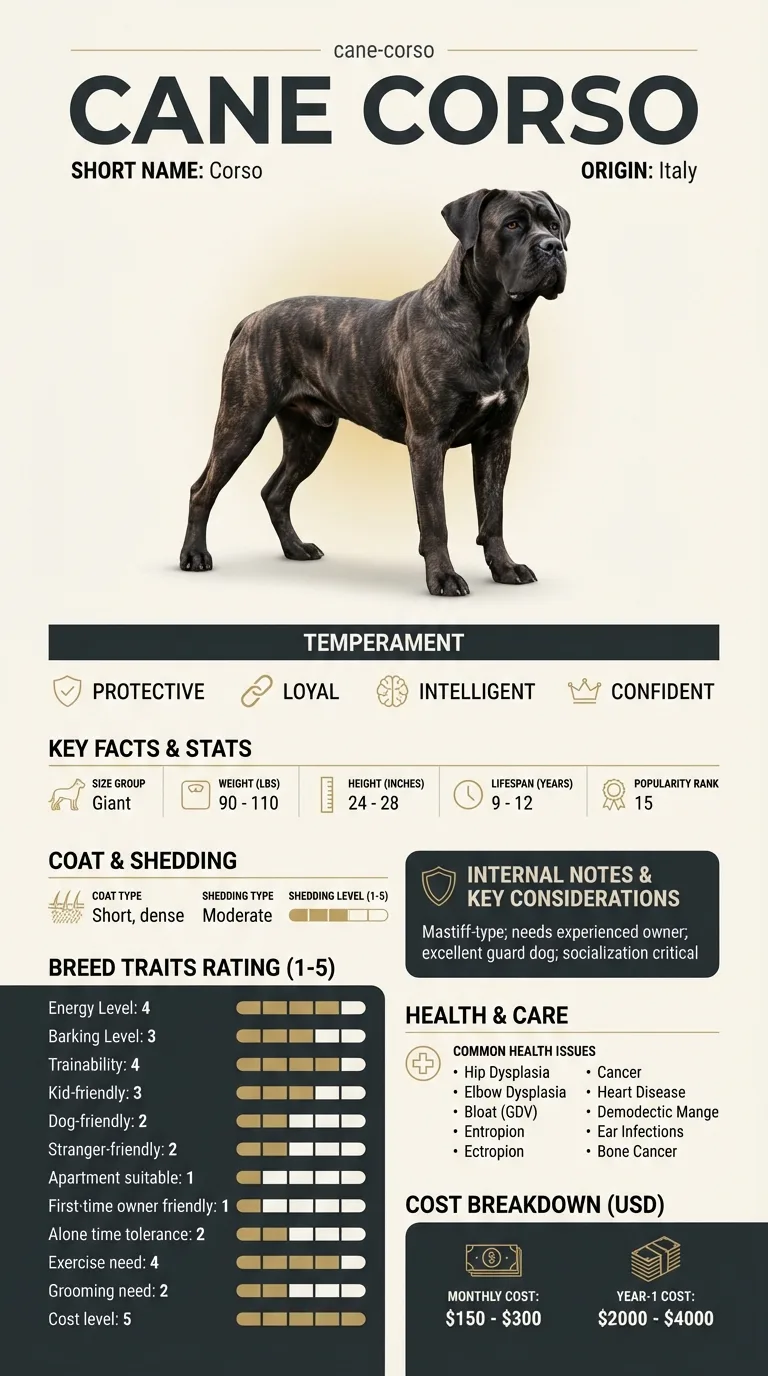
See all Cane Corso health problems, which breeds are prone to backspine issues, or the full Cane Corso breed guide for temperament, exercise needs and ownership costs.
Addressing Cane Corso back/spine issues can take 2 to 6 months, depending on the severity of the condition and the owner's commitment to a consistent care routine and follow-up with your vet.
Success means a noticeable reduction in pain, improved mobility, and increased comfort in daily activities. Your Cane Corso should be able to enjoy walks and playtime without significant discomfort.
Look for these urgent signs that indicate your Cane Corso needs immediate care. Ignoring these symptoms could lead to serious health risks.

If your Cane Corso displays mild symptoms, you might be able to monitor the situation at home. However, have a plan in place to seek help if things worsen.

Whether it’s an emergency or a mild case, consulting your vet is essential. They can provide tailored advice and treatment options for your Cane Corso’s back/spine issues. Early intervention often leads to better outcomes.
Maggie, a dedicated owner of a 4-year-old Cane Corso named Bruno, noticed he was having trouble jumping onto the couch and seemed to be in pain after walks. After consulting a vet, she learned that Bruno had early signs of intervertebral disc disease. Maggie committed to a rehabilitation plan that included controlled exercise, physical therapy, and a special diet to support his joints. Over the next few months, she worked diligently on his training and gradually introduced low-impact activities. Bruno's improvement was remarkable; he became more energetic and playful, and Maggie felt relieved to see him pain-free.
Key takeaway: Consistent care and training can significantly improve a Cane Corso's back/spine issues, making a positive difference in their quality of life.
Cane Corsos can suffer from back and spine issues due to their large size and genetic predispositions. Intervertebral disc disease is common in giant breeds, making them more susceptible to back pain. Regular vet check-ups can help identify potential problems early.
To prevent back/spine issues in your Cane Corso, ensure they maintain a healthy weight and get regular exercise. Avoid activities that put excessive strain on their spine, such as jumping from heights. Consult with your vet for tailored exercise and diet plans.
Signs of back/spine issues in Cane Corsos include difficulty walking, reluctance to jump or climb stairs, and signs of pain when handled. If you notice these symptoms, it's essential to consult a vet immediately for assessment and treatment options.
Yes, proper training can help reduce the risk of back/spine issues in Cane Corsos. Focus on teaching commands that promote controlled movements and avoid high-impact activities. Training can also improve their overall fitness and flexibility.
Surgery may be necessary for severe back/spine issues in Cane Corsos, especially if conservative treatments fail. Your vet will assess the situation and discuss the best options, including surgery, physical therapy, or medication.
At home, you can help your Cane Corso by providing a comfortable, supportive bed and limiting their jumping. Also, ensure they have a balanced diet to maintain a healthy weight and consult with your vet for any recommended supplements.
Regular vet check-ups are crucial for monitoring your Cane Corso's back/spine health. Typically, an annual visit is recommended, but if your dog shows any signs of discomfort or changes in behavior, schedule an appointment sooner.
Early signs of back and spine issues in a Cane Corso include reluctance to jump or climb stairs, changes in posture, and difficulty getting up. You might also notice signs of pain, such as whining or sensitivity when touching their back.
For older Cane Corsos, gentle exercise and weight management are crucial. You can also consider using orthopedic beds and ramps to reduce stress on their spine. Always consult with your vet for tailored advice.
It can be safe to train a Cane Corso with back/spine issues, but modifications are necessary. Focus on low-impact activities and avoid strenuous exercises that could worsen their condition. Make sure to work with a trainer experienced in handling dogs with health issues.
If your Cane Corso shows severe pain, inability to move, or loss of bladder control, these could be signs of serious back/spine issues. It's essential to seek immediate veterinary attention if you notice these symptoms.
Yes, some back and spine issues can be hereditary in Cane Corsos due to their genetics. Responsible breeding practices can help reduce the risk of these problems, so it's wise to research breeders thoroughly.
Keep your Cane Corso at a healthy weight, avoid high jumps, and provide regular, gentle exercise to prevent back/spine issues.
Focus on low-impact training techniques that enhance control and flexibility, avoiding activities that strain their spine.
Treatment for back/spine issues can range from $200 for initial vet visits to several thousand dollars for surgery, depending on severity.
Provide a supportive bed and limit their jumping or climbing to help keep your Cane Corso comfortable and safe.
Regular vet visits focusing on joint and spine health are essential to catch any issues early and maintain your dog's overall well-being.
A one-page prep sheet for this condition: the signs, the questions to ask, what to get priced. Unlocks here.
You get: Vet visit prep sheet
No spam. One-click unsubscribe. See our privacy policy.
Preview page 1 before you decide.