Behavior
What are Bulldog (English) purebred vs. mixed breeds quick tips?
Focus on early socialization and training to prevent behavior issues. Regular vet check-ups can help catch any health problems early.

Quick answer
What are Bulldog (English) purebred vs. mixed breeds quick tips?
Focus on early socialization and training to prevent behavior issues. Regular vet check-ups can help catch any health problems early.
Choosing between a Bulldog (English) purebred and a mixed breed can be challenging. Each option has distinct behavior traits and potential health issues. (Bulldog (English) purebred vs. mixed breeds)
This dilemma often faces first-time dog owners, families with children, and those who may not be fully aware of the health implications related to purebred versus mixed breed Bulldogs. It's important to weigh the pros and cons carefully.
This guide is not medical advice. If your dog shows pain, sudden behavior change, or worsening symptoms, consult a licensed veterinarian.
Some links may be affiliate links. We may earn a commission at no extra cost to you. We only suggest products we believe are helpful for dog owners.
We research and check what we publish, but we do not warrant that any figure, date, price, or statement is accurate, complete, or current, and we accept no liability for any loss, cost, injury, or other harm arising from the use of this site. Use it as one reference among several. You remain responsible for your own decisions and for your dog's care - confirm anything that matters with a licensed veterinarian or another qualified professional before you act on it. Full disclaimer.
Check this first
Red-flag signs indicating an emergency for Bulldogs include severe difficulty breathing, excessive drooling, or sudden collapse. If your dog shows these symptoms, don’t hesitate; call your vet immediately. Other signs like persistent vomiting, diarrhea with blood, or a swollen abdomen can also be serious and require urgent attention.
Mild cases that can be monitored include a slight cough, minor digestive upset, or low energy that lasts only a day. In these situations, keep an eye on your Bulldog and take notes on their behavior. If symptoms worsen or persist beyond 24 hours, it’s time to consult your vet.
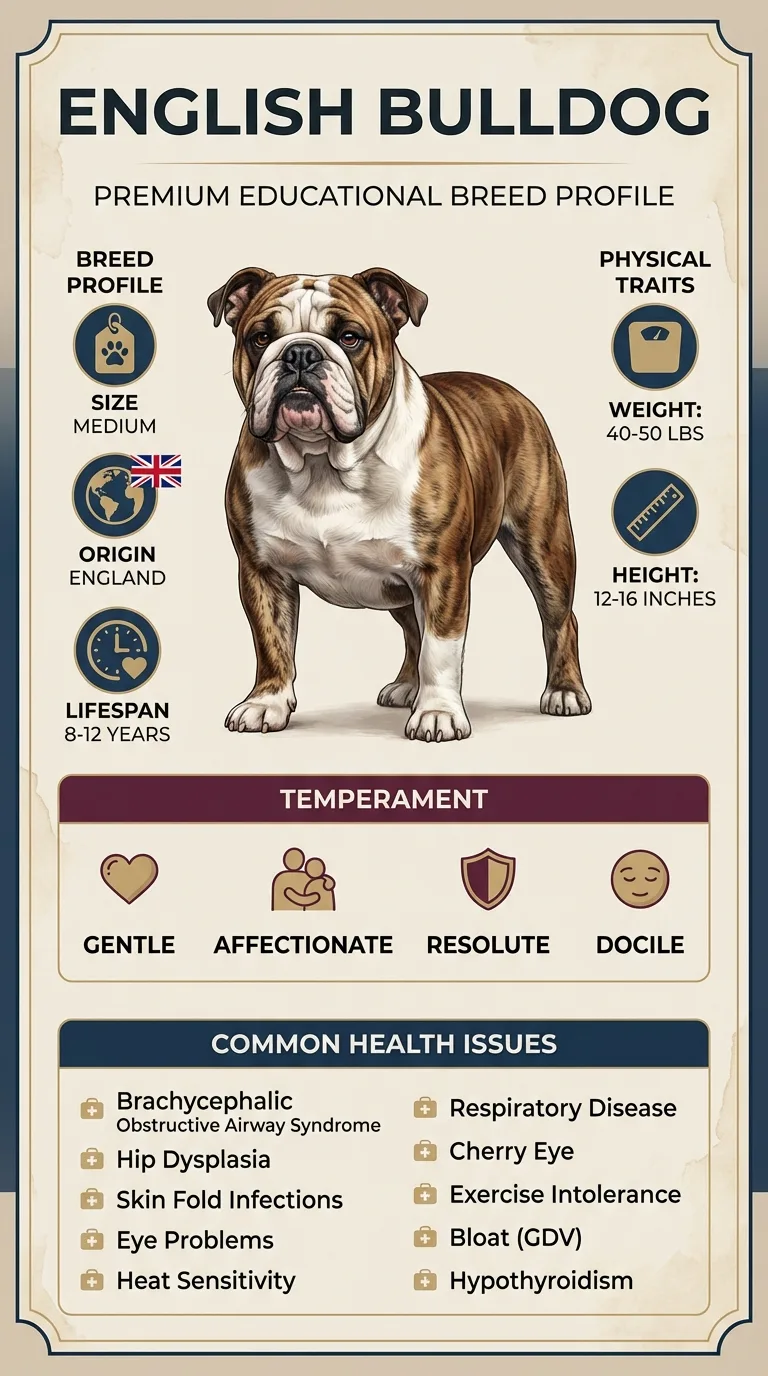
Remember, Bulldogs are prone to certain health issues like Brachycephalic Obstructive Airway Syndrome and hip dysplasia. Staying aware of their specific needs will help you act quickly when necessary. Always trust your instincts—if you think it's serious, don't wait.
If any of these apply, call your vet or an emergency clinic now. The rest of this page is for the cases that are not an emergency.
The issue of choosing between a purebred and a mixed breed Bulldog (English) can lead to frustration and confusion. Many owners worry about potential health problems and genetic predispositions that purebreds may face. Bulldogs are known to have unique health challenges, making this decision particularly important for prospective dog owners.
This dilemma is quite common among Bulldog (English) owners. Purebreds can face more health issues, with studies showing they are 1.9 times more likely to develop cancer than mixed breeds. Many owners report feeling overwhelmed by the choices, especially when considering long-term care and costs.
Bulldogs (English) can inherit specific health issues due to their genetics. These purebreds are more prone to conditions like brachycephalic obstructive airway syndrome and skin fold infections. These breed characteristics can influence their behavior and overall health.
The environment plays a significant role in a Bulldog's behavior. Factors like living conditions, socialization experiences, and training practices can contribute to anxiety or behavioral issues. A lack of mental and physical stimulation can also lead to restlessness or destructive behavior.
If you notice persistent behavioral changes or signs of distress, it's important to consult a vet. They can rule out any underlying health issues that may be affecting your Bulldog's behavior and suggest appropriate treatments.
Avoiding these common mistakes can help you better manage your Bulldog's issues related to purebred versus mixed breeds.
Start here: English Bulldog Most Common Genetic Disorders: Screening
See all Bulldog health problems, which breeds are prone to purebred vs mixed breeds, or the full Bulldog breed guide for temperament, exercise needs and ownership costs.
You can expect to see some improvement in your Bulldog's behavior within 4 to 8 weeks of consistent care and follow-up with your vet. More significant changes may take several months, especially if dealing with anxiety related to their breed's predispositions.
Success means your Bulldog is showing reduced anxiety, improved behavior during training sessions, and a better ability to relax during alone time. You'll notice a calmer, more confident dog who responds well to commands and feels secure in their environment.
Jessica, a first-time dog owner in Atlanta, adopted a sweet Bulldog named Max. At first, Max struggled with separation anxiety, barking excessively whenever Jessica left the house. After researching techniques specific to Bulldogs, she started a consistent training routine, incorporating short departures and positive reinforcement. Slowly, Max learned that it was okay to be alone for short periods, and with patience, he began to relax. Within three months, he was able to stay calm and was less anxious during transitions.
Key takeaway: With dedication and the right training strategies, Bulldogs can overcome anxiety and become confident companions.
Behavior issues in Bulldogs can stem from genetics, training, and environment. Purebreds may have specific behavioral traits, while mixed breeds can inherit diverse traits from both parents. Understanding your dog's lineage can help address these issues more effectively.
To curb misbehavior, consistent training and positive reinforcement are key. Set clear boundaries and use rewards for good behavior. Engage in regular exercise and mental stimulation to reduce boredom-related issues.
Positive reinforcement methods work best for Bulldogs. Use treats, praise, and play as rewards during training. Avoid harsh corrections, as Bulldogs respond better to encouragement and consistency.
Bulldogs can be prone to anxiety, especially if they are not socialized properly. Purebred Bulldogs may exhibit separation anxiety and other stress-related behaviors. Regular socialization and training can help mitigate these issues.
Common health issues for Bulldogs include respiratory problems, hip dysplasia, and skin conditions. Mixed breeds may have fewer genetic predispositions to certain ailments, but it's essential to monitor their health closely as well.
Mixed breed Bulldogs (English) can still inherit health issues from their purebred lineage. Common issues include hip dysplasia, skin fold infections, and respiratory problems. Regular vet check-ups can help catch and manage these conditions early.
Signs of anxiety in Bulldogs (English) include excessive barking, destructive behavior, and changes in eating habits. If your dog seems overly clingy or shies away from social interactions, it may be time to check in with a veterinarian or a behaviorist for guidance.
Training can vary widely among Bulldogs (English), whether purebred or mixed. Mixed breeds might inherit positive traits from different breeds, potentially making them easier to train. However, consistent training and socialization are key for success with any Bulldog.
If your Bulldog (English) is struggling to adjust, providing a stable routine and plenty of exercise can help. Gradually introducing them to new environments and people can also ease their anxiety. If problems persist, consulting a vet or trainer may be beneficial.
Mixed breed Bulldogs (English) often enjoy a longer lifespan than purebreds due to diverse genetics. While purebreds typically live between 8 to 12 years, mixed breeds may live longer, but health monitoring remains essential. Regular vet visits play a crucial role in maintaining their health.
Focus on early socialization and training to prevent behavior issues. Regular vet check-ups can help catch any health problems early.
Monthly care costs for Bulldogs generally range from $150 to $350, depending on health and lifestyle choices.
Bulldogs typically live between 8 to 12 years, with proper care and regular vet visits contributing to a longer life.
Bulldogs require consistent training and socialization, ideally starting at a young age to help them develop good habits.
A one-page prep sheet for this condition: the signs, the questions to ask, what to get priced. Unlocks here.
You get: Vet visit prep sheet
No spam. One-click unsubscribe. See our privacy policy.
See a sample page before you decide.
Early access list
The free prep sheet covers the same-day warning signs, a symptom log and the questions to ask. We are considering a fuller kit that adds a cost worksheet for the usual tests and treatments (US price ranges with their sources) and a plain-English guide to ways of covering the bill. It is not built yet; this list tells us whether it is worth building.
One email, no spam, unsubscribe anytime. Information only, not veterinary advice.