Health
What are quick tips for managing Bulldog (English) genetic disorders?
Regular vet check-ups and a healthy diet can help manage Bulldog (English) genetic disorders. Stay informed about common issues and be proactive in seeking treatment.

Quick answer
What are quick tips for managing Bulldog (English) genetic disorders?
Regular vet check-ups and a healthy diet can help manage Bulldog (English) genetic disorders. Stay informed about common issues and be proactive in seeking treatment.
Bulldogs (English) are prone to several genetic disorders that can impact their health and well-being. Understanding these issues is crucial for every owner. (Bulldog (English) most common genetic disorders)
New Bulldog owners, especially those unaware of the breed's specific health risks, may find themselves overwhelmed. It's even more challenging for busy families who want to provide the best care but struggle to keep up with their pet's needs.
This guide is not medical advice. If your dog shows pain, sudden behavior change, or worsening symptoms, consult a licensed veterinarian.
Some links may be affiliate links. We may earn a commission at no extra cost to you. We only suggest products we believe are helpful for dog owners.
We research and check what we publish, but we do not warrant that any figure, date, price, or statement is accurate, complete, or current, and we accept no liability for any loss, cost, injury, or other harm arising from the use of this site. Use it as one reference among several. You remain responsible for your own decisions and for your dog's care - confirm anything that matters with a licensed veterinarian or another qualified professional before you act on it. Full disclaimer.
Check this first
Recognizing when Bulldog (English) genetic disorders are an emergency is crucial for ensuring your dog’s health. Look for signs that require immediate veterinary attention, such as severe difficulty breathing, persistent coughing, or signs of extreme pain. If your Bulldog collapses, has a swollen abdomen, or shows signs of bloat, you must call your vet immediately.
If any of these apply, call your vet or an emergency clinic now. The rest of this page is for the cases that are not an emergency.
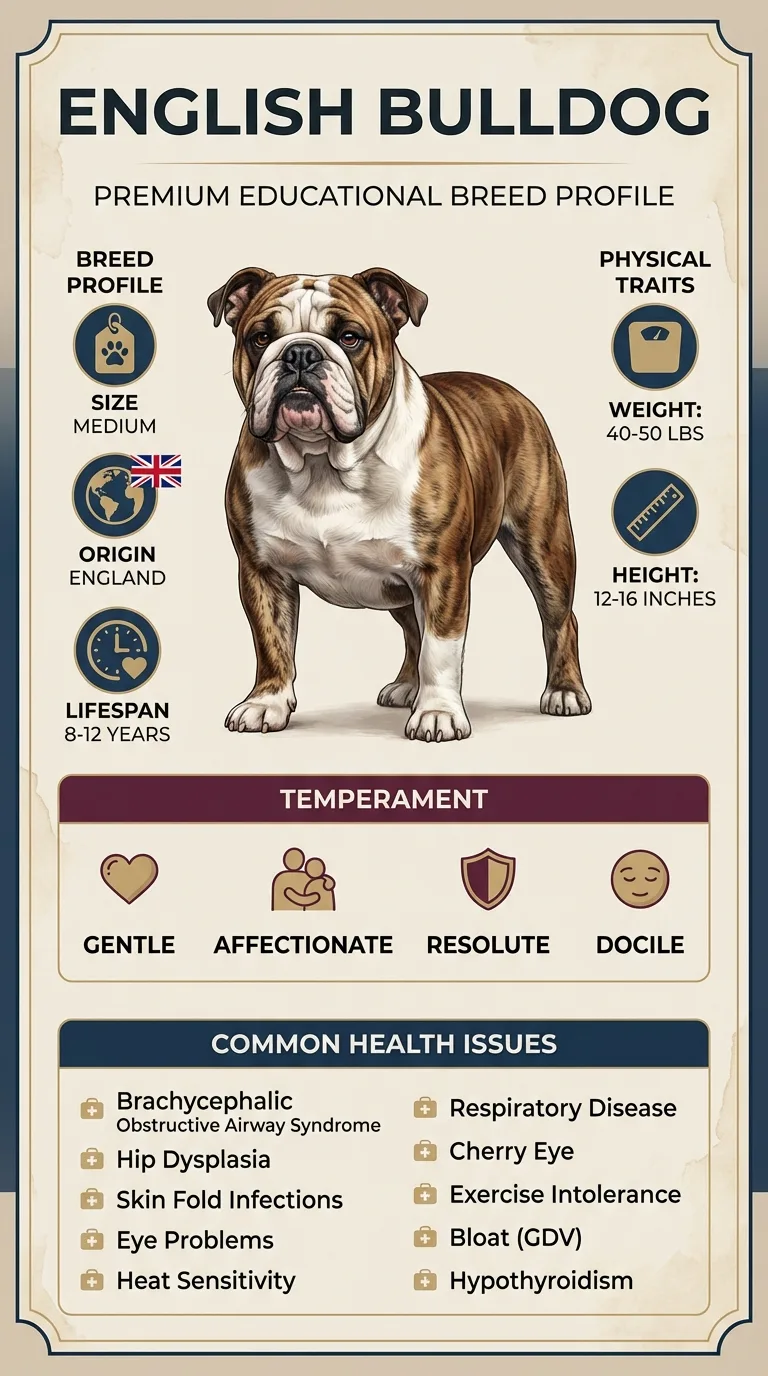
Bulldogs (English) are known for their lovable nature, but they also face a range of genetic disorders that can affect their health. Common issues include Brachycephalic Obstructive Airway Syndrome, hip dysplasia, and skin fold infections. These problems often manifest in daily life through breathing difficulties, skin irritations, or decreased activity levels.
Genetic disorders are prevalent among Bulldogs, with many encountering at least one health issue during their lifetime. Studies suggest that a significant percentage of Bulldogs may face serious health challenges related to their breeding.
Bulldogs (English) are prone to several genetic disorders due to their unique physical traits. Their brachycephalic structure leads to breathing problems, while their stocky build can result in hip dysplasia. Additionally, skin fold infections and eye issues are common because of their loose skin and prominent eyes.
Environmental factors can also contribute to health issues. Bulldogs may struggle in hot weather due to their short snouts, making them more susceptible to heat sensitivity. Lack of exercise can exacerbate weight issues, leading to conditions like bloat and respiratory diseases.
If you notice any signs of distress, such as difficulty breathing, lethargy, or unusual behavior, consult your vet immediately. Regular check-ups are crucial to catch genetic disorders early.
Let’s explore common mistakes Bulldog owners make that can worsen their pet's genetic disorders. Understanding these missteps can help you provide better care and support for your furry friend.
See all Bulldog health problems, which breeds are prone to most common genetic disorders, or the full Bulldog breed guide for temperament, exercise needs and ownership costs.
You can expect to see improvements in your Bulldog's health and behavior within 3 to 6 months of consistent care and follow-up with your vet.
Success means your Bulldog has fewer health issues, improved behavior, and a better quality of life, making it easier for them to enjoy daily activities.
In less severe cases, you can monitor your Bulldog's symptoms with a plan. If your dog shows mild signs of discomfort, such as occasional coughing or slight lethargy, keep a close eye on them. It’s also wise to note any changes in appetite or behavior and discuss these with your vet during your next visit.

Sarah, a busy nurse from Atlanta, adopted Max, an English Bulldog, who frequently struggled with breathing issues and skin infections. After researching and consulting with a vet, she started a structured care routine that included regular vet check-ups, a specialized diet, and gentle exercise. Within a few months, Max's health improved significantly, and his energy levels increased, allowing him to enjoy walks and playtime without discomfort.
Key takeaway: With patience and the right care, Bulldogs can lead happy, healthier lives despite their genetic predispositions.
Bulldogs (English) are prone to several genetic disorders, including Brachycephalic Obstructive Airway Syndrome, hip dysplasia, and skin fold infections. Regular vet check-ups can help detect these issues early. This answer relates to Bulldog (English) most common genetic disorders.
Genetic disorders in Bulldogs (English) often stem from their breeding history. As a brachycephalic breed, they have physical traits that predispose them to specific health issues, so it’s essential to choose a reputable breeder.
Support your Bulldog by keeping them at a healthy weight and ensuring they get regular exercise. Working with a vet on a tailored health plan can make a significant difference in managing genetic disorders.
Yes, training can help manage some effects of genetic disorders. For example, teaching your Bulldog to avoid excessive exertion can reduce the risk of exercise intolerance and respiratory issues.
Common signs include difficulty breathing, skin infections, or unusual lethargy. If your Bulldog shows any of these symptoms, it's best to consult your vet for a thorough examination.
Preventing genetic disorders starts with responsible breeding. Choose a breeder who tests for hereditary conditions, and maintain your Bulldog's health through proper care and regular vet visits.
Ensure regular vet check-ups to monitor any existing conditions. Adjust their diet and exercise routines to accommodate their health needs, and consider supplements that support joint health.
Yes, DNA tests are available for certain genetic disorders common in Bulldogs. These tests can help you understand your dog's genetic risks and manage their health proactively.
Bulldogs are prone to certain genetic disorders due to their breeding practices. This breed has been selectively bred for specific traits, which unfortunately can lead to a higher incidence of health problems.
Look for a vet with experience in treating Bulldogs and similar breeds. Reading reviews and asking for recommendations from local breed clubs can help you find a knowledgeable veterinarian.
Regular vet check-ups and a healthy diet can help manage Bulldog (English) genetic disorders. Stay informed about common issues and be proactive in seeking treatment.
Expect to spend around $150 to $350 a month on health care for Bulldogs (English). This includes routine vet visits, medications, and emergency care.
Yes! Training your Bulldog (English) to avoid strenuous activities can help manage their genetic disorders. Focus on gentle exercises and obedience training.
Keep your Bulldog (English) cool, especially in hot weather, to prevent heat sensitivity. Regular, low-impact exercise can also help maintain their health.
A one-page prep sheet for this condition: the signs, the questions to ask, what to get priced. Unlocks here.
You get: Vet visit prep sheet
No spam. One-click unsubscribe. See our privacy policy.
Preview page 1 before you decide.