Behavior
What are some Bulldog (English) dental issues quick tips?
Brush your Bulldog's teeth regularly, provide dental chews, and schedule annual vet visits for cleanings.

Quick answer
What are some Bulldog (English) dental issues quick tips?
Brush your Bulldog's teeth regularly, provide dental chews, and schedule annual vet visits for cleanings.
Bulldogs often face dental issues that can impact their overall health. Proper dental care is crucial for their well-being. (Bulldog (English) dental issues)
Many Bulldog owners, especially first-time pet parents, find themselves struggling with these dental challenges. These issues can be particularly concerning for busy families or individuals who may not be aware of the specific needs of this breed.
This guide is not medical advice. If your dog shows pain, sudden behavior change, or worsening symptoms, consult a licensed veterinarian.
Some links may be affiliate links. We may earn a commission at no extra cost to you. We only suggest products we believe are helpful for dog owners.
We research and check what we publish, but we do not warrant that any figure, date, price, or statement is accurate, complete, or current, and we accept no liability for any loss, cost, injury, or other harm arising from the use of this site. Use it as one reference among several. You remain responsible for your own decisions and for your dog's care - confirm anything that matters with a licensed veterinarian or another qualified professional before you act on it. Full disclaimer.
Check this first
Dental issues in Bulldogs can be a serious concern. It's crucial to recognize when these problems are emergencies versus when they can be monitored at home. If your Bulldog shows signs of severe pain, such as yelping when eating or avoiding food, this is a red flag.
Other emergency signs include excessive drooling, bleeding gums, or noticeable swelling around the mouth. If you notice these symptoms, it's time to call your vet immediately.
On the other hand, if your Bulldog has mild bad breath or minor plaque buildup, this may not require immediate attention. You can monitor these issues at home by maintaining a regular dental care routine. Brushing their teeth a few times a week and providing dental chews can help.
Keep an eye on their dental health and schedule a vet check-up if the situation worsens or fails to improve after a few weeks.
If any of these apply, call your vet or an emergency clinic now. The rest of this page is for the cases that are not an emergency.
Bulldog (English) dental issues can lead to serious health problems if not addressed. These dogs often suffer from dental problems due to their unique mouth structure, which can cause overcrowding and misalignment of teeth. Daily life with a Bulldog facing these issues may involve bad breath, difficulty eating, and even pain or discomfort when chewing.
Dental issues are quite common in Bulldogs, affecting a significant number of them as they age. Many Bulldog owners report that their pets develop some form of dental problem by the time they are three years old.
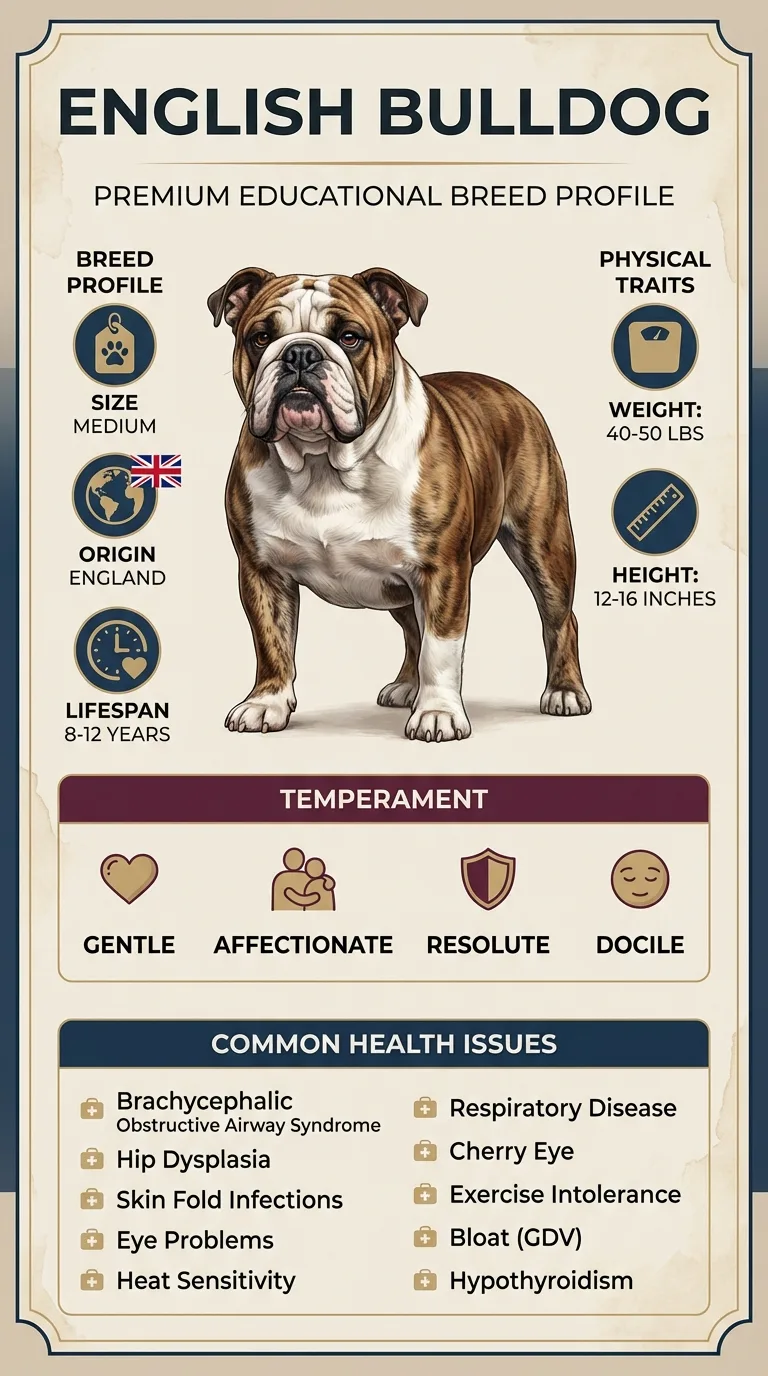
Bulldogs are prone to dental issues due to their unique jaw structure. Their short snouts can lead to crowded teeth, making it hard to maintain good oral hygiene. This breed also often has a tendency toward gum disease as they age.
Poor dental care routines and diet can exacerbate dental issues in Bulldogs. If they are not given appropriate chew toys or dental treats, plaque can build up. Additionally, lack of regular vet check-ups can result in untreated dental problems.
If you notice bad breath, swollen gums, or difficulty eating, it's time to talk to your vet. These signs may indicate serious dental issues that require professional treatment.
Avoiding common mistakes can help improve your Bulldog's dental health. Here are some behaviors to watch out for.
Start here: English Bulldog Most Common Genetic Disorders: Screening
See all Bulldog health problems, which breeds are prone to dental issues, or the full Bulldog breed guide for temperament, exercise needs and ownership costs.
You can expect to see improvements in your Bulldog's dental health within 4 to 6 weeks of consistent care and follow-up with your vet.
Success means your Bulldog will have cleaner teeth, fresher breath, and a reduced risk of dental disease, leading to a healthier and happier life.
Emily, a first-time Bulldog owner, noticed her dog Max had bad breath and yellowed teeth. Concerned, she took him to the vet, who diagnosed him with early dental disease. Emily learned how to brush Max's teeth and incorporated dental chews into his diet, gradually making these routines part of their daily life. After a few weeks of consistent care, Max's breath improved and his teeth looked much healthier. Emily felt relieved and proud of her efforts, realizing that regular dental care could make a significant difference.
Key takeaway: Consistent dental care is crucial for Bulldogs, and early intervention can lead to better health outcomes.
Bulldogs (English) are prone to dental issues due to their unique jaw structure. Their teeth can become overcrowded, leading to plaque buildup and gum disease. Regular dental care is essential to prevent these problems.
To stop Bulldog (English) dental issues, establish a regular dental hygiene routine. This includes brushing their teeth several times a week, offering dental chews, and scheduling annual vet dental cleanings. Consistency is key to maintaining their oral health.
Look for signs like bad breath, difficulty eating, swollen gums, or loose teeth. If your Bulldog (English) is pawing at their mouth or showing reluctance to chew, these could be indicators of dental issues. Early detection is crucial for effective treatment.
Feeding your Bulldog (English) a diet formulated for dental health can help reduce plaque and tartar buildup. Look for kibble with specific textures designed to clean teeth as they chew. Consult your vet for tailored dietary recommendations.
You should take your Bulldog (English) for a dental checkup at least once a year. If you notice any dental issues, such as bad breath or gum swelling, schedule a visit sooner. Regular checkups help catch problems early and maintain overall health.
Signs of dental issues in Bulldogs include bad breath, difficulty eating, swollen gums, and excessive drooling. If you notice any of these symptoms, it's important to consult your vet for an examination.
Yes, dental problems in older Bulldogs can often be treated, but the approach may vary based on the severity. Regular vet check-ups and professional cleanings can help manage their dental health.
To prevent dental issues in your Bulldog, establish a regular dental care routine. This includes brushing their teeth, providing dental chews, and scheduling professional cleanings with your vet.
Yes, Bulldogs are generally more prone to dental issues due to their unique mouth structure. Their crowded teeth and short snouts can lead to plaque buildup and other dental problems.
If your Bulldog shows signs of dental issues or if their breath smells unusually bad, it's time to see the vet. Early intervention can prevent more serious health complications.
Brush your Bulldog's teeth regularly, provide dental chews, and schedule annual vet visits for cleanings.
Aim to brush your Bulldog's teeth at least two to three times a week to maintain good dental health.
Bad breath, difficulty eating, and swollen gums are common signs of dental issues in Bulldogs.
Yes, look for dog food designed to promote dental health and reduce plaque buildup.
Start dental care early and make it a positive experience with treats and praise to help your Bulldog accept it.
A one-page prep sheet for this condition: the signs, the questions to ask, what to get priced. Unlocks here.
You get: Vet visit prep sheet
No spam. One-click unsubscribe. See our privacy policy.
Preview page 1 before you decide.
Early access list
The free prep sheet covers the same-day warning signs, a symptom log and the questions to ask. We are considering a fuller kit that adds a cost worksheet for the usual tests and treatments (US price ranges with their sources) and a plain-English guide to ways of covering the bill. It is not built yet; this list tells us whether it is worth building.
One email, no spam, unsubscribe anytime. Information only, not veterinary advice.