Behavior
What are quick tips for managing Brussels Griffon von Willebrand's disease (vwd1)?
Keep your dog calm and avoid rough play. Regular vet check-ups are essential for monitoring their condition.
Brussels Griffon von Willebrand's disease (vWD1) is a genetic bleeding disorder that affects these small dogs.
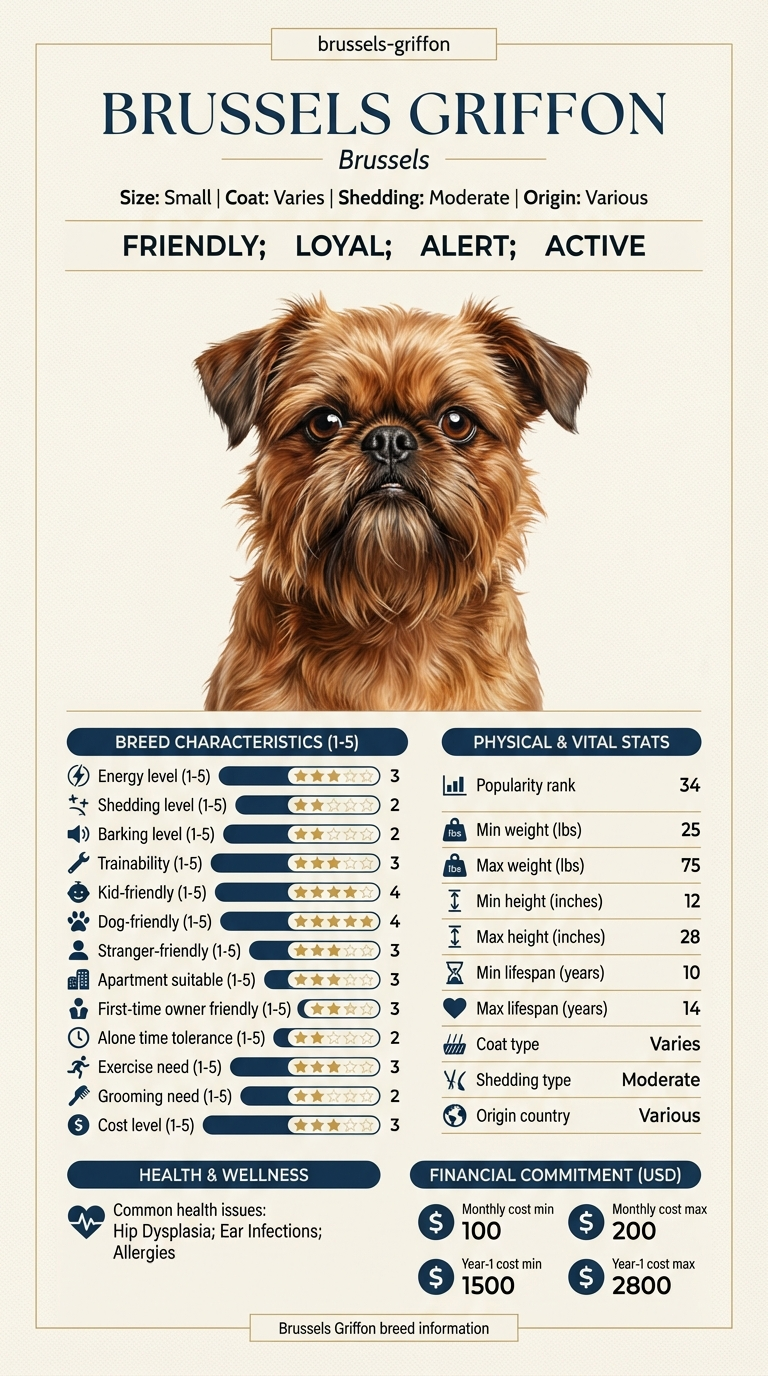
Typically, owners of Brussels Griffons may face challenges with vWD1, particularly if they are first-time pet parents or those who are unaware of the breed's predisposition to this disorder.
This guide is not medical advice. If your dog shows pain, sudden behavior change, or worsening symptoms, consult a licensed veterinarian.
Some links may be affiliate links. We may earn a commission at no extra cost to you. We only suggest products we believe are helpful for dog owners.
Brussels Griffon von Willebrand's disease (vWD1) is a genetic bleeding disorder that can lead to excessive bleeding or bruising. Owners may notice their dog bleeding easily from minor injuries or having prolonged bleeding during surgery. This condition can be distressing for both the dog and the owner, as it requires careful management and monitoring.
Von Willebrand's disease (vWD1) is relatively common in Brussels Griffons, with studies showing that around 30% of this breed may carry the gene. While not all affected dogs will show symptoms, it's important for owners to be aware of the risks and to have regular check-ups with a vet.
Brussels Griffons are prone to von Willebrand's disease (vWD1) due to their genetics. This inherited bleeding disorder affects their ability to clot blood properly. It is essential to understand that breeding practices can influence the prevalence of this condition within the breed.
While vWD1 is primarily genetic, environmental factors can exacerbate its effects. Stressful situations, such as injuries or surgeries, may lead to bleeding episodes. Additionally, certain medications can interact with the disease, making it more pronounced.
If your Brussels Griffon shows signs of anxiety or fear-related behaviors that could lead to injuries, consider hiring a trainer to help modify their behavior. Positive reinforcement techniques can help them feel more secure in their environment.
Consult your vet if you notice excessive bleeding, unusual bruising, or if your dog has a family history of vWD1. A vet can run tests to confirm the diagnosis and recommend appropriate management strategies.
Managing Brussels Griffon von Willebrand's disease (vWD1) is an ongoing process. Initial diagnosis and establishing a treatment plan usually take a few weeks. Over time, you can expect to see improvements in your dog's health and behavior with consistent care.
Success means your Brussels Griffon has fewer bleeding episodes and can enjoy a normal, active life. You should also feel confident in managing any emergencies that arise, knowing you have a solid plan in place.
When managing Brussels Griffon von Willebrand's disease (vWD1), certain common mistakes can unintentionally worsen the situation. Here are some mistakes to avoid and safer alternatives.
If your Brussels shows any of the following signs, treat it as an emergency: - Excessive bleeding from minor injuries or during routine procedures. - Unexplained bruising or bleeding in the gums, nose, or urine. - Lethargy, weakness, or collapse, especially after bleeding episodes.
For mild cases, you can monitor your Brussels Griffon if they experience: - Occasional nosebleeds without other symptoms. - Minor cuts that stop bleeding quickly. - Mild bruising with no other alarming signs.
In these cases, keep a close eye on your dog’s behavior and health. If symptoms worsen or new signs appear, don’t hesitate to reach out to your veterinarian. Staying informed and prepared can ensure your Brussels stays healthy and happy.

When Lisa adopted Bella, a spirited Brussels Griffon, she was drawn to her playful nature. However, soon after bringing Bella home, she noticed unusual bleeding after minor injuries. After a vet visit, Bella was diagnosed with von Willebrand's disease (vWD1). Lisa felt overwhelmed but dedicated herself to learning about the condition. With her vet’s guidance, she adjusted Bella's diet, kept a close watch for injuries, and learned how to manage bleeding episodes. Over time, Bella became more resilient, and their bond grew stronger as they navigated this challenge together.
Key takeaway: Understanding your dog's health conditions, like vWD1, can empower you to provide better care and nurture your relationship.
Brussels Griffon von Willebrand's disease (vwd1) is a genetic bleeding disorder that affects the clotting ability of your dog's blood. This condition can lead to excessive bleeding from minor injuries and can be life-threatening if not managed properly.
This disease is inherited from the parents, meaning your Brussels Griffon may have it due to genetic predisposition. If you suspect your dog has vwd1, consult a veterinarian for testing and diagnosis.
Management includes regular veterinary check-ups and possibly medications to help with clotting. Avoid activities that risk injury, and always inform groomers and vets about your dog's condition.
Common symptoms include nosebleeds, excessive bleeding from cuts, and prolonged bleeding after surgeries. If you notice any of these signs, seek veterinary advice immediately.
While training won't cure vwd1, it can help your dog learn to avoid risky situations. Focus on gentle commands and positive reinforcement to minimize any potential harm.
If your Brussels Griffon gets injured, apply direct pressure to the wound and contact your veterinarian right away. Quick action is crucial for dogs with vwd1.
To prevent injuries, create a safe environment for your dog. Supervise playtime, avoid roughhousing, and keep hazardous items out of reach.
If your Brussels Griffon shows symptoms of von Willebrand's disease, such as excessive bleeding or bruising, it's important to consult a veterinarian right away. They can perform tests to confirm the diagnosis and recommend a treatment plan tailored to your dog's needs.
Yes, many Brussels Griffons with von Willebrand's disease can lead normal, fulfilling lives with proper care. Regular vet check-ups and a controlled environment can help manage their condition effectively.
Yes, von Willebrand's disease is a genetic condition that can be passed down in Brussels Griffons. Responsible breeders should screen for this condition to reduce the risk of affected puppies.
Training a Brussels Griffon with von Willebrand's disease should focus on positive reinforcement and gentle techniques. Avoid overly strenuous activities and ensure your dog stays calm during training sessions to prevent injuries.
Long-term effects of von Willebrand's disease can vary, but many Brussels Griffons live healthy lives with proper management. Regular veterinary care and awareness of their condition can help mitigate potential complications.
Keep your dog calm and avoid rough play. Regular vet check-ups are essential for monitoring their condition.
Yes, but keep the activity low-impact and avoid high-risk situations. Short, gentle walks are best.
Always inform the vet about your dog's vwd1. They may need to adjust their treatment approach accordingly.
Avoid foods that could cause injury or irritation, like bones or hard treats, to minimize bleeding risks.