Behavior
What are quick tips for Boxer x-scid?
Regular vet check-ups are vital for Boxers with X-SCID, as early detection of issues can help. Provide a low-stress environment and avoid exposure to sick dogs to minimize health risks.

Quick answer
What are quick tips for Boxer x-scid?
Regular vet check-ups are vital for Boxers with X-SCID, as early detection of issues can help. Provide a low-stress environment and avoid exposure to sick dogs to minimize health risks.
Boxer x-scid is a serious health issue that affects your dog's immune system.
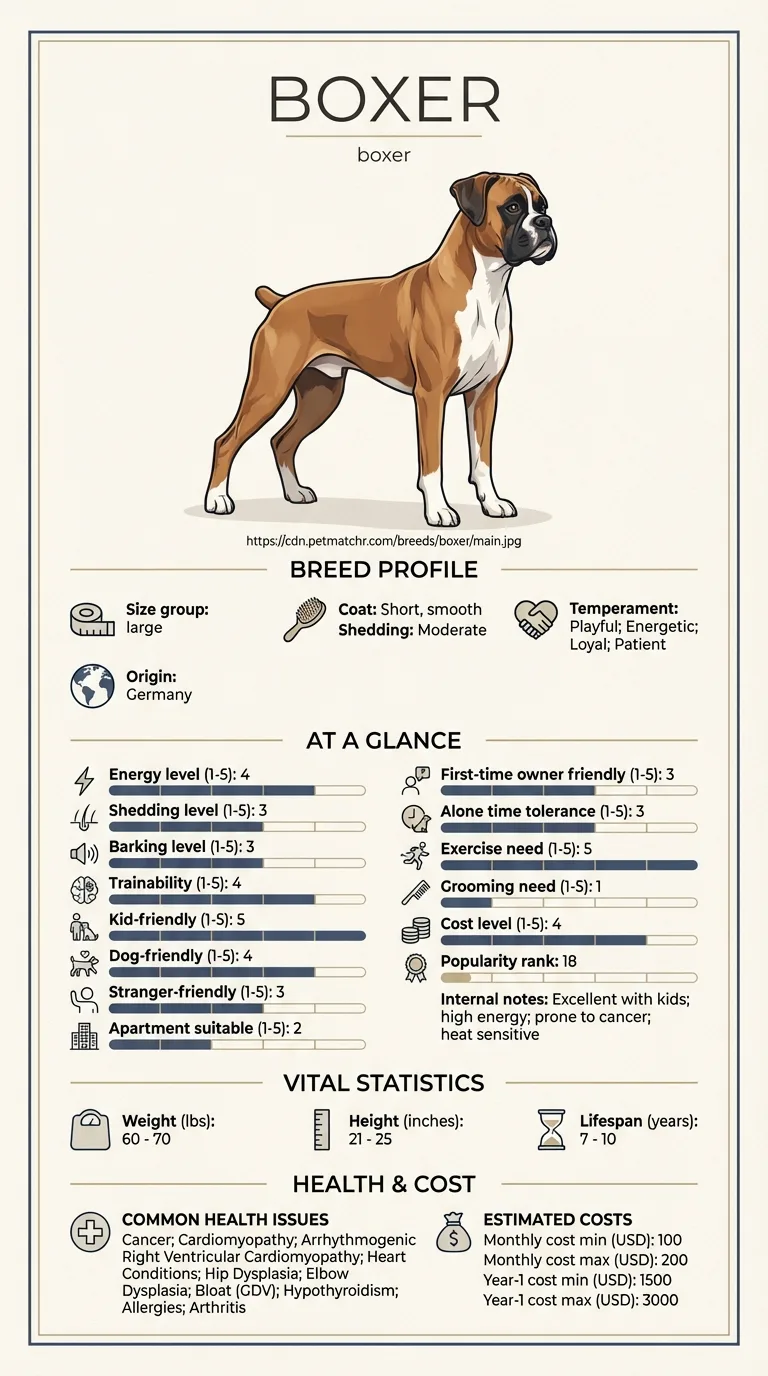
This issue typically affects Boxer owners who may notice their pets getting sick often or experiencing unusual symptoms. New owners or those unfamiliar with this breed might find it particularly challenging.
This guide is not medical advice. If your dog shows pain, sudden behavior change, or worsening symptoms, consult a licensed veterinarian.
Some links may be affiliate links. We may earn a commission at no extra cost to you. We only suggest products we believe are helpful for dog owners.
We research and check what we publish, but we do not warrant that any figure, date, price, or statement is accurate, complete, or current, and we accept no liability for any loss, cost, injury, or other harm arising from the use of this site. Use it as one reference among several. You remain responsible for your own decisions and for your dog's care - confirm anything that matters with a licensed veterinarian or another qualified professional before you act on it. Full disclaimer.
Check this first
Boxer x-scid, or severe combined immunodeficiency, can be serious. It's crucial to know when to call your vet and when to monitor the situation. Here are some signs that mean you should seek immediate veterinary help.
If any of these apply, call your vet or an emergency clinic now. The rest of this page is for the cases that are not an emergency.
Boxers with X-SCID (X-Linked Severe Combined Immunodeficiency) face serious challenges. This rare condition makes their immune systems very weak, leading to frequent infections and illnesses. Owners may notice their Boxer being unusually lethargic, having trouble recovering from minor ailments, or showing signs of chronic infections.
X-SCID is a rare condition in Boxers. While not every Boxer will have this issue, the breed is genetically predisposed, making it important for owners to be aware and proactive about their dog's health.
Boxers are genetically predisposed to certain health issues, including X-SCID, which affects their immune system. This condition can lead to increased vulnerability to infections and other health problems. Understanding this breed's genetic background helps explain why your Boxer may be facing these challenges.
Environmental factors can also play a role in the severity of X-SCID symptoms. Stressful living situations, poor nutrition, or exposure to pathogens can worsen the condition. Creating a safe and healthy environment is crucial for managing your Boxer's health.
Talk to your vet if your Boxer exhibits frequent infections, unusual lethargy, or other concerning symptoms. Regular check-ups are essential for monitoring their health and adjusting care as needed.
Avoiding these common mistakes can help manage your Boxer x-scid more effectively. Here are some behaviors to watch out for.
Start here: Boxer Most Common Genetic Disorders: What to Screen For
See all Boxer health problems, which breeds are prone to x scid, or the full Boxer breed guide for temperament, exercise needs and ownership costs.
With consistent care under your vet's plan, you may see improvement in your Boxer x-scid's behavior within 6 to 12 weeks. However, maintaining that progress will require ongoing support.
Success looks like a Boxer who can cope better with stress and anxiety, shows reduced fear responses, and is more relaxed in various situations.
If your Boxer shows mild symptoms, such as slight lethargy or a small cough, it's best to keep an eye on them. Monitor their behavior and appetite for any changes. If they seem stable, you can wait a day or two before consulting your vet.

Sarah, a busy nurse in Chicago, adopted Max, a lively Boxer. Shortly after bringing him home, she noticed he was extremely anxious, especially during thunderstorms. Max would bark excessively and hide whenever the weather turned bad. Sarah felt overwhelmed, unsure of how to help him. After researching, she discovered a training program focused on desensitization and positive reinforcement. She committed to daily training sessions and gradually introduced Max to recorded storm sounds at a low volume. Over weeks, Max learned to associate storms with treats and praise, which significantly reduced his anxiety during real storms.
Key takeaway: With patience and the right training approach, even a fearful Boxer can learn to manage anxiety and enjoy a happier life.
X-SCID, or severe combined immunodeficiency, is a genetic condition that affects the immune system. In Boxers, this condition can be inherited, meaning it often runs in families. If your Boxer has been diagnosed with X-SCID, consulting a vet about genetic testing and treatment options is essential.
Managing X-SCID involves regular veterinary check-ups and monitoring your dog's health closely. Keeping up with vaccinations is essential, but be aware that your dog may not respond to vaccines as a healthy dog would. Providing a stress-free environment can also help improve your Boxer's quality of life.
Symptoms of X-SCID may include recurrent infections, poor growth, and lethargy. You might notice your Boxer becoming sick more often than other dogs. It's crucial to report any unusual behaviors or health issues to your vet immediately.
Currently, there is no cure for X-SCID, and treatment mainly focuses on managing symptoms. Supportive care such as antibiotics for infections can be helpful. Discuss your Boxer's specific needs with your veterinarian to ensure the best care.
To address behavior issues related to X-SCID, focus on creating a stable routine and providing a calm environment. Positive reinforcement training can help teach your Boxer acceptable behaviors. Working with a professional trainer experienced with medical conditions is also beneficial.
Supporting a Boxer with X-SCID involves minimizing exposure to infections and maintaining a clean environment. Regular vet visits and possibly a special diet may also be necessary, so always check with your vet for specific recommendations.
Yes, X-SCID is a genetic condition that can be inherited. If you're concerned about your Boxer’s lineage, consider speaking to a breeder about the health history of the puppy's parents.
X-SCID is usually a congenital condition, meaning it is present at birth, and not typically developed later in life. However, if an older Boxer shows symptoms of immune issues, consult a vet for a thorough evaluation.
If your Boxer with X-SCID shows signs of illness, it's crucial to contact your veterinarian immediately. Due to their compromised immune system, they may require prompt medical attention to prevent serious complications.
Regular vet check-ups are vital for Boxers with X-SCID, as early detection of issues can help. Provide a low-stress environment and avoid exposure to sick dogs to minimize health risks.
For a Boxer with X-SCID, schedule vet visits at least every six months. This way, your vet can monitor their health closely and catch any potential issues early.
Yes, training is possible and beneficial. Use gentle methods and keep sessions short to avoid overwhelming your dog.
A balanced diet tailored to your Boxer's needs is essential. Consult with your vet for specific dietary recommendations to boost your dog's immune system.
A one-page prep sheet for this condition: the signs, the questions to ask, what to get priced. Unlocks here.
You get: Vet visit prep sheet
No spam. One-click unsubscribe. See our privacy policy.
Preview page 1 before you decide.