Health
What are quick tips for Boxer von Willebrand's disease?
Identify symptoms early and maintain regular vet check-ups to manage your Boxer's condition effectively.

Quick answer
What are quick tips for Boxer von Willebrand's disease?
Identify symptoms early and maintain regular vet check-ups to manage your Boxer's condition effectively.
Boxer von Willebrand's disease is a bleeding disorder that affects many Boxers. This condition can be serious and requires attention.
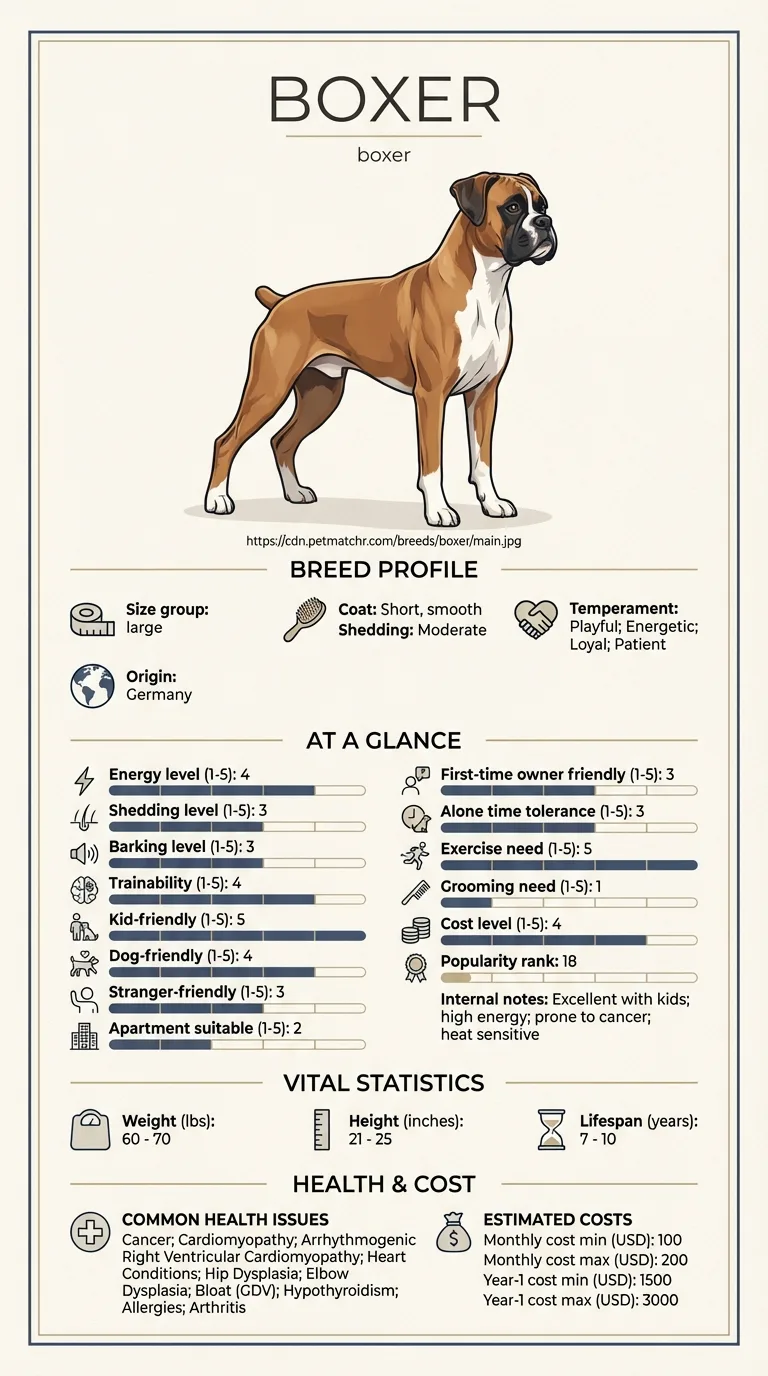
Typically, first-time Boxer owners or those unfamiliar with canine health issues may struggle to recognize the symptoms of von Willebrand's disease. This can lead to confusion and concern when their dog experiences bleeding or bruising.
This guide is not medical advice. If your dog shows pain, sudden behavior change, or worsening symptoms, consult a licensed veterinarian.
Some links may be affiliate links. We may earn a commission at no extra cost to you. We only suggest products we believe are helpful for dog owners.
We research and check what we publish, but we do not warrant that any figure, date, price, or statement is accurate, complete, or current, and we accept no liability for any loss, cost, injury, or other harm arising from the use of this site. Use it as one reference among several. You remain responsible for your own decisions and for your dog's care - confirm anything that matters with a licensed veterinarian or another qualified professional before you act on it. Full disclaimer.
Check this first
You should call your vet immediately if your Boxer shows any of the following red flags: - Excessive bleeding from minor cuts or injuries. - Unexplained bruising or bleeding from the gums. - Blood in urine or stool. - Signs of weakness or lethargy following bleeding episodes. These symptoms indicate a severe case that requires urgent medical attention.
On the other hand, if your Boxer has mild symptoms like occasional nosebleeds or minor bruising without any significant bleeding, you can monitor the situation at home. Keep an eye on their behavior and health, noting any changes. If mild symptoms persist or worsen, it's wise to consult your vet for further guidance.
Being vigilant about your Boxer's health can help catch issues early. If you're ever uncertain, it's best to err on the side of caution and reach out to your veterinarian.
If any of these apply, call your vet or an emergency clinic now. The rest of this page is for the cases that are not an emergency.
Boxer von Willebrand's disease is a bleeding disorder that can cause excessive bleeding in Boxers. Day-to-day, this means your dog might experience prolonged bleeding from minor injuries, excessive bleeding during surgery, or spontaneous bleeding with no clear cause. It's important to monitor any signs of unusual bleeding, as this condition can be serious and may require immediate veterinary attention.
Von Willebrand's disease is relatively common in Boxers compared to other breeds, affecting a significant number of them. While not every Boxer will develop this condition, awareness and early detection can help manage the risks associated with it.
Boxers are genetically predisposed to Von Willebrand's Disease (vWD), a bleeding disorder caused by a deficiency in a clotting protein. This inherited condition affects their ability to stop bleeding after injuries. If your Boxer has a family history of vWD, the risk increases.
Environmental factors such as stress, poor diet, or inadequate healthcare can exacerbate the symptoms of vWD. High-stress situations or injuries can trigger bleeding episodes, making it crucial to maintain a calm and secure environment for your dog.
If you notice any signs of bleeding, such as excessive bruising or unusual bleeding from the nose or gums, contact your vet immediately. Regular check-ups are also essential to monitor your Boxer's condition and adjust care as needed.
Avoiding these common pitfalls can help you manage your Boxer’s von Willebrand's disease more effectively.
Start here: Boxer Most Common Genetic Disorders: What to Screen For
See all Boxer health problems, which breeds are prone to von willebrands disease, or the full Boxer breed guide for temperament, exercise needs and ownership costs.
Managing Boxer von Willebrand's disease usually takes several months. With regular vet visits and proper care, you may see improvement in your dog's condition within 6-12 months.
Success means your Boxer has fewer bleeding episodes and can lead a relatively normal life. Regular monitoring and adjustments to their care routine will help maintain their health.
Jake, a first-time dog owner, was heartbroken when his Boxer, Bella, was diagnosed with von Willebrand's disease. Initially overwhelmed, he learned how to manage her condition through regular vet check-ups, a special diet, and careful exercise. After six months, Bella had fewer bleeding episodes and was back to her playful self. Jake realized that with patience and the right support, they could enjoy their time together without constant worry.
Key takeaway: Taking proactive steps and working closely with your vet can significantly improve your dog's quality of life when dealing with Boxer von Willebrand's disease.
Boxer von Willebrand's disease is a bleeding disorder that affects your dog's ability to clot blood. This condition is common in Boxers and can lead to excessive bleeding from minor injuries. Early diagnosis and management are crucial for your dog's health.
Managing your Boxer's von Willebrand's disease involves regular veterinary visits and possibly medication. Your vet may recommend special care during surgery or injury to prevent excessive bleeding. Keeping a close eye on your dog's health and avoiding high-risk situations is also essential.
If your Boxer starts bleeding, apply direct pressure to the wound and keep your dog calm. Seek immediate veterinary care, as they can provide the necessary treatment and ensure your dog is safe. Knowing how to handle bleeding emergencies can save your dog's life.
Training your Boxer with von Willebrand's disease should emphasize gentle activities that minimize injury risk. Avoid high-impact sports and focus on basic obedience and mental stimulation. Positive reinforcement is key to keeping training enjoyable and safe.
Currently, there is no cure for von Willebrand's disease, but it can be managed effectively. Regular check-ups and appropriate care can help keep your Boxer healthy. Consult your vet about the best management strategies for your dog's specific needs.
Yes, older Boxers can develop von Willebrand's disease, especially if they have a family history of bleeding disorders. Regular check-ups with your vet are important to catch any health issues early, including this condition.
Managing your Boxer's von Willebrand's disease at home involves minimizing risks of injury and stress. Ensure they have a safe environment and avoid activities that could lead to bleeding, and follow your vet's advice on diet and exercise.
Training a Boxer with von Willebrand's disease should focus on gentle methods that avoid stress. Positive reinforcement techniques work best, ensuring your Boxer feels safe and confident while learning commands.
Identify symptoms early and maintain regular vet check-ups to manage your Boxer's condition effectively.
Keep your Boxer calm during injuries and apply pressure to wounds while seeking immediate veterinary assistance.
Focus on gentle training techniques and avoid activities that could lead to injury, using positive reinforcement.
Avoid rough play and high-impact activities that could result in injuries and excessive bleeding.
Provide a balanced diet, regular exercise, and consistent veterinary care to support your Boxer's overall health.
A one-page prep sheet for this condition: the signs, the questions to ask, what to get priced. Unlocks here.
You get: Vet visit prep sheet
No spam. One-click unsubscribe. See our privacy policy.
See a sample page before you decide.
Early access list
The free prep sheet covers the same-day warning signs, a symptom log and the questions to ask. We are considering a fuller kit that adds a cost worksheet for the usual tests and treatments (US price ranges with their sources) and a plain-English guide to ways of covering the bill. It is not built yet; this list tells us whether it is worth building.
One email, no spam, unsubscribe anytime. Information only, not veterinary advice.