Health
What are quick tips for Boxer most common genetic disorders?
Ensure regular vet check-ups and consider genetic testing. Maintain a healthy diet and exercise routine to support your Boxer's overall health.

Quick answer
What are quick tips for Boxer most common genetic disorders?
Ensure regular vet check-ups and consider genetic testing. Maintain a healthy diet and exercise routine to support your Boxer's overall health.
Boxers are prone to several genetic disorders that can affect their health and quality of life.
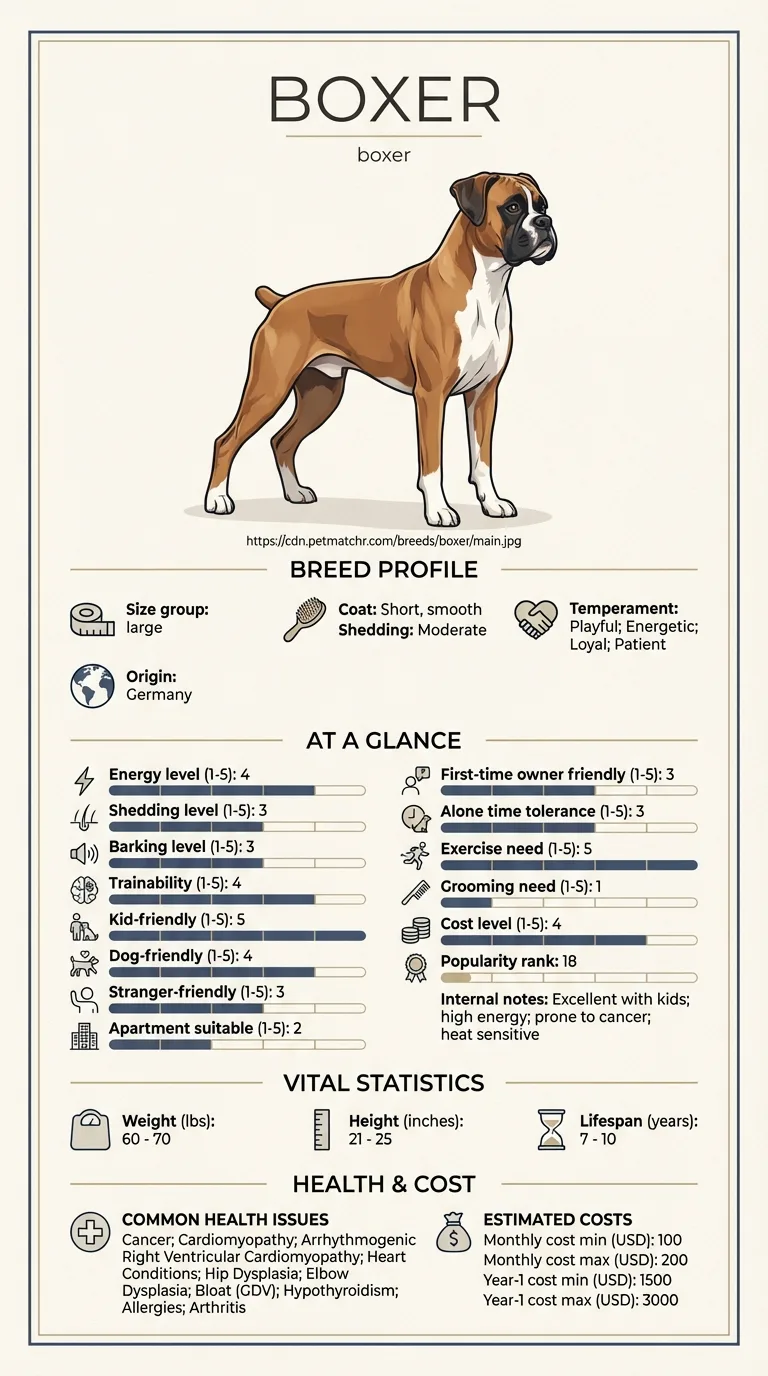
Owners who love Boxers but may not be fully aware of the breed's health risks often face challenges. This includes first-time owners, families with kids, and anyone looking to keep their Boxer healthy for years to come.
This guide is not medical advice. If your dog shows pain, sudden behavior change, or worsening symptoms, consult a licensed veterinarian.
Some links may be affiliate links. We may earn a commission at no extra cost to you. We only suggest products we believe are helpful for dog owners.
We research and check what we publish, but we do not warrant that any figure, date, price, or statement is accurate, complete, or current, and we accept no liability for any loss, cost, injury, or other harm arising from the use of this site. Use it as one reference among several. You remain responsible for your own decisions and for your dog's care - confirm anything that matters with a licensed veterinarian or another qualified professional before you act on it. Full disclaimer.
Check this first
Understanding when your Boxer’s genetic disorders require immediate attention is crucial. Some signs indicate you should call your vet right away, while others can be monitored at home. Knowing the difference can help you act quickly when needed.
Emergency Signs: If your Boxer shows any of the following symptoms, it’s time to contact your vet immediately: - Sudden lethargy or weakness - Difficulty breathing or persistent coughing - Unexplained swelling or pain in the abdomen - Loss of appetite for more than 24 hours - Vomiting or diarrhea that lasts longer than a day
These symptoms may suggest serious conditions like bloat or heart issues, which can be life-threatening.
Watch and Wait: In contrast, if your Boxer has mild symptoms, you may monitor them at home. Watch for: - Occasional coughing without distress - Mild limping or stiffness after play - Slight changes in appetite or energy levels
Keep a close eye on these symptoms. If they persist or worsen, it's best to consult your vet. Regular check-ups can also help catch potential issues early.
Remember, being proactive about your Boxer’s health can make a big difference. If in doubt, always reach out to your vet for guidance.
If any of these apply, call your vet or an emergency clinic now. The rest of this page is for the cases that are not an emergency.
Boxers are energetic and loyal dogs, but they are prone to some common genetic disorders that can affect their day-to-day life. Issues like cancer, cardiomyopathy, and hip dysplasia can lead to health problems that may result in discomfort or difficulty in movement. Owners often notice signs like lethargy, difficulty breathing, or unusual limping, which can be concerning.
These genetic disorders are relatively common among Boxers, with many owners reporting at least one health issue during their dog's lifetime. It's important to be proactive about their health and regular vet check-ups to catch any potential problems early.
Boxers are prone to several genetic disorders due to their breeding history. Common issues include cancer, cardiomyopathy, and hip dysplasia, which are more prevalent in purebred dogs. These conditions can stem from inherited traits that affect their overall health and longevity.
Environmental factors also contribute to the health of Boxers. Poor nutrition, lack of exercise, and high-stress situations can exacerbate existing genetic vulnerabilities. Additionally, factors like exposure to extreme temperatures or toxins can pose risks to their health.
If you suspect any genetic disorder based on symptoms like lethargy, difficulty breathing, or unusual behavior, it’s crucial to consult your vet. Regular check-ups can help catch potential issues early, ensuring your Boxer has the best chance at a healthy life.
Avoid these common mistakes when addressing Boxer most common genetic disorders. They can inadvertently reinforce problems or slow down improvement.
See all Boxer health problems, which breeds are prone to most common genetic disorders, or the full Boxer breed guide for temperament, exercise needs and ownership costs.
You can expect to see improvements in your Boxer's health and behavior within 3 to 6 months of consistent care and follow-up with your vet.
Success looks like a healthier, more active Boxer who exhibits fewer signs of genetic disorders and better overall wellness.
When Sarah adopted Max, a lively Boxer, she quickly learned about the breed's common genetic disorders. Max was diagnosed with elbow dysplasia, which made him hesitant to play like he used to. With guidance from her vet, Sarah implemented a specialized exercise routine and focused on his diet. Within months, Max was running and playing joyfully again. Sarah also took a training class to help manage his energy levels and behavior. This holistic approach not only improved Max's physical health but also strengthened their bond.
Key takeaway: Being proactive about a Boxer's health can lead to significant improvements. Regular vet visits and tailored training can help manage and even mitigate genetic disorders.
Boxers are prone to several genetic disorders, including cancer, cardiomyopathy, and hip dysplasia. Regular vet check-ups and genetic testing can help identify these issues early. This answer relates to Boxer most common genetic disorders.
Boxers are predisposed to certain genetic disorders due to breeding practices that emphasize specific traits. Understanding these risks can help you take proactive steps in managing your Boxer's health.
While you can't prevent genetic disorders entirely, maintaining a healthy lifestyle for your Boxer can help. Regular exercise, a balanced diet, and routine veterinary care are key to keeping your dog healthy.
Common signs of genetic disorders in Boxers include lethargy, difficulty breathing, or swelling in the abdomen. If you notice any unusual behavior, it's essential to consult your vet for a proper diagnosis.
Training methods for Boxers with genetic disorders should be gentle and accommodate their physical limitations. Focus on positive reinforcement techniques to keep training enjoyable and effective.
If your Boxer is diagnosed with a genetic disorder, work closely with your veterinarian to develop a management plan. This may include medication, dietary changes, or lifestyle adjustments.
Yes, genetic disorders can impact your Boxer's lifespan. However, with proper care, many Boxers can live happy lives despite their health challenges.
Supporting your Boxer may involve providing a balanced diet, regular vet check-ups, and appropriate exercise. Training can also play a role, as it helps address behavioral issues that may arise due to health problems.
Yes, older Boxers may show increased signs of genetic disorders, particularly conditions like arthritis or heart issues. Regular vet visits become even more crucial as they age to monitor their health.
While you can't completely prevent genetic disorders, choosing a reputable breeder who conducts health screenings can reduce risks. Ensuring your Boxer receives regular health check-ups is also important for early detection.
Ensure regular vet check-ups and consider genetic testing. Maintain a healthy diet and exercise routine to support your Boxer's overall health.
Budget for regular veterinary visits and potential treatments, as costs can range from $100 to $200 monthly. Consider pet insurance to help cover unexpected expenses.
Schedule an appointment with your veterinarian as soon as possible for a thorough examination and potential testing.
Create a comfortable living space and provide gentle exercise to avoid strain. Always follow your vet's guidance for specific care needs.
A one-page prep sheet for this condition: the signs, the questions to ask, what to get priced. Unlocks here.
You get: Vet visit prep sheet
No spam. One-click unsubscribe. See our privacy policy.
Preview page 1 before you decide.