Behavior
How to stop Border Collie von Willebrand's disease?
There is no way to stop von Willebrand's disease, as it is inherited. Management through veterinary care is essential.

Quick answer
How to stop Border Collie von Willebrand's disease?
There is no way to stop von Willebrand's disease, as it is inherited. Management through veterinary care is essential.
Border Collie von Willebrand's disease is a bleeding disorder that can significantly affect your dog's health.
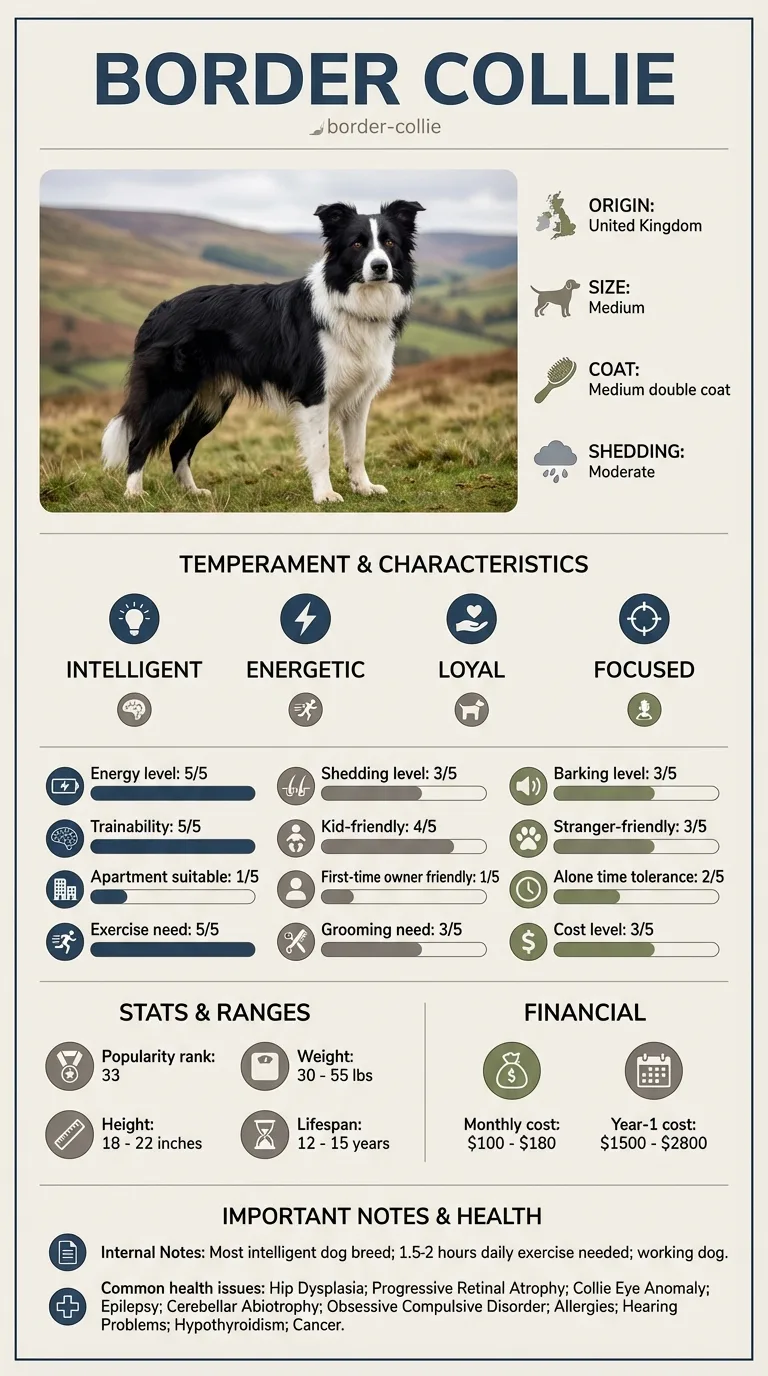
Owners of Border Collies often face challenges when their dog is diagnosed with von Willebrand's disease. This is especially true for first-time dog owners or those who may not recognize the symptoms early on.
This guide is not medical advice. If your dog shows pain, sudden behavior change, or worsening symptoms, consult a licensed veterinarian.
Some links may be affiliate links. We may earn a commission at no extra cost to you. We only suggest products we believe are helpful for dog owners.
We research and check what we publish, but we do not warrant that any figure, date, price, or statement is accurate, complete, or current, and we accept no liability for any loss, cost, injury, or other harm arising from the use of this site. Use it as one reference among several. You remain responsible for your own decisions and for your dog's care - confirm anything that matters with a licensed veterinarian or another qualified professional before you act on it. Full disclaimer.
Check this first
Understanding when to seek immediate help for your Border Collie is crucial. If you notice severe signs like excessive bleeding from small cuts, prolonged bleeding after a minor injury, or spontaneous bleeding from the nose or gums, call your vet right away. These red flags indicate a serious situation that needs urgent medical attention.
Milder symptoms, such as occasional nosebleeds or minor bruising, can often be monitored at home. Keep track of these instances and consult with your vet about a management plan. It’s essential to be observant and stay in contact with your veterinarian to ensure your dog's health and safety.
Always keep in mind that even if a symptom seems mild, it's best to err on the side of caution. Regular check-ups can help manage any underlying conditions, including von Willebrand's disease, and can improve your dog's quality of life. When in doubt, don’t hesitate to reach out to your vet for guidance.
If any of these apply, call your vet or an emergency clinic now. The rest of this page is for the cases that are not an emergency.
Border Collie von Willebrand's disease is a bleeding disorder that affects these energetic dogs. It can make everyday activities challenging, as even minor injuries may lead to excessive bleeding. Owners may notice their Border Collie bruising easily or bleeding after a small cut, making it important to monitor their health closely.
Von Willebrand's disease is relatively common among Border Collies, particularly due to their genetic background. Many owners may not recognize the signs immediately, leading to potential health risks.
Border Collies are prone to Von Willebrand's Disease due to genetic factors. This bleeding disorder is inherited and affects the blood's ability to clot properly. It is more common in certain breeds, including the Border Collie, making them more susceptible to this health issue.
Environmental factors can also play a role in how this disease manifests. Stressful situations, lack of proper care, or injuries can exacerbate the symptoms of Von Willebrand's Disease. A chaotic environment may complicate the management of your dog's health.
Speak to your vet if you notice any signs of excessive bleeding, such as prolonged bleeding from minor cuts or nosebleeds. Regular check-ups are essential to manage Von Willebrand's Disease, so don't hesitate to ask about treatment options.
Avoiding these common mistakes can help manage your Border Collie’s von Willebrand's disease effectively.
Start here: Border Collie Most Common Genetic Disorders: Screening
See all Border Collie health problems, which breeds are prone to von willebrands disease, or the full Border Collie breed guide for temperament, exercise needs and ownership costs.
Managing your Border Collie's von Willebrand's disease typically involves regular vet visits and a consistent care routine. Within a few months, you should start to notice improvements in managing bleeding episodes.
Success means being able to minimize bleeding incidents through proper care and treatment. Your dog should be more comfortable and active, allowing you to enjoy your time together without constant worry.
When Sarah adopted Charlie, her energetic Border Collie, she quickly noticed something was off. After a few weeks of play, he had a bleeding episode that sent her to the vet. Diagnosis: von Willebrand's disease. With the vet's guidance, Sarah adjusted Charlie's diet and developed a routine that included regular check-ups and careful monitoring of his activity levels. Over the next few months, she learned how to help him stay safe and happy, which made a huge difference in their lives.
Key takeaway: Understanding your dog's condition and working closely with a vet can lead to a happier, healthier life for both you and your dog.
Border Collie von Willebrand's disease is a bleeding disorder caused by a deficiency in a blood-clotting protein. This condition makes it difficult for the dog's blood to clot properly, leading to excessive bleeding from injuries or surgeries.
Managing your Border Collie's von Willebrand's disease involves regular veterinary check-ups and possibly medication to help with clotting. Additionally, avoid situations where your dog might get injured, as this can lead to bleeding complications.
Yes, you can train your Border Collie, but keep training low-impact to prevent injury. Focus on mental stimulation and obedience training rather than high-energy activities that could lead to accidents.
Signs of von Willebrand's disease include excessive bleeding from small cuts, nosebleeds, or blood in urine or feces. If you notice any of these symptoms, contact your veterinarian immediately.
While there is no cure for von Willebrand's disease, it can be managed with veterinary care. Treatments may include desmopressin therapy to help improve clotting ability during specific situations.
Signs of von Willebrand's disease in Border Collies can include excessive bleeding from cuts, prolonged bleeding during surgery, or unexplained bruising. If you notice any of these symptoms, it's crucial to consult your vet quickly.
Yes, older Border Collies may experience more severe symptoms due to a weakened immune system. Regular check-ups and blood tests can help monitor their condition and catch any complications early.
Training can help your Border Collie follow commands and avoid risky situations that may lead to injury. Positive reinforcement and gentle guidance are key to ensuring their safety.
There is no way to stop von Willebrand's disease, as it is inherited. Management through veterinary care is essential.
Keep your dog away from rough play to avoid injury. Regular vet visits are crucial to monitor their health.
Yes, with proper management and care, many dogs with von Willebrand's disease can live normal lives. Just be cautious about their activities.
A one-page prep sheet for this condition: the signs, the questions to ask, what to get priced. Unlocks here.
You get: Vet visit prep sheet
No spam. One-click unsubscribe. See our privacy policy.
Preview page 1 before you decide.