Behavior
How can I stop Bernedoodle bloat (GDV)?
To stop bloat, feed smaller meals throughout the day and avoid exercise right after eating.

Quick answer
How can I stop Bernedoodle bloat (GDV)?
To stop bloat, feed smaller meals throughout the day and avoid exercise right after eating.
Bernedoodle bloat (GDV) is a serious condition that can threaten your dog’s life. Recognizing the signs and understanding prevention is crucial.
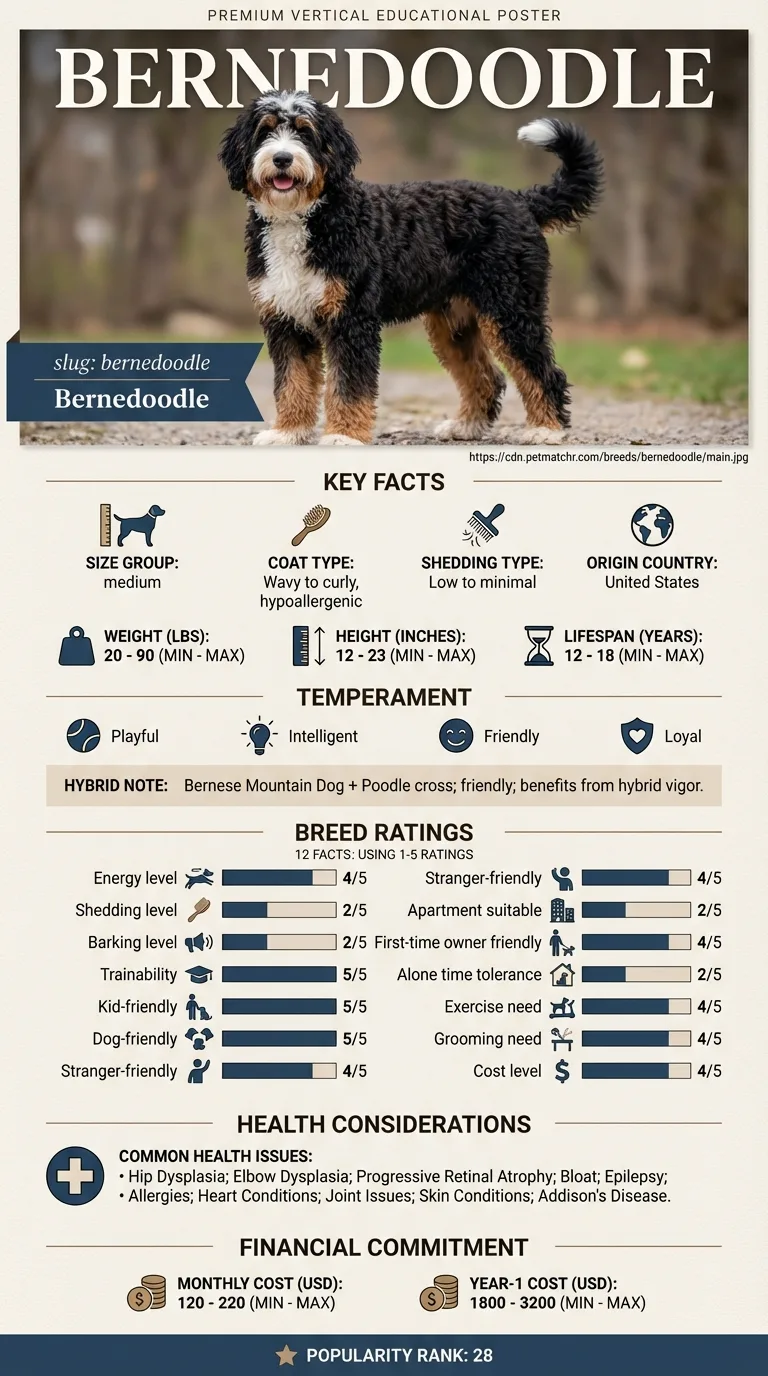
Owners of Bernedoodles may face this issue, especially those who have active lifestyles or feed their dogs large meals quickly. Busy families, first-time dog owners, or anyone unsure about dog health can find this situation stressful.
This guide is not medical advice. If your dog shows pain, sudden behavior change, or worsening symptoms, consult a licensed veterinarian.
Some links may be affiliate links. We may earn a commission at no extra cost to you. We only suggest products we believe are helpful for dog owners.
We research and check what we publish, but we do not warrant that any figure, date, price, or statement is accurate, complete, or current, and we accept no liability for any loss, cost, injury, or other harm arising from the use of this site. Use it as one reference among several. You remain responsible for your own decisions and for your dog's care - confirm anything that matters with a licensed veterinarian or another qualified professional before you act on it. Full disclaimer.
Check this first
Recognizing the signs of Bernedoodle bloat (GDV) can save your dog's life. This condition is serious and requires immediate veterinary attention. Emergency signs include a distended abdomen, unproductive vomiting, excessive drooling, restlessness, and signs of pain. If your Bernedoodle shows any of these symptoms, call your vet right away.
On the other hand, mild cases of bloat may present symptoms like slight discomfort, moderate bloating, and occasional vomiting. If your dog seems a bit off but is still eating, drinking, and behaving normally, you can monitor them closely at home. Keep an eye on their behavior and appetite, and have a plan in place to visit your vet if things worsen.
In summary, when it comes to Bernedoodle bloat (GDV), trust your instincts. If you notice any alarming signs, don’t hesitate to seek help. For mild cases, a watchful approach may suffice, but always prioritize your dog's health.
If any of these apply, call your vet or an emergency clinic now. The rest of this page is for the cases that are not an emergency.
Bernedoodle bloat (GDV) is a serious condition where the stomach twists, trapping gas and food inside. This can lead to severe pain, rapid heart rate, and even death if not treated immediately. Owners might notice their Bernedoodle trying to vomit without producing anything, a distended abdomen, or signs of restlessness.
Bloat is a known risk for Bernedoodles, particularly those with a family history of the condition. While not every Bernedoodle will experience bloat, the risk is significant enough that owners should be aware of the symptoms and triggers.
Bernedoodles are medium-sized dogs that have a deep chest. This anatomy can predispose them to bloat (gastric dilatation-volvulus, or GDV). Additionally, their friendly nature may lead them to eat quickly, increasing the risk of bloat.
Stressful situations, such as a chaotic household or irregular feeding schedules, can trigger bloat in Bernedoodles. Also, vigorous exercise right after eating can lead to this serious condition, as it may cause the stomach to twist.
If you notice bloating, restlessness, or signs of distress in your Bernedoodle after eating, contact your vet immediately. Bloat is a serious condition that requires prompt medical attention to prevent life-threatening complications.
Avoiding these common mistakes can help manage Bernedoodle bloat (GDV) more effectively.
Start here: Bernedoodle Most Common Genetic Disorders: Screening
See all Bernedoodle health problems, which breeds are prone to bloat gdv, or the full Bernedoodle breed guide for temperament, exercise needs and ownership costs.
Addressing Bernedoodle bloat (GDV) can take several weeks of consistent care and lifestyle adjustments. It's crucial to monitor your dog's eating habits and adjust them as necessary.
Success means your Bernedoodle can eat without excessive gulping and show no signs of distress after meals. You'll notice a more relaxed demeanor during feeding times.
Sarah, a busy nurse in Seattle, noticed her Bernedoodle, Max, often gulping down his food. After a couple of weeks, he developed a bloated stomach, prompting her to seek help. Following a vet's advice, she transitioned Max to smaller, more frequent meals and introduced slow-feeding bowls. Over the next few weeks, Max's eating habits improved significantly. He became calmer during mealtime and showed no further signs of bloat.
Key takeaway: By understanding the importance of meal management, Sarah learned how to prevent Bernedoodle bloat (GDV) effectively, ensuring Max's health and comfort.
Bernedoodle bloat, or GDV (gastric dilatation-volvulus), is a serious condition where the stomach fills with gas and twists. This can cut off blood flow and is life-threatening. If you notice your Bernedoodle trying to vomit without success, has a swollen belly, or shows signs of distress, seek immediate veterinary help.
To help prevent bloat, feed your Bernedoodle smaller, more frequent meals instead of one large meal. Encourage slow eating by using special bowls designed for this purpose. Additionally, avoid vigorous exercise right after meals.
If you suspect your Bernedoodle has bloat, don’t wait. Take them to the vet right away. Time is critical, and prompt treatment can save their life.
Yes, bloat requires immediate medical attention. Treatment often involves decompressing the stomach and surgery to prevent recurrence. Following the vet's guidance post-treatment is crucial for recovery.
Many Bernedoodles recover well from bloat with proper treatment and care. However, they may be at higher risk for future episodes, so ongoing monitoring and following preventative measures is essential.
Common symptoms of bloat (GDV) in Bernedoodles include a swollen abdomen, restlessness, excessive drooling, and attempts to vomit without success. If you notice these signs, it's critical to get your dog to a vet immediately.
Yes, older Bernedoodles can be at risk for bloat (GDV), especially if they have a history of eating quickly or have underlying health issues. It's essential to monitor their eating habits and consult your vet regularly.
To help prevent bloat (GDV), feed your Bernedoodle smaller meals multiple times a day instead of one large meal. Additionally, avoiding vigorous exercise right after eating can also reduce the risk.
While bloat (GDV) can occur in any dog, larger breeds and those with deep chests, like Bernedoodles, are at a higher risk. Understanding your dog’s breed traits can help you be more vigilant.
Seek emergency care immediately if your Bernedoodle displays symptoms like a distended abdomen, lethargy, or signs of pain. Bloat (GDV) is a life-threatening condition that requires prompt veterinary attention.
To stop bloat, feed smaller meals throughout the day and avoid exercise right after eating.
Use slow feeders, keep your dog calm after meals, and monitor food intake to prevent bloat.
Bloat is a known issue in many large breeds, including Bernedoodles, so awareness is key.
Seek immediate veterinary assistance if your Bernedoodle shows signs of bloat, as it is a medical emergency.
Treatment costs for bloat can vary widely, ranging from several hundred to thousands of dollars depending on the severity and needed procedures.
A one-page prep sheet for this condition: the signs, the questions to ask, what to get priced. Unlocks here.
You get: Vet visit prep sheet
No spam. One-click unsubscribe. See our privacy policy.
Preview page 1 before you decide.