Behavior
What are quick tips for Belgian Malinois skin infections?
Keep your Belgian Malinois clean with regular grooming and baths. Monitor their diet for potential allergens, and consult your vet for persistent issues.

Quick answer
What are quick tips for Belgian Malinois skin infections?
Keep your Belgian Malinois clean with regular grooming and baths. Monitor their diet for potential allergens, and consult your vet for persistent issues.
Belgian Malinois skin infections can be a common issue for this breed, often leading to discomfort and health concerns. Understanding this problem is crucial for keeping your pup healthy and happy.
Typically, owners of Belgian Malinois face this issue, especially those who may not have prior experience with dog care. Busy families or first-time pet owners may find it challenging to manage their dog's grooming and health needs effectively.
This guide is not medical advice. If your dog shows pain, sudden behavior change, or worsening symptoms, consult a licensed veterinarian.
Some links may be affiliate links. We may earn a commission at no extra cost to you. We only suggest products we believe are helpful for dog owners.
We research and check what we publish, but we do not warrant that any figure, date, price, or statement is accurate, complete, or current, and we accept no liability for any loss, cost, injury, or other harm arising from the use of this site. Use it as one reference among several. You remain responsible for your own decisions and for your dog's care - confirm anything that matters with a licensed veterinarian or another qualified professional before you act on it. Full disclaimer.
Check this first
Recognizing when a skin infection in your Belgian Malinois is an emergency can be crucial for their health. If you notice any of these red-flag signs, call your vet immediately: excessive itching or scratching, swelling, open sores, or pus around the infected area. These symptoms can indicate a severe infection that needs immediate medical attention.
On the other hand, if your Malinois has mild redness, occasional itching, or minor bumps that don't seem to worsen, you may be able to monitor the situation for a few days. Keep an eye on their behavior and overall health. If their condition doesn't improve or worsens, then it's time to consult your vet. You can also implement a basic care plan, such as regular grooming and cleaning of the affected area, to help manage mild cases.
It's essential to differentiate between emergencies and manageable situations. Quick action can prevent more severe issues, while monitoring can save unnecessary vet visits. Always trust your instincts; if you're unsure, it's better to err on the side of caution and seek professional advice.
If any of these apply, call your vet or an emergency clinic now. The rest of this page is for the cases that are not an emergency.
Belgian Malinois skin infections can be a common and frustrating issue for owners. These infections often manifest as red, inflamed patches on the skin, particularly in areas with folds, like the ears or between the toes. You might notice your Malinois scratching or licking excessively, which can worsen the condition and lead to more serious skin problems.
Skin infections are quite common in Belgian Malinois, especially due to their active nature and moderate shedding. Many owners report dealing with infections at least once during their dog's life, making it an important concern to address.
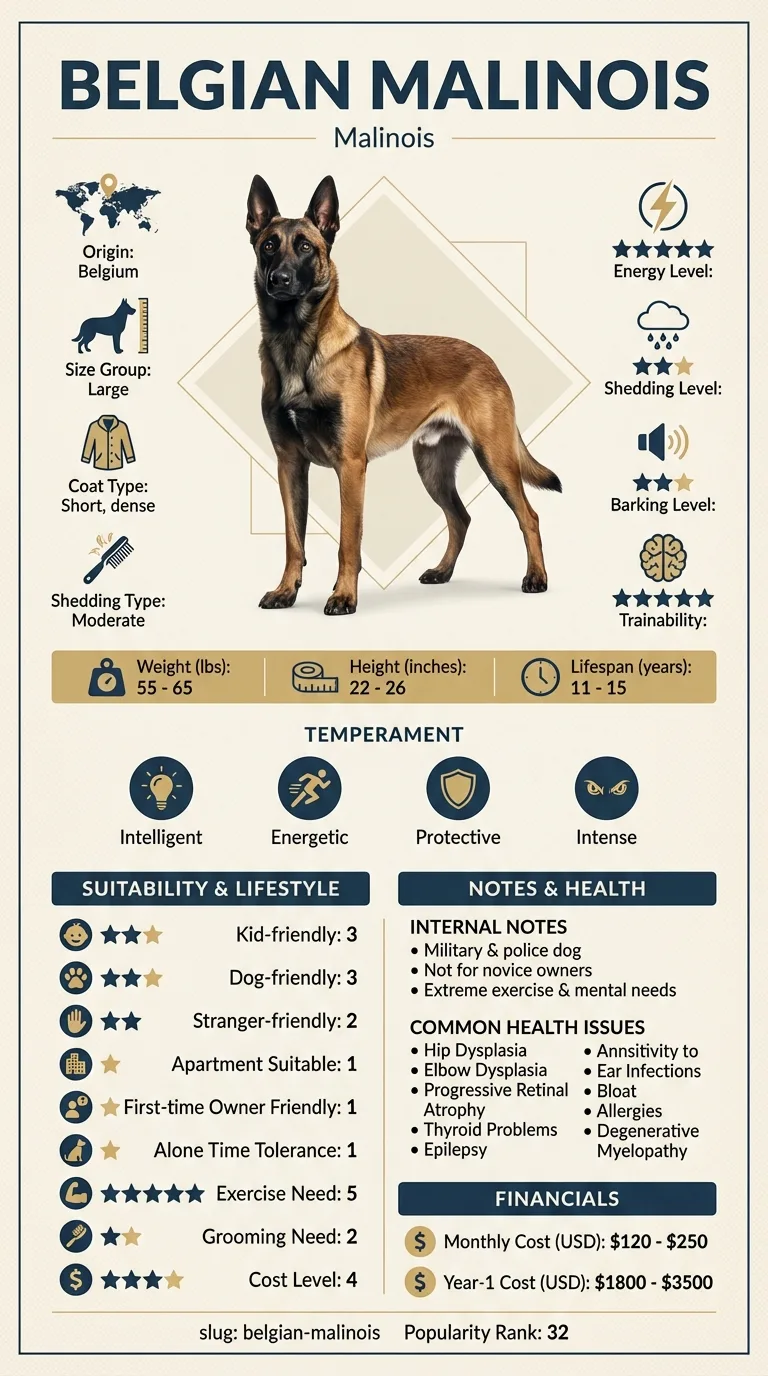
Belgian Malinois are known for their short, dense coats, which can trap moisture and debris. This environment can lead to skin infections, especially if they're not groomed regularly. Their high energy levels also mean they may be more prone to injuries that can become infected.
Skin infections in Belgian Malinois can also stem from environmental factors. Allergens like pollen, dust mites, or certain foods can irritate their skin. Additionally, if they spend a lot of time outdoors, exposure to bacteria and parasites increases, raising the risk of infections.
If home treatments don’t improve your dog's condition within a week, or if you notice severe redness, swelling, or discharge, it's time to visit the vet. They can provide a proper diagnosis and necessary treatments, including antibiotics or allergy testing.
Avoiding certain behaviors can help your Belgian Malinois recover from skin infections more effectively. Here are common mistakes to sidestep.
Start here: Belgian Malinois Most Common Genetic Disorders: Screening
See all Belgian Malinois health problems, which breeds are prone to skin infections, or the full Belgian Malinois breed guide for temperament, exercise needs and ownership costs.
You might see improvements in your Belgian Malinois's skin condition within 4 to 8 weeks after implementing a consistent care routine.
Success means your Malinois has fewer skin irritations, less itching, and healthier skin overall. You'll notice less scratching and more comfort in their daily activities.
Sarah, a busy nurse in Atlanta, struggled with her Belgian Malinois, Max, who had persistent skin infections. Despite regular vet visits, Max's skin remained irritated. After researching home care methods, Sarah began a new routine that included proper grooming and a special diet aimed at reducing allergens. Slowly, she noticed Max scratching less and his fur becoming shinier. It took time, but after a few months, Max's skin infections had significantly improved, allowing him to enjoy his daily walks without discomfort.
Key takeaway: With patience and the right care routine, you can help reduce skin infections in your Belgian Malinois and improve their quality of life.
Belgian Malinois are prone to skin infections due to their short, dense coat and moderate shedding. Factors like allergies, poor hygiene, or underlying health issues can contribute to these infections. Regular grooming and vet check-ups can help identify and manage these problems.
To stop Belgian Malinois skin infections, maintain a consistent grooming routine to keep their coat clean and free from debris. Regular baths with a gentle, hypoallergenic dog shampoo can help, as well as ensuring they are dried thoroughly after walks. If infections persist, consult your vet for possible allergies or other treatments.
Skin infections in Belgian Malinois are typically not contagious to other dogs or humans. However, some underlying issues like parasites or fungal infections could be spreadable. Always consult your vet if you suspect a contagious condition.
Yes, diet can significantly impact skin health. Allergies to certain ingredients can lead to skin infections. Feeding your Belgian Malinois a high-quality diet tailored for their breed can help minimize the risk of skin issues.
If your Belgian Malinois experiences recurring skin infections, it's essential to consult your vet. They can perform allergy tests or check for underlying health problems. Keeping a detailed record of symptoms can help in diagnosing the issue.
Yes, regular grooming and proper hygiene can help prevent skin infections. Make sure to clean any folds or areas where dirt can accumulate. Additionally, a balanced diet and regular vet check-ups can enhance their overall skin health.
If your Belgian Malinois is experiencing persistent itching, redness, or if the skin appears infected, it’s time to visit the vet. Also, if you notice any unusual changes in their behavior, such as increased irritability or lethargy, seek professional advice.
Older Belgian Malinois may have weaker immune systems, making them more susceptible to skin infections. Additionally, they might develop infections due to underlying health issues, so it's important to monitor their skin condition closely as they age.
You can help your Belgian Malinois by keeping their skin clean and dry. Applying vet-recommended topical treatments can also provide relief. However, always consult your vet before starting any at-home treatments to ensure they are safe and appropriate.
Keep your Belgian Malinois clean with regular grooming and baths. Monitor their diet for potential allergens, and consult your vet for persistent issues.
Gently clean the infected area with a vet-recommended antiseptic solution. Avoid using harsh chemicals that could irritate the skin further.
A mild, hypoallergenic dog shampoo is best for Belgian Malinois with skin infections. Look for products designed to soothe irritated skin.
You should bathe your Belgian Malinois every 4 to 6 weeks, but this may vary based on their activity level and skin condition. Always consult your vet for tailored advice.
Yes, stress can lead to a weakened immune system, making your Belgian Malinois more susceptible to skin infections. Providing a stable, calm environment can help reduce stress.
A one-page prep sheet for this condition: the signs, the questions to ask, what to get priced. Unlocks here.
You get: Vet visit prep sheet
No spam. One-click unsubscribe. See our privacy policy.
Preview page 1 before you decide.