Behavior
What are quick tips for managing Beagle excessive barking?
To manage Beagle excessive barking, ensure they get plenty of exercise, provide mental stimulation, and establish a consistent training routine.

Quick answer
What are quick tips for managing Beagle excessive barking?
To manage Beagle excessive barking, ensure they get plenty of exercise, provide mental stimulation, and establish a consistent training routine.
Beagle excessive barking can be a frustrating issue for many dog owners. This behavior often disrupts the peace at home and can even lead to complaints from neighbors.
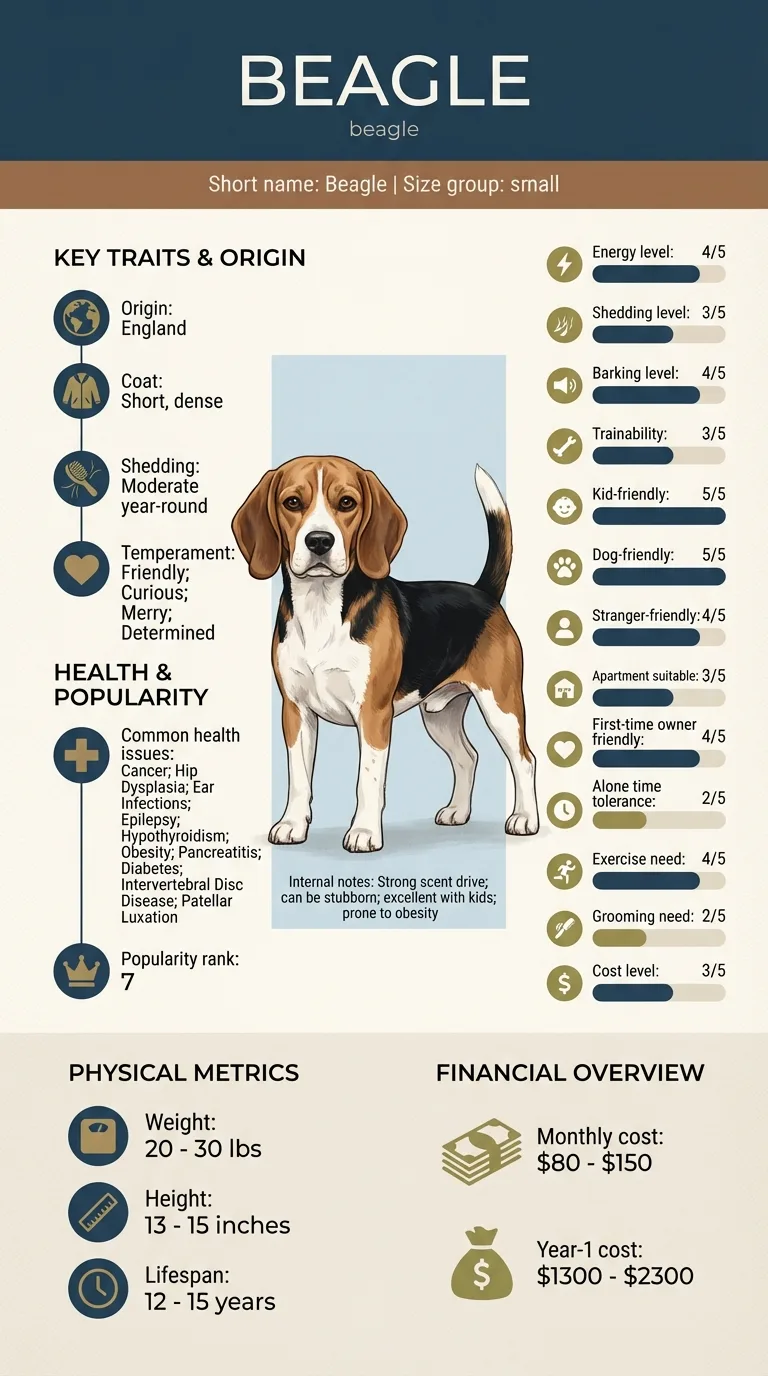
Owners of Beagles, especially first-time dog parents or those living in close quarters like apartments, often face the challenge of managing their dog's vocal tendencies. Busy families or individuals with work commitments may find it particularly tough to provide the necessary training and stimulation to curb this behavior.
This guide is not medical advice. If your dog shows pain, sudden behavior change, or worsening symptoms, consult a licensed veterinarian.
Some links may be affiliate links. We may earn a commission at no extra cost to you. We only suggest products we believe are helpful for dog owners.
We research and check what we publish, but we do not warrant that any figure, date, price, or statement is accurate, complete, or current, and we accept no liability for any loss, cost, injury, or other harm arising from the use of this site. Use it as one reference among several. You remain responsible for your own decisions and for your dog's care - confirm anything that matters with a licensed veterinarian or another qualified professional before you act on it. Full disclaimer.
Beagle excessive barking can be a daily challenge for many owners. This breed is known for being vocal, often barking at anything that moves or catches their attention. Whether it's a passing car, a neighbor, or even a leaf falling from a tree, Beagles are quick to express their excitement or curiosity through barking.
Excessive barking is quite common among Beagles due to their energetic and curious nature. Many Beagle owners report dealing with barking issues, especially if their dogs are not adequately stimulated or exercised. This tendency can become more pronounced if they feel anxious or bored.
Beagles are naturally vocal dogs. Their strong scent drive and curious nature often lead them to bark when they sense something interesting or unusual. This breed tends to be more vocal than others, which can sometimes escalate into excessive barking.
Environmental factors can also contribute to excessive barking in Beagles. A noisy neighborhood, lack of stimulation, or being left alone for long periods can make them bark more. If they feel anxious or bored, barking may become their way of coping with those feelings.
If your Beagle's excessive barking persists despite your efforts, it may be time to consult a professional trainer. A trainer can provide tailored strategies and address any underlying behavioral issues.
If you notice sudden changes in your Beagle's barking habits, consider talking to your vet. Excessive barking can sometimes indicate health issues like pain or anxiety, so it's important to rule out any medical concerns.
Start here: Beagle Most Common Genetic Disorders: What to Screen For
See all Beagle health problems, which breeds are prone to excessive barking, or the full Beagle breed guide for temperament, exercise needs and ownership costs.
You can expect to see progress within 2 to 4 weeks of consistent training.
Success means your Beagle barks less frequently and responds better to commands, allowing for a more peaceful home.
Here are some common mistakes Beagle owners make that can worsen excessive barking. Avoiding these will help you manage the problem more effectively.
Excessive barking in Beagles can be a nuisance, but knowing when it's an emergency is crucial. If your Beagle is barking uncontrollably while showing signs of distress, such as pacing, panting, or whining, it may be time to call your vet. These signs can indicate anxiety, pain, or a serious health issue.
Another red-flag sign is if your Beagle suddenly starts barking excessively after being calm. This change in behavior could mean your dog is experiencing a medical emergency like a seizure, injury, or illness. Immediate veterinary attention is necessary in these situations.
In contrast, if your Beagle is barking due to boredom or excitement, you can monitor the situation. Establish a training plan to help curb the barking. Activities like more exercise, interactive toys, or training sessions can help alleviate their need to bark. Additionally, consider your dog’s environment. If they feel isolated or anxious when left alone, it might be time to address their separation anxiety with a behavior specialist.

When Sarah adopted Bella, her Beagle, she was thrilled. However, Bella's excessive barking at every noise drove her neighbors crazy. After researching how to stop Beagle excessive barking, Sarah started a consistent training routine. She used positive reinforcement, rewarding Bella for quiet behavior. They practiced commands like 'quiet' and 'leave it' daily. Over time, Bella learned to bark less and respond to cues, making both Sarah and her neighbors much happier.
Key takeaway: With patience and consistent training, you can significantly reduce your Beagle's excessive barking.
Beagles are naturally vocal dogs, and excessive barking can stem from boredom, anxiety, or a strong instinct to alert you of their surroundings. Ensuring they have enough exercise and mental stimulation can help reduce this behavior.
To stop Beagle excessive barking, start by identifying triggers that cause the barking. Use positive reinforcement techniques to reward quiet behavior and consider training them to respond to a 'quiet' command.
Yes, excessive barking can be a sign of separation anxiety in Beagles. If your Beagle barks significantly when left alone, consider gradually increasing their alone time and providing engaging toys to ease their anxiety.
Using a combination of distraction techniques and reward-based training works best for Beagle excessive barking. Try redirecting their attention with toys or treats when they bark unnecessarily.
Beagles typically need about 60 minutes of exercise daily. Regular walks, play sessions, and mental challenges can help keep them calm and reduce excessive barking.
Yes, consider using anti-bark collars or calming pheromone diffusers. Always consult with a vet before trying new products to ensure they are suitable for your Beagle.
Beagles are naturally vocal dogs and may bark excessively due to boredom, anxiety, or excitement. Their strong scent drive can also trigger barking when they pick up interesting smells.
Training your Beagle to reduce barking starts with consistent commands and positive reinforcement. Using techniques like distraction, providing mental stimulation, and rewarding quiet behavior can help curb excessive barking.
If an older Beagle suddenly begins to bark excessively, it may be a sign of health issues or cognitive decline. It's important to consult your vet to rule out underlying medical problems.
If your Beagle's excessive barking is accompanied by other behavioral changes, signs of distress, or if it disrupts your household, it's wise to consult a vet. They can help identify if there's a health issue or behavioral problem.
Yes, Beagles can develop separation anxiety, which often results in excessive barking when left alone. Training and gradual desensitization can help, along with seeking advice from a professional dog trainer.
To manage Beagle excessive barking, ensure they get plenty of exercise, provide mental stimulation, and establish a consistent training routine.
Yes, consistent training and positive reinforcement can significantly reduce excessive barking in Beagles.
Beagle excessive barking is common, but it should be manageable with the right training and engagement.
If your Beagle's excessive barking continues despite training, seeking help from a professional trainer or behaviorist can be beneficial.
Behaviour changes often start with pain. The prep sheet for this page covers what to rule out, and what to ask.
You get: Vet visit prep sheet
No spam. One-click unsubscribe. See our privacy policy.
Preview page 1 before you decide.