Living
What are quick tips for Basset Hound care?
Ensure regular vet visits and a balanced diet for your Basset Hound. Daily exercise is essential to keep them healthy and happy.

Quick answer
What are quick tips for Basset Hound care?
Ensure regular vet visits and a balanced diet for your Basset Hound. Daily exercise is essential to keep them healthy and happy.
Understanding the differences between Basset Hound purebred vs. mixed breeds is crucial for potential dog owners.
First-time dog owners or families unsure about which option suits their lifestyle often find themselves confused. They worry about health issues, training challenges, and the overall fit of a Basset Hound in their home.
This guide is not medical advice. If your dog shows pain, sudden behavior change, or worsening symptoms, consult a licensed veterinarian.
Some links may be affiliate links. We may earn a commission at no extra cost to you. We only suggest products we believe are helpful for dog owners.
We research and check what we publish, but we do not warrant that any figure, date, price, or statement is accurate, complete, or current, and we accept no liability for any loss, cost, injury, or other harm arising from the use of this site. Use it as one reference among several. You remain responsible for your own decisions and for your dog's care - confirm anything that matters with a licensed veterinarian or another qualified professional before you act on it. Full disclaimer.
Check this first
Call your vet right away if you notice any of these red-flag signs: sudden lethargy, excessive vomiting, difficulty breathing, or signs of severe pain. If your Basset Hound is displaying unusual aggression or extreme anxiety, these can also be emergencies. Additionally, if your dog has a sudden change in appetite or weight, this warrants immediate attention.
On the other hand, if your Basset Hound is simply barking excessively or showing mild anxiety during thunderstorms, these are usually not emergencies. You can monitor these behaviors and try calming techniques or distractions. Keeping a consistent routine can also help alleviate mild anxiety and manage barking.
Remember, if you’re ever in doubt about your dog’s health, it’s better to err on the side of caution and consult your vet. They can help guide you on whether a visit is needed or if you can manage the situation at home.
If any of these apply, call your vet or an emergency clinic now. The rest of this page is for the cases that are not an emergency.
The debate of Basset Hound purebred vs. mixed breeds often centers around behavior and health. Purebred Basset Hounds can be more prone to certain health issues, while mixed breeds might have varied temperaments and fewer genetic concerns. Day-to-day, owners may notice differences in energy levels, stubbornness, and adaptability to training.
Basset Hounds, whether purebred or mixed, can experience behavior problems like separation anxiety and stubbornness. These issues are fairly common, especially in purebreds, due to their specific breeding for traits that may lead to certain health challenges.
Basset Hounds are known for their stubbornness, which can make training them a challenge. Their friendly nature may lead them to be overly curious, sometimes resulting in behavior issues. Additionally, certain health problems common in Basset Hounds, like ear infections or obesity, can also affect their behavior.
The living environment plays a crucial role in a Basset Hound's behavior. If they lack enough mental and physical stimulation, they may develop anxiety or destructive behaviors. Changes in routine or family dynamics can also impact their feelings of security, leading to stress.
If your Basset Hound shows sudden changes in behavior, such as aggression or lethargy, it's important to consult your vet. Health issues can often manifest as behavioral problems, and your vet can check for underlying medical conditions.
Avoiding common mistakes can help improve your Basset Hound's behavior. Here are some key pitfalls to watch out for.
Start here: Basset Hound Most Common Genetic Disorders: Screening
See all Basset Hound health problems, which breeds are prone to purebred vs mixed breeds, or the full Basset Hound breed guide for temperament, exercise needs and ownership costs.
It typically takes 3 to 6 months to see noticeable improvements in behavior when addressing issues between Basset Hound purebreds and mixed breeds.
Success means your Basset Hound is more relaxed around other dogs, responds better to commands, and enjoys interactions without excessive anxiety or aggression.
Meet Sarah, a busy nurse living in Chicago. She adopted a purebred Basset Hound named Max, but quickly found that he was often anxious and reactive around mixed breeds at the dog park. After consulting with a trainer, Sarah learned to use positive reinforcement methods. She gradually introduced Max to calm mixed breeds in controlled settings. Over several months, Max became more confident and less anxious in social situations.
Key takeaway: Patience and structured training can help your Basset Hound thrive, even when faced with the challenges of interacting with other breeds.
Basset Hounds can show traits from their breed lineage or mixed ancestry. Purebreds may have specific health issues, while mixed breeds can inherit diverse characteristics. Understanding your dog's background helps in tailoring care and training.
To tackle behavior issues, focus on consistent training and positive reinforcement. Engaging your Basset Hound in regular exercise can also reduce anxiety and improve behavior. Consider consulting a trainer experienced with Basset Hounds for tailored strategies.
Basset Hounds are prone to various health problems, including ear infections and hip dysplasia. Regular vet check-ups are essential to catch these issues early. Ensure you provide a healthy diet and maintain their weight to minimize risks.
Training a Basset Hound requires patience and consistency. Start with basic commands and use treats as rewards. Short, frequent training sessions work best since Basset Hounds can be stubborn.
Mixed breed Basset Hounds can benefit from hybrid vigor, often leading to fewer health issues than purebreds. However, it’s essential to understand both parents' health backgrounds. Regular vet care is crucial for all dogs, regardless of breed.
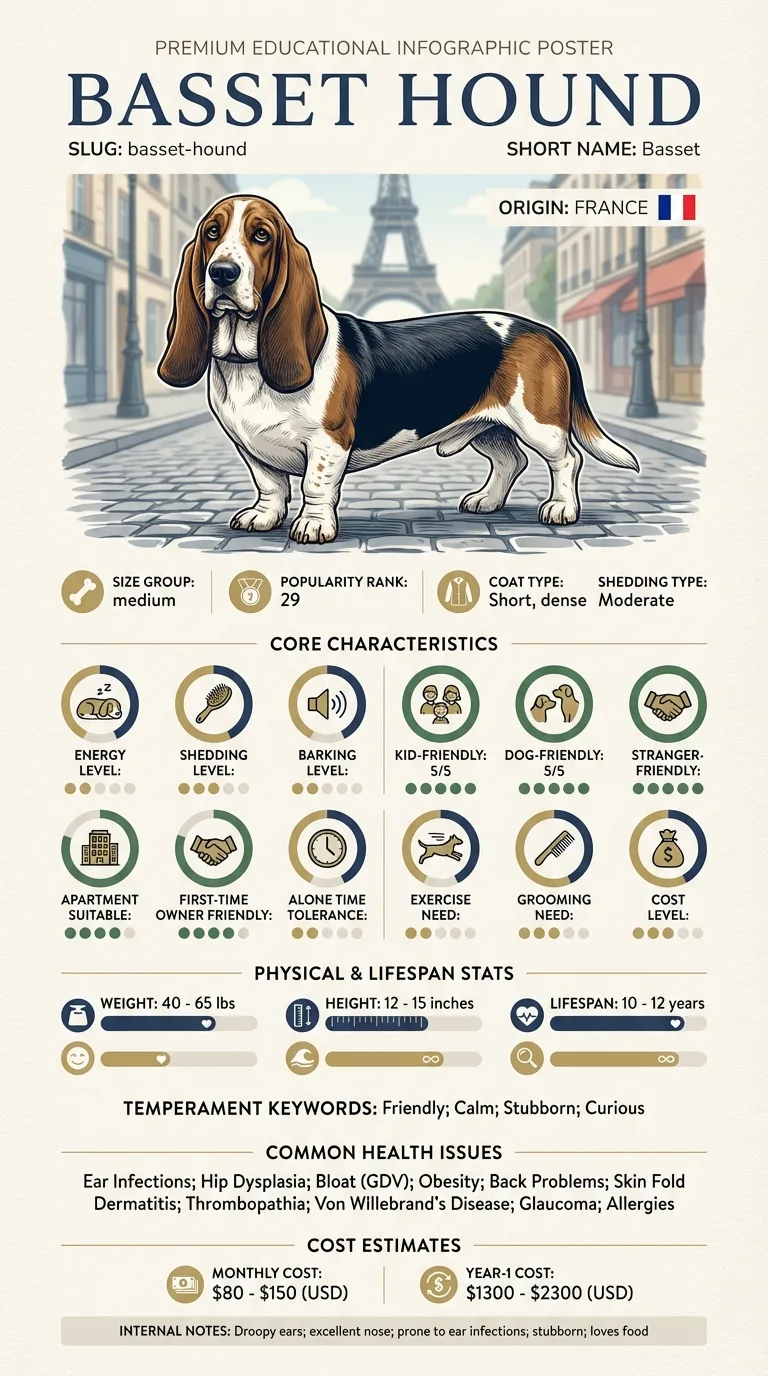
The first-year costs for a Basset Hound can range from $1,300 to $2,300. Ongoing monthly expenses typically fall between $80 and $150. Be prepared for potential health expenses, as Basset Hounds can have specific issues requiring attention.
Signs of separation anxiety include excessive barking, destructive behavior, or house soiling when left alone. If you notice these behaviors, consult a vet for advice on managing anxiety in your Basset Hound.
Both Basset Hound purebreds and mixed breeds can be great for families. Purebreds may have predictable traits, but mixed breeds often have fewer genetic health issues. Consider your lifestyle and the dog's temperament when making a choice.
Training can vary based on the individual dog's personality rather than whether they are purebred or mixed. Some Basset Hound traits, like stubbornness, can be present in both types. Consistent, positive reinforcement works best for training any Basset Hound.
Basset Hound purebreds may be more prone to certain health issues, like hip dysplasia and ear infections. Mixed breeds can benefit from hybrid vigor, potentially leading to fewer genetic health problems. Regular vet check-ups are crucial for both types.
Generally, both Basset Hound purebreds and mixed breeds are friendly and sociable with other dogs. However, individual temperament and socialization play a significant role. Introducing them gradually can help ensure a smooth integration.
Basset Hound purebreds typically have a lifespan of 10 to 12 years, similar to many mixed breeds. Factors like genetics, diet, and exercise can impact longevity. Regular vet visits and a healthy lifestyle are essential for maximizing their lifespan.
Ensure regular vet visits and a balanced diet for your Basset Hound. Daily exercise is essential to keep them healthy and happy.
Identify triggers for barking and work on desensitization. Training with positive reinforcement can also help reduce excessive barking.
Basset Hounds typically live between 10 to 12 years. Regular vet care can help extend their lifespan.
Basset Hounds require moderate exercise, about 30 minutes a day. Regular walks and playtime keep them healthy.
Focus on basic commands and socialization in your training plan. Make sure to use positive reinforcement techniques for best results.
A one-page prep sheet for this condition: the signs, the questions to ask, what to get priced. Unlocks here.
You get: Vet visit prep sheet
No spam. One-click unsubscribe. See our privacy policy.
Preview page 1 before you decide.