Health
What are quick tips for managing ventricular arrhythmias in American Staffordshire Terriers?
Regular vet check-ups, a balanced diet, and controlled exercise can help manage ventricular arrhythmias in American Staffordshire Terriers.

Quick answer
What are quick tips for managing ventricular arrhythmias in American Staffordshire Terriers?
Regular vet check-ups, a balanced diet, and controlled exercise can help manage ventricular arrhythmias in American Staffordshire Terriers.
Ventricular arrhythmias in American Staffordshire Terriers can lead to serious health concerns. Understanding this condition is crucial for your dog's well-being.
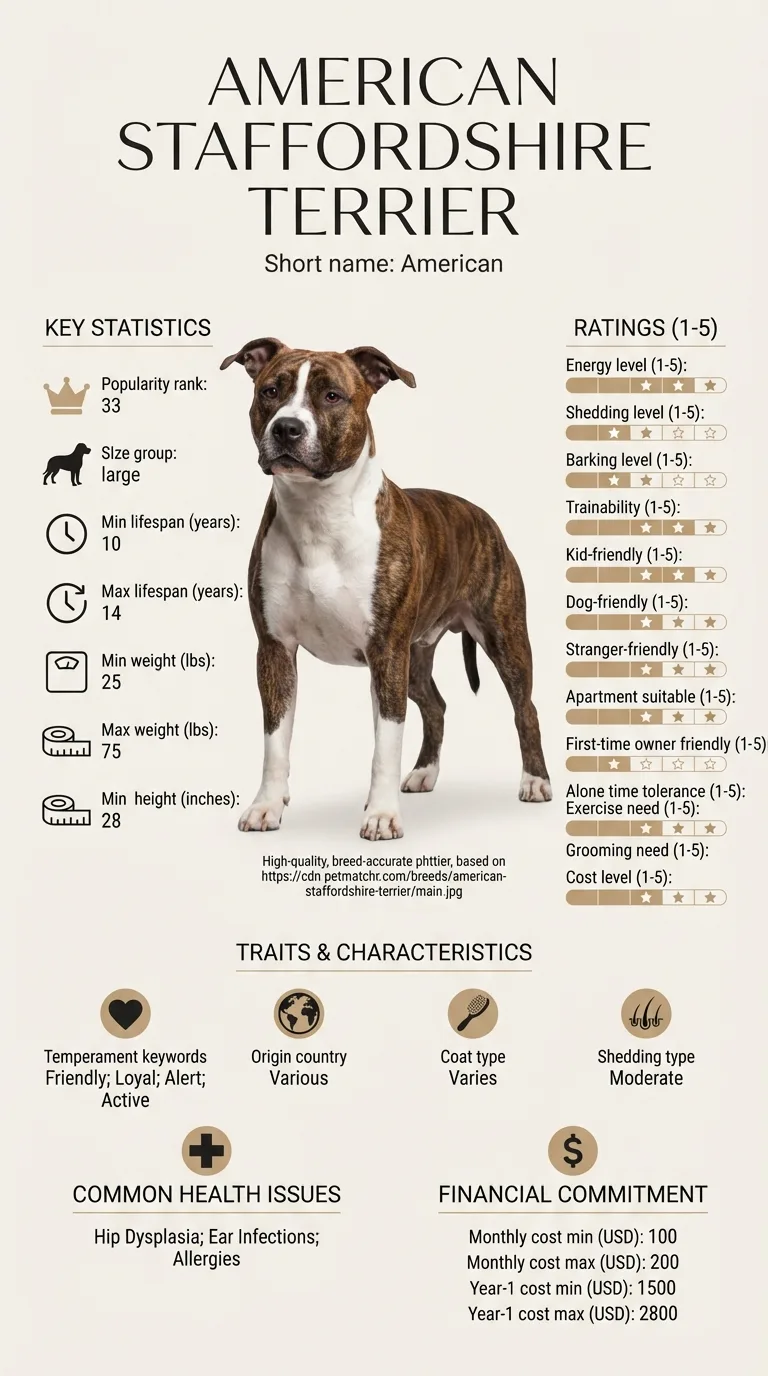
Owners of American Staffordshire Terriers, especially those who are first-time pet parents, may find themselves confused or overwhelmed when dealing with this health issue. Busy families or individuals who may not have prior experience with dog health problems can particularly struggle with understanding the implications of ventricular arrhythmias.
This guide is not medical advice. If your dog shows pain, sudden behavior change, or worsening symptoms, consult a licensed veterinarian.
Some links may be affiliate links. We may earn a commission at no extra cost to you. We only suggest products we believe are helpful for dog owners.
We research and check what we publish, but we do not warrant that any figure, date, price, or statement is accurate, complete, or current, and we accept no liability for any loss, cost, injury, or other harm arising from the use of this site. Use it as one reference among several. You remain responsible for your own decisions and for your dog's care - confirm anything that matters with a licensed veterinarian or another qualified professional before you act on it. Full disclaimer.
Check this first
Recognizing when your American Staffordshire Terrier's ventricular arrhythmias are an emergency is crucial for their health. Certain signs indicate that immediate veterinary attention is necessary. If your dog is experiencing severe symptoms like collapse, fainting, or excessive lethargy, you should call your vet right away. These could be signs of a serious underlying condition requiring prompt intervention.
Other red flags include difficulty breathing, a rapid heartbeat, or extreme weakness. If you notice any of these symptoms alongside irregular heartbeats, don’t wait. Your dog may be in distress and needs immediate care. A quick response can be life-saving.
On the other hand, if your dog shows mild signs of ventricular arrhythmias without severe symptoms, you can monitor them closely at home. You might notice occasional irregular heartbeats that don't seem to cause distress. In such cases, keep track of their behavior and any changes. Create a plan to observe their condition over the next few days, and consult your vet for further guidance. It’s always best to err on the side of caution, but not every irregular heartbeat is an emergency.
If any of these apply, call your vet or an emergency clinic now. The rest of this page is for the cases that are not an emergency.
American Staffordshire Terrier ventricular arrhythmias can be alarming, as they involve irregular heartbeats that may be noticed during play or rest. Owners might observe their dog acting lethargic, coughing, or even fainting in severe cases. This can be distressing, not just for the dog but for the owner, as it raises concerns about their pet's health.
Ventricular arrhythmias are not the most common issue for American Staffordshire Terriers, but they do occur. Many dogs may experience mild cases throughout their lives, especially as they age or if they have other health issues.
American Staffordshire Terriers can be predisposed to certain heart issues, including ventricular arrhythmias. Their strong, muscular build may contribute to stress on the heart, especially in high-energy situations. Genetics also play a role, as some lines may have a higher risk for heart conditions.
Environmental factors can trigger or worsen ventricular arrhythmias in your American Staffordshire Terrier. Stressful situations, like loud noises or unfamiliar surroundings, can cause irregular heartbeats. Additionally, a lack of exercise and poor diet can negatively impact heart health.
Talk to your vet if you notice persistent irregular heartbeats or any other concerning symptoms. They can provide a thorough examination and suggest treatment options tailored to your dog's needs.
Managing your American Staffordshire Terrier's ventricular arrhythmias can be tricky. Avoiding common mistakes can help you support their health more effectively. Here are some pitfalls to watch out for.
Start here: American Staffordshire Terrier Most Common Genetic Disorders
See all American Staffordshire Terrier health problems, which breeds are prone to ventricular arrhythmias, or the full American Staffordshire Terrier breed guide for temperament, exercise needs and ownership costs.
You can expect to see some improvement in your American Staffordshire Terrier's ventricular arrhythmias within a few weeks of consistent management and care. Full stabilization may take a few months, depending on your dog's specific condition and response to treatment.
Success looks like your dog exhibiting fewer irregular heartbeats, increased energy levels, and improved overall well-being. You'll also notice more stable behavior during routine activities, making outings and training more enjoyable.
Sarah, a first-time dog owner, was excited to bring Max, her American Staffordshire Terrier, home. However, she quickly noticed he was having irregular heartbeats, which worried her. After a vet visit confirmed ventricular arrhythmias, Sarah learned about management options, including medication and lifestyle changes. She started a consistent routine of exercise, training, and regular vet check-ups. Gradually, Max’s condition improved, and Sarah felt more in control and confident as an owner.
Key takeaway: With patience and a structured approach, you can effectively manage your American Staffordshire Terrier's ventricular arrhythmias and improve their quality of life.
Ventricular arrhythmias in American Staffordshire Terriers can be caused by various factors, including genetic predispositions, heart disease, or other health issues. It's essential to have your dog evaluated by a vet to determine the underlying cause, especially if they show signs like lethargy or fainting. This answer relates to American Staffordshire Terrier ventricular arrhythmias.
Stopping ventricular arrhythmias involves a combination of veterinary care and lifestyle changes. Follow your vet's recommendations for medications, dietary adjustments, and exercise routines that can help stabilize your dog's heart health.
Training for American Staffordshire Terriers with ventricular arrhythmias should focus on gentle, low-stress techniques. Use positive reinforcement and keep training sessions short to avoid overexertion, which can trigger heart irregularities.
Yes, a balanced diet can play a role in managing heart health. Talk to your vet about a suitable diet that may help support your American Staffordshire Terrier's overall cardiac function.
Look for signs like coughing, lethargy, fainting, or a rapid heartbeat. These symptoms can indicate serious health issues, so it's important to consult a vet if you notice any of them.
Yes, some heart conditions can be hereditary. If your American Staffordshire Terrier has a family history of heart problems, it's wise to discuss this with your vet and monitor for any signs of arrhythmias.
Older dogs may need special care. Regular vet check-ups, a balanced diet, and gentle exercise can help manage their condition. Always follow your vet's recommendations for specific care tailored to your dog's needs.
A heart-healthy diet is important. Look for dog food that supports heart health and consult your vet for specific dietary recommendations to manage your dog's condition effectively.
Positive reinforcement training can be effective. Use gentle commands and rewards to build confidence and reduce anxiety. Consider consulting a trainer familiar with dogs facing health issues for tailored techniques.
Regular vet check-ups, a balanced diet, and controlled exercise can help manage ventricular arrhythmias in American Staffordshire Terriers.
Treatment costs can vary widely, but expect to spend around $100 to $200 monthly for medications and vet visits.
Yes, training helps with behavior management. Use gentle methods to avoid stress and ensure a positive experience.
If your American Staffordshire Terrier faints, stay calm and call your vet immediately. They will guide you on the next steps.
Yes, stress can exacerbate heart issues. Create a calm environment and avoid high-stress situations for your dog.
A one-page prep sheet for this condition: the signs, the questions to ask, what to get priced. Unlocks here.
You get: Vet visit prep sheet
No spam. One-click unsubscribe. See our privacy policy.
Preview page 1 before you decide.