Behavior
What are quick tips for managing American Pit Bull Terrier progressive retinal atrophy (pra-rcd3)?
Keep your home environment consistent and free of obstacles. Use tactile markers to help your dog navigate spaces safely.
American Pit Bull Terrier progressive retinal atrophy (PRA-RCD3) leads to vision loss and can significantly affect your dog's quality of life.
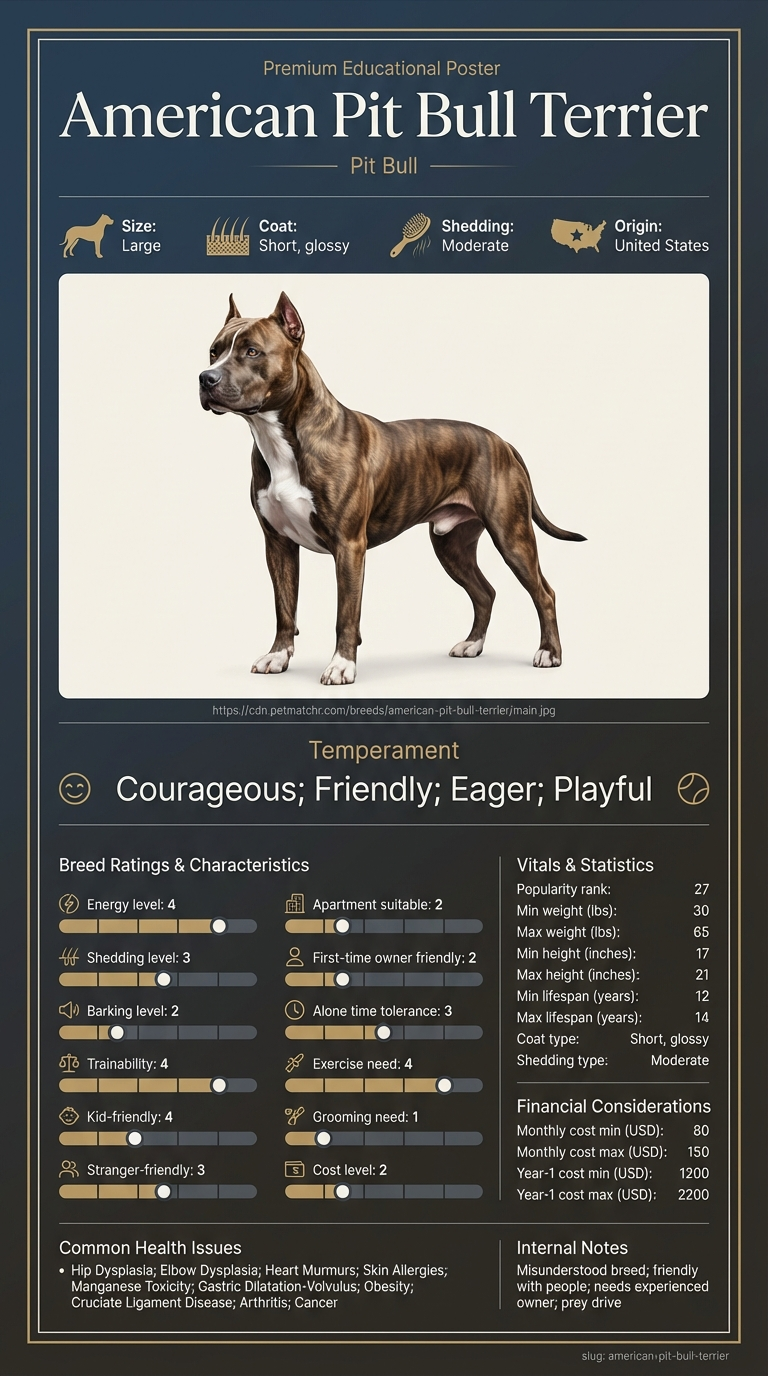
Typically, owners of American Pit Bull Terriers may notice their dogs struggling with navigation or showing signs of confusion in familiar environments. This can be particularly challenging for first-time dog owners or those with busy lifestyles.
This guide is not medical advice. If your dog shows pain, sudden behavior change, or worsening symptoms, consult a licensed veterinarian.
Some links may be affiliate links. We may earn a commission at no extra cost to you. We only suggest products we believe are helpful for dog owners.
American Pit Bull Terrier progressive retinal atrophy (pra-rcd3) is a genetic condition leading to gradual vision loss. Owners may notice their dog bumping into furniture, hesitating in unfamiliar places, or showing increased anxiety in new environments. This progressive condition can be particularly challenging as it often manifests slowly over time, making it easy to overlook initially.
Progressive retinal atrophy (pra-rcd3) is relatively common in American Pit Bull Terriers, particularly in those with a family history of eye issues. While not every Pit Bull will develop this condition, awareness and early detection are key to managing it.
American Pit Bull Terriers can inherit Progressive Retinal Atrophy (PRA-rcd3) due to genetic factors. This breed is prone to certain inherited eye conditions, which can lead to gradual vision loss. Understanding this genetic predisposition can help owners take proactive steps in managing their dog's health.
Environmental factors, like exposure to bright sunlight, can exacerbate eye issues in dogs. A lack of a safe, stimulating environment may also affect how your Pit Bull adapts to vision changes. Creating a supportive living space is essential for their well-being.
If your American Pit Bull Terrier shows signs of anxiety or confusion due to their vision loss, a professional trainer can help. Look for a trainer experienced in working with dogs with special needs. They can provide techniques to build your dog's confidence.
Consult your vet if you notice any sudden changes in your dog's vision or behavior. Regular check-ups are vital for monitoring the progression of PRA-rcd3. Your vet can recommend appropriate management strategies or treatments to support your dog.
Managing American Pit Bull Terrier progressive retinal atrophy (pra-rcd3) typically requires ongoing care and adjustments over several months. Expect to see gradual changes in your dog's vision, which may take up to a year to fully understand and adapt to.
Success means your dog adjusts to their vision loss. They learn to navigate familiar spaces confidently and you develop a routine that includes regular vet check-ups and adaptations at home to ensure their safety.
Avoiding these common mistakes can help you manage your American Pit Bull Terrier's progressive retinal atrophy (PRA-rcd3) more effectively.
Recognizing when American Pit Bull Terrier progressive retinal atrophy (PRA-rcd3) becomes an emergency is crucial for your dog's well-being. If you notice signs of sudden vision loss, such as bumping into objects or becoming disoriented, you should call your vet right away. Other red flags include excessive whining, signs of distress, or changes in behavior that suggest your dog is struggling to navigate their environment.
In contrast, if your Pit Bull is showing mild signs of vision impairment, like occasional stumbling or hesitance in low-light situations, it's best to monitor them closely. You can create a safe environment by removing obstacles and providing extra guidance when needed. Keep track of any changes and consult your vet if the symptoms worsen or new behaviors emerge.
Understanding these distinctions can help you respond appropriately and ensure your furry friend receives the right care.
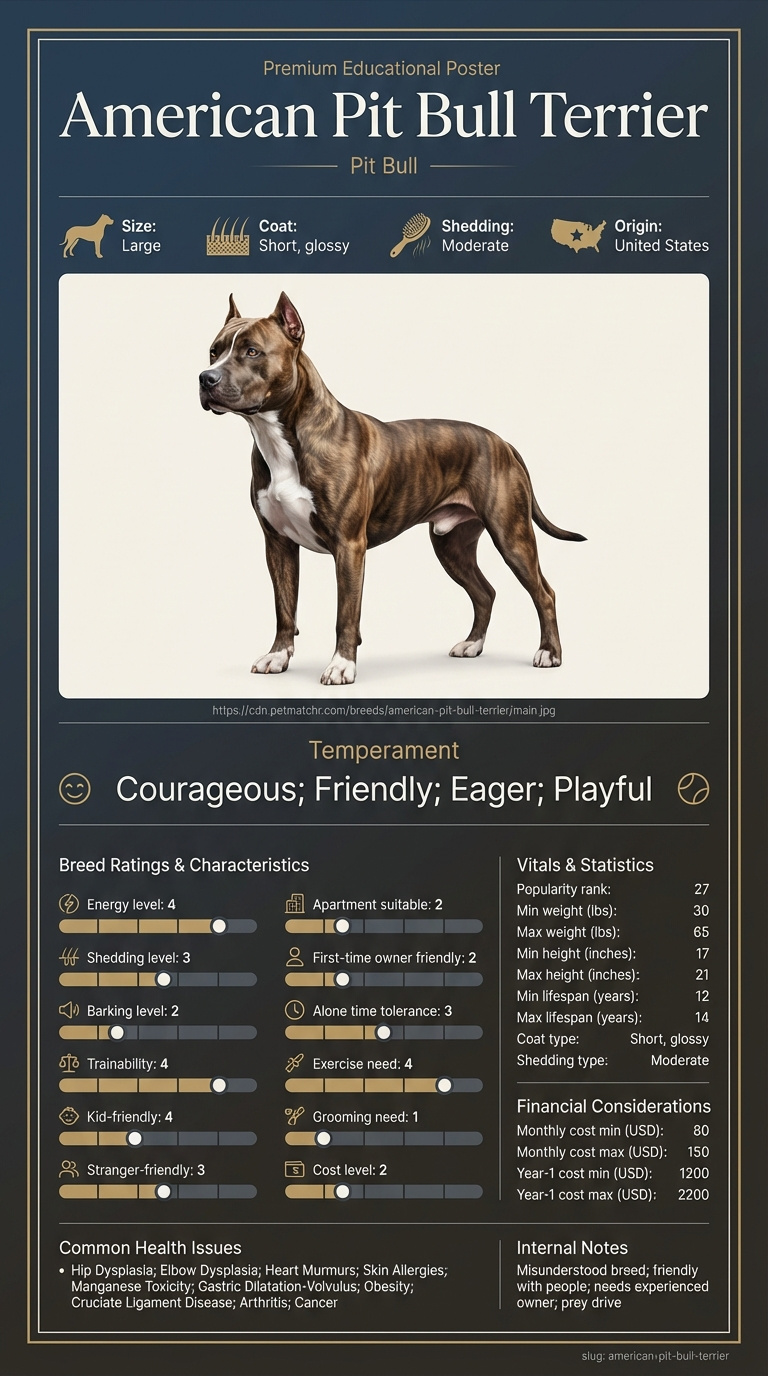
When Sarah adopted Max, her American Pit Bull Terrier, she was excited about their adventures together. However, she soon noticed Max stumbling and hesitating while playing. A vet diagnosed Max with progressive retinal atrophy (pra-rcd3), which left Sarah feeling overwhelmed. After some research and consultations, she set up a training routine that included creating a safe environment and using verbal cues to guide Max. Over time, Max learned to navigate his surroundings better, and Sarah found joy in his resilience.
Key takeaway: With patience and proper adjustments, dogs like Max can thrive despite vision loss. Understanding their needs and creating a supportive environment is key.
American Pit Bull Terrier progressive retinal atrophy (pra-rcd3) is a genetic condition that leads to vision loss. It affects the retina, causing gradual degeneration. Early detection can help manage the condition.
This condition is inherited and occurs due to specific genetic mutations. If your Pit Bull shows signs of vision loss, consulting with a vet for genetic testing and advice is essential.
Signs include difficulty navigating in dim light, bumping into objects, or reluctance to go outside. Observe any changes in behavior or activity level, and consult your vet for an assessment.
While there's no cure, early intervention can help manage symptoms. Regular veterinary check-ups and environmental adjustments can improve your dog's quality of life.
Focus on positive reinforcement techniques and guide your dog through new environments. Use verbal cues and commands to help them navigate safely.
Currently, there are no effective treatments to reverse the condition. However, some supportive therapies can help manage associated symptoms. Always consult your vet for options.
Early signs of PRA-rcd3 include difficulty seeing in low light or during nighttime. You might notice your dog bumping into furniture or hesitating before jumping off steps. If you observe these changes, it's a good idea to consult a vet.
Currently, there is no cure for PRA-rcd3, but management strategies can help your dog adjust. This might include creating a safe home environment and using training techniques to assist with their vision loss. Always consult with your vet for personalized advice.
Yes, PRA-rcd3 is a genetic condition that can be inherited. Responsible breeding practices can help reduce the prevalence of this condition in future generations. If you're considering breeding, it's crucial to screen for this condition.
For older dogs with PRA-rcd3, maintaining a consistent home layout can help them navigate safely. Using bright colors for furniture and toys can also aid their vision. Training them with verbal cues can further assist in their daily activities.
If you notice any changes in your dog's vision, such as bumping into things or reluctance to move in low light, it's time to see a vet. Early diagnosis can help manage conditions like progressive retinal atrophy (PRA-rcd3) more effectively.
Keep your home environment consistent and free of obstacles. Use tactile markers to help your dog navigate spaces safely.
Introduce new areas gradually and provide plenty of verbal encouragement. Consistency and patience are key.
Costs may include regular vet visits and potential specialized treatments, averaging $80 to $150 monthly.
Yes, it's a known genetic issue in this breed, so early screening is advisable for responsible breeding.

