Behavior
What are quick tips for managing American Pit Bull Terrier diabetes?
Feed your dog at the same times every day and avoid giving high-sugar snacks. Regular vet check-ups are essential for monitoring their condition.

Quick answer
What are quick tips for managing American Pit Bull Terrier diabetes?
Feed your dog at the same times every day and avoid giving high-sugar snacks. Regular vet check-ups are essential for monitoring their condition.
American Pit Bull Terrier diabetes is a serious health issue that can affect your dog's quality of life. Understanding its symptoms and management is crucial for their well-being.
Owners of American Pit Bull Terriers, especially those with senior dogs, often face this challenge. If you're a first-time owner or are unfamiliar with diabetes symptoms, it can be especially overwhelming.
This guide is not medical advice. If your dog shows pain, sudden behavior change, or worsening symptoms, consult a licensed veterinarian.
Some links may be affiliate links. We may earn a commission at no extra cost to you. We only suggest products we believe are helpful for dog owners.
We research and check what we publish, but we do not warrant that any figure, date, price, or statement is accurate, complete, or current, and we accept no liability for any loss, cost, injury, or other harm arising from the use of this site. Use it as one reference among several. You remain responsible for your own decisions and for your dog's care - confirm anything that matters with a licensed veterinarian or another qualified professional before you act on it. Full disclaimer.
Check this first
Recognizing when your American Pit Bull Terrier's diabetes becomes an emergency is crucial. If you notice any of the following red-flag signs, it's time to call your vet immediately. Symptoms like extreme lethargy, vomiting, rapid breathing, or confusion indicate a serious issue. Additionally, if your dog is exhibiting signs of dehydration, such as excessive thirst and urination, seek help without delay.
On the other hand, there are milder cases of diabetes that can be monitored at home. If your Pit Bull is experiencing increased thirst or frequent urination without severe symptoms, you can likely watch and wait. Keeping a close eye on their eating habits and energy levels is important. Regular vet check-ups and following a prescribed treatment plan can help manage their condition effectively.
If any of these apply, call your vet or an emergency clinic now. The rest of this page is for the cases that are not an emergency.
American Pit Bull Terrier diabetes is a serious condition that can affect their daily life. This endocrine disorder often occurs in older dogs and can lead to increased thirst, frequent urination, and weight loss despite a good appetite. Owners may notice their Pit Bull becoming lethargic or showing changes in behavior, which can be concerning.
While diabetes is not the most common health issue for American Pit Bull Terriers, it does occur, especially as they age. It's essential for owners to monitor their dog's health closely and consult a vet if they notice any symptoms.
American Pit Bull Terriers can be prone to diabetes due to genetic factors. Their larger size and certain health issues, like obesity, can increase their risk. Additionally, some breeds have a higher likelihood of developing insulin resistance.
Environmental factors such as poor diet and lack of exercise play a significant role in diabetes. Feeding your Pit Bull high-calorie, low-nutrition food can lead to weight gain. Stress and lack of physical activity can also contribute to this condition.
Reach out to your vet if you notice any symptoms of diabetes, such as increased thirst, frequent urination, or unexplained weight loss. Early diagnosis and management are crucial for your dog's health.
Avoiding these common mistakes can help manage your American Pit Bull Terrier's diabetes effectively.
Start here: American Pit Bull Terrier Most Common Genetic Disorders
See all American PIT Bull Terrier health problems, which breeds are prone to diabetes, or the full American PIT Bull Terrier breed guide for temperament, exercise needs and ownership costs.
Managing American Pit Bull Terrier diabetes typically involves ongoing adjustments to diet and insulin treatment over several weeks. You'll see initial improvements within a month, but full management may take 3-6 months.
Success means your Pit Bull has stable blood sugar levels and shows increased energy and a return to their playful self. You’ll notice more consistent eating habits and a healthier weight.
Tina, a busy nurse in Texas, noticed her American Pit Bull Terrier, Rocky, had been drinking a lot more water and losing weight. After a vet visit, she learned that Rocky had diabetes. With a strict diet, regular vet check-ups, and daily insulin shots, Tina adapted her schedule to manage Rocky's condition. It took a few months, but soon Rocky was back to chasing his favorite ball and enjoying life again.
Key takeaway: With dedication and the right support, managing American Pit Bull Terrier diabetes is possible, and it can lead to a happier, healthier dog.
Diabetes in American Pit Bull Terriers can be caused by genetic factors, obesity, or hormonal issues. It's also more common in older dogs. Regular vet check-ups can help catch these problems early. This answer relates to American Pit Bull Terrier diabetes.
Managing diabetes in your American Pit Bull Terrier involves consistent feeding schedules, a balanced diet, and regular exercise. Work closely with your vet to establish an insulin regimen that fits your dog's needs.
Signs of diabetes include increased thirst, frequent urination, weight loss despite a good appetite, and lethargy. If you notice these symptoms, consult your vet immediately.
While not all cases are preventable, maintaining a healthy weight and providing regular exercise can reduce the risk of diabetes. Regular vet visits can also help monitor your dog's overall health.
Switch to a high-fiber, low-fat diet to help stabilize blood sugar levels. Avoid giving table scraps and high-sugar treats, and consult your vet for specific dietary recommendations.
Insulin can be injected under the skin using a syringe. Your vet will demonstrate the correct technique and timing. Make sure to follow their instructions to ensure your dog's health.
Early signs of diabetes in an American Pit Bull Terrier include increased thirst, frequent urination, and sudden weight loss. If you notice these symptoms, it's essential to consult your veterinarian for a proper diagnosis.
You can manage your American Pit Bull Terrier's diabetes by providing a consistent diet, regular exercise, and monitoring their blood sugar levels. Work closely with your vet to create a tailored care plan that fits your dog's needs.
Yes, diabetes is more common in older American Pit Bull Terriers. As they age, their bodies can become less efficient at processing sugar, leading to higher risks of diabetes. Regular check-ups can help catch any issues early.
Diabetes in American Pit Bull Terriers is generally considered a lifelong condition, but it can be managed effectively. With proper care, including diet and insulin therapy, many dogs can lead healthy, active lives.
If your American Pit Bull Terrier is diagnosed with diabetes, the first step is to work closely with your veterinarian. They will help you understand treatment options, dietary changes, and how to monitor their condition effectively.
Feed your dog at the same times every day and avoid giving high-sugar snacks. Regular vet check-ups are essential for monitoring their condition.
Aim for at least 30 minutes of moderate exercise daily. Consistent activity helps manage weight and blood sugar levels.
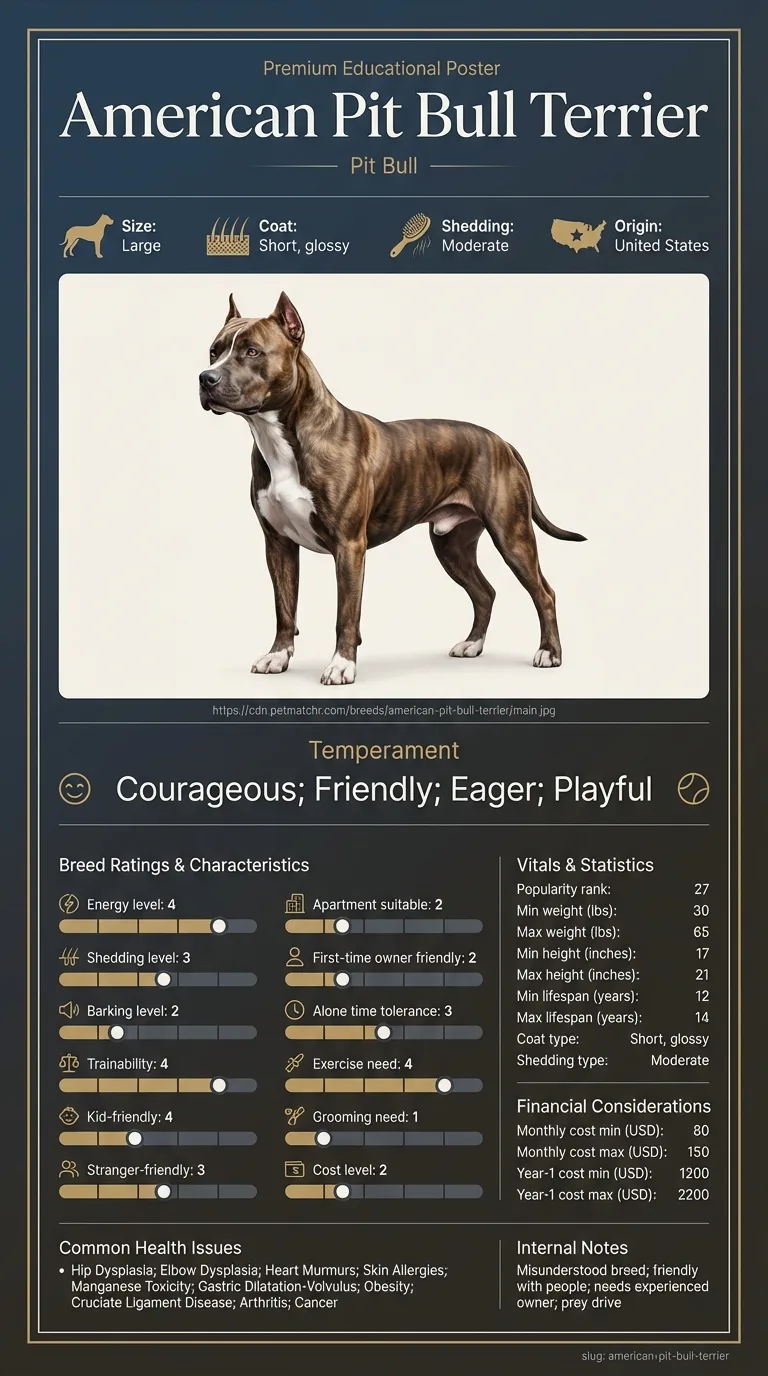
Expect to spend between $80 to $150 monthly for a diabetic dog on food, insulin, and vet visits. Initial costs in the first year can range from $1,200 to $2,200.
A one-page prep sheet for this condition: the signs, the questions to ask, what to get priced. Unlocks here.
You get: Vet visit prep sheet
No spam. One-click unsubscribe. See our privacy policy.
See a sample page before you decide.
Early access list
The free prep sheet covers the same-day warning signs, a symptom log and the questions to ask. We are considering a fuller kit that adds a cost worksheet for the usual tests and treatments (US price ranges with their sources) and a plain-English guide to ways of covering the bill. It is not built yet; this list tells us whether it is worth building.
One email, no spam, unsubscribe anytime. Information only, not veterinary advice.