Costs
What is the Vizsla first year cost?
That is one-time setup plus $90 to $180 a month.
Quick answer
What is the Vizsla first year cost?
That is one-time setup plus $90 to $180 a month.
Thinking about bringing a Vizsla into your Seattle home? Be prepared for some significant costs.
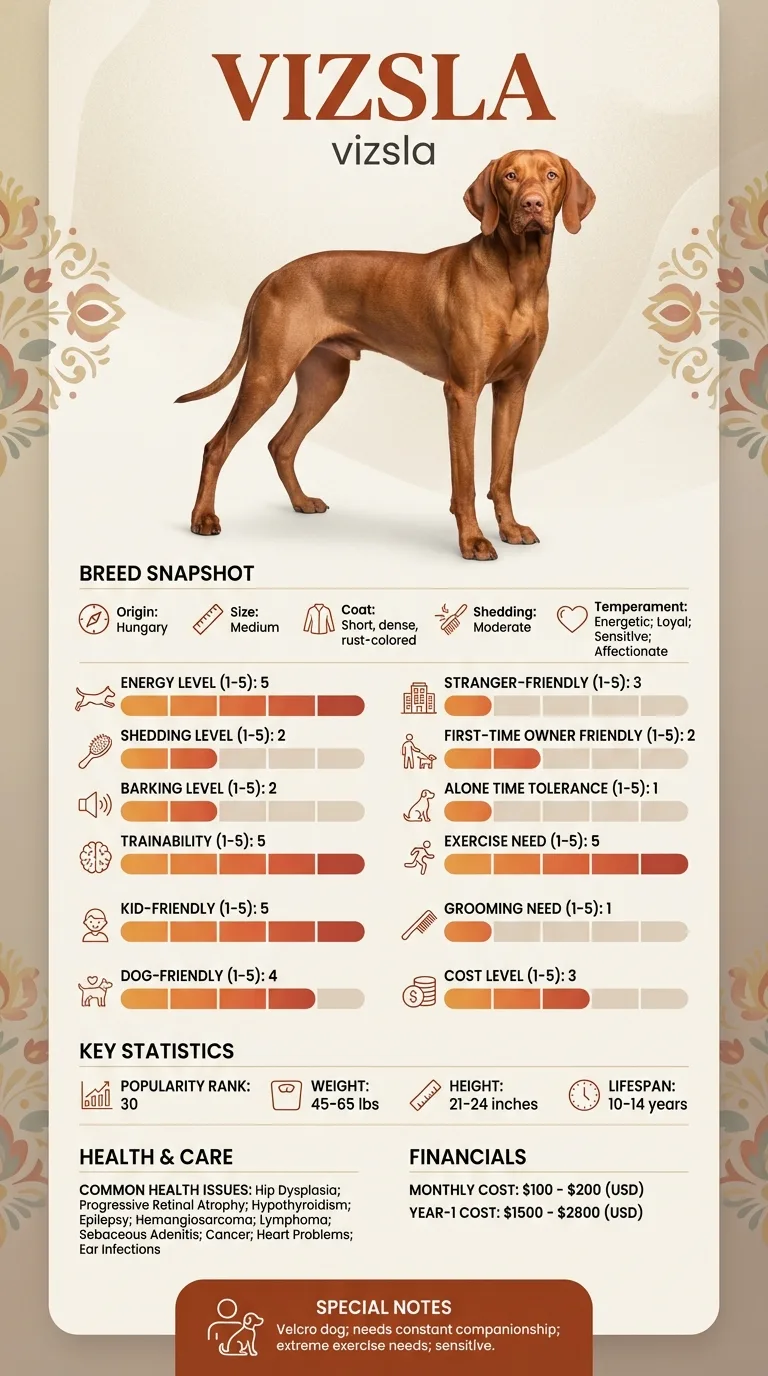
Costs can increase due to unexpected emergencies or larger expenses like surgery, specialized training, or premium pet insurance.
The total cost of owning a Vizsla in Seattle can vary significantly based on various factors like food, vet care, and training. These numbers can shift based on lifestyle choices and unexpected expenses.
| Item | Cost range |
|---|---|
Initial purchase price Breeder costs can vary widely based on reputation and location. | $500 - $1500 |
Training classes Essential for a well-behaved Vizsla, especially for first-time owners. | $100 - $300 |
Emergency fund It's advisable to set aside funds for unexpected health issues. | $500 - $1000 |
| Item | Cost range |
|---|---|
Food and treats High-quality dog food is essential for a healthy diet. | $50 - $100 |
Pet insurance Costs can vary based on coverage and health of the dog. | $40 - $80 |
Understanding pet insurance is crucial for budgeting the Vizsla cost in Seattle.
Insurance is a smart choice if you plan to use your Vizsla for activities like agility or hunting, which may lead to injuries. It's also beneficial if your dog has a family history of health issues, as it helps offset unexpected vet bills.
Additionally, if your Vizsla is young and healthy, you can often save money by building a pet savings account instead.
Owning a Vizsla in Seattle can be costly, but there are practical ways to save money while ensuring your dog is happy and healthy.
When considering the Vizsla cost in Seattle, don't overlook the hidden expenses that can sneak up on you. These small, recurring fees often add up, making your total cost of ownership higher than expected. For instance, routine grooming, even for low-shedding breeds like Vizslas, might run you about $30 to $60 every few months. Additionally, you’ll need to account for gear replacements.
Surprise vet visits can become a significant part of your Vizsla vet bills in Seattle. Even with regular check-ups, unexpected illnesses or injuries can happen. Budgeting an extra $200 to $500 annually for these surprises is wise, especially since Vizslas can be prone to certain health issues like hip dysplasia and ear infections.
It’s better to be prepared than caught off guard!
Don’t forget about lifestyle-driven extras that can inflate your costs. If you plan on taking your Vizsla to doggy daycare or hiring a dog walker, that could add $300 to $1,200 yearly, depending on your needs. Additionally, if you travel, pet boarding can cost between $25 to $75 per day.
These lifestyle choices greatly affect your overall budget.
When considering the Vizsla cost in Seattle, several local factors come into play. Seattle is known for its high cost of living, which directly influences pet ownership expenses. Rent and housing prices are among the highest in the country, leading to increased overall costs for pet owners.

Meet Sarah, a busy graphic designer living in Seattle. However, she quickly learned that the costs can add up. Sarah was surprised by the $600 vet bill for unexpected vaccinations and a minor health issue during the first few months. To manage her monthly budgeting, Sarah set aside $150 for food and treats, and another $100 for routine vet visits. She also signed up for a dog training class, which added another $300 to her first-year expenses. With the Vizsla's high energy level, she found that daily walks and playtime were essential, which meant she also had to factor in the cost of dog-friendly parks and occasional daycare when she worked late. Despite the initial shock of unexpected costs, Sarah learned to prioritize her Vizsla's needs. She even joined a local dog owner group, which helped her find cost-effective solutions for grooming and pet supplies. By the end of the year, she realized that while the Vizsla cost in Seattle was higher than expected, the joy her dog brought to her life was priceless.
Key takeaway: Owning a Vizsla in Seattle can be more expensive than you think.
The initial purchase price for a Vizsla in Seattle typically ranges from $500 to $2,000.
You can expect to spend between $100 and $200 a month on a Vizsla. This includes food, routine veterinary care, and other necessary supplies.
The first-year cost of a Vizsla in Seattle can range from $1,500 to $2,800.
While Vizslas are moderate in cost, their health care and exercise needs can add up. Regular vet visits and adequate exercise facilities are essential, especially given their energetic nature.
This cost can vary based on the coverage level and the provider you choose.
This does not include emergency visits or specialized treatments, which can be significantly higher.
Vet bills for a Vizsla in Seattle can range from $300 to $700 annually, depending on their health needs.
Monthly premiums typically range from $30 to $60, depending on coverage.
Living in Seattle can increase the cost of owning a Vizsla due to higher vet prices and pet services. Additionally, activities like training classes and dog parks may come with fees. However, the city's outdoor spaces offer great opportunities for exercise.
This fund can cover surgeries, accidents, or severe illnesses that might arise. Being prepared can help ensure your Vizsla receives the care they need without financial stress.
Yes, Vizslas can be prone to certain health problems like hip dysplasia and ear infections, which may require ongoing care. Setting aside funds for treatments or medications can prevent surprises. Make sure to discuss your dog's health with a vet to understand potential costs.
That is one-time setup plus $90 to $180 a month.
Ongoing costs for a Vizsla in Seattle come to $90 to $180 a month. Food and treats alone accounts for $50 to $100.
Expect $40 to $80 a month to insure a Vizsla in Seattle; a higher deductible pulls it toward the lower end.
This guide is not medical advice. If your dog shows pain, sudden behavior change, or worsening symptoms, consult a licensed veterinarian.
Some links may be affiliate links. We may earn a commission at no extra cost to you. We only suggest products we believe are helpful for dog owners.