Costs
What is the average Shih Tzu first year cost?
Expect $2,100 to $5,500 across the first year of owning a Shih Tzu in Birmingham. The recurring share is $110 to $300 a month.
Quick answer
What is the average Shih Tzu first year cost?
Expect $2,100 to $5,500 across the first year of owning a Shih Tzu in Birmingham. The recurring share is $110 to $300 a month.
Bringing a Shih Tzu into your home can be a rewarding experience, but it's essential to understand the costs involved.
Be prepared for unexpected costs, as emergencies or big-ticket items like surgery can significantly impact your budget. Regular vet visits and grooming requirements also contribute to the overall expenses.
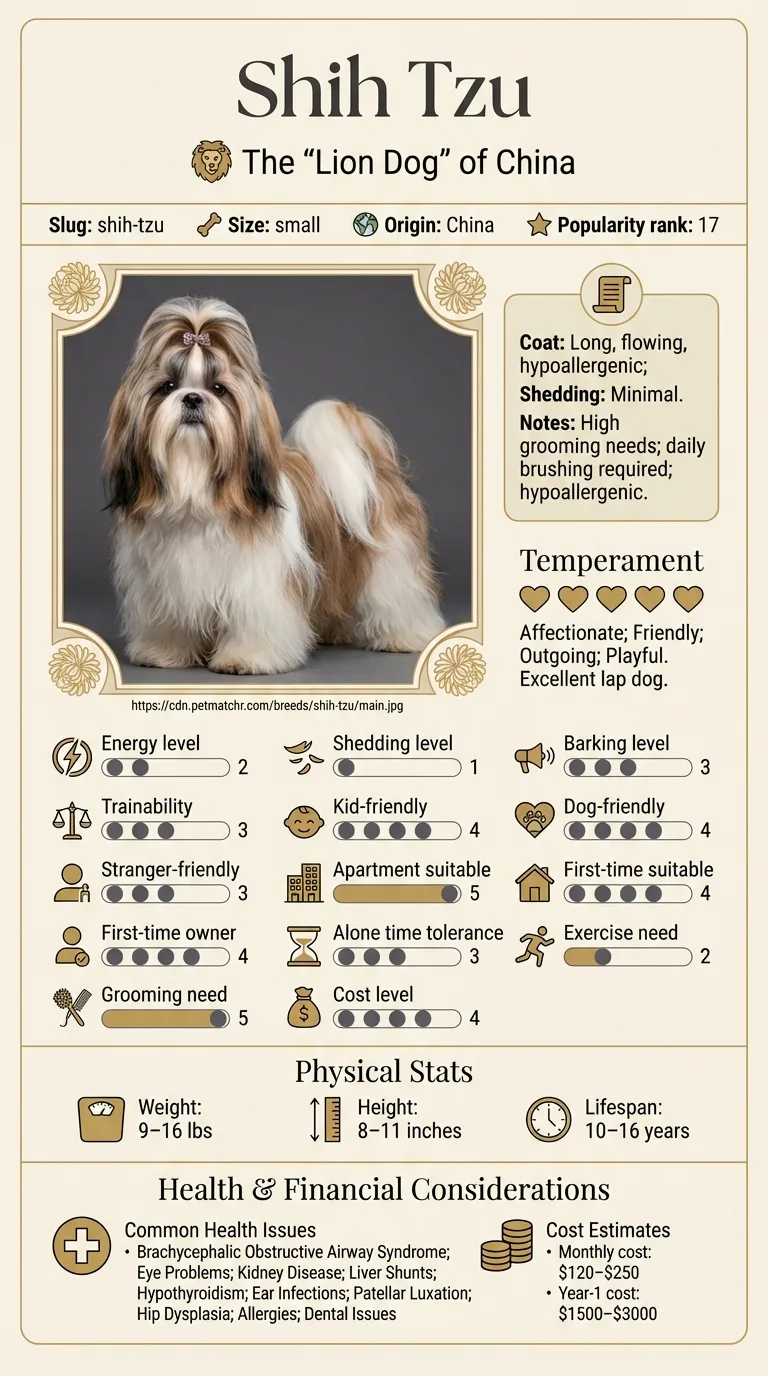
The total cost of owning a Shih Tzu in Birmingham ranges from $1,500 to $3,000 in the first year. Ongoing monthly costs typically fall between $120 and $250. Major expenses include grooming, food, and veterinary care, which can vary based on your dog's needs and your choices.
Estimate · source: us average · confidence: medium · updated 2026-09-01 · not a quote
| Item | Cost range |
|---|---|
Adoption or purchase fee Costs depend on whether you adopt or buy from a breeder. | $500 - $1500 |
Training classes Highly recommended for first-time owners. | $100 - $300 |
| Item | Cost range |
|---|---|
Grooming Shih Tzus require regular grooming due to their long coat. | $50 - $150 |
Food Quality dog food is essential for their health. | $30 - $70 |
Pet insurance Costs vary based on coverage and provider. | $30 - $70 |
Understanding the cost of a Shih Tzu in Birmingham includes considering pet insurance.
Pet insurance makes sense if your Shih Tzu is prone to health issues, especially with breeds like this known for conditions like eye problems and hip dysplasia. It can help cover regular check-ups and emergencies.
If you plan to set aside a dedicated pet emergency fund instead, it could be more cost-effective. Additionally, if your dog is older, the premium may outweigh the potential benefits.
Owning a Shih Tzu in Birmingham can be manageable with some smart saving strategies. Here are some practical tips to lower your costs.
When budgeting for your Shih Tzu in Birmingham, it's essential to consider hidden costs that can sneak up on you. These small, recurring fees can add up quickly and may not be on your radar at first. For example, grooming expenses are significant for Shih Tzus due to their long, flowing coats.
Expect to spend around $50 to $100 every few months for professional grooming, plus daily brushing at home to prevent matting.
Veterinary care is another area where costs can surprise new owners. Routine check-ups might cost $45 to $75 each visit, but unexpected health issues could lead to extra vet bills. Shih Tzus are prone to various health problems, and emergency visits can range from $200 to $1,000, depending on the situation.
Also, consider the cost of pet insurance, which can be $30 to $50 monthly, potentially saving you from huge bills later.
Lastly, lifestyle-driven extras like doggy daycare, training classes, or specialized food can add to your monthly expenses. Doggy daycare might run $300 to $600 monthly, while training classes can cost around $150 to $300 for a series. These costs can easily push your Shih Tzu's monthly expenses beyond the average range of $120 to $250, making it crucial to plan for the unexpected.
Housing costs are relatively affordable in this city compared to other major urban areas, but this can vary based on your neighborhood. If you live in a pet-friendly apartment, expect to pay around $1,000 to $1,500 for monthly rent. This means you'll need to budget accordingly for your furry friend. Veterinary services are readily available in Birmingham, with many clinics specializing in small breeds like the Shih Tzu. Routine check-ups and vaccinations can run between $200 to $500 annually, depending on the services you choose. However, keep in mind that unexpected health issues can arise, especially given some common health problems associated with Shih Tzus, such as eye and dental issues. Additionally, grooming needs for Shih Tzus are high. Professional grooming can cost anywhere from $50 to $100 every 6 to 8 weeks, so factor this into your monthly expenses. Overall, you should plan for a monthly budget of $120 to $250, which includes food, grooming, and other necessities.

Meet Sara, a busy nurse living in Birmingham. She budgeted about $1500 for the first year, which included adoption fees, vet bills, and grooming. However, she hadn’t anticipated the $300 emergency vet visit when her puppy got into her cat’s food, which turned out to be too rich for the little guy. Despite this surprise, Sara learned to budget around $200 monthly for regular expenses, including food, grooming, and vet check-ups. She became proactive about her dog's health, investing in pet insurance, which helped cover some of the surprise costs down the line. Every month, she tracked her spending closely, adjusting her budget as needed. Grooming was a significant expense due to the Shih Tzu’s long coat, so she learned to do some grooming herself to save money. Overall, Sara found that by being informed and managing her budget, she was able to provide a loving home without compromising her financial stability.
Key takeaway: Planning for the Shih Tzu cost in Birmingham involves budgeting for regular expenses and being prepared for surprises like emergency vet visits.
The Shih Tzu cost in Birmingham typically ranges from $1,500 to $3,000 in the first year. This includes expenses like the initial purchase, vaccinations, and supplies. Monthly costs can range from $120 to $250.
Yes, Shih Tzus can be considered moderately expensive dogs. Besides the initial purchase price, their grooming needs and potential health issues can add to the overall cost.
The Shih Tzu monthly cost in Birmingham can range from $120 to $250. This includes food, grooming, regular vet visits, and other supplies.
Coverage can vary based on the provider and the specific needs of your dog.
This covers initial costs like purchase, vaccinations, grooming, and potential health care.
Common vet bills for a Shih Tzu in Birmingham can average $300 to $600 annually. Routine check-ups, vaccinations, and any unexpected health issues should be factored into your budget.
Yes, there can be hidden costs when owning a Shih Tzu. Grooming expenses, potential health issues, and pet-related emergencies can increase your overall spending.
In Birmingham, you can expect to pay around $300 to $600 annually for routine vet care for your Shih Tzu. This includes vaccinations, check-ups, and flea treatments.
Since they have high grooming needs, you may want to budget for monthly visits or consider learning to groom them at home.
Living in Birmingham might affect your Shih Tzu's costs due to local vet prices and grooming services. Additionally, you may want to factor in costs for pet-friendly parks or activities that cater to small dogs.
This can help you cover costs for emergencies, which can be significantly higher than routine care.
Expect $2,100 to $5,500 across the first year of owning a Shih Tzu in Birmingham. The recurring share is $110 to $300 a month.
Birmingham monthly upkeep for a Shih Tzu runs $110 to $300. Grooming takes $50 to $150 of it.
Monthly pet insurance for a Shih Tzu in Birmingham sits at $30 to $70, set by the coverage level and annual cap.
This guide is not medical advice. If your dog shows pain, sudden behavior change, or worsening symptoms, consult a licensed veterinarian.
Some links may be affiliate links. We may earn a commission at no extra cost to you. We only suggest products we believe are helpful for dog owners.