Costs
What is the Belgian Malinois first year cost?
Cheyenne owners spend $2,700 to $7,500 on a Belgian Malinois in the first twelve months. Ongoing care is $120 to $250 a month of that.

See Belgian Malinois price across all cities →
Quick answer
What is the Belgian Malinois first year cost?
Cheyenne owners spend $2,700 to $7,500 on a Belgian Malinois in the first twelve months. Ongoing care is $120 to $250 a month of that.
The Belgian Malinois can be a rewarding companion, but it comes with significant costs.
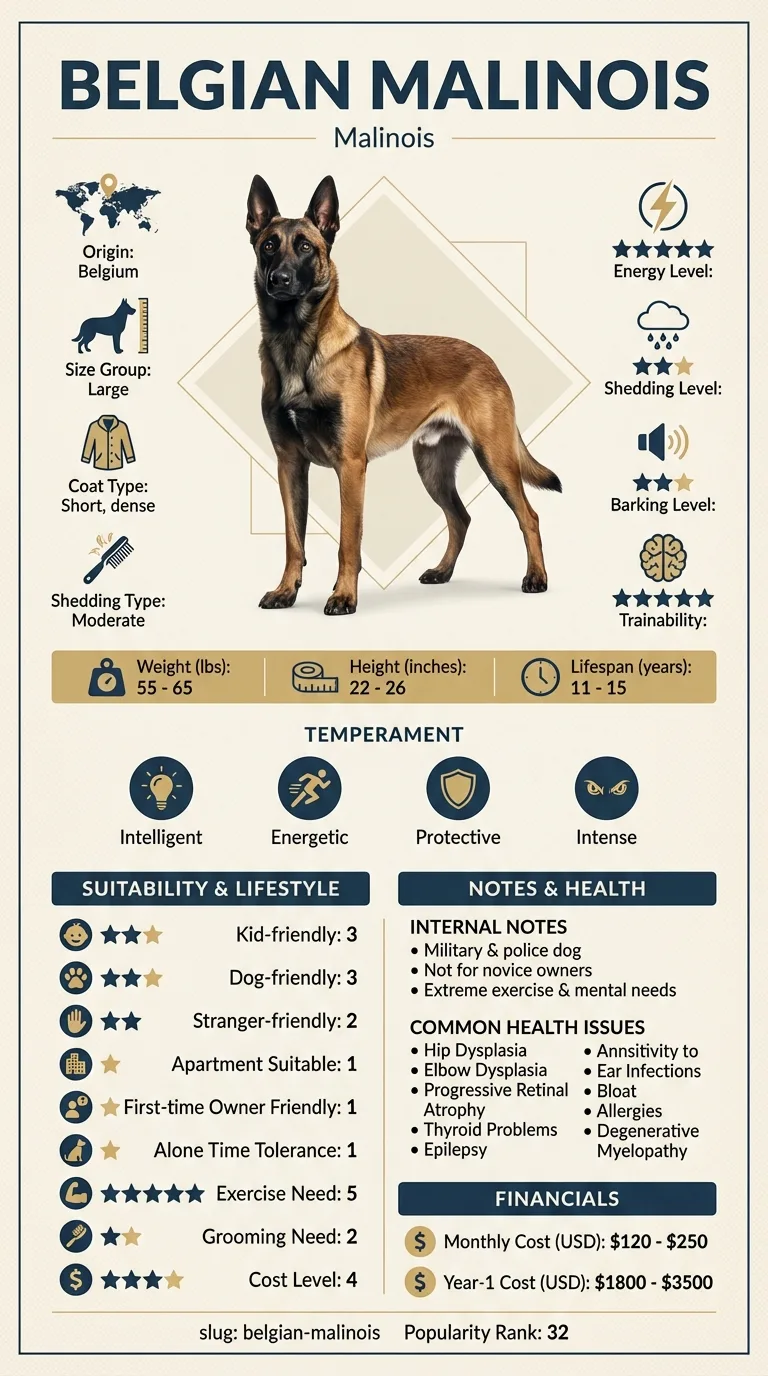
Costs can increase due to emergencies, unexpected vet bills, or big-ticket items like training classes and specialized equipment.
The Belgian Malinois cost in Cheyenne varies widely based on initial expenses, ongoing care, and unexpected costs. First-year costs range from $1,800 to $3,500, depending on factors like adoption fees, training, and health care.
Estimate · source: estimation · confidence: medium · updated 2026-10-06 · not a quote
| Item | Cost range |
|---|---|
Adoption or purchase cost Costs vary by breeder or shelter; purebreds are usually more expensive. | $300 - $2000 |
Emergency vet visits Unexpected health issues can arise, so it's wise to prepare. | $500 - $1500 |
| Item | Cost range |
|---|---|
Food A high-quality diet is essential for their energy levels. | $60 - $100 |
Grooming Moderate shedding requires regular grooming. | $20 - $50 |
Pet insurance Costs can vary based on coverage type and provider. | $40 - $100 |
Each range starts from a national baseline for this breed's size class and is then adjusted for local cost of living and veterinary pricing. The baselines, and the source each one came from, are listed on our sources page (dataset 2026.09). Two inputs, the purchase price and the emergency reserve, have no published national figure we could verify, so we leave them to you rather than invent them.
These are planning estimates, not quotes. Your own numbers will move with the individual dog, your vet and your insurer. Build a budget with your own figures.
When considering the Belgian Malinois cost in Cheyenne, pet insurance can be a smart move. However, it's essential to weigh the benefits and costs carefully.
Given that Belgian Malinois can develop health problems like hip dysplasia or bloat, having coverage can save you from significant expenses. If you're a first-time dog owner unsure about potential costs, insurance can provide financial protection.
If you're adopting an older Malinois, the likelihood of needing extensive medical care may be lower. Additionally, if you plan to keep a close eye on your dog's health through regular check-ups, you might find insurance unnecessary.
Owning a Belgian Malinois in Cheyenne can be costly, but there are practical ways to save without compromising your dog's care. Here are some actionable tips to keep expenses manageable.
When budgeting for a Belgian Malinois, many owners overlook hidden costs that can really add up. Additionally, unexpected vet visits for common issues can set you back anywhere from $100 to $500, depending on the treatment needed.
A Malinois needs durable toys and gear due to their energetic nature. You might find yourself replacing chewed-up toys monthly, costing $10 to $30 each time. Also, consider the expenses of training classes, which can range from $100 to $300, especially since this breed thrives on learning and mental stimulation.

Don’t forget about regular costs like heartworm and flea prevention, which can total $200 to $400 annually. Additionally, if you plan on traveling, dog-sitting or boarding fees can average $25 to $50 per day, depending on your location.

Understanding the Belgian Malinois cost in Cheyenne involves considering several local factors that can impact your expenses. Cheyenne, with its unique climate and community, can affect everything from vet bills to dog training costs. The cost of living in Cheyenne is generally lower than in major metropolitan areas, which can help reduce some ownership expenses.
In Cheyenne, you might find that pet services such as grooming and dog training are more affordable than in larger cities. However, the availability of specialized services, like advanced training for the energetic Belgian Malinois, might be limited. This breed often requires professional training to manage their high energy, which can lead to higher costs if specialized trainers are not readily available.
Veterinary care is another important factor. In Cheyenne, the density of veterinarians is lower, which might mean fewer options for routine care and emergencies. This could lead to higher vet bills if you have to travel for specialized care.
Additionally, consider the costs of pet insurance; the premiums can vary based on the coverage and the specific health needs of a Belgian Malinois.
Finally, Cheyenne’s climate, with its dry conditions and colder winters, may influence your dog's health. For instance, the breed is prone to certain health issues like hip dysplasia, which could lead to increased vet visits. Overall, while some costs may be lower in Cheyenne, the specific needs of a Belgian Malinois can lead to higher expenses in certain areas.
Planning and budgeting will be key to responsibly owning this breed in Cheyenne.

Meet Sarah, a busy nurse living in Cheyenne, who recently brought home a Belgian Malinois named Max. She was drawn to the breed's intelligence and energy but quickly realized that managing the Belgian Malinois cost in Cheyenne required careful planning. For the first year, she budgeted around $2,500 for Max's initial expenses, including his adoption fee, vaccinations, and essentials like a crate and leash. Also, she discovered that pet insurance for a Belgian Malinois could help cover future health issues, which she is now considering. Despite the challenges, Sarah feels that Max is worth every penny. His playful nature and loyalty have brought joy to her busy life, reminding her that a well-planned budget can help manage costs while enjoying the companionship of such an active breed.
Key takeaway: Budgeting for a Belgian Malinois in Cheyenne requires planning for both expected and unexpected costs, making a pet emergency fund essential.
Yes, the Belgian Malinois can be considered an expensive dog.
In Cheyenne, the Belgian Malinois cost can vary between $800 and $1,500 for the puppy itself. However, you should also budget for monthly expenses and potential vet bills.
The first year cost of a Belgian Malinois in Cheyenne typically ranges from $1,800 to $3,500. This includes the purchase price, food, grooming, and veterinary care.
This depends on the coverage level you choose and the provider's rates.
This includes routine check-ups, vaccinations, and unexpected health issues.
The Belgian Malinois monthly cost generally falls between $120 and $250. This covers food, grooming, and other essentials, but can vary based on individual needs.
Yes, additional costs may include training classes, specialized toys, and pet care services. These can add several hundred dollars to your annual budget.
This includes routine check-ups, vaccinations, and preventive care.
This can vary based on the coverage level and provider.
Yes, owning a Belgian Malinois in Cheyenne may involve costs like training classes and exercise facilities, as they need a lot of physical activity. Additionally, consider expenses for dog-friendly parks and activities that cater to their high energy levels. These costs can add up, so budgeting is essential.
The first-year cost of owning a Belgian Malinois in Cheyenne can range from $1,800 to $3,500. Be prepared for additional costs like training and socialization to ensure a well-adjusted pet.
Caring for a Belgian Malinois can be considered moderate to expensive. The breed's high exercise needs may also lead to increased expenses for activities and training.
Cheyenne owners spend $2,700 to $7,500 on a Belgian Malinois in the first twelve months. Ongoing care is $120 to $250 a month of that.
Plan on $120 to $250 a month for a Belgian Malinois in Cheyenne. Most of that is food, at $60 to $100.
Insuring a Belgian Malinois in Cheyenne costs $40 to $100 a month, depending on how much of a claim you cover yourself.
Main expenses include food, vet bills, grooming, and training, which can significantly impact your budget.
Yes, common health issues include hip dysplasia and allergies, which may lead to additional veterinary costs.
This guide is not medical advice. If your dog shows pain, sudden behavior change, or worsening symptoms, consult a licensed veterinarian.
Some links may be affiliate links. We may earn a commission at no extra cost to you. We only suggest products we believe are helpful for dog owners.
We research and check what we publish, but we do not warrant that any figure, date, price, or statement is accurate, complete, or current, and we accept no liability for any loss, cost, injury, or other harm arising from the use of this site. Use it as one reference among several. You remain responsible for your own decisions and for your dog's care - confirm anything that matters with a licensed veterinarian or another qualified professional before you act on it. Full disclaimer.
One sheet with every line item, the emergency fund and when insurance pays off - unlocks on this page.
You get: 12-month budget sheet
No spam. One-click unsubscribe. See our privacy policy.
See a sample page before you decide.
