Living
Boxer vs Yorkshire Terrier energy level
Boxers have a high energy level, needing more exercise, while Yorkshire Terriers are moderate and require less activity.

Quick answer
Boxer vs Yorkshire Terrier energy level
Boxers have a high energy level, needing more exercise, while Yorkshire Terriers are moderate and require less activity.
Deciding between a Boxer and a Yorkshire Terrier? Both breeds bring unique traits and challenges that can affect your home life.
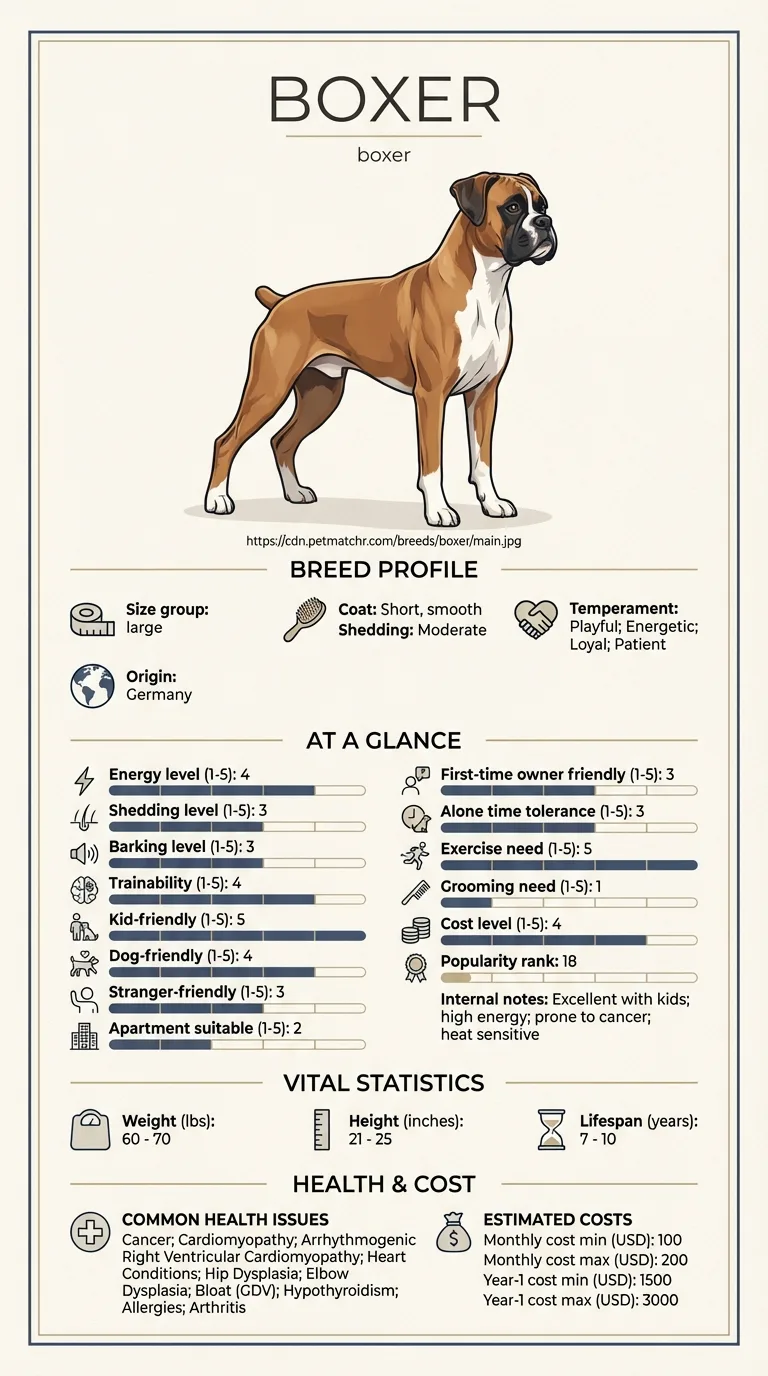
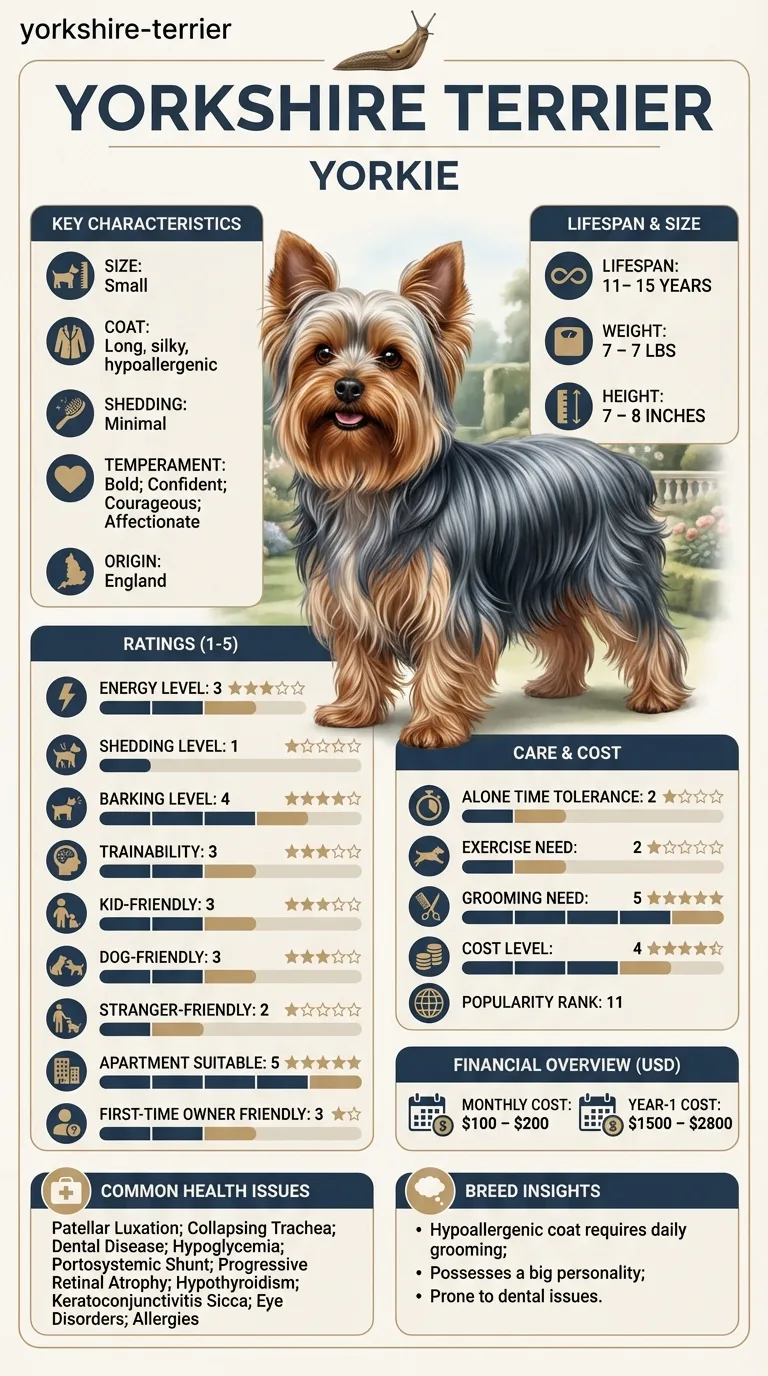
This comparison is for potential dog owners looking to choose between a Boxer and a Yorkshire Terrier. You might be a family with children seeking a playful companion or a busy professional living in an apartment needing a smaller dog. Understanding the differences between these breeds will help you make an informed decision that fits your lifestyle.
If you want a loyal, active, and family-friendly dog, the Boxer is a great choice; if you're looking for a smaller, low-shedding companion, the Yorkshire Terrier may be better.
Choose a Boxer if you have space for a larger dog, want a pet that loves playtime, and can commit to daily exercise.
Opt for a Yorkshire Terrier if you live in a small space, prefer a low-shedding dog, and want a smaller breed that can adapt well to apartment living.
| Feature | boxer | yorkshire terrier | Winner |
|---|---|---|---|
| Size class | large | small | Equal |
| Weight | 60–70 lbs | 4–7 lbs | Equal |
| Height | 21–25 in | 7–8 in | Equal |
| Lifespan | 7–10 years | 11–15 years | yorkshire terrier |
| Exercise need | Very high (5/5) | Low (2/5) | yorkshire terrier |
| Grooming need | Very low (1/5) | Very high (5/5) | boxer |
| Shedding | Moderate (3/5) | Very low (1/5) | yorkshire terrier |
| Energy level | High (4/5) | Moderate (3/5) | Equal |
| Barking | Moderate (3/5) | High (4/5) | boxer |
| Apartment suitability | Low (2/5) | Very high (5/5) | yorkshire terrier |
| Good for first-time owners | Moderate (3/5) | Moderate (3/5) | Equal |
| Tolerates being alone | Moderate (3/5) | Low (2/5) | boxer |
| Trainability | High (4/5) | Moderate (3/5) | boxer |
| Good with kids | Very high (5/5) | Moderate (3/5) | boxer |
| Good with other dogs | High (4/5) | Moderate (3/5) | boxer |
| Friendly to strangers | Moderate (3/5) | Low (2/5) | boxer |
| Cost level | High (4/5) | High (4/5) | Equal |
| Coat | Short, smooth | Long, silky, hypoallergenic | Equal |
| Origin | Germany | England | Equal |
| Typical monthly cost | $100–$200 | $100–$190 | Equal |
| Typical first-year cost | $1,500–$3,000 | $1,400–$2,900 | Equal |
Boxers are known for their high energy, needing plenty of exercise and playtime. This makes them a great choice for active families or individuals who enjoy outdoor activities. In contrast, Yorkshire Terriers have a moderate energy level.
While they still enjoy play, they require less physical activity and are suitable for a more laid-back lifestyle.
When it comes to grooming, Boxers are low-maintenance with their short, smooth coats. Regular brushing is sufficient to keep them healthy. On the other hand, Yorkshire Terriers require daily grooming to manage their long, silky hair and prevent tangles.
This dedication to grooming can be a deciding factor for busy owners.
Boxers are not the best fit for apartment living due to their size and energy. They thrive in homes with yards where they can run and play freely. Conversely, Yorkshire Terriers are perfect for apartments, thanks to their small size and lower exercise needs.
They adapt well to smaller spaces, making them more suitable for city dwellers.
When it comes to apartment living, the Yorkshire Terrier is the clear winner. With a size that fits comfortably in small spaces, Yorkies are adaptable and can thrive in any cozy corner of your home. Their low exercise needs and minimal barking make them ideal for urban dwellers who want a quiet companion.
Families with kids will find that Boxers are the perfect match. Known for their playful and loyal nature, Boxers are incredibly kid-friendly. They enjoy playing games and are patient with children, making them a reliable family pet.
When evaluating costs, both breeds are similar, but the Yorkshire Terrier has a slight edge. Both breeds have comparable monthly costs of around $100 to $200. However, Yorkies generally have lower grooming costs, despite needing daily care due to their long coats.
For first-time dog owners, Boxers offer a unique blend of loyalty and trainability. They are eager to please, making them easier to train with consistency and patience. Their playful nature can provide joy and companionship as new owners learn the ropes of pet care.


Choosing between a Boxer and a Yorkshire Terrier depends on your lifestyle. Boxers are energetic and great with kids, making them ideal for active families. In contrast, Yorkies are small, apartment-friendly, and have a big personality, perfect for those with limited space.
Both breeds have similar first-year costs, ranging from $1,500 to $3,000. However, ongoing monthly costs can be similar, around $100 to $200. Ultimately, the overall expenses depend on factors like grooming and health care.
Boxers have high exercise needs, requiring at least an hour of activity daily due to their energy levels. Yorkshire Terriers, on the other hand, only need about 30 minutes of exercise, making them better suited for less active owners.
Boxers have low grooming needs, only requiring occasional brushing due to their short coat. In contrast, Yorkshire Terriers require daily grooming sessions because of their long, silky hair, which can mat easily.
Yes, Boxers are known for their playful and patient nature with children, making them excellent family dogs. Yorkshire Terriers can also get along with kids, but their small size makes them more fragile and less tolerant of rough play.
Boxers are more energetic, scoring a 4, needing ample exercise and playtime. Yorkshire Terriers have a moderate energy level of 3, making them suitable for owners who prefer less vigorous activity.
Yorkshire Terriers are highly suitable for apartment living due to their small size and lower exercise needs. Boxers, being larger and more active, may struggle in smaller spaces without enough room to move around.
Boxers are prone to conditions like cancer and heart issues, while Yorkshire Terriers often face dental diseases and patellar luxation. Regular vet check-ups are essential for both breeds to monitor their health.
Boxers have a high energy level, needing more exercise, while Yorkshire Terriers are moderate and require less activity.
Boxers shed moderately, while Yorkshire Terriers are hypoallergenic with minimal shedding.
Boxers have low grooming needs, while Yorkshire Terriers require daily grooming due to their long coat.
Both breeds have similar initial and monthly costs, typically ranging from $100 to $200.
Boxers are highly trainable, while Yorkshire Terriers require more patience due to their independent nature.
Secure checkout on Stripe. We never see your card.
7-day money-back guarantee. Instant access.
This guide is not medical advice. If your dog shows pain, sudden behavior change, or worsening symptoms, consult a licensed veterinarian.
Some links may be affiliate links. We may earn a commission at no extra cost to you. We only suggest products we believe are helpful for dog owners.
We research and check what we publish, but we do not warrant that any figure, date, price, or statement is accurate, complete, or current, and we accept no liability for any loss, cost, injury, or other harm arising from the use of this site. Use it as one reference among several. You remain responsible for your own decisions and for your dog's care - confirm anything that matters with a licensed veterinarian or another qualified professional before you act on it. Full disclaimer.
Match your lifestyle to the right dog.
Take quizNot sure which breed is right for you? Take our 2-minute quiz to find out.
Take the quiz