DogBreedCompass

Akita or Belgian Malinois: Two Dogs for Experienced Owners

These are the two lowest first-time-owner ratings you can pair on this site: the Akita at 1/5 and the Malinois at 1/5. Neither is a pet-shop decision. The Akita is hard because it is a guardian that forms opinions; the Malinois is hard because it is a working dog with a 5/5 engine and a 5/5 brain and no off switch.

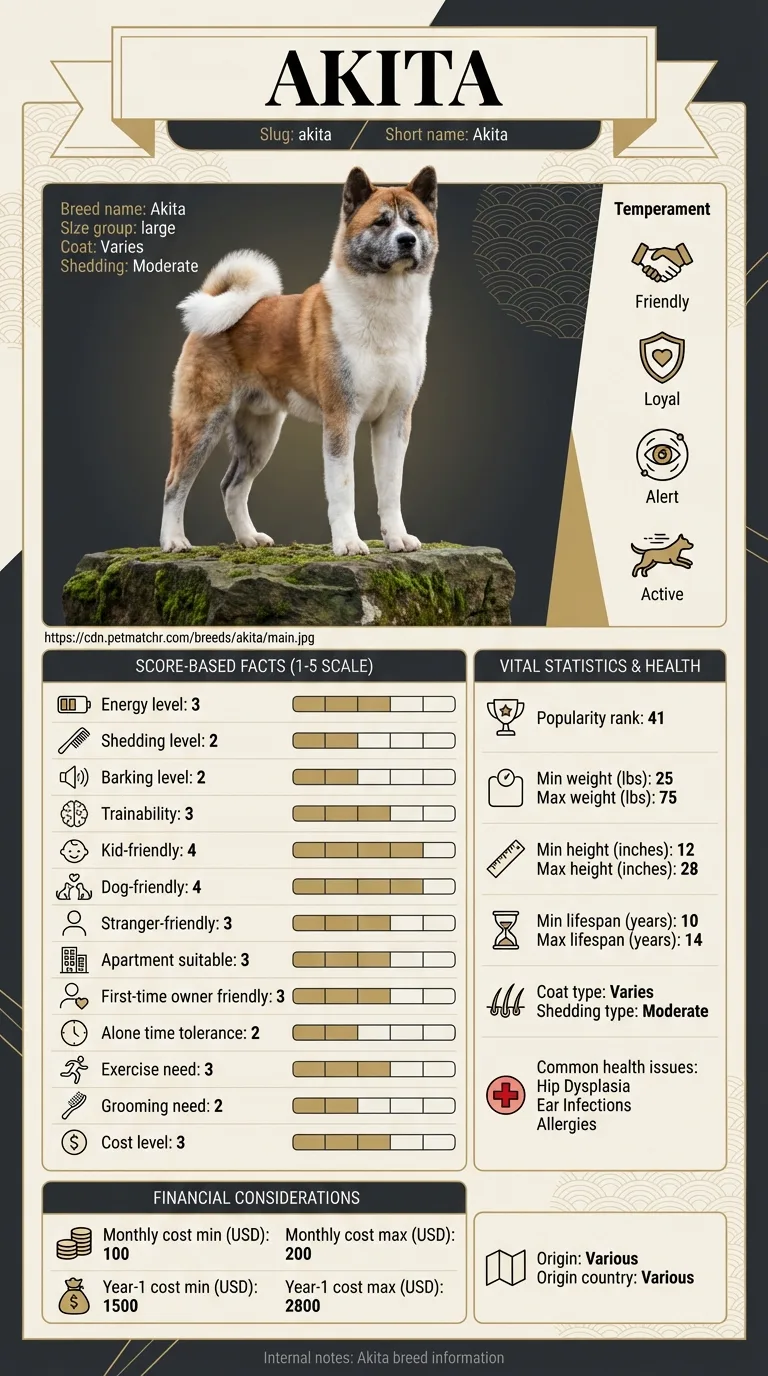
akita infographic
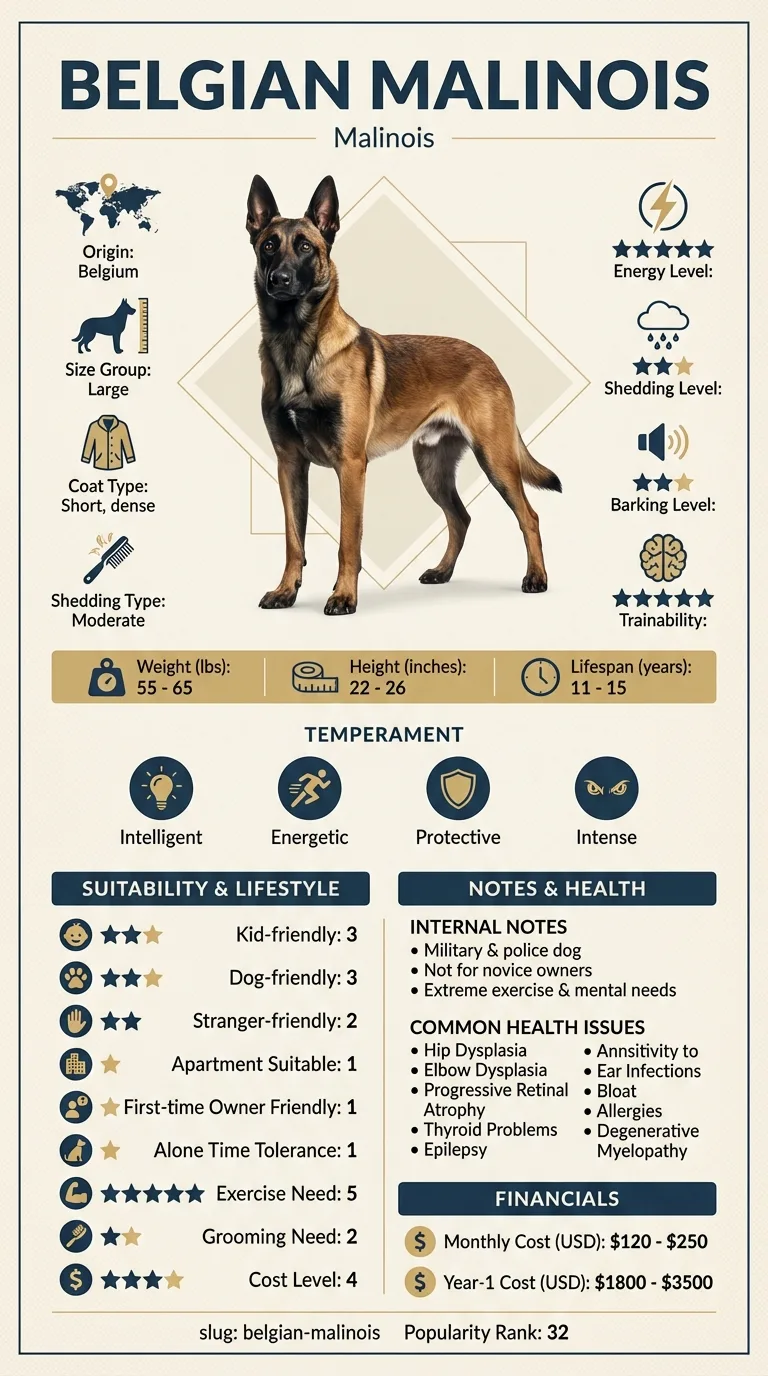
belgian malinois infographic

This is for someone who has been drawn to two serious breeds and needs to understand what each actually demands day to day. It covers the drive gap that defines the Malinois, the guardian temperament that defines the Akita, the exercise and training realities, the coat difference, the shared anaesthesia sensitivity, and cost.

Quick verdict

The Malinois needs a job and will break your house without one; the Akita needs a socialisation programme and will make its own decisions about visitors without one.

Choose akita if...

Choose the Akita if you want a calm, near-silent house dog — 3/5 exercise, 2/5 barking, 3/5 alone — and you specifically want guardian instinct. You must be willing to socialise deliberately for years, accept 2/5 with strangers and other dogs, handle up to 130 pounds, and live with a double coat that sheds at 5/5.

Choose belgian malinois if...

Choose the Belgian Malinois only if you will genuinely work it: protection sport, detection, agility, or a job. It rates 5/5 for trainability and is a joy to train, with a short coat at 2/5 grooming and 3/5 shedding. It also rates 5/5 for exercise, 1/5 for apartments and 1/5 for time alone. An under-worked Malinois is one of the most destructive dogs you can own.

Head-to-head comparison

Featureakitabelgian malinoisWinner
Weight70–130 lbs55–65 lbsEqual
Height24–28 in22–26 inEqual
Lifespan10–13 years11–15 yearsbelgian malinois
CoatDense double coatShort, denseEqual
Grooming needModerate (3/5)Low (2/5)belgian malinois
SheddingVery high (5/5)Moderate (3/5)belgian malinois
Energy levelModerate (3/5)Very high (5/5)Equal
Exercise needModerate (3/5)Very high (5/5)akita
TrainabilityModerate (3/5)Very high (5/5)belgian malinois
BarkingLow (2/5)Moderate (3/5)akita
Good with kidsModerate (3/5)Moderate (3/5)Equal
Good with other dogsLow (2/5)Moderate (3/5)belgian malinois
Friendly to strangersLow (2/5)Low (2/5)Equal
Apartment suitabilityLow (2/5)Very low (1/5)akita
Good for first-time ownersVery low (1/5)Very low (1/5)Equal
Tolerates being aloneModerate (3/5)Very low (1/5)akita
Typical monthly cost$110–$240$120–$250akita
Typical first-year cost$1,700–$3,200$1,800–$3,500akita

Deep dive

What a 5/5 Malinois actually needs

The Belgian Malinois is the breed that displaced the German Shepherd in most police and military roles, and it did so because it is lighter, faster, more heat-tolerant and more intense. Every one of those traits came from selection for work, and none of them switches off in a suburban house.

A Malinois needs a job, not a walk. Bite sport, detection work, competitive obedience, agility, herding, or serious structured training every single day. Two hours of running produces a fitter Malinois with the same unmet need, because the requirement is mental as much as physical.

Unmet, that drive turns into pacing, spinning, wall-bouncing, destruction, and in some dogs compulsive behaviours. Rescues in every country are full of Malinois surrendered by owners who were impressed by the police videos.

The Akita at 3/5 exercise and 3/5 energy is genuinely content with a decent walk and then lies down. In a household with a normal job and normal weekends, that difference is not a preference — it decides the whole thing.

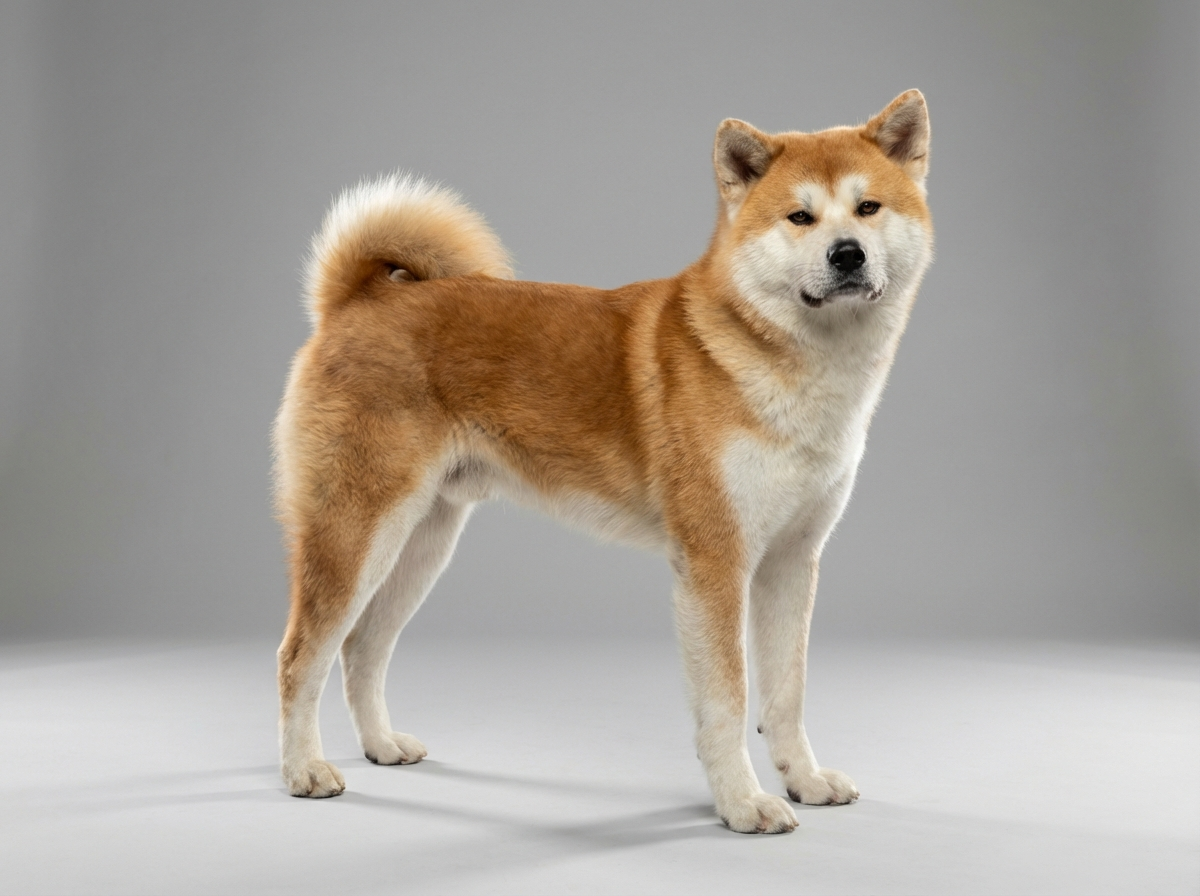
5/5 against 3/5, and what each number means

The Malinois rates 5/5 for trainability and it earns it. It learns at a speed that is genuinely startling, works with enormous willingness, and is one of the most satisfying dogs alive to train well.

The catch is that it learns unwanted things just as fast, and its default response to boredom is to escalate. A Malinois that has taught itself that lunging at the window makes the postman leave has learned a lesson very thoroughly.

The Akita at 3/5 is not slow, it is independent. It weighs whether it agrees. Training works when it is early, consistent and positive, and it fails badly when it is heavy-handed, because correcting a hundred-pound guardian breed physically is a losing proposition.

What the Akita needs more than obedience is socialisation — sustained, deliberate exposure that starts at eight weeks and continues past two years, because the guarding instinct sharpens at maturity rather than fading.

Both reserved with strangers, for different reasons

Both rate 2/5 with strangers, and both rate 3/5 with children, but the underlying temperament is not the same.

The Akita's reserve is territorial and possessive of its household. It positions itself, assesses, and settles once satisfied. It is not a dog that reacts quickly; it is a dog that has already decided.

The Malinois's reserve is that of a highly reactive working dog with strong protective instinct and very fast responses. It is more likely to be aroused by movement, noise and novelty, and its threshold for acting is lower and quicker. That speed is exactly why it is used operationally, and exactly why it is a difficult trait in a family home.

With children both rate 3/5, and for the Malinois that is largely about intensity and movement rather than intent — a herding-derived working dog and running children are not an automatically safe combination without management.

With other dogs the Malinois is marginally better at 3/5 against the Akita's 2/5, though neither is reliably dog-social.

Coat, weight and daily upkeep

The Malinois has a short dense coat: grooming 2/5, shedding 3/5, and essentially no routine beyond a weekly brush and a heavier one twice a year. It is a low-maintenance dog to keep clean.

The Akita's dense double coat sheds at 5/5 and blows out in clumps twice a year, needing an undercoat rake and real time through the moult; grooming rates 3/5. It should never be shaved.

On size the Akita is the heavier animal — 70 to 130 pounds against 55 to 65 — which matters for lifting, boarding and physical control. The Malinois is lighter but far more athletic; the containment problem with a Malinois is not strength but agility, since a fit one can clear fencing that would hold most breeds.

Both need secure fencing, for opposite reasons.

Shared joints, a shared anaesthesia note, different systemic risks

Both carry hip and elbow dysplasia and progressive retinal atrophy, and both should come from screened parents with hip scores and current eye certificates.

Both also carry a documented sensitivity to anaesthesia. Tell any vet who has not treated the breed before, particularly for routine procedures like a dental, and make sure it is noted on the file. This is one of the few genuinely shared practical points on the page.

Beyond that the Malinois carries thyroid disease and epilepsy, and as a very athletic dog it accumulates soft-tissue and cruciate injuries over a working life.

The Akita's burden is autoimmune and endocrine — immune-mediated conditions affecting skin, eyes and blood, hypothyroidism — plus bloat as a deep-chested breed. Unproductive retching with a tight swollen abdomen is an emergency measured in hours.

The Malinois lives longer, 11 to 15 years against 10 to 13.

Cost and the honest household test

Costs are close: $120–$250 a month for the Malinois against $110–$240 for the Akita, and $1,800–$3,500 in year one against $1,700–$3,200. Neither is cheap, and for the Malinois the real cost is often training — good working-dog instruction, club fees and equipment add up in a way the monthly figure does not capture.

The household test is simpler than any cost comparison. Ask what happens to the dog between nine and five on a Tuesday. If the answer is that it is alone in the house, the Malinois at 1/5 alone-tolerance is out, and it is out regardless of how good your weekends are. The Akita at 3/5 can do it.

If the answer is that someone is home and there is time and appetite for daily structured work, the Malinois becomes possible — and it is a genuinely extraordinary dog for the person who wants that.

Akita vs Belgian Malinois: two 1/5 ratings

Both breeds rate 1/5 for first-time owners, and both ratings are meant literally. This page is not really about which is better — it is about which kind of difficulty you are equipped to absorb.

The Akita's difficulty is social and it arrives slowly. A dog that was fine with everyone at eight months develops opinions at two years, and by then it weighs a hundred pounds.

The Malinois's difficulty is immediate and physical. It rates 5/5 for energy, 5/5 for exercise, 1/5 for apartments and 1/5 for time alone — the lowest alone-tolerance on this site. It is not a dog that copes with an ordinary domestic schedule.

Both rate 2/5 with strangers, and both share a sensitivity to anaesthesia worth telling your vet about.

Frequently asked questions

Which is harder to own, an Akita or a Belgian Malinois?

Both rate 1/5 for first-time owners, the lowest on this site, but the difficulty differs. The Malinois is hard immediately and physically: 5/5 energy, 5/5 exercise, 1/5 tolerance for being alone, and destructive when under-worked. The Akita is hard socially and slowly, as guardian instinct sharpens at around two years old in a dog that weighs a hundred pounds by then.

How much exercise does a Belgian Malinois really need?

More than distance can supply. It rates 5/5 and the requirement is mental as much as physical — bite sport, detection, agility, competitive obedience or serious daily training. Two hours of running produces a fitter dog with the same unmet need. The Akita at 3/5 is content with a good daily walk and then settles.

Which is easier to train?

The Malinois at 5/5 against the Akita's 3/5, and it is one of the most trainable dogs alive. The catch is that it learns unwanted behaviour just as fast and escalates when bored. The Akita is independent rather than slow — it understands and then decides — and responds badly to heavy-handed correction.

Are they good with children?

Both rate 3/5, so neither is a natural family dog. For the Malinois the issue is intensity and reactivity to movement, which does not combine automatically with running children. For the Akita it is size and a guardian temperament that needs managing around visiting friends. Both need supervision and neither should be a first dog in a young family.

Which sheds more?

The Akita, at 5/5 against the Malinois's 3/5. The Akita blows a dense double coat in clumps twice a year and needs an undercoat rake through the moult, with grooming rated 3/5. The Malinois's short coat needs a weekly brush and rates 2/5 for grooming.

Is there a health issue both breeds share?

Yes — both carry a documented sensitivity to anaesthesia, alongside hip and elbow dysplasia and progressive retinal atrophy. Tell any vet unfamiliar with the breed before a procedure and get it noted on the file. The Akita additionally carries autoimmune disease and bloat risk; the Malinois carries thyroid disease and epilepsy.

Can a Belgian Malinois live in an apartment?

It rates 1/5, the bottom of the scale, and combined with 1/5 tolerance for being alone it is the worst apartment fit on this site. It is possible only for an owner whose entire routine is built around working the dog daily. The Akita at 2/5 is more plausible in a smaller home, being quiet and far less driven, though it is a very large dog.

Quick answers

View more answers
Living

Akita vs Belgian Malinois: which should I choose?

Choose the Malinois only if you will genuinely work it daily and someone is home. Choose the Akita if you want a quiet guardian on an ordinary schedule and will commit to years of socialisation. Both rate 1/5 for first-time owners.

Living

Which can be left alone during a working day?

The Akita at 3/5. The Malinois rates 1/5, the lowest on this site, and an under-occupied one becomes destructive quickly.

Costs

How much does each cost per month?

The Akita runs $110–$240 a month and the Belgian Malinois $120–$250. For the Malinois, training and club fees often exceed the difference.

Health

What should I tell my vet about either breed?

Both carry a documented anaesthesia sensitivity. Flag it before any procedure, including routine dentals, and make sure it is on the file.

Related DogBreedCompass guides

  • Akita breed guideThe Akita profile covers guardian temperament and the long socialisation window.
  • Belgian Malinois breed guideThe Malinois profile covers drive, working outlets and what under-employment looks like.
  • Belgian Malinois vs German ShepherdThe German Shepherd is the breed most buyers should be comparing the Malinois against, and it is the more realistic pet.
  • Akita vs Alaskan MalamuteThe Malamute is the large northern alternative to the Akita and is far more sociable.
  • Akita anesthesia sensitivityThe anaesthesia page explains what the shared sensitivity means before a procedure.
  • Belgian Malinois hip dysplasiaHip dysplasia is the structural condition both breeds share and the one a breeder should have scored.

Related guides

Important reminder

Health information here is general and is not veterinary advice. If your dog shows pain, sudden behaviour change, or worsening symptoms, consult a licensed veterinarian.

Some links on this site are affiliate links. We may earn a commission at no extra cost to you, and we only suggest products we believe are helpful for dog owners.

Find Your Perfect Breed

Match your lifestyle to the right dog.

Take quiz

Find your match

Not sure which breed is right for you? Take our 2-minute quiz to find out.

Take the quiz