Behavior
What are some quick tips for Poodle (Standard) anxiety?
Create a safe space, establish a routine, and use calming products to help manage Poodle (Standard) anxiety.

Quick answer
What are some quick tips for Poodle (Standard) anxiety?
Create a safe space, establish a routine, and use calming products to help manage Poodle (Standard) anxiety.
Poodle (Standard) anxiety can turn a joyful companion into a nervous wreck.
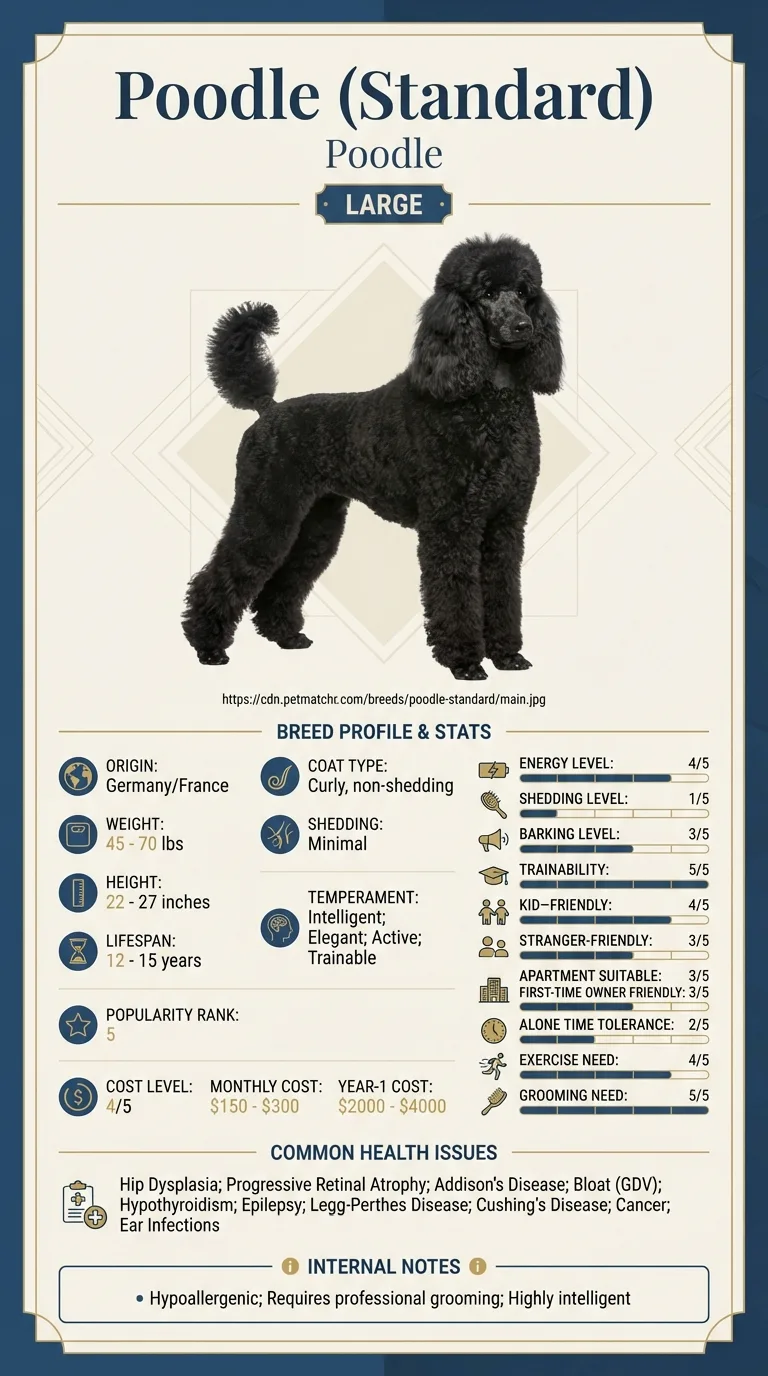
This guide is for Poodle owners who are noticing signs of anxiety in their pets, especially those struggling with separation anxiety or general nervousness.
Poodle (Standard) anxiety often manifests as restlessness and excessive barking. Owners may notice their dog becoming clingy or fearful in certain situations. This anxiety can make it challenging for the dog to relax, impacting daily activities.
If your Poodle's anxiety is severe or doesn't improve with at-home strategies, consider enrolling them in a specialized training program. Training can help change their emotional response to anxiety triggers.
Consult a vet or certified behaviorist if your Poodle shows signs of extreme anxiety, such as destructive behavior, excessive barking, or withdrawal. They can help determine if medication or advanced training is needed.
There are various tools and products that can help manage Poodle (Standard) anxiety. These can range from calming aids to training resources.
To help manage your Poodle (Standard) anxiety, consider making some lifestyle adjustments. These changes can significantly improve your dog's comfort and reduce stress levels. Start by establishing a consistent daily schedule.
Regular meal times, exercise, and bedtime routines can provide your dog with a sense of security.
Next, focus on exercise. Poodles are active dogs that need regular physical activity. Aim for at least an hour of exercise each day, including walks, playtime, and mental stimulation.
This will help reduce pent-up energy, which can lead to anxiety.
Also, think about alone-time windows. Poodles usually aren't fond of being left alone for long periods. Gradually increasing alone time can help them adjust.
Start with short periods and slowly extend the time as they become more comfortable being by themselves. Creating a cozy, safe space with their favorite toys can also ease their anxiety when you’re away.
Finally, pay attention to household routines. Keeping noise levels low and avoiding sudden changes in the environment can help your Poodle feel more secure. If you have guests, prepare your dog in advance so they aren't startled by new faces or sounds.
Implementing these lifestyle adjustments can make a world of difference for your anxious Poodle.
Tracking your Poodle (Standard) anxiety progress is vital. Look for small 'micro-wins' like your pup settling down quicker during a thunderstorm or being less anxious during your departures. Recognizing these improvements can motivate you and help you adjust your training approach.

It's normal to experience setbacks. For instance, your Poodle might regress after a change in routine or environment. When this happens, revisit your training methods and consider increasing the time spent on calming exercises or consult a professional if needed.

If you notice persistent signs of anxiety, like excessive barking or destructive behavior, it may be time to escalate your plan. This could mean introducing new training techniques, increasing socialization opportunities, or seeking help from a trainer specializing in Poodle (Standard) anxiety.

Meet Sarah, a busy nurse living in Chicago. When she adopted her Standard Poodle, Max, she quickly noticed he became anxious every time she left for work. He would bark excessively and chew on furniture, making her worried about his well-being. After trying various strategies at home, like leaving on the TV and providing chew toys, the anxiety persisted. Realizing she needed professional help, Sarah enlisted the guidance of a dog trainer who specialized in anxiety training. They created a structured routine for Max, incorporating gradual desensitization techniques and interactive playtime to reduce his anxiety. Over the next few weeks, Max became more comfortable being alone, leading to much less barking and destructive behavior. Sarah now feels more confident leaving Max for longer periods, knowing he is happier and calmer at home.
Key takeaway: With the right training and support, Poodles can overcome anxiety issues. A structured routine and professional guidance can make a significant difference.
Poodle (Standard) anxiety can stem from various factors, including genetics, lack of socialization, or changes in their environment. These dogs are sensitive and can become anxious if they feel insecure or are left alone for too long.
To help your anxious Poodle (Standard), establish a consistent routine, offer positive reinforcement training, and create a safe space for them. Gradual desensitization to triggers can also be effective.
Professional training can be very beneficial for managing Poodle (Standard) anxiety. A trainer experienced in anxiety issues can provide tailored strategies and support to help your dog feel more secure.
Yes, there are various products like anxiety wraps, calming treats, and toys designed to reduce stress in dogs. Always consult your vet before introducing new products to ensure they are safe and appropriate.
Avoid punishment or negative reinforcement when managing anxiety in your Poodle (Standard). Instead, focus on positive reinforcement and creating a calm environment to help them feel secure.
The time it takes for a Poodle (Standard) to overcome anxiety varies from dog to dog. With consistent training and support, some dogs show improvement within weeks, while others may take months.
Older Poodles can experience anxiety due to changes in their health or environment. It's important to maintain a consistent routine, provide a calm space, and consider gentle training techniques. Always consult your vet for tailored advice.
Travel can be stressful for Poodles. To ease anxiety, familiarize them with their travel crate, bring comfort items, and take regular breaks during long trips. Gradual exposure to car rides can also help.
Yes, adding new dogs can create stress for your Poodle. It's crucial to introduce them slowly and monitor their interactions. Providing separate spaces for each dog can also help reduce anxiety.
Increased barking can indicate anxiety or discomfort. It might be triggered by changes in the environment or separation from you. Assess their surroundings and consider implementing calming techniques.
To manage Poodle (Standard) anxiety, establish a routine, engage in regular exercise, and use calming products like anxiety wraps. Consistent training can also improve their confidence and reduce anxious behaviors.
Create a safe space, establish a routine, and use calming products to help manage Poodle (Standard) anxiety.
Focus on positive reinforcement training techniques and gradual exposure to stressors to help your Poodle (Standard) gain confidence.
Costs can vary widely, with training sessions ranging from $50 to $150 each, plus potential additional expenses for calming products.
Anxiety and pain look alike from the outside. Get the prep sheet for this breed's separation-anxiety page and take it to the vet.
You get: Vet visit prep sheet
No spam. One-click unsubscribe. See our privacy policy.
Preview page 1 before you decide.

This guide is not medical advice. If your dog shows pain, sudden behavior change, or worsening symptoms, consult a licensed veterinarian.
Some links may be affiliate links. We may earn a commission at no extra cost to you. We only suggest products we believe are helpful for dog owners.
We research and check what we publish, but we do not warrant that any figure, date, price, or statement is accurate, complete, or current, and we accept no liability for any loss, cost, injury, or other harm arising from the use of this site. Use it as one reference among several. You remain responsible for your own decisions and for your dog's care - confirm anything that matters with a licensed veterinarian or another qualified professional before you act on it. Full disclaimer.
Not sure which breed is right for you? Take our 2-minute quiz to find out.
Take the quiz