Behavior
What are some quick tips for Great Dane anxiety?
Establish a calm environment, maintain a consistent routine, and provide plenty of exercise to help manage Great Dane anxiety.

Quick answer
What are some quick tips for Great Dane anxiety?
Establish a calm environment, maintain a consistent routine, and provide plenty of exercise to help manage Great Dane anxiety.
Great Dane anxiety can be a challenging issue for owners of this gentle giant.
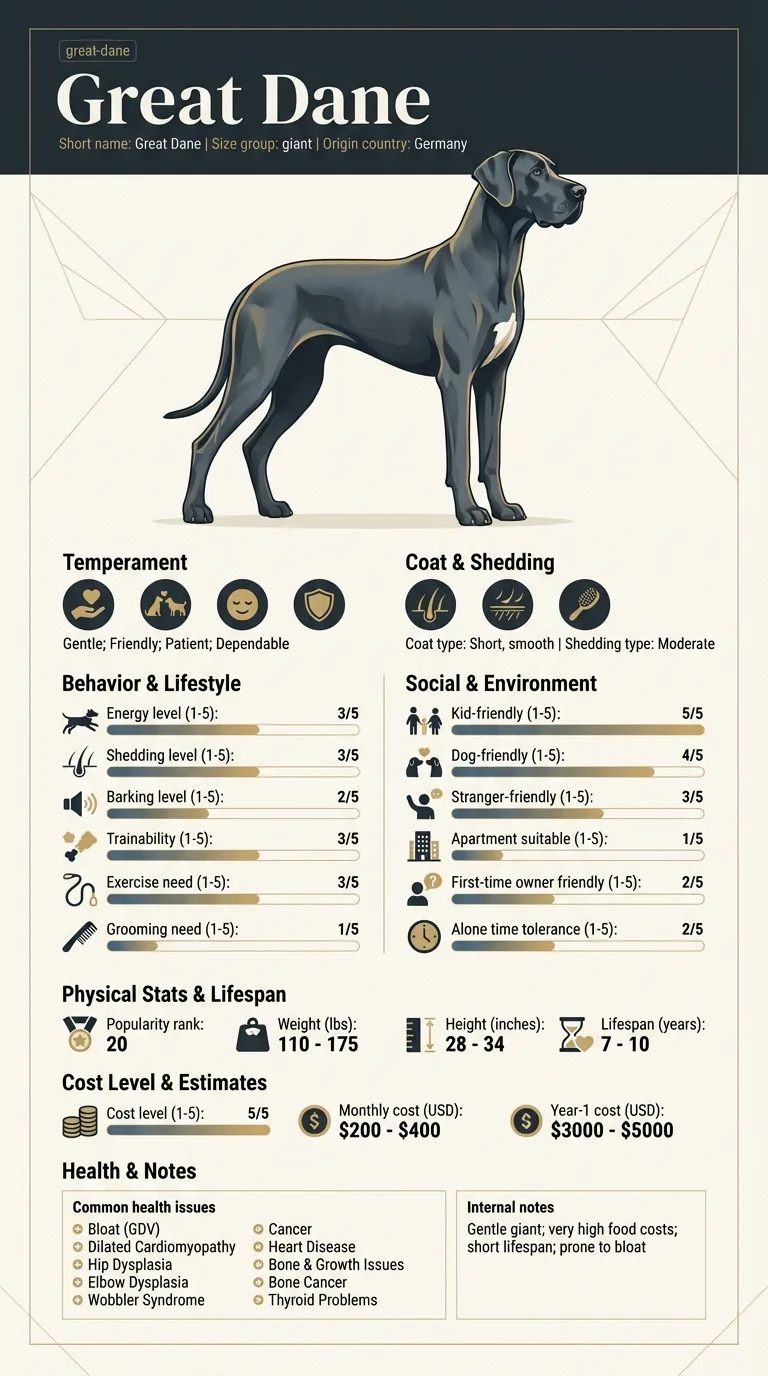
This guide is for Great Dane owners looking to address anxiety issues in their dogs, whether they are first-time owners or seasoned pet parents.
Great Dane anxiety can manifest as a combination of nervousness, fear, and restlessness. Owners may notice their dog pacing, whining, or being overly clingy. This anxiety often peaks in stressful situations or when the dog is left alone, making daily life a bit challenging.
If your Great Dane's anxiety persists despite your efforts, consider enrolling them in a training program. A professional can help address specific behavioral issues and teach you effective techniques.
If your Great Dane shows severe anxiety symptoms, such as destructive behavior or aggression, consult your vet or a certified behaviorist. They can provide guidance and may recommend medical interventions if necessary.
Various tools and products can support managing Great Dane anxiety. These items can help create a calming environment and improve training outcomes.
Managing Great Dane anxiety requires thoughtful lifestyle adjustments. A consistent daily routine can help your dog feel more secure and reduce anxiety. Start by establishing regular feeding times, walks, and play sessions to create a predictable environment.
Exercise is crucial for Great Danes, as their energy levels can contribute to anxiety. Aim for at least an hour of moderate exercise each day. This could include long walks, playtime in a secure yard, or even dog-friendly outings.
Keeping your Great Dane physically stimulated can help alleviate excess energy that may lead to anxious behaviors.
It's also essential to gradually increase alone-time windows. Start with short departures and slowly extend them, ensuring your Great Dane feels comfortable being alone. Use interactive toys or puzzles to keep your dog occupied while you’re away.
These adjustments can help your Great Dane adapt to being alone without becoming overly anxious.
Additionally, consider your household routines. If your home is often busy or loud, try to create quiet areas where your Great Dane can retreat. Soft music or calming scents can further help to ease anxiety.
By incorporating these changes, you can create a more peaceful environment that supports your Great Dane's well-being.
Tracking progress with Great Dane anxiety can feel overwhelming, but recognizing micro-wins can help you see the light at the end of the tunnel. Micro-wins are small but significant improvements in your dog's behavior. For example, if your Great Dane starts to relax more when you leave the room or shows less anxiety during thunderstorms, that’s a positive sign.
Celebrate these moments! They indicate that your training is making a difference.
However, it’s important to be prepared for setbacks. Anxiety isn’t always a straight path; there may be days when your dog appears more anxious than usual. This could be due to changes in routine, new environments, or even seasonal shifts.
If you notice a regression, don’t get discouraged. Instead, revisit your training plan and consider whether adjustments are needed.
To recognize when your plan is working or needs escalation, keep an eye on the frequency and intensity of anxious behaviors. If your Great Dane is barking less, seems calmer during high-stress situations, or is more willing to engage with others, those are signs of improvement. Conversely, if anxiety levels worsen, it may be time to consult a professional trainer or a veterinarian for further guidance.
Remember, progress takes time, and patience is key to helping your Great Dane thrive.

When Sarah adopted Bella, her Great Dane, she was thrilled. But soon, she noticed Bella would whimper and pace when left alone, showing signs of severe anxiety. Sarah tried leaving on the TV for background noise and gave Bella toys to keep her busy, but these only helped a little. After a few weeks, Sarah decided to seek professional help. A trainer suggested a structured routine and gradual desensitization to being alone. They practiced leaving Bella in a safe space for short periods and gradually increased the time apart. Bella learned to feel more secure, and Sarah noticed her pup was much calmer. Now, Bella can relax when left alone, and their bond has strengthened as a result.
Key takeaway: Great Dane anxiety can improve with patience and the right strategies. A structured routine, gradual desensitization, and professional guidance can make a big difference.
Great Danes may experience anxiety due to various factors, including genetics, past experiences, or changes in their environment. Their size and sensitivity make them more prone to stress from loud noises, separation, or unfamiliar situations. Understanding the triggers can help you address their anxiety effectively.
Signs of anxiety in Great Danes include excessive barking, pacing, destructive behavior, and hiding. You may also notice physical signs like trembling or drooling. Being observant of these behaviors can help you identify when your dog is feeling anxious.
Positive reinforcement training is one of the best approaches to help manage Great Dane anxiety. This method encourages calm behavior with rewards, helping your dog associate pleasant experiences with situations that might cause stress. Consistency and patience are key to successful training.
In some cases, medication can be helpful for managing anxiety in Great Danes, especially if their anxiety is severe. It's essential to consult with your vet to discuss the best options and ensure any medication is suitable for your dog's unique needs.
To reduce separation anxiety, gradually train your Great Dane to feel comfortable being alone. Start with short absences and gradually increase the time. Providing engaging toys and a safe space can also help ease their stress during your absence.
Yes, creating a consistent routine, providing plenty of exercise, and using calming products like anxiety wraps or pheromone diffusers can help manage Great Dane anxiety. Engaging in regular training sessions can also provide mental stimulation and build confidence.
Common signs of Great Dane anxiety include excessive barking, destructive behavior, and pacing. You might also notice your dog hiding or becoming aggressive in certain situations. Recognizing these signs early can help you address the anxiety effectively.
Yes, older Great Danes may experience anxiety differently due to changes in their health or environment. They might become more clingy or show signs of confusion, especially if they have cognitive decline. Providing a stable routine and gentle training can help ease their anxiety.
Helping a Great Dane with separation anxiety involves gradual desensitization and creating a safe space for your dog. Start by leaving them alone for short periods and gradually increasing the time. Using calming aids or training techniques can also be beneficial.
Travel can be stressful for Great Danes, especially those with anxiety. Changes in routine, new environments, and unfamiliar sounds can trigger anxiety. To help, acclimate your dog to the travel process and consider calming products or training methods before the trip.
Having multiple Great Danes can sometimes help each other with anxiety, as they may find comfort in companionship. However, it’s important to monitor their interactions and ensure that they are well-socialized. If one dog is anxious, it can sometimes increase stress for the other.
Establish a calm environment, maintain a consistent routine, and provide plenty of exercise to help manage Great Dane anxiety.
Anxiety duration can vary based on the cause and management strategies. With proper training and care, many dogs see improvement within weeks or months.
Yes, training is crucial for anxious Great Danes. It helps them learn coping mechanisms and builds their confidence over time.
Redirect their energy with toys and engage them in activities to minimize destructive behavior. Providing a safe space can also help.
Anxiety and pain look alike from the outside. Get the prep sheet for this breed's separation-anxiety page and take it to the vet.
You get: Vet visit prep sheet
No spam. One-click unsubscribe. See our privacy policy.
Preview page 1 before you decide.
This guide is not medical advice. If your dog shows pain, sudden behavior change, or worsening symptoms, consult a licensed veterinarian.
Some links may be affiliate links. We may earn a commission at no extra cost to you. We only suggest products we believe are helpful for dog owners.
We research and check what we publish, but we do not warrant that any figure, date, price, or statement is accurate, complete, or current, and we accept no liability for any loss, cost, injury, or other harm arising from the use of this site. Use it as one reference among several. You remain responsible for your own decisions and for your dog's care - confirm anything that matters with a licensed veterinarian or another qualified professional before you act on it. Full disclaimer.
Not sure which breed is right for you? Take our 2-minute quiz to find out.
Take the quiz